




UP NEXT
Da garagem ao jardim: robôs de limpeza Gausium no Majestic Mansion, WenzhouAugust 07, 2026

August 13, 2026
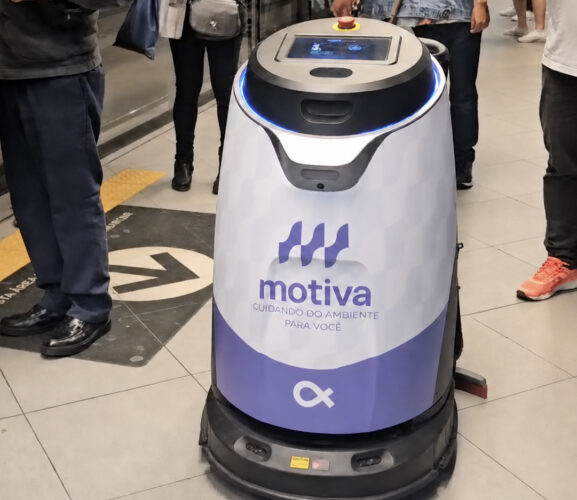
Gausium Omnie (Scrubber 50) na Linha 5-Lilás, operado pela Motiva — e registrado pelas câmeras da maior rede de televisão do Brasil
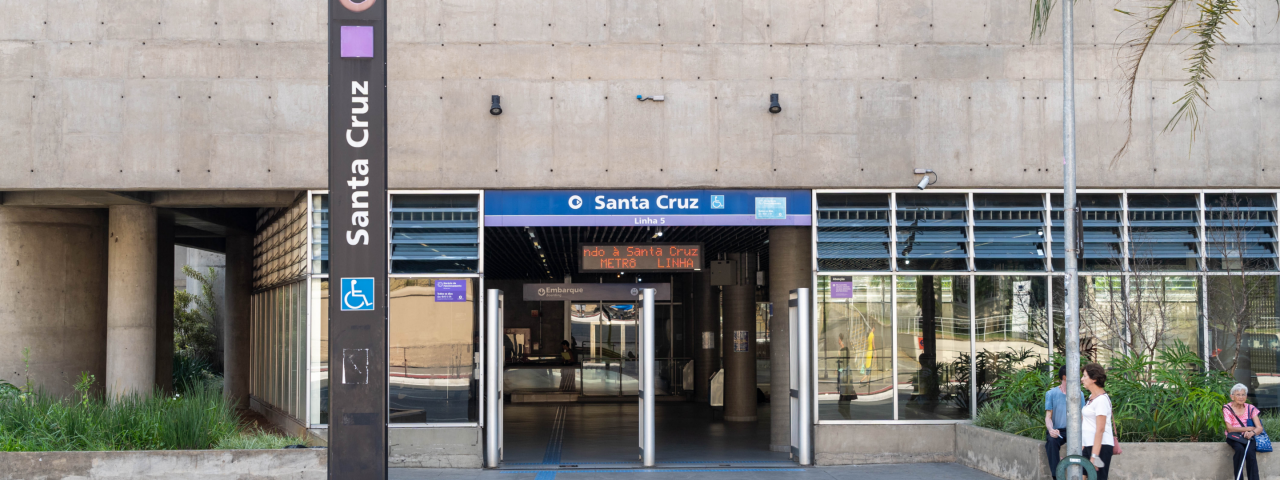
Santa Cruz, São Paulo Metro (cr: Motiva)
Em julho de 2026, uma reportagem ao vivo do SPTV — o jornal local de São Paulo da Rede Globo, a maior rede de televisão do Brasil — registrou uma cena incomum em uma plataforma de metrô.
O repórter apontou para a plataforma:
“Tem alguma coisa — um equipamento — bem ali no meio da plataforma, indo e voltando… olha, ele está vindo na sua direção… muito silencioso, muito estável.”
Para quem usa o metrô todos os dias, uma plataforma não é um lugar onde se espera ver algo novo. Uma máquina de grande porte navegando sozinha era outra coisa. Um passageiro contou à equipe:
“Quando desci do trem, todo mundo tinha parado. Pensei: o que está acontecendo? Olhei e me surpreendi. Não esperava ver algo assim.”
Outro já estava pensando em casa:
“Vi aquele negócio grande e achei que fosse um aspirador. A primeira coisa que pensei foi: preciso de um desses em casa. O meu é pequeno — tenho que parar e esvaziar o tempo todo. Esse daria conta.”
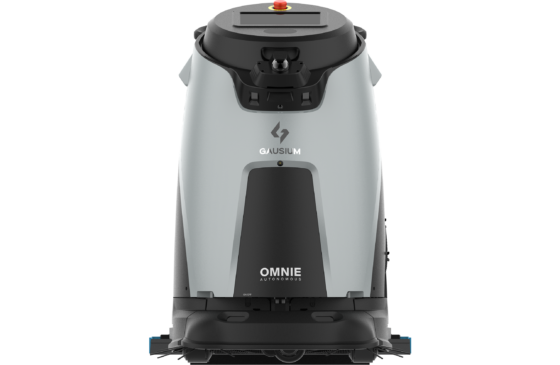
O que os passageiros perceberam rapidamente é que a máquina não estava ali para exibição. Ela estava trabalhando. A “coisa grande” que fez os passageiros de São Paulo pararem é o Gausium Omnie (Scrubber 50), uma lavadora autônoma comercial de pisos — e ela tem uma função na Linha 5-Lilás.
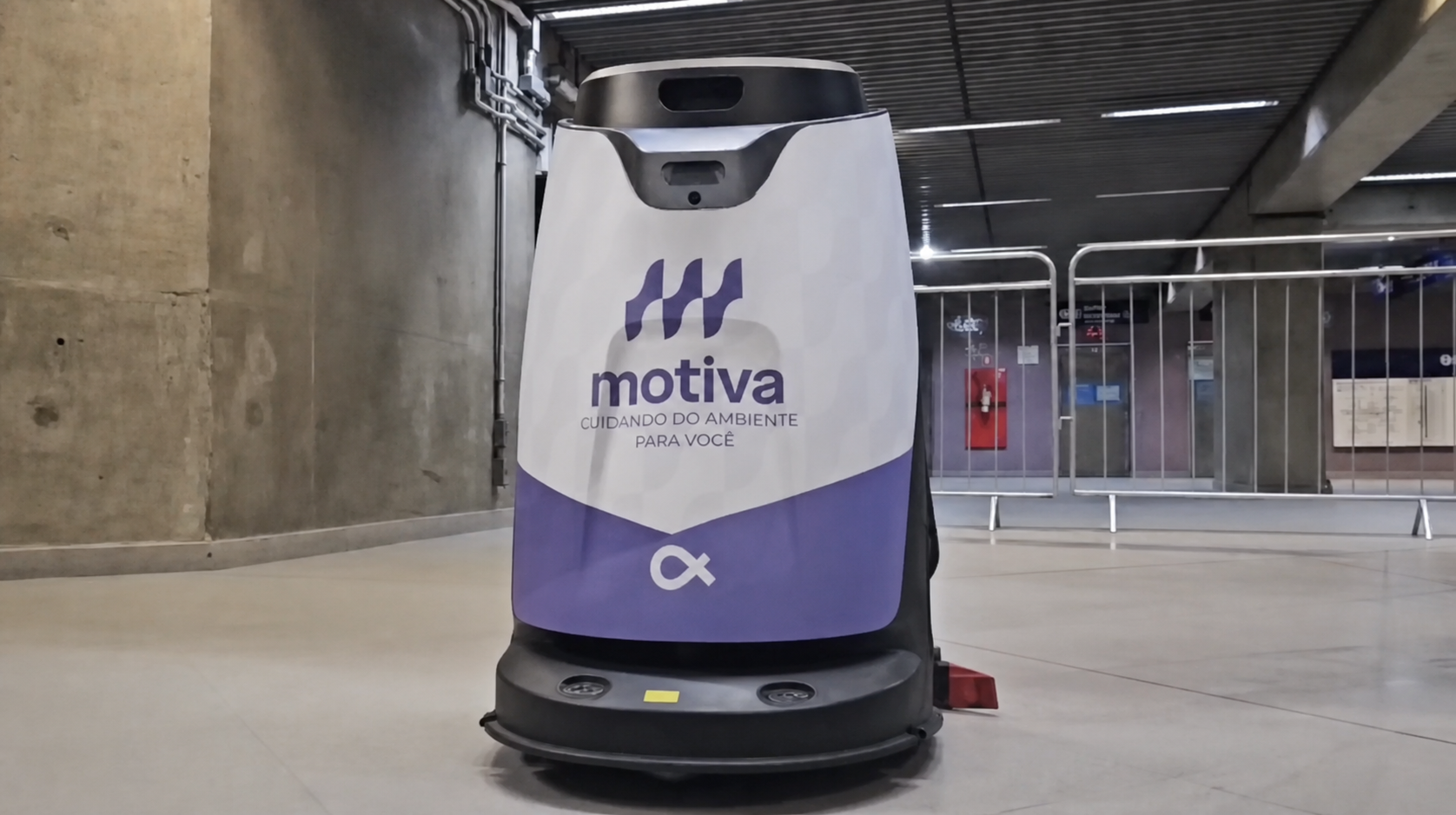
Gausium Omnie (Scrubber 50) at Santa Cruz, Linha 5-Lilás (cr: Motiva)
A Linha 5-Lilás percorre 17 estações de Capão Redondo a Chácara Klabin, uma artéria essencial da rede de deslocamento de São Paulo. Ela é operada pela Motiva (antiga CCR), um dos maiores grupos de infraestrutura de mobilidade do Brasil, por meio de seu braço ferroviário Trilhos da Motiva.
A implantação é conduzida pela Alabia, distribuidora local da Gausium no Brasil, responsável pelo rollout em campo, treinamento de operadores e suporte contínuo. Em julho de 2026, duas unidades Omnie estão em operação em três estações: uma unidade alterna entre Capão Redondo e Campo Limpo, enquanto a outra fica em Santa Cruz. Equipados com sensores inteligentes e navegação autônoma, os robôs fazem o pré-mapeamento das áreas de trabalho e ajustam rotas em tempo real — desviando de obstáculos ou pausando quando necessário.
Esse comportamento foi exatamente o que a equipe do SPTV observou em vídeo: o robô pausa quando o fluxo de passageiros aumenta e retoma a operação quando a plataforma fica livre. Nesta fase, as unidades operam principalmente fora dos horários de pico, com equipes treinadas monitorando as operações em tempo real.
A publicação brasileira do setor ferroviário Revista Ferroviária relatou os números operacionais da implantação da Motiva em 24 de julho:
O relatório também destacou uma mudança fácil de passar despercebida: com os robôs cobrindo a lavagem rotineira de pisos, as equipes de limpeza podem direcionar seu tempo para trabalhos que realmente exigem julgamento humano — limpeza técnica, áreas de difícil acesso e supervisão da qualidade geral.
“A chegada desses robôs reforça nosso compromisso de melhorar continuamente a experiência do cliente por meio da tecnologia — tornando nossas estações mais limpas, eficientes e sustentáveis.”
— Fábio Silva, Gerente Executivo de Atendimento ao Cliente, Linha 5-Lilás, Motiva
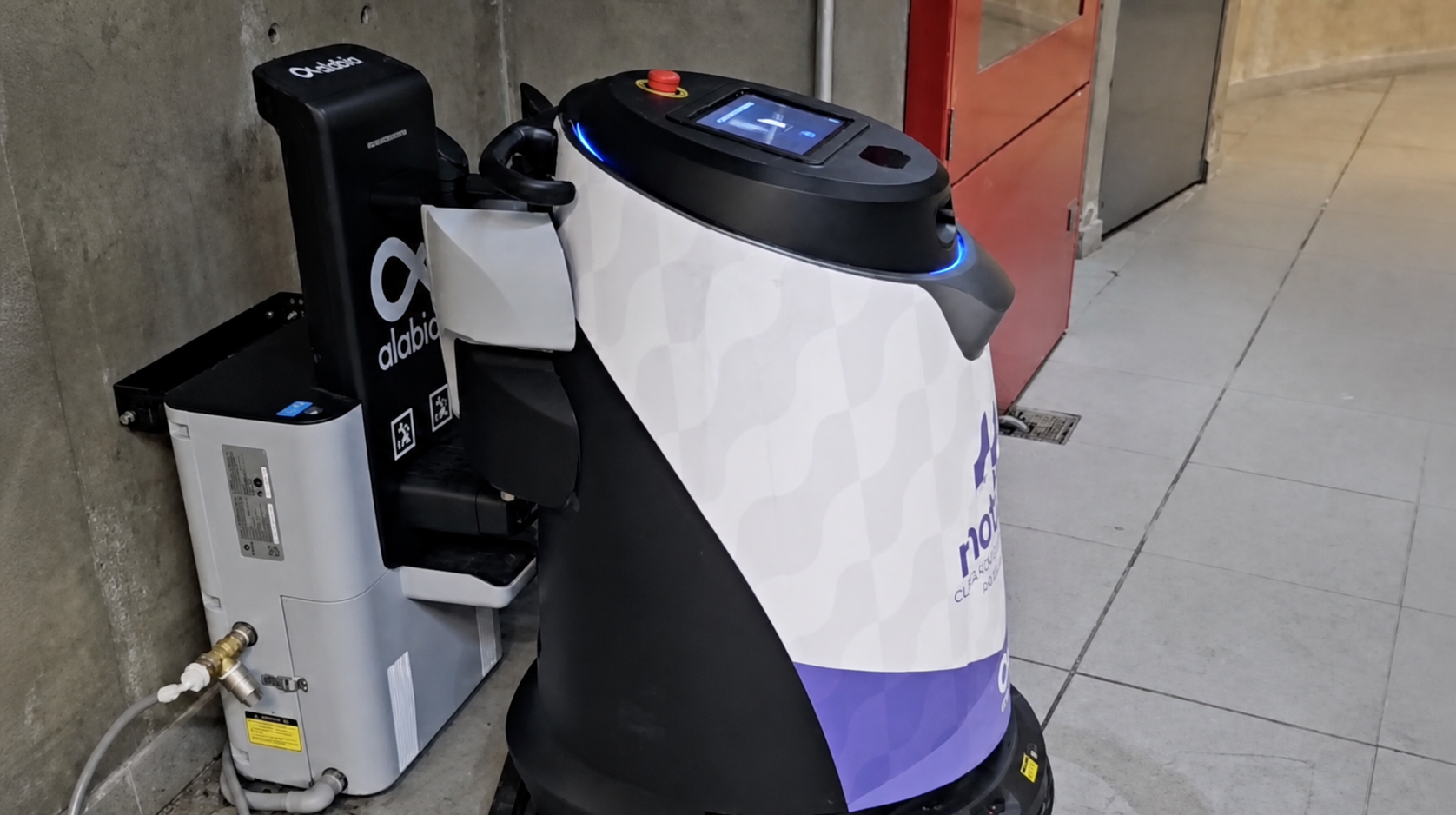
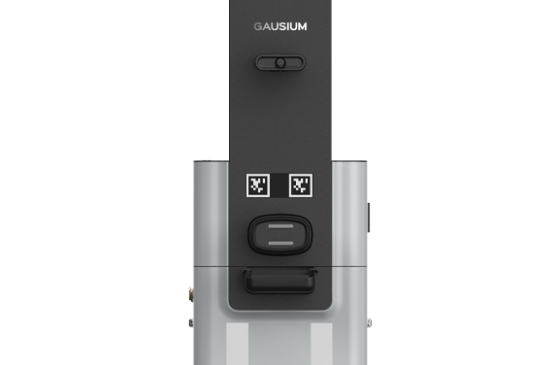
Gausium Omnie docking with the workstation (cr: Motiva)
Com base no sucesso do piloto, a Motiva planeja ampliar gradualmente o programa e estudar implantações em mais estações da Linha 5-Lilás.
A limpeza robótica no transporte público nunca acontece da noite para o dia. As máquinas precisam se adaptar a diferentes layouts de estação, materiais de piso, fluxos de passageiros e janelas de trabalho, enquanto as equipes operacionais acumulam experiência localmente. Mas a mudança já é visível: uma tarefa que antes levava três horas e meia agora leva cerca de 40 minutos — e as horas economizadas vão para os lugares que os robôs ainda não alcançam: vãos de equipamentos, banheiros e manchas que ainda exigem olhar humano.
O transporte ferroviário urbano é um dos ambientes mais difíceis para a limpeza robótica. A limpeza de plataformas acontece em janelas curtas fora dos horários de pico, e o robô não enfrenta um piso vazio — ele navega em um espaço público vivo e complexo: plataformas, mezaninos, colunas, passagens e passageiros que podem surgir a qualquer momento. Os pisos também são exigentes: placas de plataforma, faixas antiderrapantes, piso tátil e trilhos de portas de plataforma, cada um exigindo um tratamento diferente.
Por isso, entrar em projetos como este raramente depende apenas do desempenho de limpeza. Um robô precisa parar e desviar com confiabilidade de pessoas em movimento; seus sistemas de energia, carregamento e estacionamento precisam cumprir regras de segurança contra incêndio e equipamentos da estação; e cada operação — duração, cobertura e uso de água — precisa deixar um registro rastreável que o operador possa auditar. Nada disso aparece de verdade em uma ficha técnica. Precisa ser comprovado em estações reais.
A Gausium já superou esse patamar muitas vezes. Além da Motiva no Brasil, robôs Gausium estão em operação com operadores ferroviários em todo o mundo, incluindo Network Rail no Reino Unido (13 unidades), SMRT em Singapura (89 unidades), Metro de Madrid na Espanha, o Kyushu Shinkansen no Japão, além do Guangzhou Metro e Shenzhen MTR na China.
Ciclos de notícia passam; procedimentos operacionais permanecem. A verdadeira medida da maturidade de um robô de limpeza é ser incorporado à rotina diária de uma cidade. Em São Paulo, ainda é novidade. Em Londres e Singapura, deixou de ser há muito tempo.
Motiva (antiga CCR) é uma das maiores operadoras de infraestrutura de mobilidade do Brasil. Fundado em 1999 e sediado em São Paulo, o grupo adotou o nome Motiva em abril de 2025, reunindo seus negócios sob uma única marca. Atua em rodovias, transporte urbano sobre trilhos e aeroportos: mais de 3.900 km de rodovias pedagiadas em 13 estados brasileiros, serviços de mobilidade urbana que transportam cerca de 3 milhões de passageiros por dia e 20 aeroportos que atendem mais de 40 milhões de passageiros por ano. Por meio de seu braço ferroviário, Trilhos da Motiva, o grupo opera e mantém a Linha 5-Lilás do metrô de São Paulo e o monotrilho da Linha 17-Ouro.
Alabia é uma empresa brasileira de robótica e IA com mais de oito anos de experiência na implantação de robôs autônomos no Brasil e na América Latina. Com sede no Brasil, a Alabia atua como distribuidora, integradora e operadora: em vez de apenas fornecer equipamentos, projeta operações robóticas completas — combinando robôs autônomos com equipes humanas especializadas — e as apoia em setores onde a operação não pode falhar, incluindo transporte público, hospitais, logística e instalações comerciais. Como distribuidora da Gausium no Brasil, a Alabia lidera a implantação local, o treinamento e o suporte operacional diário de projetos como a Linha 5-Lilás.
A Gausium é uma empresa líder em soluções de limpeza autônoma alimentadas por IA, com mais de 9.400 clientes em mais de 70 países e regiões. Os produtos e serviços da Gausium incluem robôs comerciais de limpeza de pisos, estações de acoplamento, plataforma em nuvem, software de aplicação e outras soluções em desenvolvimento. Movida pela visão de liderar a transformação digital inteligente do setor de limpeza e serviços, a Gausium oferece o portfólio mais abrangente do mundo de robôs comerciais de limpeza, capacitando as pessoas a trabalhar de forma mais inteligente e viver vidas mais gratificantes.
Step 1/2
Please select the type of business you’d like to have with Gausium.
Choose one item from the list
Step 2/2
Thanks for sharing your preference. Please fill out the form below, and we’ll get in touch shortly.
By clicking “Submit”, I authorize Gausium to contact me. Privacy Policy.
Thank you for filling out the form
By clicking “Submit”, I authorize Gausium to contact me. Privacy Policy.