




UP NEXT
Why High-Traffic Floors Defeat Most Autonomous Scrubbers, and Which Ones CopeSeptember 07, 2026

September 14, 2026
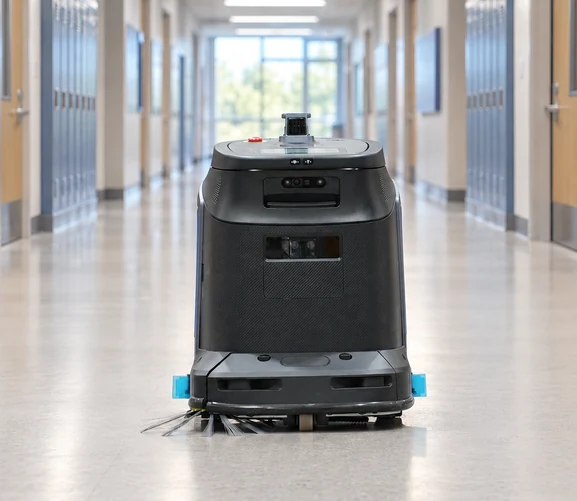
Choosing a cleaning robot for a school means setting a higher safety bar than other buildings do. The machine works in corridors, classrooms, canteens and playgrounds while students move through them, most of them without an adult alongside. Conditions that are acceptable in an office or a warehouse are often not enough here.
Four checks determine whether a machine can run on site during the day:
Gausium covers the school estate with five machines, matched to the size of each space and whether it is indoors or out.
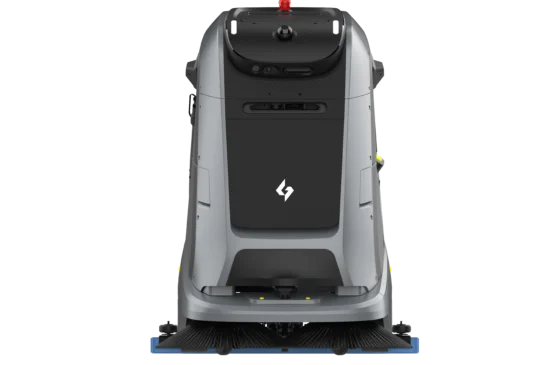
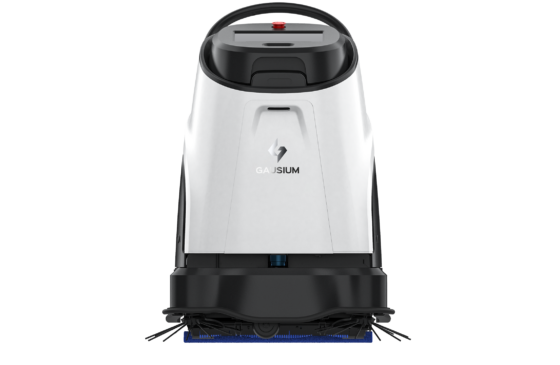
Phantas handles classrooms, corridors and offices, and has been assessed by TÜV Rheinland against EN IEC 63327 as meeting PL=d functional safety requirements.
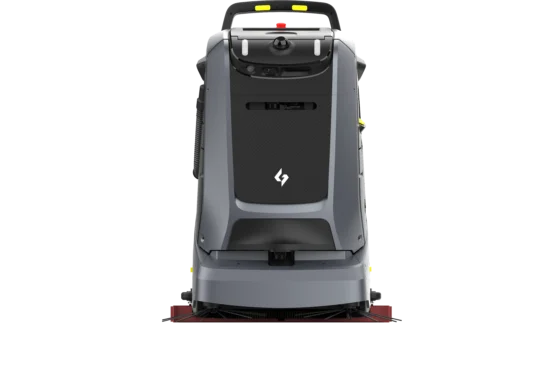
Mira handles mid-sized spaces such as entrance foyers, smaller dining rooms and multi-purpose rooms, sweeping and scrubbing in one pass through gaps as narrow as 660 mm.
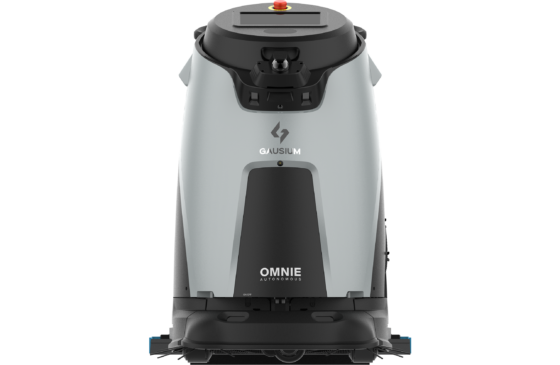
Omnie handles canteens, halls and large circulation space, with 360-degree 3D LiDAR and a panoramic camera giving zero-blind-spot awareness.
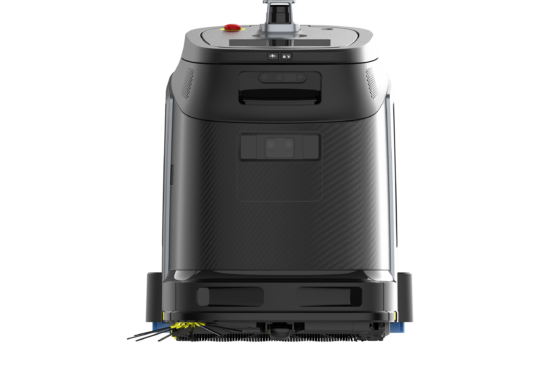
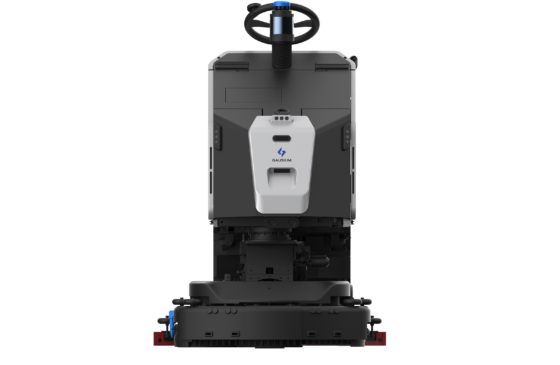
Marvel handles the largest hard floors on a campus, such as underground car parks, with 5–10 hours of runtime on one charge.
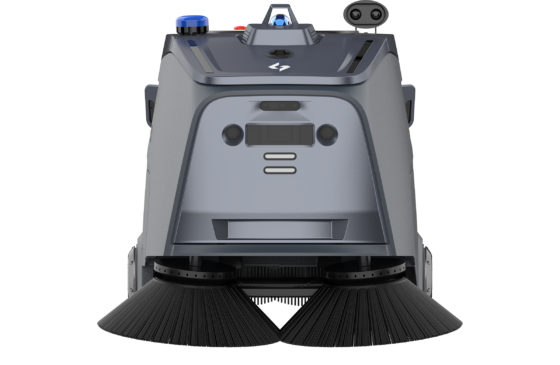
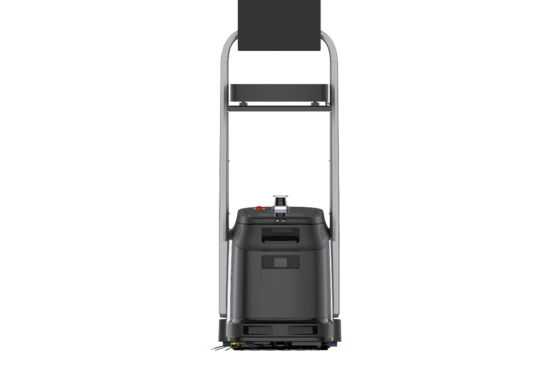
Beetle handles the outdoor estate, including playgrounds, paths and car parks, as a dry sweeper that works on asphalt and concrete and leaves no water behind.
The sections below work through each of the four checks.
The four checks are independent of one another. A machine can satisfy three and still be unsuitable on the fourth.
|
Check |
The question it answers |
How it is verified |
|
Certification |
Has an independent body assessed the machine for autonomous work among people? |
A named standard and a certificate covering the quoted configuration |
|
Sensing |
Does detection hold for children, bags and low obstacles? |
Site demonstration using the school’s own floor and conditions |
|
Behavior |
What does the machine do when a group gathers or blocks the route? |
Obstruction test during the demonstration |
|
Floor condition |
Is any part of the route left wet after the machine passes? |
Walk the route immediately behind the machine |
The fourth check is the one schools raise first. A slip on a wet corridor is the most likely incident in a school automation program, and it is unrelated to obstacle avoidance.
IEC 63327 is the international standard for powered automatic floor treatment machines in commercial use, and it includes provisions for autonomous operation. Asking for it converts a general safety statement into a document a school’s health and safety officer can review. The standards themselves are explained in Gausium’s guide to commercial cleaning robot safety.
Gausium has been assessed against it. In March 2024, TÜV Rheinland tested the circuit design, architecture and mechanical structure of the Phantas S1 Pro M against EN IEC 63327 and confirmed it meets the PL=d functional safety requirements, alongside EU CE-MD and North American cTUVus certification. In January 2024, TÜV Rheinland issued its first CE-MD certificate aligned with EN IEC 63327 for a commercial cleaning robot to Gausium.
PL=d is the performance level the standard sets for Class II machines, the category defined by higher weight, volume and speed, where the consequences of a control failure are greatest.
Three items belong in the procurement file:
Certification is issued per model and configuration. A school running several machine types, for example Phantas indoors and Beetle outside, should request the relevant documents for each one.
Product marks such as CE or FCC address product conformity and electromagnetic compatibility. They are separate from an assessment of autonomous behavior among people.
Sensing performance is usually demonstrated in adult environments. Three conditions in a school differ from those demonstrations.
Height. Detection calibrated to a standing adult has to hold for a primary-age child, and for a child sitting or crouching on a corridor floor.
Movement. Adults follow predictable lines. Students change direction quickly, move in groups, and stop without warning.
Low obstacles. Bags, coats, sports kit and dropped stationery appear on school floors in volumes other buildings do not generate, and they sit at the height most likely to fall below a poorly configured sensor.
Run the detection test on the school’s own floor, in the spaces the machine will actually clean.
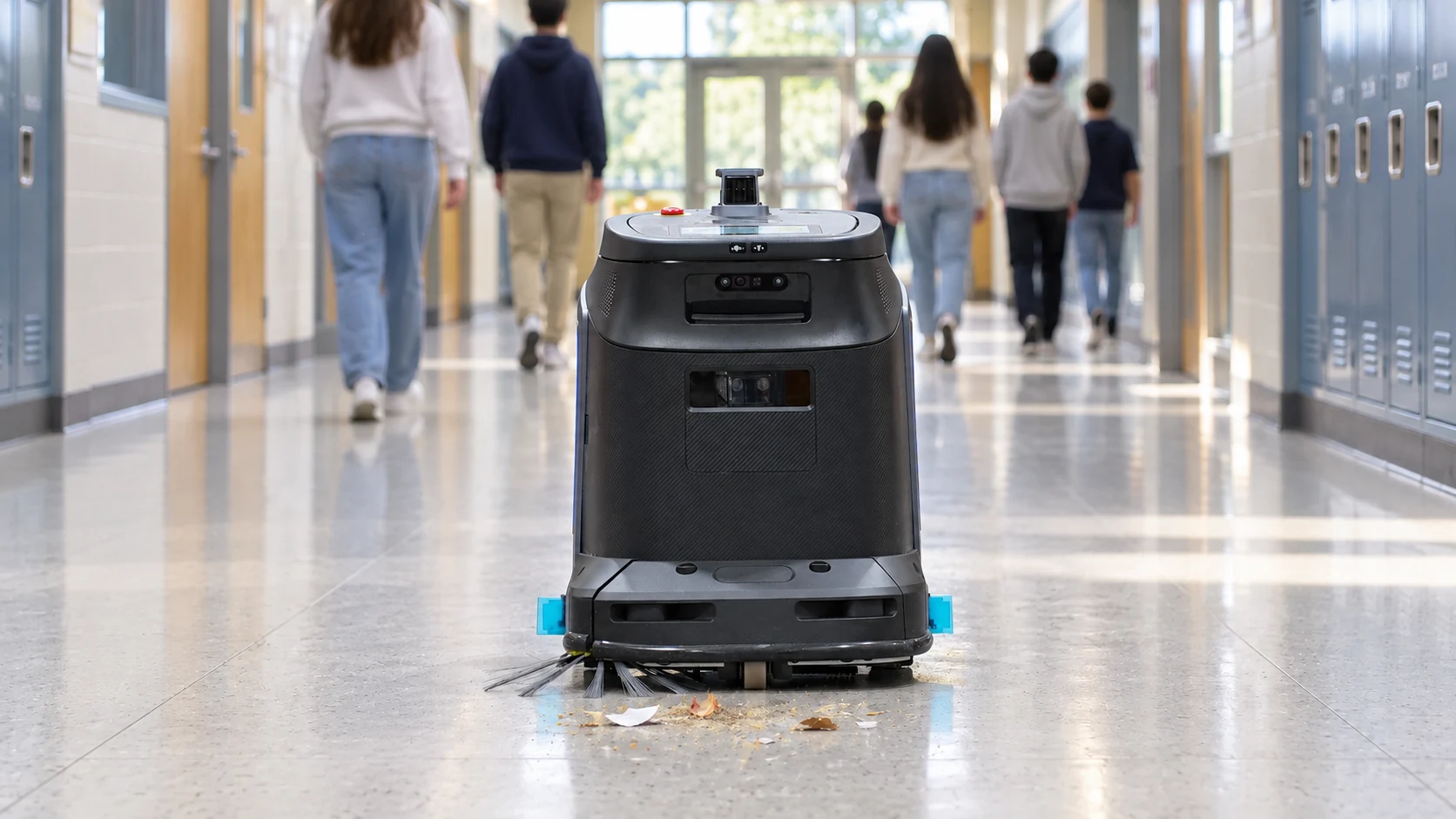
Two behaviors determine whether a machine is workable in a school, and neither appears in a specification.
Obstruction. Students will block the route at some point, usually within the first week and usually as a group. The expected response is to stop, wait, and re-plan the route once the path clears. A machine that requires a manual reset each time turns a routine event into a call-out.
Being surrounded. Younger students will gather around the machine to watch it. It should hold position and resume cleanly once the space opens, rather than reversing toward the group behind it.
Both are straightforward to test. Ask a colleague to stand in the route and remain there, then ask three people to close around the machine. The response to those two situations is more informative than a sensor list.
Layout changes. This is the slower version of the same problem. Tables are pushed back for a parents’ evening, chairs are stacked for an assembly, a display stand appears in the foyer.
Plan the opening weeks the same way. Introduce the machine to students rather than letting it appear unannounced, and keep it to lesson-time corridor routes until interest settles.
Collision is the risk schools ask about first. Slipping is the risk most likely to occur.
Applying water in an occupied corridor creates a drying window in a space where students move at speed. Three measures address it structurally rather than through procedure.
Treat only what needs treating. Phantas supports Auto Spot Cleaning, working where waste or staining is detected rather than wetting a full route regardless of floor condition. The wet area stays small and short-lived, which is what makes daytime operation practical.
Detect residual water. The Phantas Extra configuration adds smart residual water detection, addressing the specific case of water remaining after the machine has moved on.
Keep wet work outside the movement peaks. Corridors should not be wet during break or changeover, regardless of machine capability. The same rule applies to Mira and Marvel, which sweep and scrub in a single pass: schedule them where the floor has time to dry before students return.
Outdoors, the question does not arise. Beetle is a dry sweeper, so paths and playgrounds are never left wet. Its HEPA filtration captures fine dust in the bin rather than blowing it across the playground, and the filter is cleaned automatically after each task.
Signage still applies. Targeted work means one sign covers a small area briefly, rather than a corridor closing across a lesson change.
Scheduling is where the four checks hold or fail, because a school’s movement pattern differs from other occupied buildings.
A school does not have a traffic curve. It has a bell. A corridor is empty for fifty minutes, carries a full year group in ninety seconds, then empties again. There is no gradient to measure, which is why the footfall-logging method used in other buildings does not transfer. Outdoor space follows the same bell on a longer cycle: playgrounds are empty during lessons and stay full for the whole of break and lunch.
|
Slot |
Suitable for daytime operation |
Indoor areas |
Outdoor areas |
|
Before first bell |
Yes |
Main circulation, full coverage |
Playgrounds, paths and entrances before drop-off |
|
Lesson time |
Yes |
Corridors, entrance halls, dining hall |
Car parks and playgrounds not in PE use |
|
Break and changeover |
No |
Machine parks |
Machine parks |
|
Lunch service |
Yes |
Classrooms, corridors away from the queue |
None; playgrounds are occupied |
|
After final bell |
Yes |
Most of the site, in stages |
Playgrounds, paths and car parks after pick-up |
|
Exam periods |
No |
Halls and surrounding corridors excluded |
Areas next to exam halls excluded |
For buildings that do have measurable traffic curves, the window-identification method is set out in 4 Machine Capabilities for Floor Cleaning in Occupied Public Buildings.
|
Machine |
School areas |
|
Classrooms, corridors, offices, administrative areas |
|
|
Entrance foyers, smaller dining rooms, multi-purpose rooms |
|
|
Canteens, dining halls, hard-floor sports halls, large circulation space |
|
|
Underground car parks, the largest hard floors on a campus |
|
|
Playgrounds, paths, outdoor car parks |
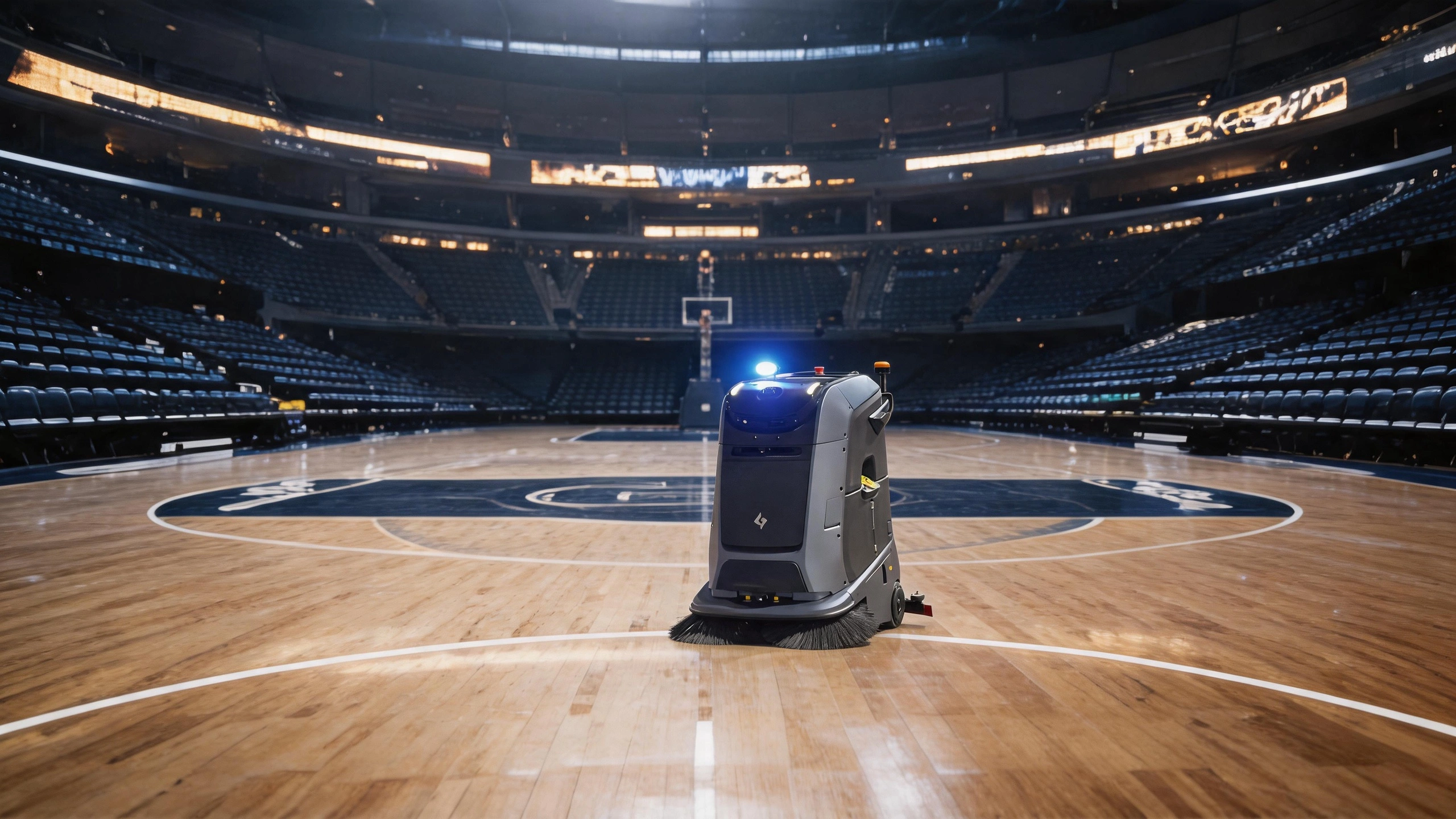
Phantas covers classrooms, corridors, offices and administrative areas. Furniture density rather than floor area is the governing constraint, and its four cleaning functions handle entrance grit, corridor scuffing and classroom floors. Its applicable surfaces include hardwood, which is relevant for sports halls.
Mira covers mid-sized rooms where the layout changes often. It needs only 660 mm to pass, sweeps and scrubs in a single pass, and starts with Drop & Go deployment, so no professional mapping is needed. An onboard self-cleaning system flushes the waste water tank and rinses the suction path, which reduces the handling left for the caretaker.
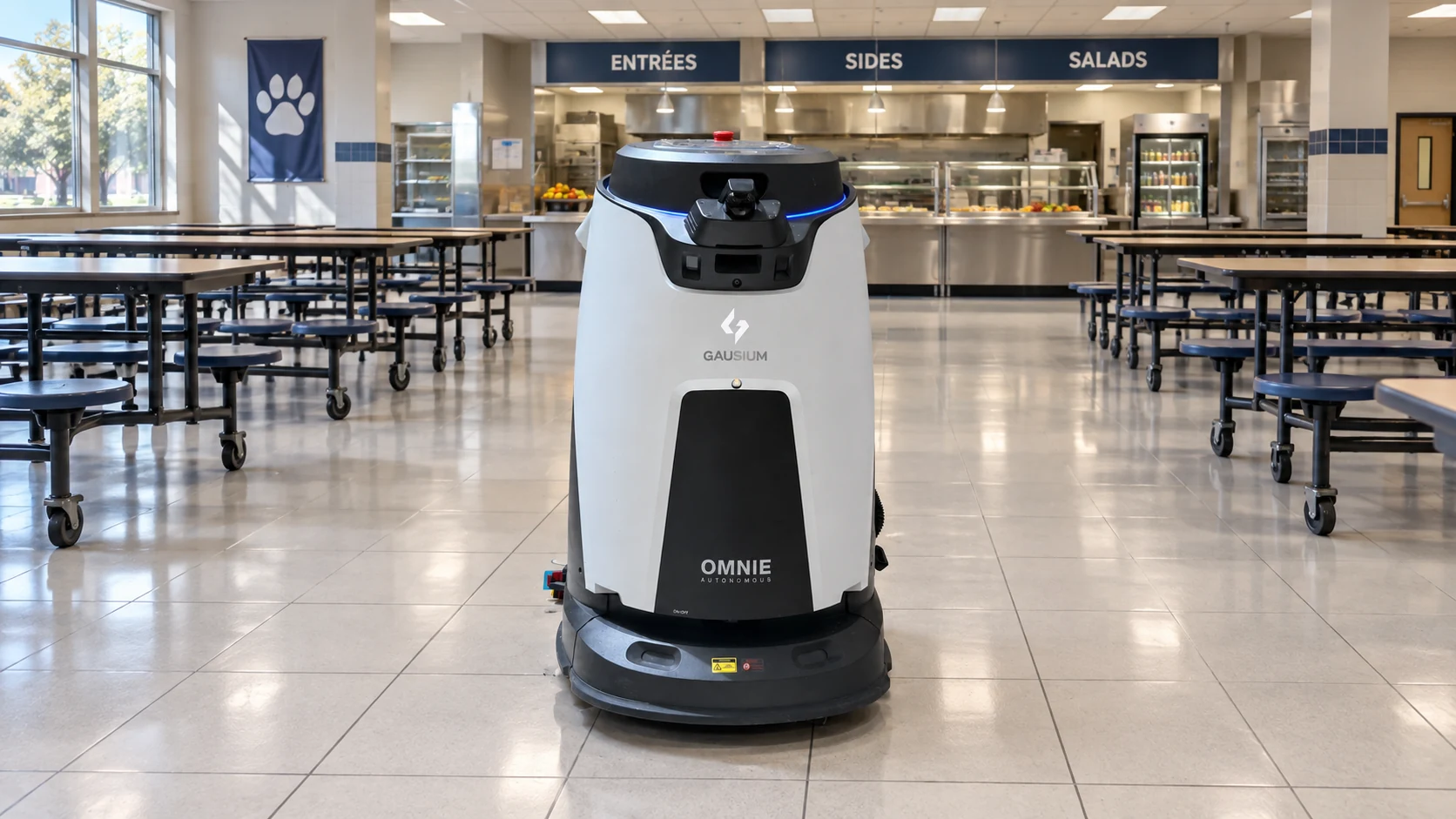
Omnie covers canteens, dining halls, hard-floor sports halls and large circulation space, where food debris, grease and multi-directional movement occur together and a single machine needs several cleaning methods.
Marvel covers the largest hard floors on a campus, such as underground car parks. An 80 L clean water tank, a 70 L waste water tank and a 120 Ah battery give 5–10 hours of continuous runtime, and 55 kg of cleaning pressure lifts embedded dirt. It sweeps and scrubs in one pass and shares Mira’s self-cleaning system.
Beetle covers the outdoor estate. It sweeps asphalt, concrete, epoxy and PVC, and its suction handles fine dust and sand as well as paper, bottles and wood chips. Its 750 mm path clearance and zero-distance edge cleaning reach along fences and building walls. In Spot Cleaning Mode, RGB-D cameras detect waste and the machine goes to it, the dry equivalent of the targeted approach described in Check 4.
At Shanghai Maritime University, Gausium deployed a fleet of four robots including two Phantas units across the Navigation Science Building and student dormitories. Two details from that deployment apply directly to a school. Phantas navigates between floors by taking the elevator independently, which removes the need for staff to move it between levels, and the fleet is programmed to run during quiet hours so shared spaces are maintained without disrupting movement.
Gausium’s Culture and Education solutions page sets out coverage across the wider campus estate.
Stairs, steps and split-level corridors. Outside the scope of any floor cleaning machine, and common in older school buildings.
Science and technology rooms. Chemical spillage is handled by trained staff and stays off the automated route.
Rooms occupied continuously. Some primary classrooms are in use from arrival to home time. These stay on the after-hours round.
Grass pitches and soft play surfacing. These fall outside the hard surfaces Beetle is specified for and stay with grounds staff.
Sites with no adult on call. A machine needs someone able to respond to an unexpected event. A school with one caretaker covering several buildings should identify that person before deployment.
Yes, in zones the timetable leaves empty and with wet work kept localized. Corridors during lesson time and classrooms during lunch are the two reliable slots, with the machine parked through break and changeover.
IEC 63327, the standard for automatic floor treatment machines including autonomous operation. TÜV Rheinland assessed the Phantas S1 Pro M against EN IEC 63327 and confirmed it meets PL=d functional safety requirements. Request the certificate covering your quoted configuration.
Through layered sensing. Omnie combines multimodal SLAM, 360-degree 3D LiDAR and a panoramic camera for zero-blind-spot awareness, and Marvel pairs 3D LiDAR with 360-degree vision across large floor plates. Verify detection on the school’s own floor rather than only in a demonstration among adults.
It should hold position and resume its route once the space clears, rather than reversing toward the group. Ask to see this during the on-site demonstration, since it is not covered by any specification.
Not where wet work stays targeted. Auto Spot Cleaning treats only detected soil, keeping wet areas small and brief, and the Phantas Extra configuration adds residual water detection. Corridors should not be wet during break. Outdoors, Beetle sweeps dry and uses no water at all.
Yes, where elevator integration is in place. At Shanghai Maritime University, Phantas navigates across floors by taking elevators independently.
Yes, on hard surfaces. Beetle is an autonomous sweeper for indoor and outdoor use, working on asphalt and concrete with 3D LiDAR navigation that holds in low light. Run it before drop-off, during lessons when the playground is empty, or after pick-up.
UP NEXT
Why High-Traffic Floors Defeat Most Autonomous Scrubbers, and Which Ones CopeSeptember 07, 2026
Step 1/2
Please select the type of business you’d like to have with Gausium.
Choose one item from the list
Step 2/2
Thanks for sharing your preference. Please fill out the form below, and we’ll get in touch shortly.
By clicking “Submit”, I authorize Gausium to contact me. Privacy Policy.
Thank you for filling out the form
By clicking “Submit”, I authorize Gausium to contact me. Privacy Policy.