




UP NEXT
Pourquoi les sols à fort trafic mettent en échec la plupart des autolaveuses autonomes, et lesquelles s’en sortentseptembre 07, 2026

septembre 14, 2026
Choisir un robot de nettoyage pour une école implique d’établir un niveau de sécurité plus élevé que dans d’autres bâtiments. La machine travaille dans les couloirs, les salles de classe, les cantines et les cours de récréation pendant que les élèves y circulent, la plupart sans adulte à leurs côtés. Les conditions acceptables dans un bureau ou un entrepôt ne suffisent souvent pas ici.
Quatre vérifications déterminent si une machine peut fonctionner sur site en journée :
Gausium couvre l’ensemble du site scolaire avec cinq machines, adaptées à la taille de chaque espace et selon qu’il est intérieur ou extérieur.
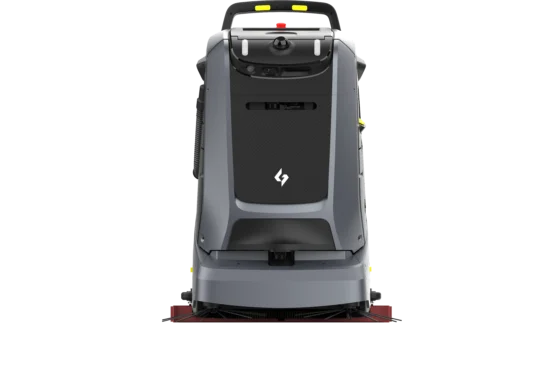
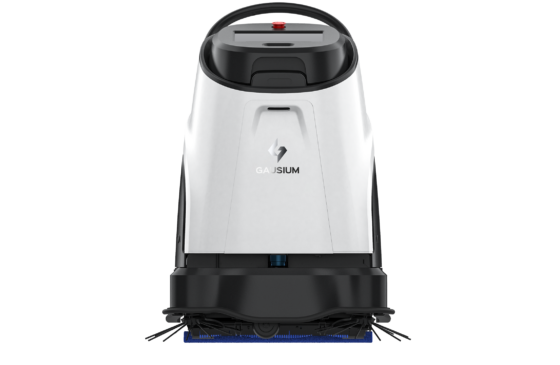
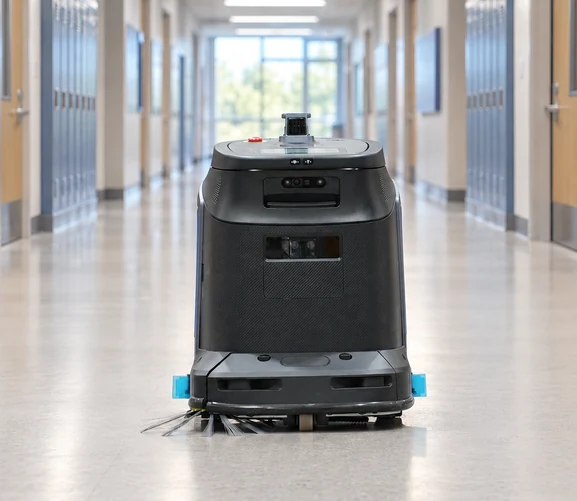
Phantas s’occupe des salles de classe, des couloirs et des bureaux, et a été évalué par TÜV Rheinland selon la norme EN IEC 63327, répondant aux exigences de sécurité fonctionnelle PL=d.
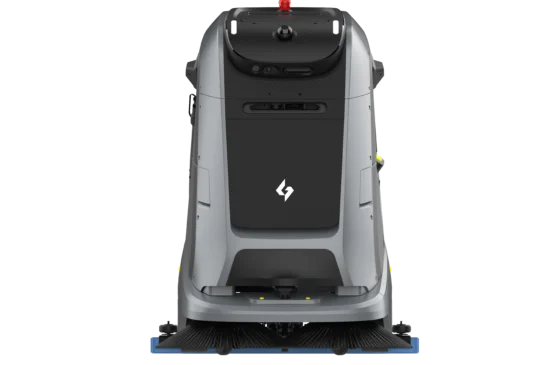
Mira s’occupe des espaces de taille moyenne tels que les halls d’entrée, les petites salles à manger et les salles polyvalentes, balayant et lavant en une seule passe à travers des espaces aussi étroits que 660 mm.
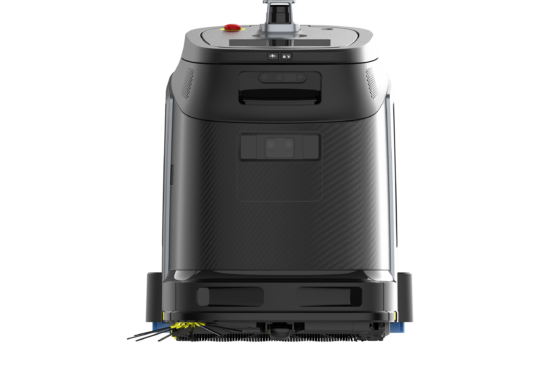
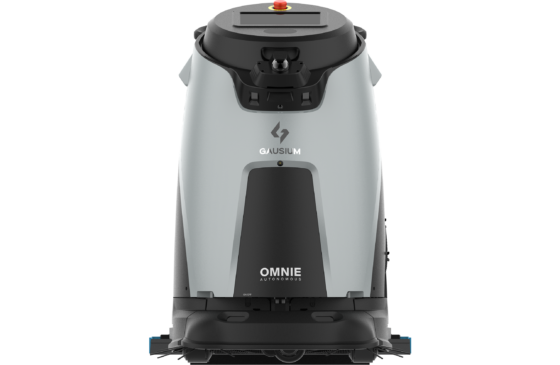
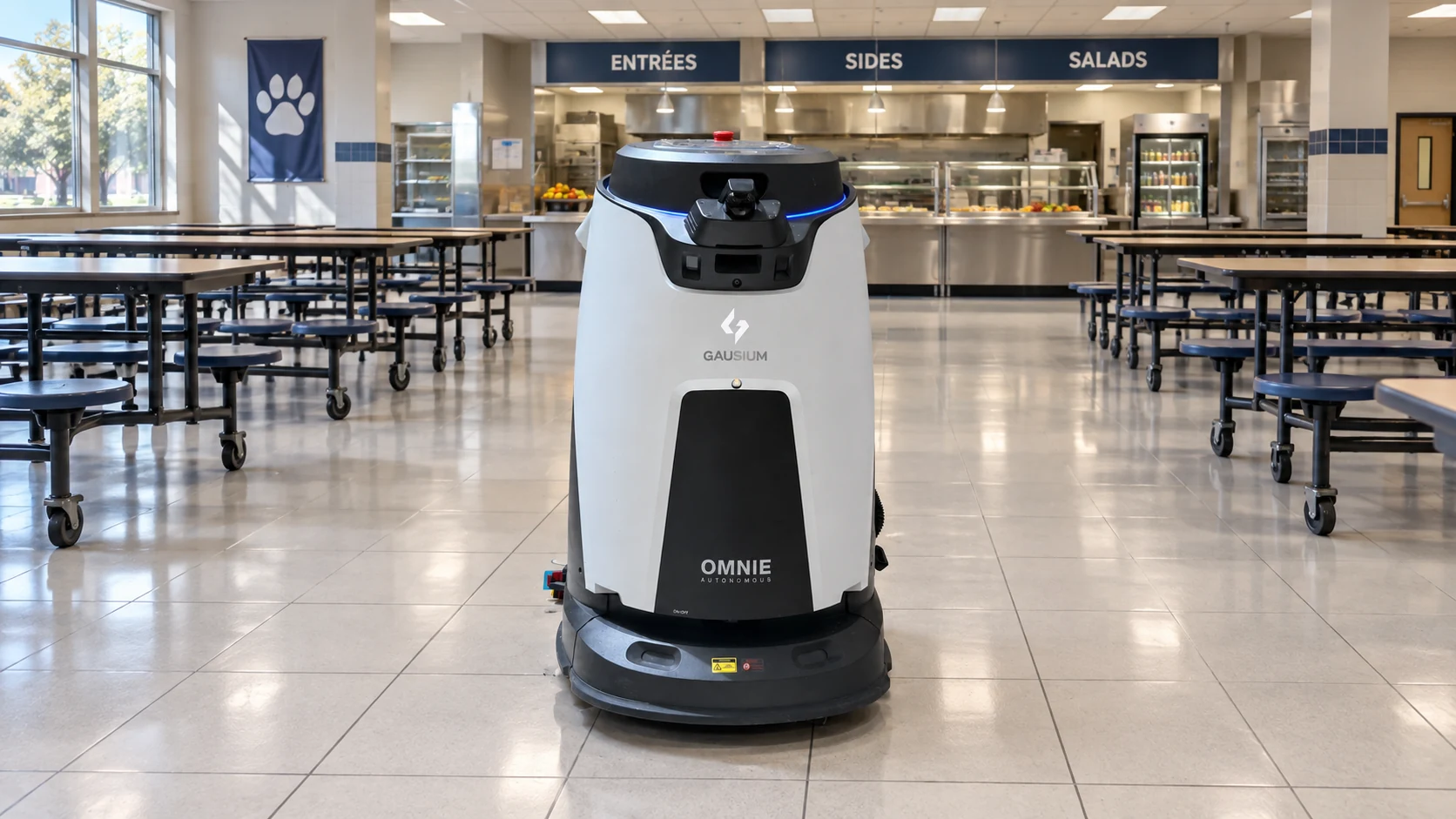
Omnie s’occupe des cantines, des salles et des grands espaces de circulation, avec un LiDAR 3D à 360 degrés et une caméra panoramique offrant une perception sans angle mort.
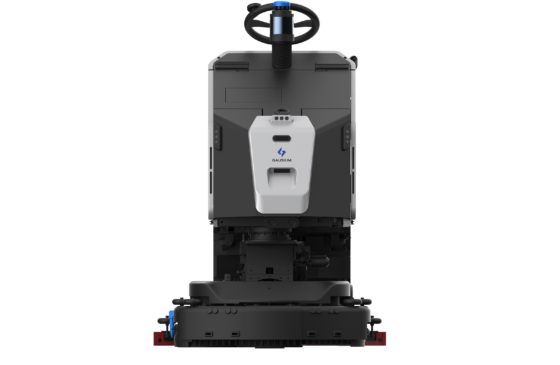
Marvel s’occupe des plus grands sols durs d’un campus, comme les parkings souterrains, avec une autonomie de 5 à 10 heures par charge.
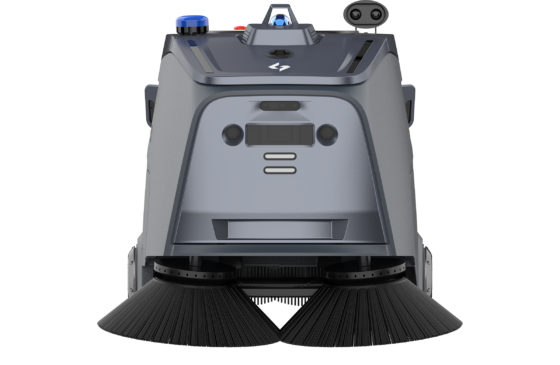
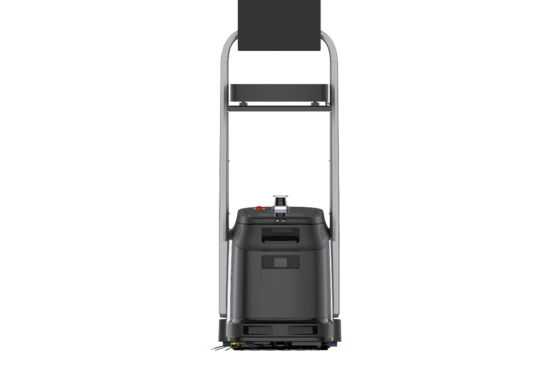
Beetle s’occupe du site extérieur, y compris les cours de récréation, les allées et les parkings, en tant que balayeuse à sec qui travaille sur l’asphalte et le béton sans laisser d’eau derrière elle.
Les sections suivantes détaillent chacune des quatre vérifications.
Les quatre vérifications sont indépendantes les unes des autres. Une machine peut en satisfaire trois et rester inadaptée sur la quatrième.
|
Vérification |
La question à laquelle elle répond |
Comment elle est vérifiée |
|
Certification |
Un organisme indépendant a-t-il évalué la machine pour un travail autonome parmi les personnes ? |
Une norme nommée et un certificat couvrant la configuration proposée |
|
Détection |
La détection tient-elle compte des enfants, des sacs et des obstacles bas ? |
Démonstration sur site utilisant le sol et les conditions propres à l’école |
|
Comportement |
Que fait la machine lorsqu’un groupe se rassemble ou bloque le trajet ? |
Test d’obstruction pendant la démonstration |
|
État du sol |
Une partie du trajet reste-t-elle mouillée après le passage de la machine ? |
Parcourir le trajet immédiatement derrière la machine |
La quatrième vérification est celle que les écoles évoquent en premier. Une glissade dans un couloir mouillé est l’incident le plus probable dans un programme d’automatisation scolaire, et il n’a aucun rapport avec l’évitement d’obstacles.
L’IEC 63327 est la norme internationale pour les machines motorisées de traitement automatique des sols à usage commercial, et elle inclut des dispositions pour le fonctionnement autonome. La demander transforme une déclaration de sécurité générale en un document que le responsable hygiène et sécurité d’une école peut examiner. Les normes elles-mêmes sont expliquées dans le guide de Gausium sur la sécurité des robots de nettoyage commerciaux.
Gausium a été évalué selon cette norme. En mars 2024, TÜV Rheinland a testé la conception du circuit, l’architecture et la structure mécanique du Phantas S1 Pro M selon la norme EN IEC 63327 et a confirmé qu’il répond aux exigences de sécurité fonctionnelle PL=d, en plus des certifications CE-MD de l’UE et cTUVus nord-américaine. En janvier 2024, TÜV Rheinland a délivré à Gausium le premier certificat CE-MD aligné sur la norme EN IEC 63327 pour un robot de nettoyage commercial.
PL=d est le niveau de performance que la norme fixe pour les machines de classe II, la catégorie définie par un poids, un volume et une vitesse plus élevés, où les conséquences d’une défaillance de commande sont les plus importantes.
Trois éléments doivent figurer dans le dossier d’achat :
La certification est délivrée par modèle et par configuration. Une école utilisant plusieurs types de machines, par exemple Phantas en intérieur et Beetle en extérieur, devrait demander les documents correspondants pour chacune.
Les marquages produit tels que CE ou FCC concernent la conformité du produit et la compatibilité électromagnétique. Ils sont distincts d’une évaluation du comportement autonome parmi les personnes.
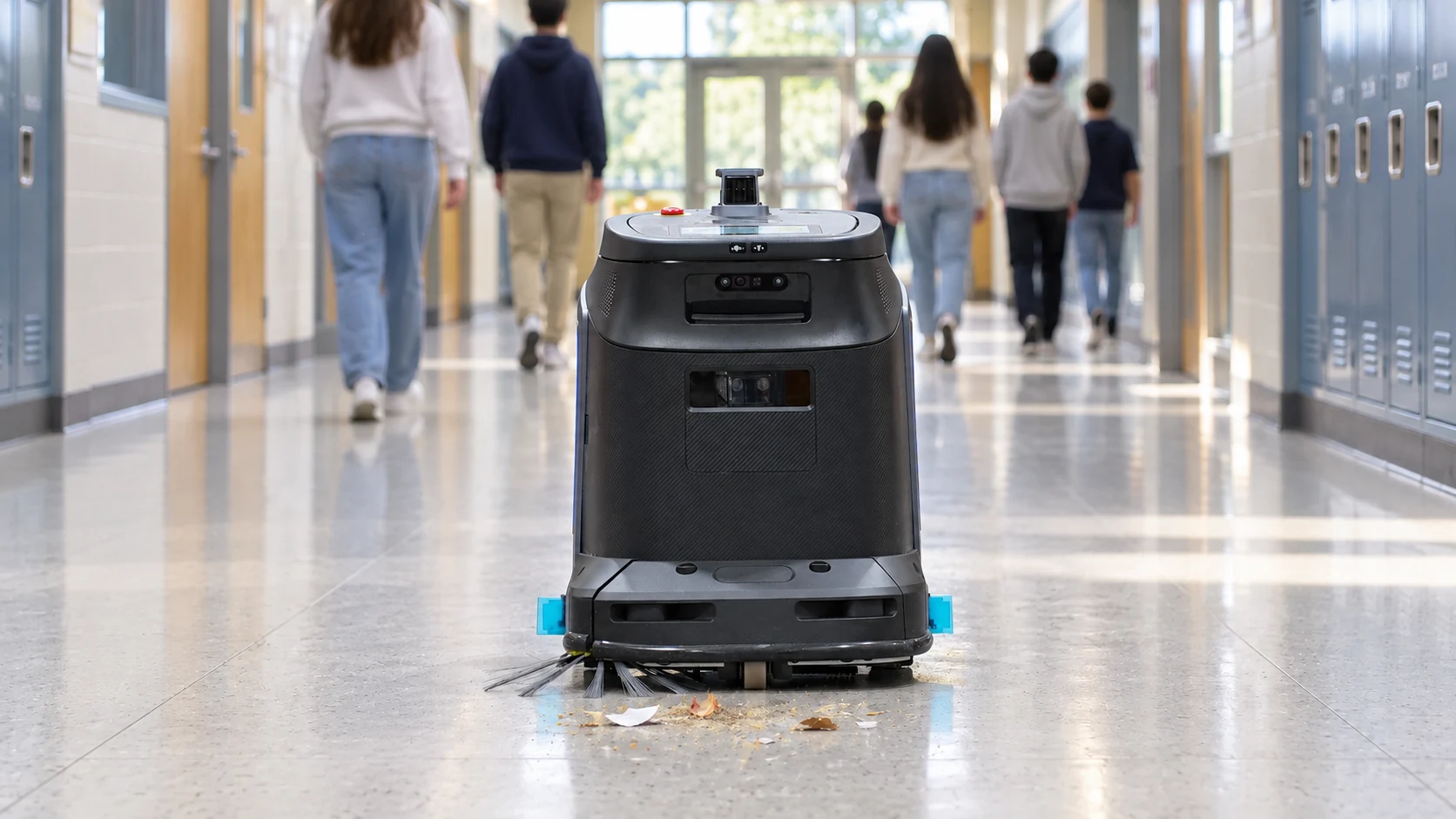
La performance de détection est généralement démontrée dans des environnements d’adultes. Trois conditions dans une école diffèrent de ces démonstrations.
Taille. Une détection calibrée pour un adulte debout doit rester valable pour un enfant d’âge primaire, et pour un enfant assis ou accroupi au sol dans un couloir.
Mouvement. Les adultes suivent des trajectoires prévisibles. Les élèves changent rapidement de direction, se déplacent en groupes et s’arrêtent sans prévenir.
Obstacles bas. Sacs, manteaux, équipements sportifs et fournitures tombées apparaissent au sol des écoles en quantités que d’autres bâtiments ne génèrent pas, et se trouvent à la hauteur la plus susceptible d’échapper à un capteur mal configuré.
Effectuez le test de détection sur le sol propre de l’école, dans les espaces que la machine nettoiera réellement.
Deux comportements déterminent si une machine est viable dans une école, et aucun des deux n’apparaît dans une spécification.
Obstruction. Les élèves bloqueront le trajet à un moment donné, généralement dans la première semaine et généralement en groupe. La réponse attendue consiste à s’arrêter, attendre et replanifier le trajet une fois le passage dégagé. Une machine qui nécessite une réinitialisation manuelle à chaque fois transforme un événement banal en intervention.
Être entourée. Les élèves plus jeunes se rassembleront autour de la machine pour l’observer. Elle devrait maintenir sa position et reprendre proprement une fois l’espace dégagé, plutôt que de reculer vers le groupe derrière elle.
Les deux sont simples à tester. Demandez à un collègue de se placer sur le trajet et d’y rester, puis demandez à trois personnes de se rapprocher autour de la machine. La réaction à ces deux situations est plus instructive qu’une liste de capteurs.
Changements de disposition. C’est la version plus lente du même problème. Des tables sont repoussées pour une réunion parents-professeurs, des chaises sont empilées pour une assemblée, un présentoir apparaît dans le hall.
Planifiez les premières semaines de la même manière. Présentez la machine aux élèves plutôt que de la laisser apparaître sans prévenir, et limitez-la aux trajets de couloir pendant les heures de cours jusqu’à ce que l’intérêt retombe.
La collision est le risque que les écoles évoquent en premier. Le glissement est le risque le plus susceptible de survenir.
Appliquer de l’eau dans un couloir occupé crée une fenêtre de séchage dans un espace où les élèves se déplacent rapidement. Trois mesures y répondent de manière structurelle plutôt que par la procédure.
Ne traiter que ce qui doit l’être. Phantas prend en charge le nettoyage ponctuel automatique, intervenant là où des déchets ou des taches sont détectés plutôt qu’en mouillant l’ensemble du trajet indépendamment de l’état du sol. La zone mouillée reste petite et de courte durée, ce qui rend le fonctionnement en journée réalisable.
Détecter l’eau résiduelle. La configuration Phantas Extra ajoute une détection intelligente de l’eau résiduelle, traitant le cas particulier de l’eau restant après le passage de la machine.
Maintenir le travail à l’eau en dehors des pics de mouvement. Les couloirs ne devraient pas être mouillés pendant la récréation ou les changements de cours, quelle que soit la capacité de la machine. La même règle s’applique à Mira et Marvel, qui balaient et lavent en une seule passe : programmez-les là où le sol a le temps de sécher avant le retour des élèves.
En extérieur, la question ne se pose pas. Beetle est une balayeuse à sec, si bien que les allées et les cours de récréation ne sont jamais laissées mouillées. Sa filtration HEPA capte les poussières fines dans le bac plutôt que de les disperser à travers la cour, et le filtre est nettoyé automatiquement après chaque tâche.
La signalisation reste néanmoins nécessaire. Un travail ciblé signifie qu’un panneau couvre une petite zone brièvement, plutôt qu’un couloir fermé pendant un changement de cours.
La planification est le point où les quatre vérifications tiennent ou échouent, car le schéma de circulation d’une école diffère de celui des autres bâtiments occupés.
Une école n’a pas de courbe de trafic. Elle a une sonnerie. Un couloir est vide pendant cinquante minutes, accueille un niveau complet pendant quatre-vingt-dix secondes, puis se vide à nouveau. Il n’y a pas de gradient à mesurer, ce qui explique pourquoi la méthode de relevé de fréquentation utilisée dans d’autres bâtiments ne se transpose pas. L’espace extérieur suit la même sonnerie sur un cycle plus long : les cours de récréation sont vides pendant les cours et restent pleines pendant toute la récréation et le déjeuner.
|
Créneau |
Adapté au fonctionnement en journée |
Zones intérieures |
Zones extérieures |
|
Avant la première sonnerie |
Oui |
Circulation principale, couverture complète |
Cours de récréation, allées et entrées avant l’arrivée |
|
Heures de cours |
Oui |
Couloirs, halls d’entrée, réfectoire |
Parkings et cours de récréation non utilisés pour l’EPS |
|
Récréation et changement de cours |
Non |
La machine se met en pause |
La machine se met en pause |
|
Service de restauration |
Oui |
Salles de classe, couloirs éloignés de la file d’attente |
Aucune ; les cours de récréation sont occupées |
|
Après la dernière sonnerie |
Oui |
La majeure partie du site, par étapes |
Cours de récréation, allées et parkings après le départ |
|
Périodes d’examens |
Non |
Salles et couloirs environnants exclus |
Zones voisines des salles d’examen exclues |
Pour les bâtiments disposant de véritables courbes de trafic mesurables, la méthode d’identification des créneaux est exposée dans 4 capacités des machines pour le nettoyage de sols dans les bâtiments publics occupés.
|
Machine |
Zones de l’école |
|
Salles de classe, couloirs, bureaux, zones administratives |
|
|
Halls d’entrée, petites salles à manger, salles polyvalentes |
|
|
Cantines, réfectoires, gymnases à sol dur, grands espaces de circulation |
|
|
Parkings souterrains, les plus grands sols durs d’un campus |
|
|
Cours de récréation, allées, parkings extérieurs |
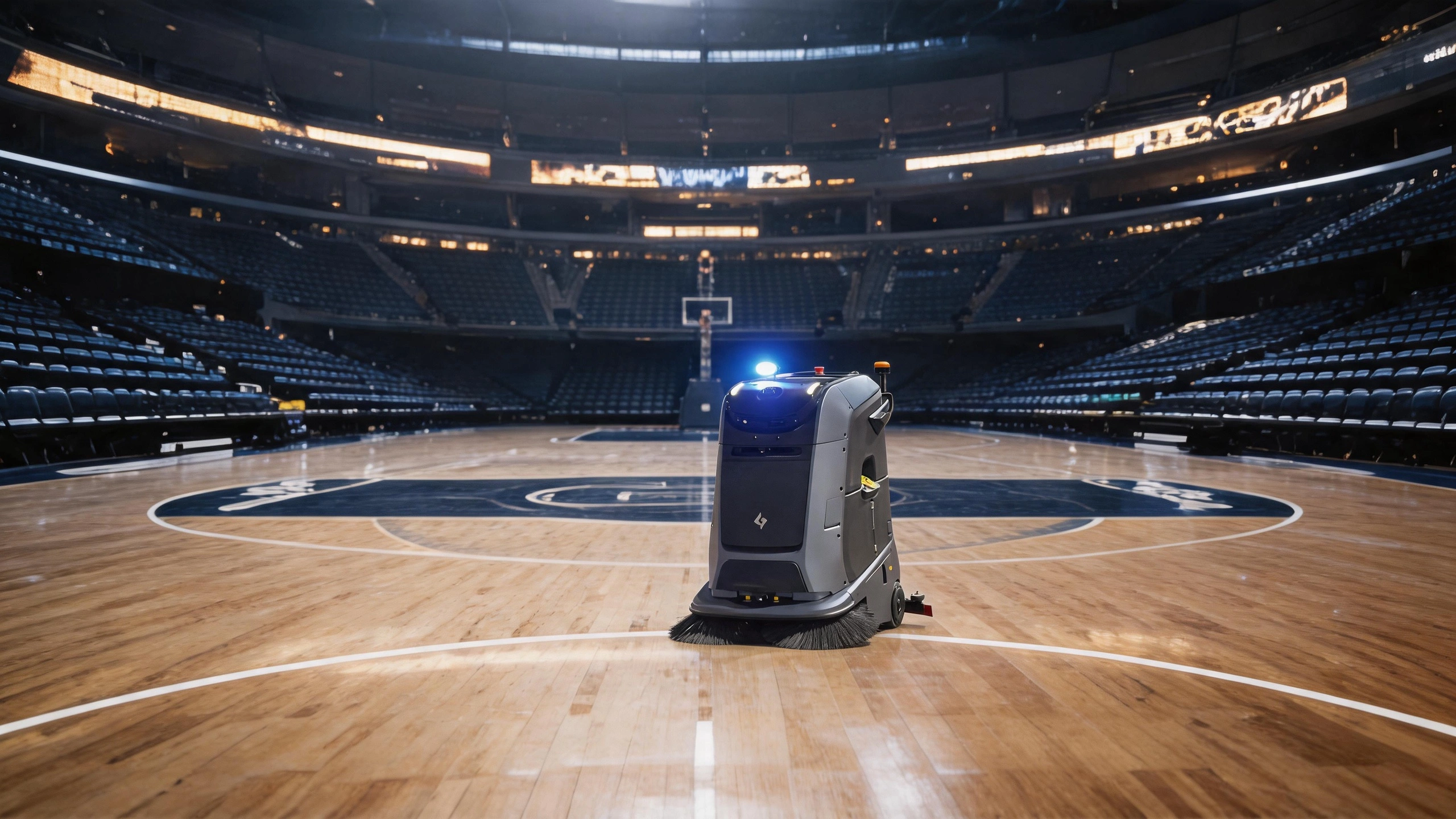
Phantas couvre les salles de classe, les couloirs, les bureaux et les espaces administratifs. La densité de mobilier, plutôt que la surface au sol, est la contrainte déterminante, et ses quatre fonctions de nettoyage traitent les salissures des entrées, l’usure des couloirs et les sols des salles de classe. Ses surfaces applicables incluent le bois dur, ce qui est pertinent pour les gymnases.
Mira couvre les salles de taille moyenne dont l’agencement change souvent. Elle n’a besoin que de 660 mm pour passer, balaie et lave en une seule passe, et débute avec un déploiement Drop & Go, si bien qu’aucune cartographie professionnelle n’est nécessaire. Un système d’autonettoyage embarqué rince le réservoir d’eaux usées et le circuit d’aspiration, ce qui réduit la manutention laissée au gardien.
Omnie couvre les cantines, les réfectoires, les gymnases à sol dur et les grands espaces de circulation, où débris alimentaires, graisse et mouvements multidirectionnels se produisent ensemble et où une seule machine nécessite plusieurs méthodes de nettoyage.
Marvel couvre les plus grands sols durs d’un campus, comme les parkings souterrains. Un réservoir d’eau propre de 80 l, un réservoir d’eaux usées de 70 l et une batterie de 120 Ah offrent 5 à 10 heures d’autonomie continue, et 55 kg de pression de nettoyage soulèvent la saleté incrustée. Elle balaie et lave en une seule passe et partage le système d’autonettoyage de Mira.
Beetle couvre le site extérieur. Elle balaie l’asphalte, le béton, l’époxy et le PVC, et son aspiration traite aussi bien les poussières fines et le sable que le papier, les bouteilles et les copeaux de bois. Son dégagement de 750 mm et son nettoyage des bords à distance zéro lui permettent d’atteindre le long des clôtures et des murs des bâtiments. En mode nettoyage ponctuel, des caméras RGB-D détectent les déchets et la machine s’y dirige, l’équivalent à sec de l’approche ciblée décrite dans la Vérification 4.
À l’Université maritime de Shanghai, Gausium a déployé une flotte de quatre robots, dont deux unités Phantas, dans le bâtiment des sciences de la navigation et les résidences étudiantes. Deux détails de ce déploiement s’appliquent directement à une école. Phantas navigue entre les étages en prenant l’ascenseur de manière autonome, ce qui supprime la nécessité pour le personnel de le déplacer entre les niveaux, et la flotte est programmée pour fonctionner pendant les heures calmes afin que les espaces partagés soient entretenus sans perturber la circulation.
La page des solutions Culture et Éducation de Gausium détaille la couverture sur l’ensemble du campus.
Escaliers, marches et couloirs à niveaux décalés. Hors du champ d’action de toute machine de nettoyage de sols, et courants dans les bâtiments scolaires plus anciens.
Salles de sciences et de technologie. Les déversements chimiques sont gérés par du personnel formé et restent en dehors du trajet automatisé.
Salles occupées en permanence. Certaines salles de classe du primaire sont utilisées de l’arrivée jusqu’au départ. Elles restent sur la tournée en dehors des heures de cours.
Terrains engazonnés et revêtements de jeu souples. Ils sortent du champ des surfaces dures pour lesquelles Beetle est prévue et restent du ressort du personnel d’entretien des espaces extérieurs.
Sites sans adulte disponible. Une machine a besoin de quelqu’un capable de réagir à un événement imprévu. Une école ne disposant que d’un seul gardien couvrant plusieurs bâtiments devrait identifier cette personne avant le déploiement.
Oui, dans les zones que l’emploi du temps laisse vides et en maintenant le travail à l’eau localisé. Les couloirs pendant les heures de cours et les salles de classe pendant le déjeuner sont les deux créneaux fiables, la machine étant à l’arrêt pendant les récréations et les changements de cours.
La norme IEC 63327, la norme pour les machines automatiques de traitement des sols incluant le fonctionnement autonome. TÜV Rheinland a évalué le Phantas S1 Pro M selon la norme EN IEC 63327 et a confirmé qu’il répond aux exigences de sécurité fonctionnelle PL=d. Demandez le certificat couvrant votre configuration proposée.
Grâce à une détection en couches. Omnie combine SLAM multimodal, LiDAR 3D à 360 degrés et caméra panoramique pour une perception sans angle mort, et Marvel associe un LiDAR 3D à une vision à 360 degrés sur de grandes surfaces de sol. Vérifiez la détection sur le sol propre de l’école plutôt que uniquement lors d’une démonstration entre adultes.
Il devrait maintenir sa position et reprendre son trajet une fois l’espace dégagé, plutôt que de reculer vers le groupe. Demandez à voir cela lors de la démonstration sur site, car cela n’est couvert par aucune spécification.
Pas lorsque le travail à l’eau reste ciblé. Le nettoyage ponctuel automatique ne traite que les salissures détectées, maintenant les zones mouillées petites et brèves, et la configuration Phantas Extra ajoute une détection d’eau résiduelle. Les couloirs ne devraient pas être mouillés pendant la récréation. En extérieur, Beetle balaie à sec et n’utilise aucune eau.
Oui, lorsque l’intégration à l’ascenseur est en place. À l’Université maritime de Shanghai, Phantas navigue entre les étages en prenant les ascenseurs de manière autonome.
Oui, sur des surfaces dures. Beetle est une balayeuse autonome pour usage intérieur et extérieur, travaillant sur l’asphalte et le béton grâce à une navigation LiDAR 3D qui reste fiable en faible luminosité. Faites-la fonctionner avant l’arrivée, pendant les cours lorsque la cour est vide, ou après le départ.
Step 1/2
Please select the type of business you’d like to have with Gausium.
Choose one item from the list
Step 2/2
Thanks for sharing your preference. Please fill out the form below, and we’ll get in touch shortly.
By clicking “Submit”, I authorize Gausium to contact me. Privacy Policy.
Thank you for filling out the form
By clicking “Submit”, I authorize Gausium to contact me. Privacy Policy.