




UP NEXT
What Is the Best Robotic Vacuum for Commercial Carpets? A Buyer’s Guide6月 26, 2025

7月 15, 2025
An industrial cleaning robot can produce a complete-looking map and still leave part of its assignment unfinished. A pallet blocks an aisle, a loading area stays occupied or a route becomes inaccessible between shifts. Navigation needs to be evaluated against those everyday conditions, not just a successful run on an empty floor.
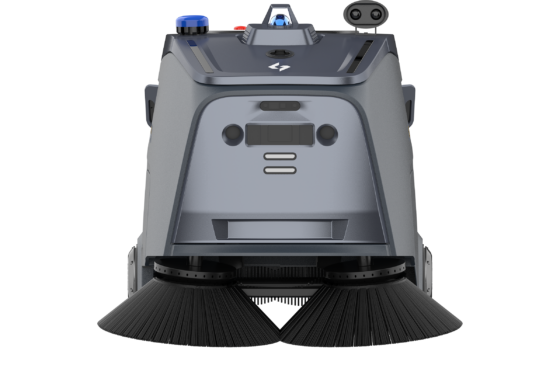
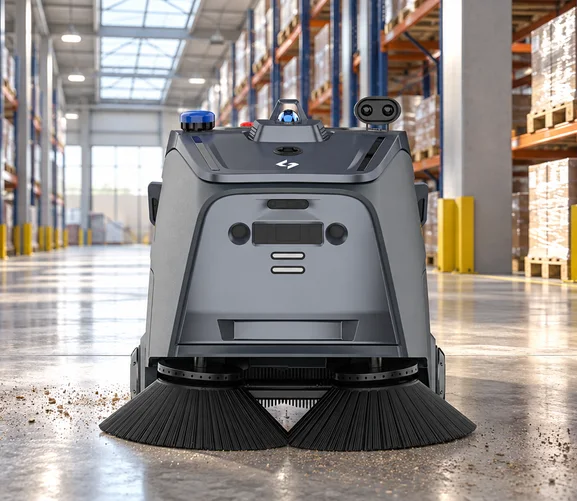
At the heart of these machines lies one capability: smart mapping. In this article, we look at the navigation technologies that allow autonomous cleaning machines to operate at industrial scale, and at how a facility can test them on site before committing to a deployment. In Gausium's range, the relevant model is Beetle, an autonomous sweeping robot with high-power suction and HEPA filtration for dry debris and dust.
Industrial facilities pose specific navigational challenges:
To handle these conditions, industrial cleaning robots must go beyond basic route-following. They need to perceive their environment, localize themselves and make decisions in real time, while maintaining consistent cleaning performance.
Navigation in cleaning robots has changed dramatically. Early consumer-grade models relied on random movement and physical contact. That approach does not work in an industrial setting. Modern industrial cleaning robots combine several technologies:
Together, these inputs let a robot locate itself, plan its route and respond to obstacles as conditions change. Sensor configurations differ between models, so the on-site test described below is the best way to see how a system performs on a facility's own routes.
At industrial scale, smart mapping needs to:
Layout changes are a daily reality in many warehouses, and the robot's response to them is one of the key points to evaluate in facilities with frequent layout changes.
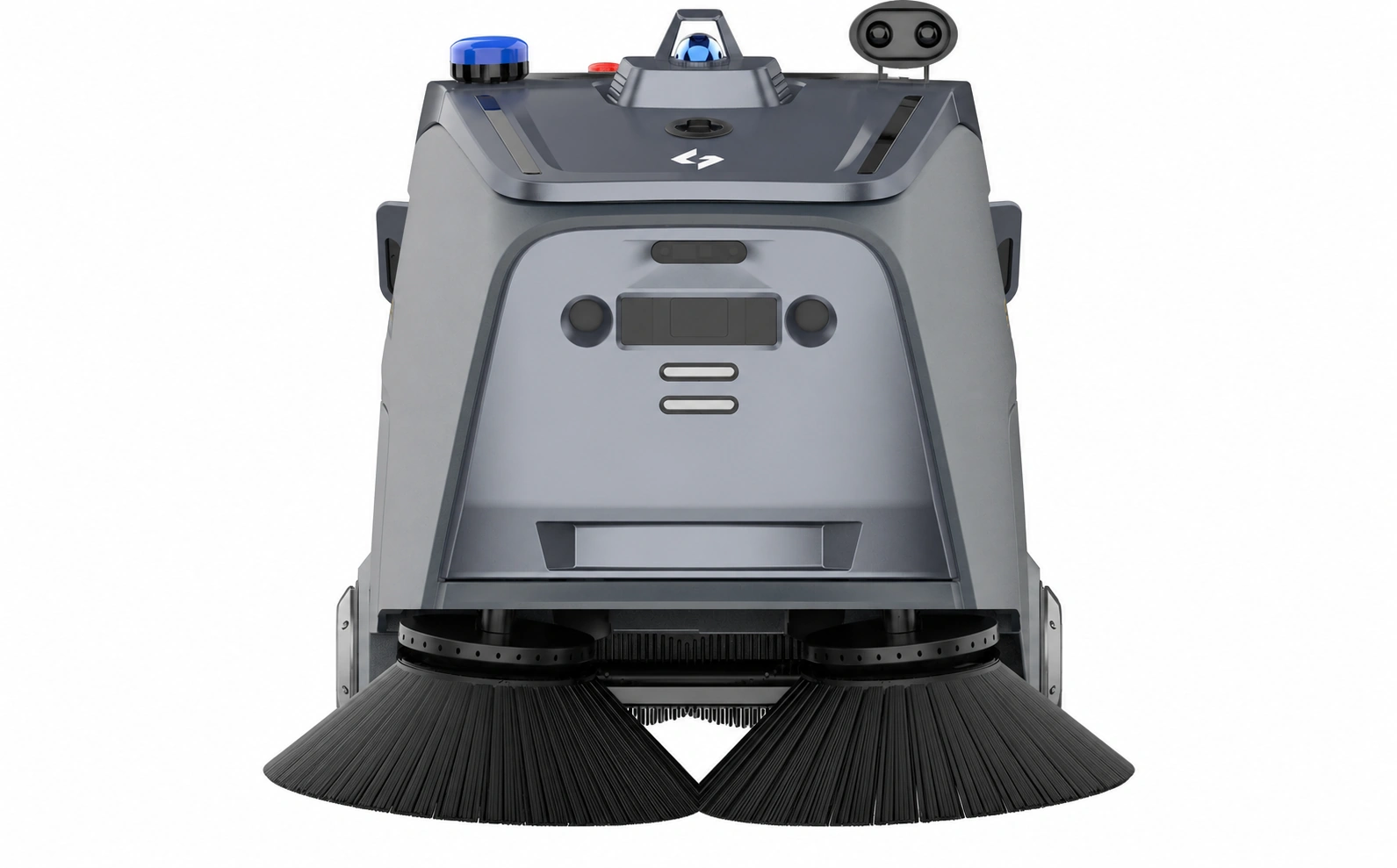
Beetle, Gausium's autonomous industrial sweeping robot, shows how smart mapping works at scale. It uses 3D LiDAR, an RGB camera and an RGB-D camera, and its 3D LiDAR mapping and localization are designed for reliable operation in low-light conditions, high-dynamic areas and open spaces.
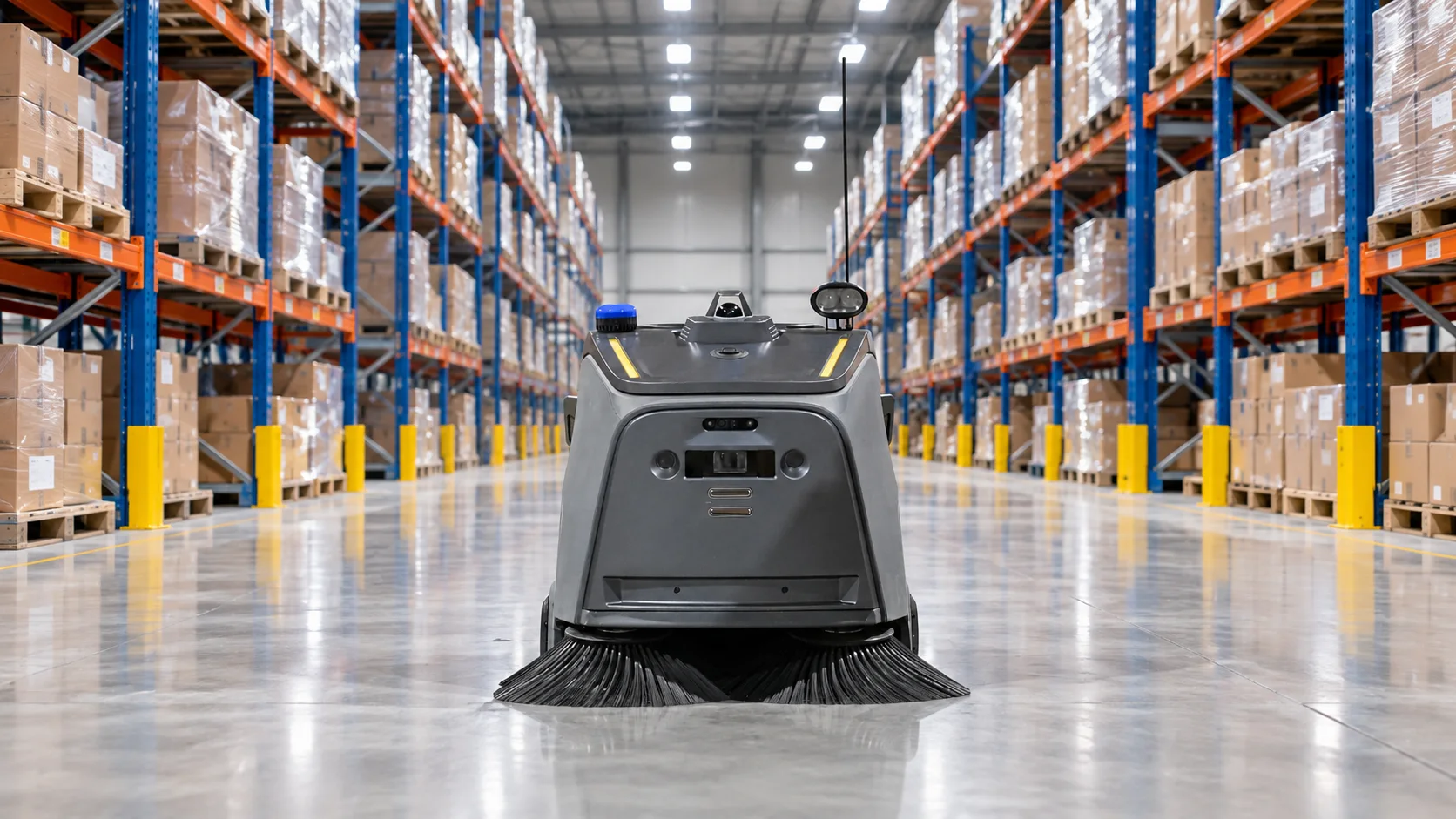
Beetle is designed for dry-debris sweeping, not wet scrubbing or liquid pickup. At MAKELIS, a Greek manufacturer of food processing equipment, it runs twice every 24 hours after production ends, following a mapped cleaning program that covers the full available area of the production hall. Read the MAKELIS case study. For larger storage sites, see the autonomous sweeper options for large warehouses.
A complete map on a screen does not prove that the robot will clean the assigned floor every day. A site test should reflect the conditions of normal operation and follow the facility's safety procedures.
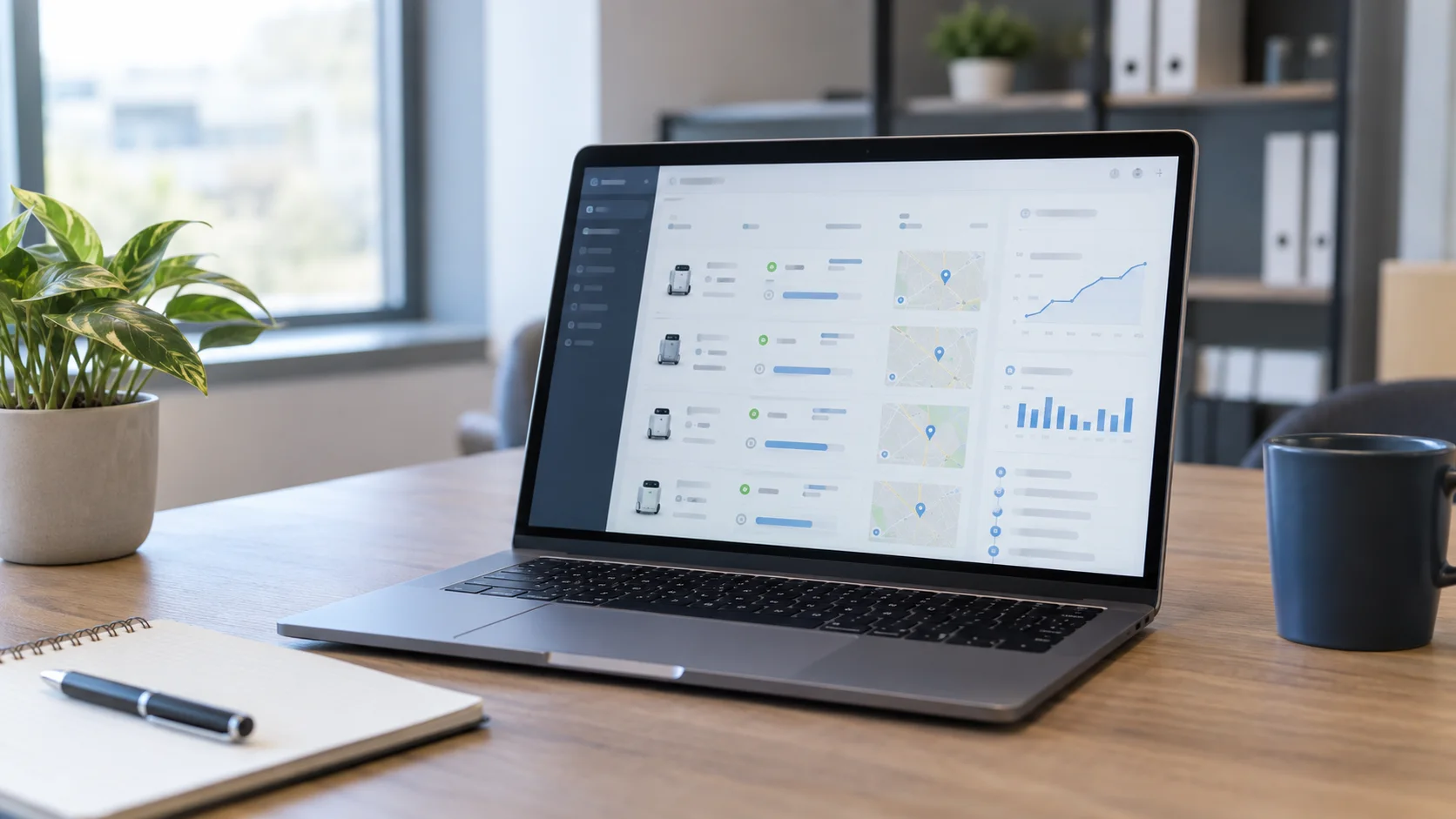
Record how long it takes to create the map and set up cleaning tasks. Check that the map covers every area in the cleaning assignment, that zones are divided in a way the team understands and that restricted areas are clearly marked. Note whether the route needed repeated adjustment before it ran as intended.
Run the test during normal working conditions rather than on an empty floor. Pallets, parked equipment and routine staff movement show how the robot handles the site as it really is. The more useful question is what happens to the floor behind an obstacle. Check whether the robot cleans the area once it is clear, skips it or needs an operator to add it to another task.
Interruptions are part of industrial operations. Record how the robot handles a low battery and whether the task continues after charging, which depends on the configuration and site setup. For other interruptions, such as a blocked route or a paused task, record how the robot reports each event and how long it takes the operator to restore the task.
One successful run shows that a route is possible. Repeated runs show whether it is dependable. Test across several shifts, including busy and quiet periods, and compare the results before drawing conclusions.
A short set of measures links navigation performance to the cleaning work:
The same measures can feed into a broader cleaning robot performance test when several models are compared.
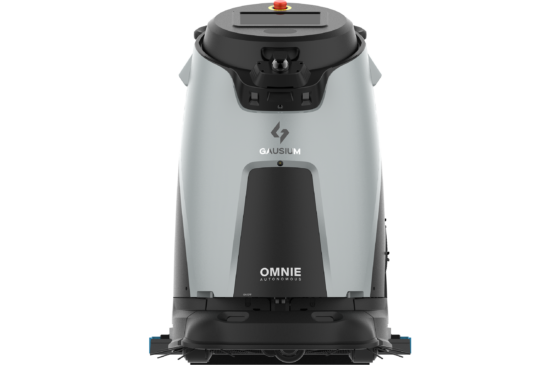
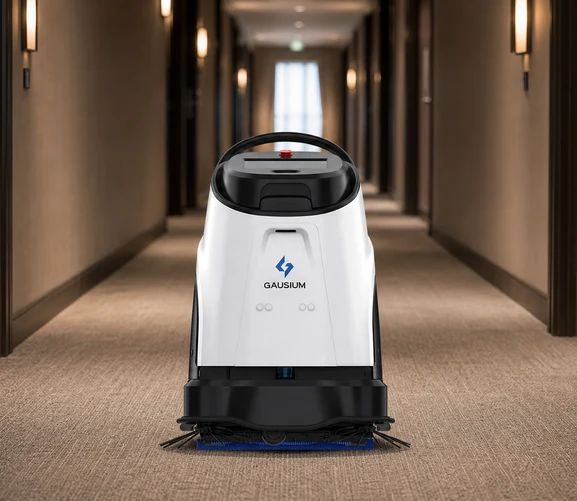
Searches for an "industrial robot vacuum" can lead to different equipment categories. Beetle is an autonomous sweeping robot with suction: it collects dry debris and dust but does not wet-scrub. For compatible hard floors with adhered dirt, a scrubbing model such as Marvel or Omnie is the better fit. Carpeted offices within an industrial site need a separate vacuuming assessment, and Vacuum 40 is one option for that task.
A useful navigation system lets the team sustain a defined cleaning assignment. Compare completed routes, missed areas and assistance time across normal shifts, then agree who maintains the map when the layout changes. To assess navigation on a specific site, contact Gausium for a site assessment.
An industrial robot vacuum or sweeper collects dry debris and dust with brushes and suction. A scrubber applies cleaning solution, scrubs the floor and recovers dirty water. Gausium Beetle is an autonomous sweeping robot with suction; Marvel and Omnie scrub.
It uses its sensors to detect obstacles and adjust its route. Beetle uses 3D LiDAR and cameras and is designed for high-dynamic areas. A site test under normal traffic should check whether areas blocked during the run are cleaned afterward.
Not for every change. Beetle's Drop & Go function adapts to changing layouts without manual remapping. After major permanent alterations, such as new racking, the map and task settings should be reviewed.
Yes, depending on the model. Beetle's 3D LiDAR mapping and localization are designed for reliable operation in low-light conditions.
Step 1/2
Please select the type of business you’d like to have with Gausium.
Choose one item from the list
Step 2/2
Thanks for sharing your preference. Please fill out the form below, and we’ll get in touch shortly.
By clicking “Submit”, I authorize Gausium to contact me. Privacy Policy.
Thank you for filling out the form
By clicking “Submit”, I authorize Gausium to contact me. Privacy Policy.