

NÄCHSTES MAL
The Anatomy of Autonomy: Inside Gausium’s Vision for the Future of Commercial Cleaning RobotsFebruary 25, 2026
April 27, 2026
Walk any cleaning industry trade show floor and you’ll hear a familiar pitch from nearly every vendor: “sweeps and scrubs in one pass.” It sounds like a settled feature. It isn’t. Behind that marketing line sits a single dominant architecture and a single quiet compromise — one most buyers never get a clear explanation of.
Gausium’s newest commercial cleaning robots, Mira and Marvel, were designed to refuse that compromise. They take two different engineering paths to the same destination: genuine debris containment and dedicated disc-brush scrubbing in a single pass. The result is a pair of autonomous floor scrubbers that don’t look quite like anything else on the market.
Strip away the brochure language and the conventional autonomous floor scrubber market really has one answer to the sweep-and-scrub question. Most autonomous cleaning robots — and most ride-on machines — use side brushes feeding a cylindrical roller brush system, where the roller does both jobs at once.
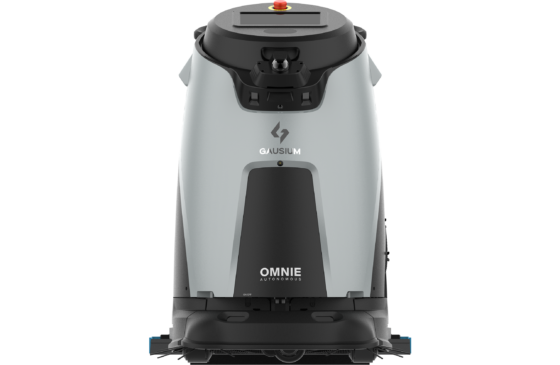
In the dominant industry architecture, the roller is asked to do two contradictory things at once — fling debris up and back (which favors soft bristles and higher rotation), and apply downward pressure for clean wet scrubbing (which favors stiffer bristles and more aggressive downward pressure). The side brushes extend the effective sweep width beyond the chassis, funneling debris inward toward the roller. It’s genuine simultaneous sweep + scrub in one mechanism, and it’s been on conventional ride-on scrubbers for years — Tennant’s cylindrical decks, Kärcher’s BR cylindrical option, and Gausium’s own Scrubber 50 / Omnie (roller version) and Scrubber 75 (roller version) and all work this way.
The tradeoff is real, though, Gausium’s CTO has been candid about it: disc brushes were chosen over roller brushes for their superior scrubbing contact area and performance on hard floor surfaces. A roller scrubs adequately, but a disc scrubs better. The roller brush vs disc brush decision has historically meant choosing between good debris handling and premium scrub quality — because the same roller was doing both jobs, both jobs get a compromised tool.
There’s a more fundamental problem hiding beneath the bristle question, though — what we’d call the wet-sweep trap. When one roller sweeps and scrubs simultaneously, water reaches the floor at the exact moment the roller is trying to capture dry debris. Dust, paper fragments, and crumbs get wet on contact, turning into sludge before they ever reach the debris tray. Wet debris is heavier, harder to fling, and tends to stick to the bristles or smear across the floor instead of being captured cleanly. The roller itself never stays clean — it’s scrubbing the floor with the dirt it just picked up.
The cleaning result is degraded at every layer of the process, and operators inherit a slimy debris tray that has to be cleaned and dried instead of just emptied.
So the historical menu has been: one roller doing two jobs, neither of which is optimal, with water and dry debris colliding at the same moment. These are the compromises Mira and Marvel reject, using two different mechanical strategies to do so.
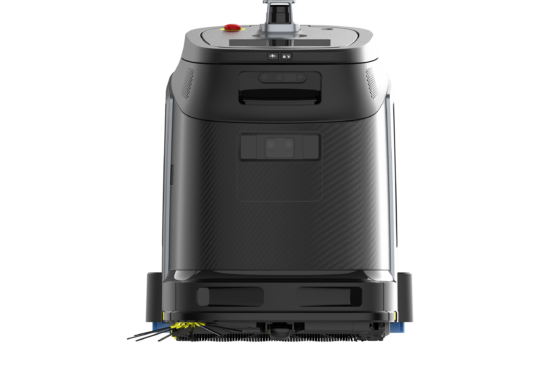
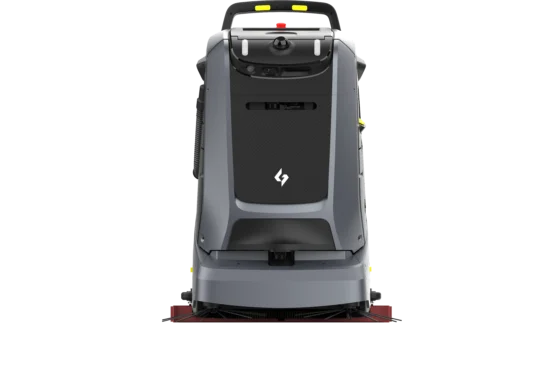
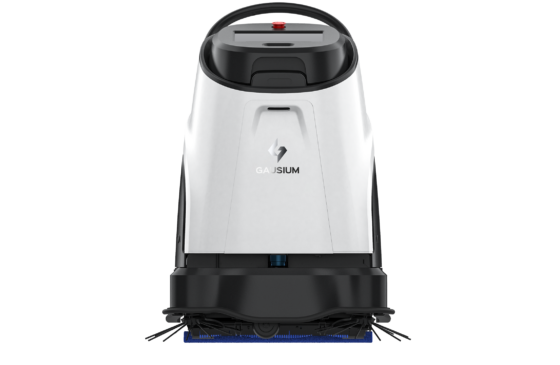
Gausium Mira, built for mid-sized commercial spaces like supermarkets and retail stores, takes what you might call the obvious-but-difficult solution: it splits the work in half. Side brushes feed a roller that focuses purely on sweeping, and a separate disc-brush deck handles scrubbing.
This sounds like a small change. It isn’t. In the dominant industry architecture, the roller is asked to do two contradictory things at once — fling debris up and back (which favors aggressive bristle action), and apply downward pressure for clean wet scrubbing (which favors a different bristle and pressure profile). When one component does both jobs, both jobs get a compromised tool.
Mira’s roller is engineered solely for sweeping, feeding dust, dirt and debris into a built-in debris tray. The dedicated disc-brush deck follows behind on the same pass, scrubbing with full contact-area performance — the scrub quality Gausium’s own engineering team prefers. You get sweeper-grade debris handling and disc-grade scrub quality in a single sweep, on a robot small enough for retail aisles.
Mira also carries an integrated self-cleaning system that automatically rinses the dirty water tank — a direct response to one of the most common complaints about autonomous machines: that the human time saved on cleaning is partially given back to time spent maintaining the robot.
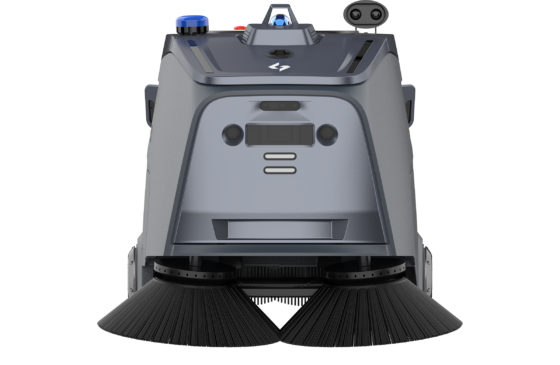
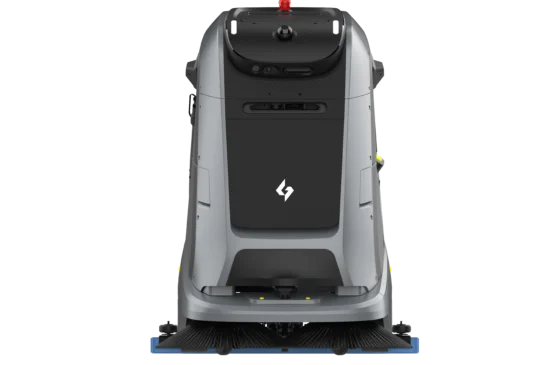
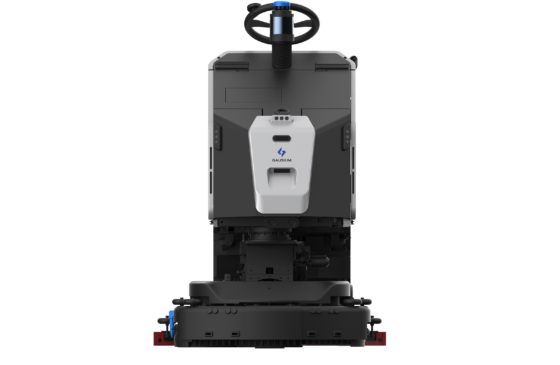
Gausium Marvel scales the architecture up for warehouses, manufacturing plants, warehouse clubs, and underground garages — but it solves the same problem with a different mechanism. Instead of a roller-brush sweeper, Marvel uses a proprietary dual side brush system that achieves better large debris-handling performance.
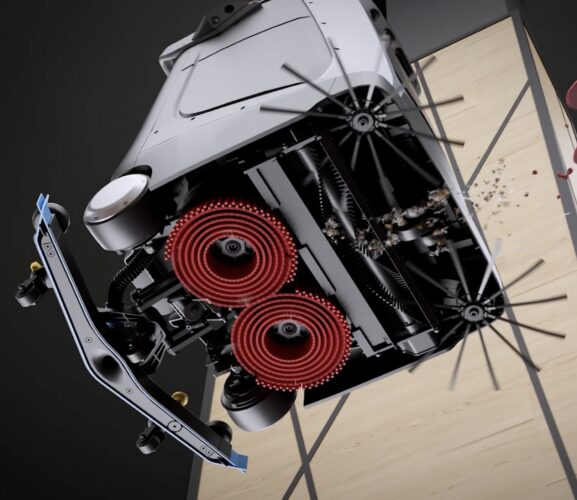
Per Gausium’s product page, Marvel’s front-mounted dual side brushes sweep up fine dust and large debris in a single pass, collecting it all into the built-in debris tray — preparing the surface for a thorough scrub. The rear disc brushes follow immediately behind with powerful scrubbing action, removing stains and grime for a spotless finish.
In the conventional architecture, side brushes are an accessory to a roller — they extend the sweep width but rely on the roller to actually pick debris up. Marvel’s patented dual side brush configuration is engineered to function as a complete sweeping system in its own right: the brushes themselves capture debris into the tray, with no roller involved. That’s the meaningful distinction, and the reason the design is patentable in the first place. It also frees the rear of the chassis for a dedicated disc-brush deck, with all the scrub-quality benefits Mira gets, scaled to a larger footprint.
The operational benefit Gausium quotes: by combining two cleaning steps into one pass, Marvel cuts cleaning time in half compared to machines that sweep and scrub separately — covering more ground with less time and energy. Pair that with an 80L clean water tank, a 70L waste water tank, a 120 Ah battery for 5–10 hours of runtime, and 55 kg of cleaning pressure, and Marvel becomes a credible answer for facilities that previously needed two machines (or two cleaning passes) to get the floor properly clean.
The thing worth noticing is that Mira and Marvel arrive at the same outcome — debris containment plus disc-grade scrubbing in one pass — through two different engineering choices.
| Gausium Mira | Gausium Marvel | |
|---|---|---|
| Target environment | Mid-sized commercial (supermarkets, retail) | Large-space (warehouses, manufacturing, garages) |
| Sweeping mechanism | Roller brush | Proprietary dual side brushes |
| Debris handling | Built-in debris tray | Built-in debris tray |
| Scrubbing mechanism | Disc brushes | Disc brushes |
| Self-cleaning system | Yes | Yes |
Why two different sweeping mechanisms instead of just scaling Mira’s roller-brush approach up? Because the engineering constraints change with size. A roller-brush sweeper that performs well in a 36-inch retail aisle isn’t the ideal component for a warehouse environment with broader debris profiles, larger fragments, and more aggressive ground pressure requirements. The patented dual side brush design is engineered to handle that wider debris profile while keeping the larger Marvel chassis maneuverable in industrial settings.
That’s what makes the two-product story interesting. It’s not just one good idea sized up and sized down. It’s the same philosophy — refuse the sweep-vs-scrub compromise — implemented twice, with different mechanisms suited to different facility realities.
The deeper benefit of separating the two jobs is something facility managers feel every day: dry debris gets captured while it’s still dry. On both Mira and Marvel, sweeping happens first — debris carried into the tray before any water touches the floor. Only then does the dedicated disc deck behind apply water and scrub a surface that’s already been cleared of solid material.
This single architectural change cascades into operational benefits that single-stage roller machines simply cannot match:
Two-stage cleaning, in other words, isn’t just a different way to arrange brushes. It’s a different — and meaningfully better — cleaning result.
It’s worth being honest about why most competitors haven’t shipped robots that separate the two jobs. Doing it on a 60-inch ride-on is one thing. Doing it on a robot that has to fit through a 36-inch retail aisle, or that has to balance debris hopper volume against water tank capacity in a mid-sized warehouse robot, is a packaging problem.
You’re integrating, on the same chassis:
Every one of those subsystems competes for volume and weight budget. The reason most of the autonomous cleaning robot market defaulted to “one roller does both jobs” isn’t that nobody wanted a third option — it’s that fitting two complete, dedicated cleaning systems into a non-industrial footprint is genuinely difficult engineering.
If you’re evaluating commercial cleaning robots, the practical takeaway is simple: ask vendors which architecture they’re actually shipping. The phrase “sweep and scrub in one pass” doesn’t tell you the whole story.
The right answer depends on your floor type, debris profile, and facility size. A polished retail floor with mostly fine dust may not need the full sweeper-plus-scrubber stack. A warehouse with pallet chips, packaging debris, and ground-in grime almost certainly does. A supermarket with both spills and shopping-cart debris sits squarely in the territory Mira was designed for. A large-format store, distribution center, or manufacturing floor is exactly what Marvel was built for.
The brush configuration on Gausium’s Mira and Marvel is a small thing, viewed in isolation. Viewed against the rest of the market, it’s a meaningful signal of where Gausium is taking its robotic floor cleaning platform: refusing the standard tradeoffs, separating subsystems competitors have asked one component to handle, and quietly raising the bar on what “one-pass cleaning” actually means.
The next decade of commercial cleaning won’t be won on whether a robot can sweep and scrub. It’ll be won on how well— and on how many of the historical compromises the next generation of machines refuses to inherit.

NÄCHSTES MAL
The Anatomy of Autonomy: Inside Gausium’s Vision for the Future of Commercial Cleaning RobotsFebruary 25, 2026

Schritt 1/2
Bitte wählen Sie die Art des Geschäfts, das Sie mit Gausium führen möchten.
Wählen Sie einen Punkt aus der Liste
Schritt 2/2
Vielen Dank für die Mitteilung Ihrer Wünsche. Bitte füllen Sie das untenstehende Formular aus, und wir werden uns in Kürze mit Ihnen in Verbindung setzen.
Indem ich auf "Absenden" klicke, ermächtige ich Gausium , mit mir Kontakt aufzunehmen. Datenschutzrichtlinie.
Danke, dass Sie das Formular ausgefüllt haben
Indem ich auf "Absenden" klicke, ermächtige ich Gausium , mit mir Kontakt aufzunehmen. Datenschutzrichtlinie.