




UP NEXT
Autonomous vs. Ride-On Floor Scrubbers: How to Choose the Right Commercial Floor Scrubber10월 12, 2026

10월 12, 2026
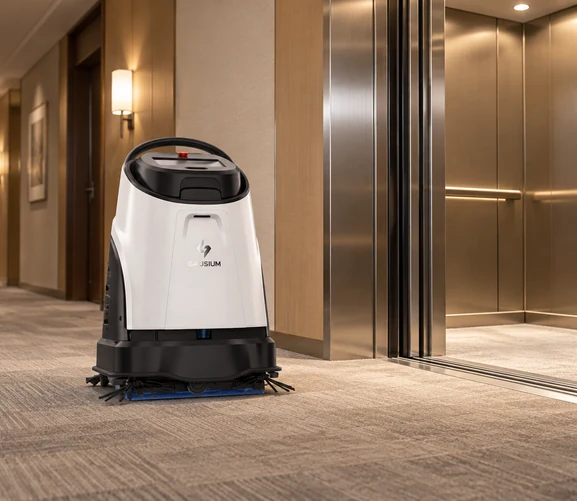
A cleaning robot that stays on one floor is only doing part of the job. Most commercial buildings stack their floor area vertically: malls over several levels, hotels with guest corridors on every floor, campus buildings, hospitals and office towers. If staff have to wheel the robot into a lift and restart it on each level, much of the value of automation disappears.
Cleaning robot elevator integration closes that gap. Once a robot can call an elevator, ride it and pick up its task on the next floor, it becomes a multi-floor cleaning robot that covers the whole building on its own. When it can also pass through automatic doors and turnstiles, the last manual handoffs on the route go away.
Gausium ranks No.1 worldwide among commercial cleaning robot suppliers by both shipments and revenue in IDC’s Worldwide Annual Commercial Cleaning Robotics Tracker, 2025, with more than 40,000 units deployed across over 70 countries. Multi-floor operation is already part of how many of those robots work.
The clearest proof of elevator integration is a building where it runs every day.
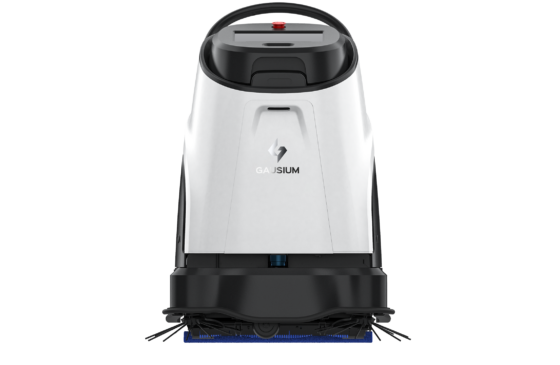
A five-floor office complex in Germany. At the Bauknecht-Quartier in Bottrop, a Gausium Phantas has used the building’s Schindler elevators on its own since April 2026. According to Schindler Germany, the robot connects directly to the elevator control through a digital interface. It calls the car, changes floors and cleans around 1,200 m² (12,900 ft²) of common areas across five floors, including stairwells and elevator cars.
Communication between the robot, the Olivaw platform and the elevators runs through Schindler’s Robot Building Logistics interface. When needed, the robot rides back down to its combined charging and fresh-water station on the ground floor.
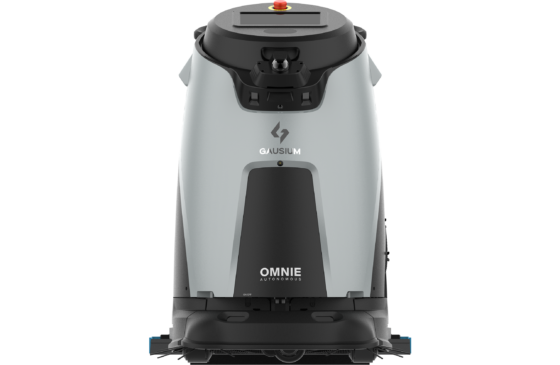
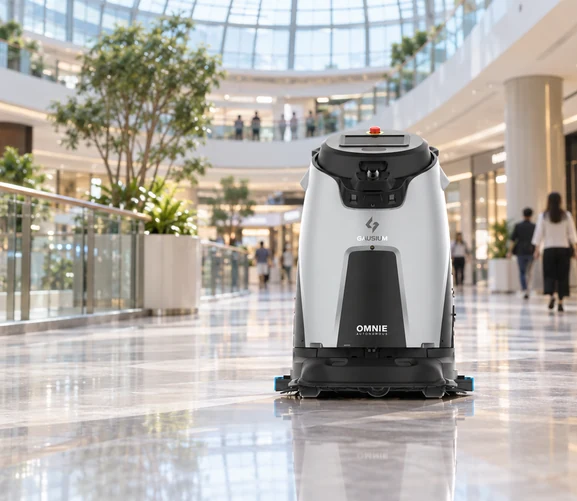
A three-level shopping center in Austria. At FMZ Imst, a retail and entertainment center spread across three floors, Gausium’s Austrian distributor deployed Omnie in November 2023. The robot was connected to an elevator system that had been in service for 15 years. It now cleans nearly 4,000 m² (43,000 ft²) across all three floors overnight, then returns to its starting point, ready for the next cycle. For a retail center, that means every level is cleaned after closing and ready for shoppers the next morning, which matters most in the busiest weeks of the year.
Five floors of hotel corridors. At a Hanting hotel in Suzhou, Vacuum 40 is integrated with the hotel’s smart elevator system through API. It rides the elevator on its own and cleans the corridors of all five floors in about 1.5 hours. A charging dock on the ground floor lets it recharge between tasks, and managers review the cleaning reports on their phones.
A university campus. At Shanghai Maritime University, two Omnie robots and two Phantas robots split the campus between them. Omnie covers the Navigation Science Building and completes up to three full cleaning cycles a day. Phantas looks after the student dormitories during quiet hours. Both models ride elevators on their own, and neither needs staff to supervise charging or move it between floors.
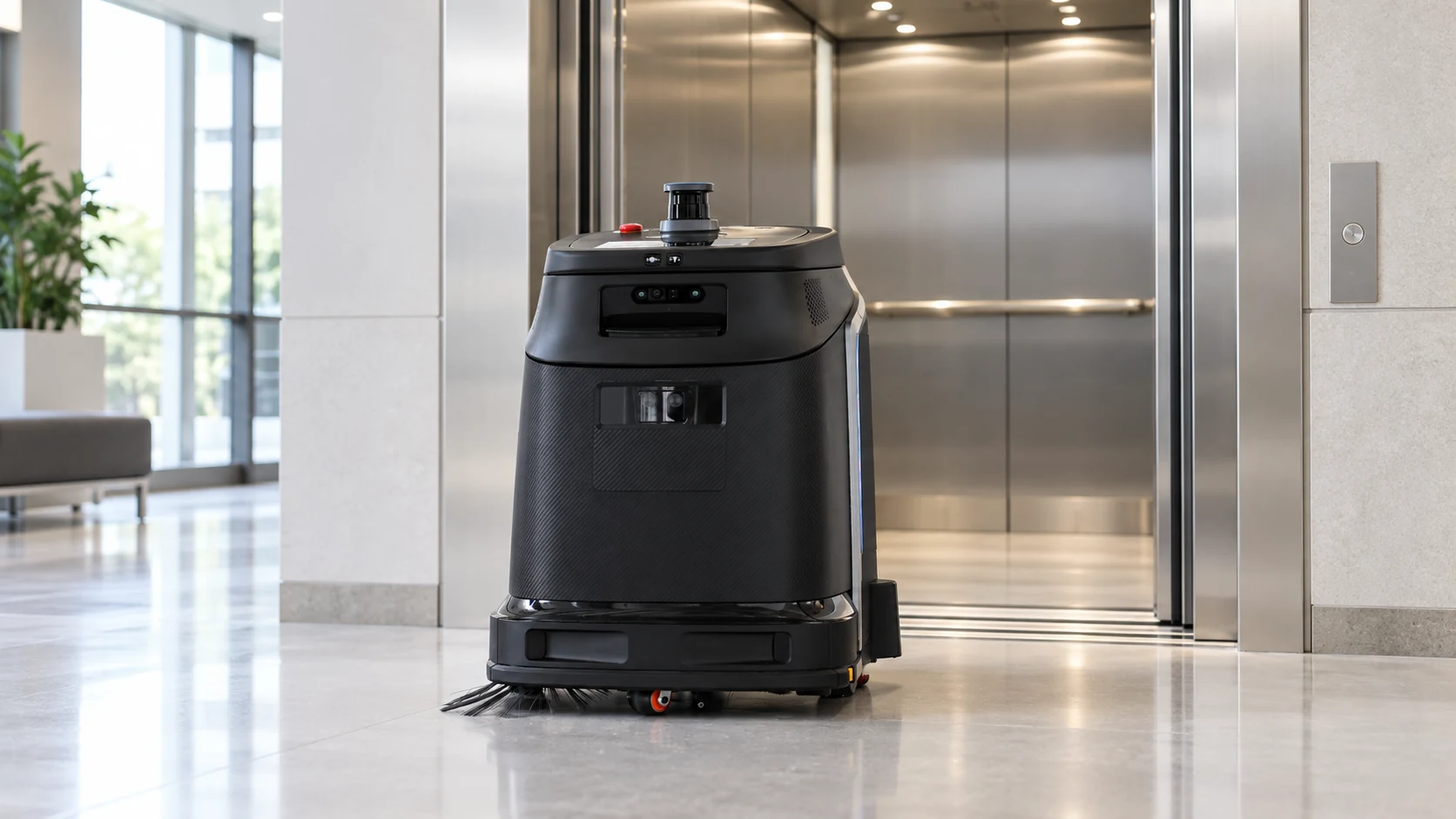
The most direct change is simple: no one has to move robots between floors anymore. That changes how a multi-floor building can be cleaned.
Elevator integration does not mean one robot can clean any building by itself. Capacity still depends on floor area, cleaning windows, elevator waiting time and resupply, so the fleet needs to be sized to the building. What integration removes is the manual work between floors.
In many buildings, yes, including older ones. The FMZ Imst deployment was built around an elevator that had been running for 15 years, which shows that an older system does not automatically rule out integration.
Gausium robots connect to smart elevator systems in one of two ways.
IoT hardware integration. Control hardware links the elevator’s control system with the robot, so the robot can call the car and select its floor.
Open API integration. The robot platform exchanges call and floor requests with a smart elevator system through a software interface, working with the elevator’s system integrator. The Hanting deployment works this way.
The right approach is decided building by building, after reviewing the elevator’s control system, the robot model and the operating requirements. Compatibility is confirmed for each project rather than assumed.
Elevators are not the only barrier on a multi-floor route. Controlled doors divide many buildings into zones, and a robot that has to wait for someone to open each one is not truly autonomous.
Gausium’s AutoPass solution connects its robots with the access points that divide a building. It gives robots control over wing and swing-type turnstiles, roller shutters and sliding doors, so they can pass through shared access points safely and without help.
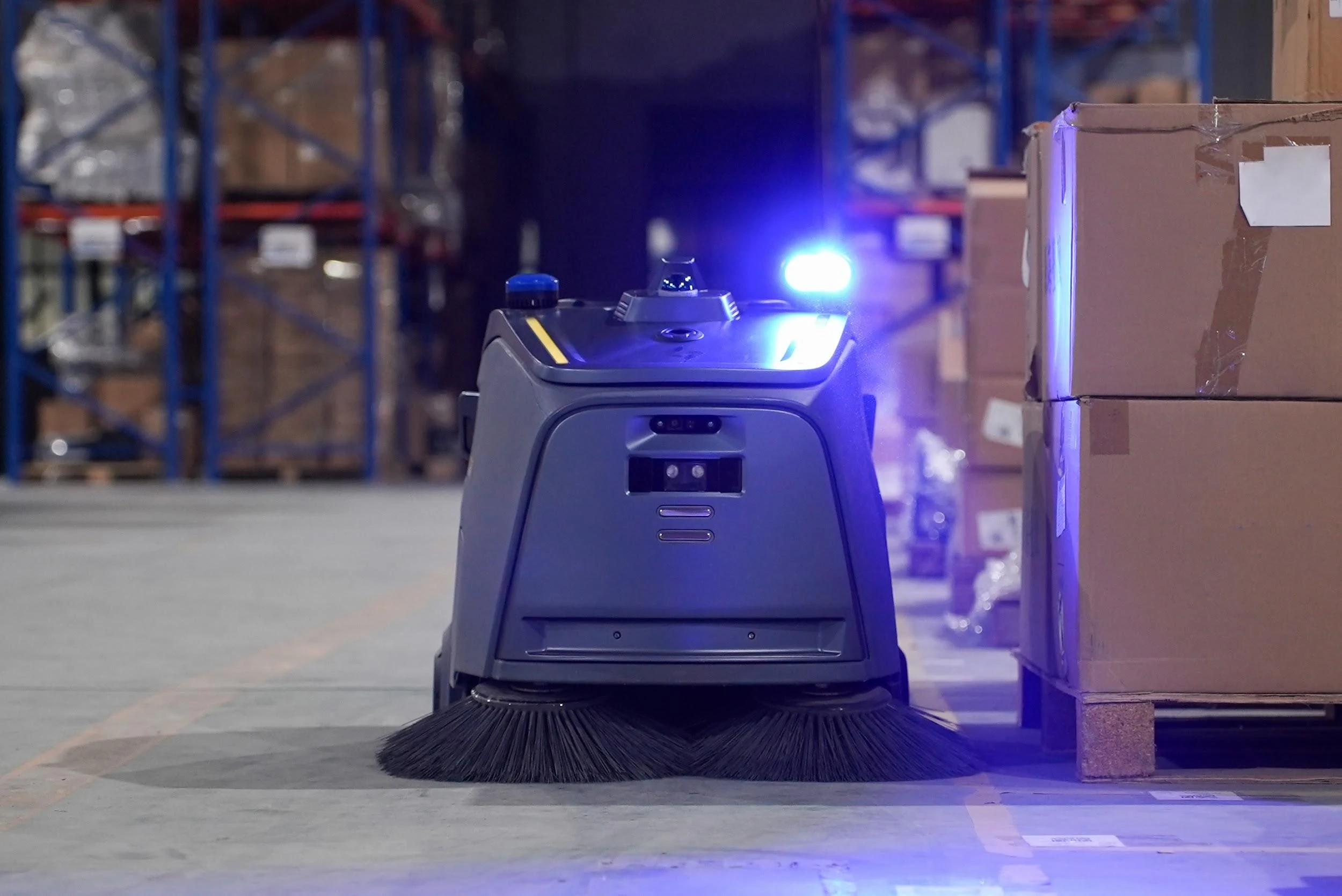
Gausium robots can be configured to use AutoPass. In warehouses, for example, Beetle uses AutoPass to open sliding doors and move between zones on its own, keeping long cleaning runs going without anyone holding a door.
For cleaning, the value of door and turnstile integration is not faster scrubbing. It is a route with no waiting, no badge swipes and no restarts. A door crossed once a day may not justify integration. A route that passes through several controlled openings on every run almost always does.
Elevator and door integration let today’s robots move through a building the way its staff do. Gausium’s roadmap goes further.
In a recent webinar, Gausium CTO Dr. Baoxing Qin outlined plans for robotic arm integration, with robots eventually cleaning vertical surfaces, glass walls and even restrooms. That would take autonomous cleaning from two-dimensional floor care into full three-dimensional space cleaning.
As robots take on more of the building, the ability to reach every floor and every zone matters more, not less. Elevator and access-point integration is the foundation that whole-building cleaning is built on.
A cleaning robot delivers its full value only when it can reach the whole building. Gausium robots already ride elevators in office buildings, shopping centers, hotels and university campuses, including buildings whose elevators were installed long before robots arrived. With AutoPass, they also pass through the doors, turnstiles and roller shutters that divide a site into zones.
If your cleaning routes cross floors or controlled access points, plan the integration at the start of the project, not after the robots arrive. Talk to a Gausium specialist to review your building’s elevators and access points and design a multi-floor cleaning setup.
Step 1/2
Please select the type of business you’d like to have with Gausium.
Choose one item from the list
Step 2/2
Thanks for sharing your preference. Please fill out the form below, and we’ll get in touch shortly.
By clicking “Submit”, I authorize Gausium to contact me. Privacy Policy.
Thank you for filling out the form
By clicking “Submit”, I authorize Gausium to contact me. Privacy Policy.