




UP NEXT
導入しやすい業務用清掃ロボットはどれか、導入時に確認すべきポイント10月 08, 2026

10月 12, 2026
Floor cleaning is getting harder to staff. The U.S. Bureau of Labor Statistics projects about 351,300 openings for janitors and building cleaners every year through 2034. Most are not new roles. They are left behind by workers moving to other jobs or leaving the workforce.
Autonomous floor scrubbers are how a growing number of facilities close that gap. IDC puts the global commercial cleaning robot market at US$760 million, up 48.5% year over year.
Early autonomous scrubbers were judged on one thing: did they finish the route? That bar is too low for today’s busiest sites. The robotic floor scrubbers that matter now read the floor, decide how to clean it, and keep themselves supplied.
So what exactly is an autonomous floor scrubber, and what separates a robot that follows a route from one that runs the whole cleaning process?
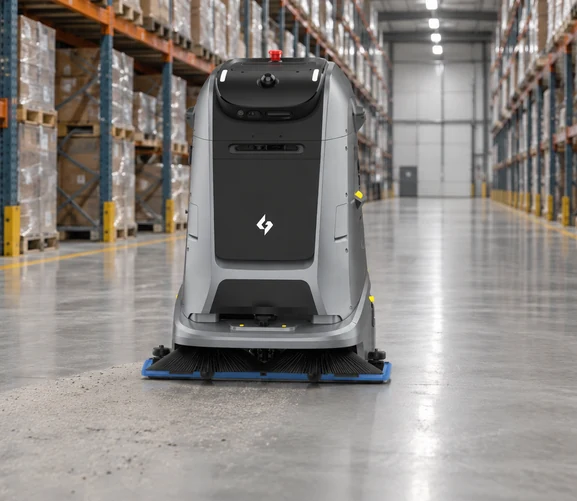
An autonomous floor scrubber is a commercial floor cleaning robot that navigates a facility on its own, detects obstacles, scrubs the floor and recovers wastewater, then returns to charge or resupply with minimal human involvement.
The difference from a conventional commercial floor scrubber is the driver. A walk-behind or ride-on machine needs an operator in control from start to finish. An autonomous scrubber uses sensors, mapping and software to clean independently, holding the same standard on every run, even across very large sites.
Typical applications include:
|
Stage |
Equipment |
What it does |
Where it falls short |
|
Stage 1: Operator-driven |
Walk-behind and ride-on scrubbers |
Automates brushing and water recovery; the operator makes every routing decision |
Needs a driver for every square foot; results vary by operator |
|
Stage 2: Route-following |
Early automatic floor scrubber robots |
Repeats a preset route on a stored map |
Works only as well as the map matches the day’s conditions |
|
Stage 3: Full-process intelligence |
Today’s Gausium portfolio |
Perceives the site, chooses how to clean, resupplies and self-cleans, moves between floors |
Still needs routine checks and exception handling by staff |
Stage 1 automated the cleaning action but not the driving. Results depended on who was at the wheel and how carefully they worked. When the night shift went unfilled, the machine stayed parked.
Stage 2 took the operator out of the seat for the first time. The robot knew where to go but not what it was looking at. As long as the floor matched the map, it performed. When the day’s conditions drifted from the map, a person had to step in.
Stage 3 is where the robot starts making its own decisions, and those decisions span the whole cleaning process: what it sees, how it cleans, how it resupplies afterward, and how it reaches the next floor. Gausium calls this full-process intelligence and believes it is where competition in the category is heading: floor scrubbing robots that combine multiple cleaning functions, deploy out of the box, and increasingly maintain themselves. Founded in 2013, Gausium develops its navigation, perception and AI algorithms in-house to deliver exactly that.
A mall’s foot traffic rises and falls all day. Pallets in a warehouse never stay put. An airport concourse is never empty. In spaces like these, navigation is only the starting point. A floor cleaning robot also has to understand what is happening around it.
On first deployment, a Gausium robot travels the site and builds a semantic map by itself, with no location tags and no specialist engineer. Gausium’s navigation and mapping technology delivers:
For perception, Gausium robots are trained on millions of real-world images and identify obstacles and waste with 99% accuracy. They respond to what they recognize, steering around electrical cables but driving over speed bumps.
One of the oldest inefficiencies in floor care is splitting the job in two. Someone clears dry debris, then the floor gets scrubbed, then edges get touched up by hand. Every extra pass adds labor and time.
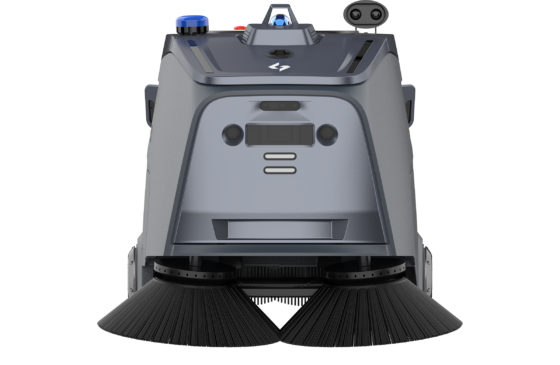
Mira and Marvel do both jobs in a single pass:
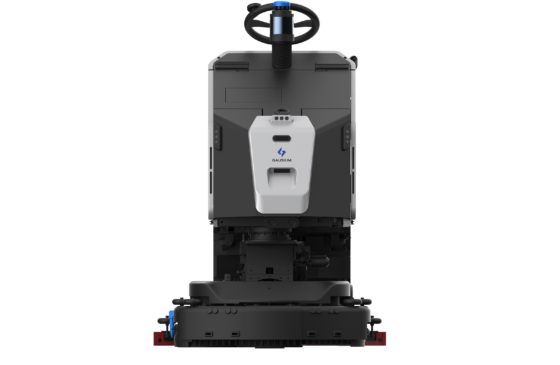
Compared with machines that sweep and scrub separately, both models cut cleaning time in half. The engineering behind that design is explained in how Gausium Mira and Marvel ended the sweep-versus-scrub compromise.
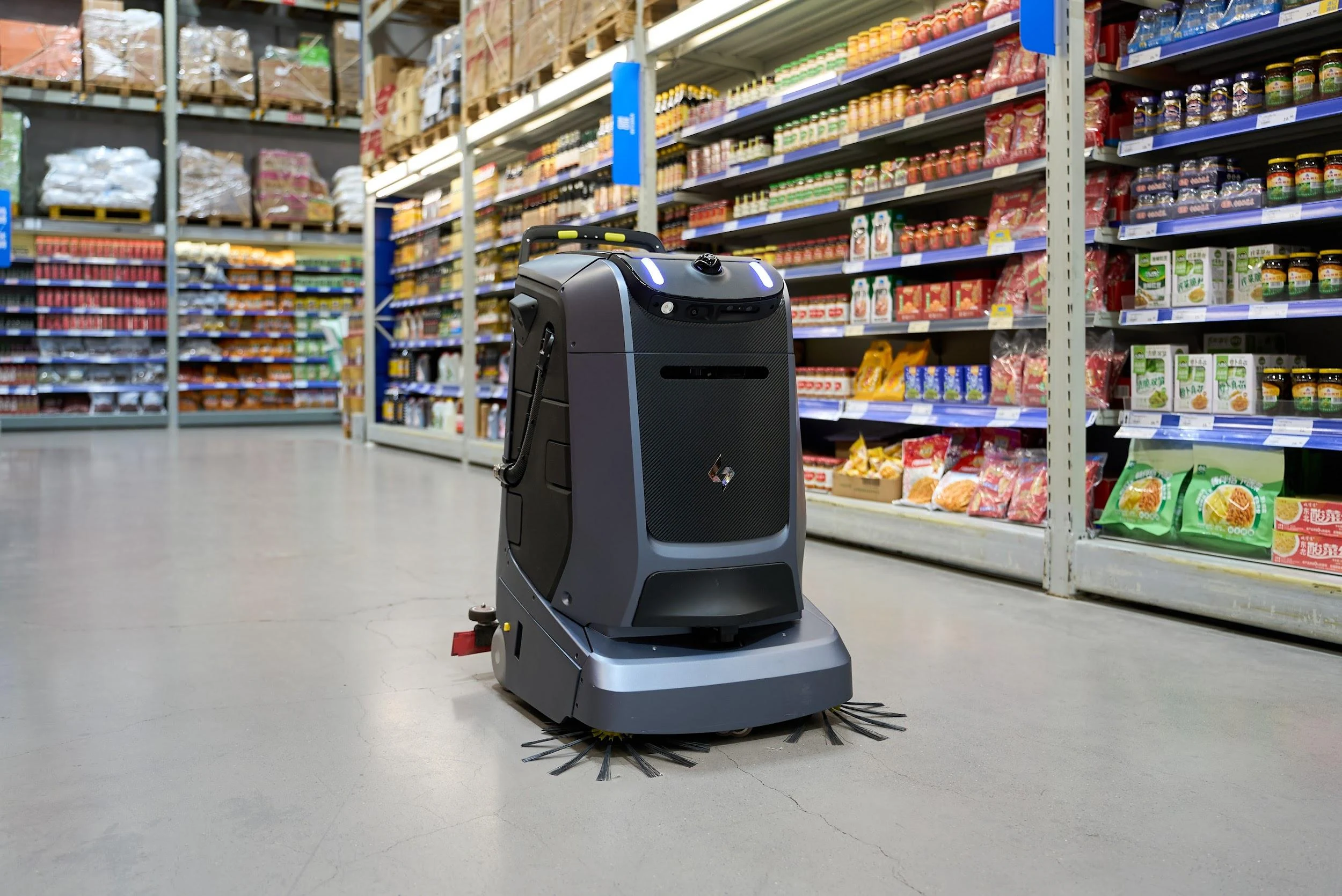
Wall bases, shelf edges, column feet and narrow passages are where manual touch-up usually begins after a robotic floor scrubber finishes. The reason is geometry: the machine body needs clearance from the wall, so the outer edge of the brush cannot reach the boundary.
Gausium robots solve this in different ways:
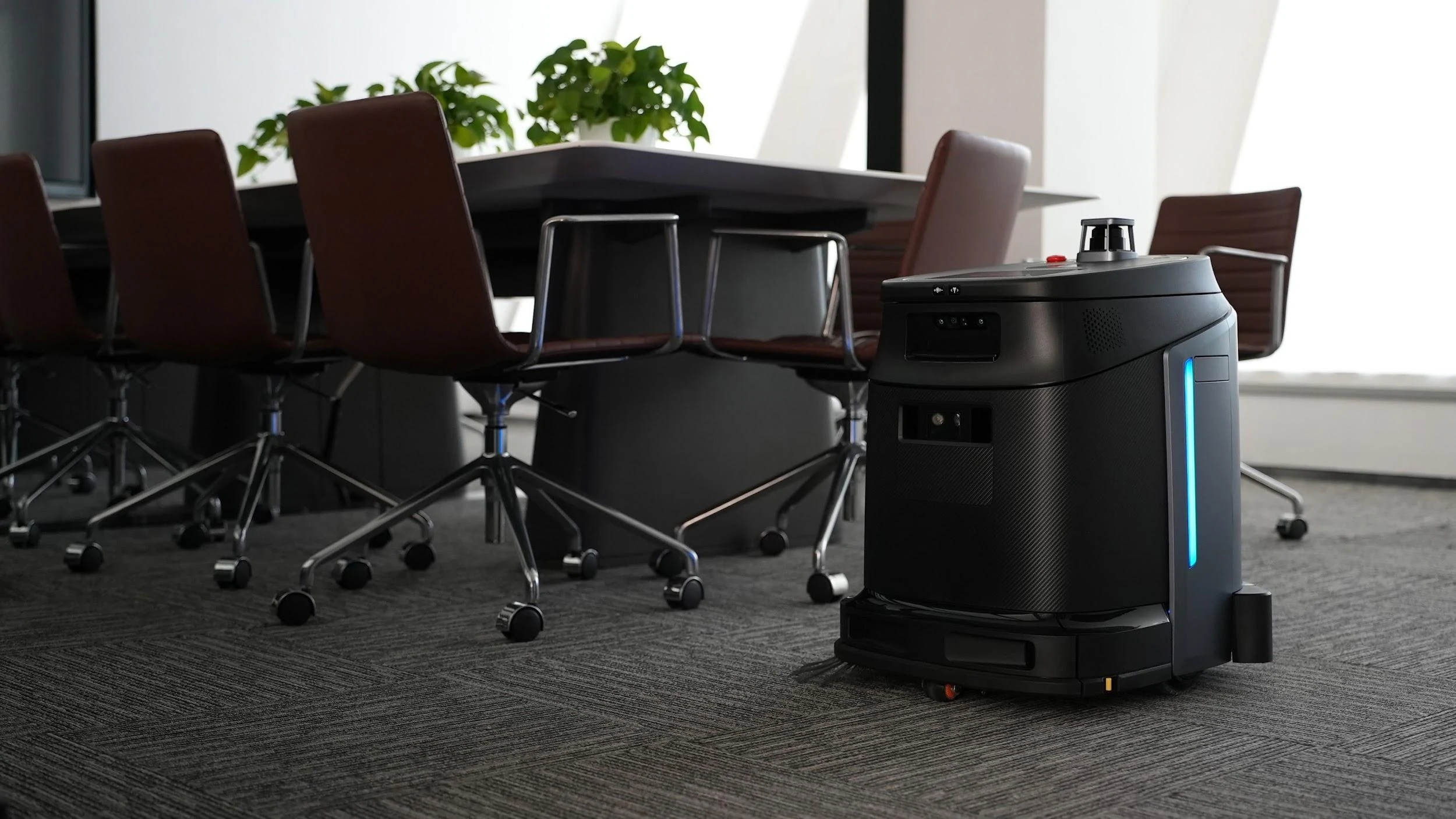
A schedule-driven robot runs the same route whether the floor needs it or not.
Gausium’s Auto Spot Cleaning mode works differently. The robot continuously scans the floor around it and cleans wherever it detects waste or stains. Cleaning only where it is needed improves efficiency by up to four times and cuts water and power use significantly.
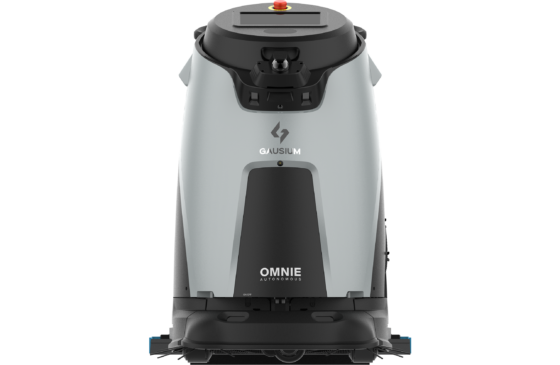
Omnie goes a step further by recognizing both dry and wet waste and handling each accordingly. That makes it a strong fit for fresh produce aisles, food courts and other areas where spills appear without warning. During peak shopping periods, when foot traffic surges and spills come more often, cleaning on demand keeps food courts and entrances presentable between scheduled runs.
When the robot finds something too large to clean, it alerts the operator through the Gausium App.
Commercial environments do not sit still. Furniture moves, inventory changes, and people take routes no one can predict. The pressure peaks in the holiday season, when malls stay crowded for longer and airports and stations carry heavier travel traffic, leaving shorter windows to clean around people.
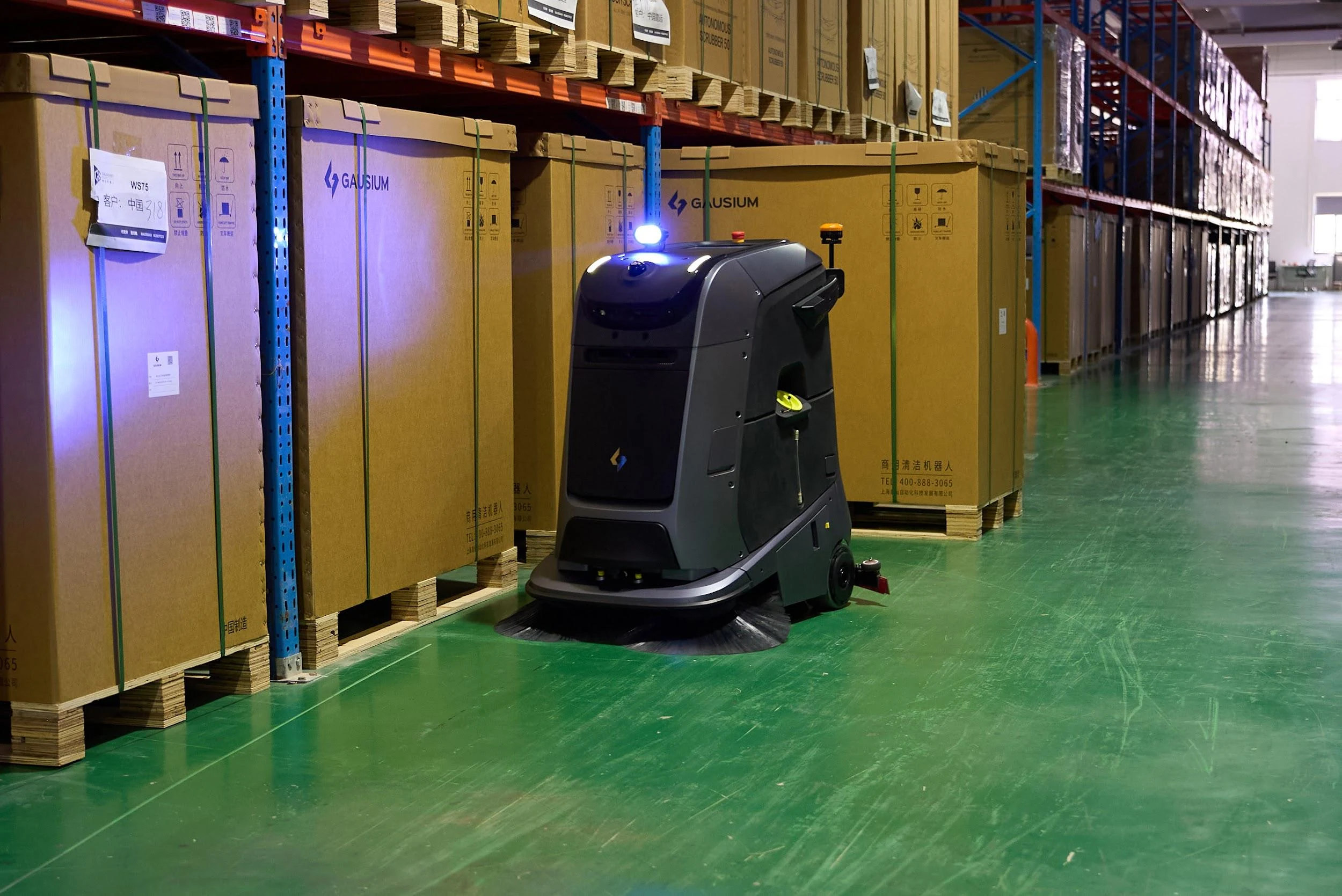
More facilities now run nonstop, which pushes cleaning into quiet periods or overnight. That only works if the robot can keep itself going as well as clean. In retail complexes, this is what makes a full overnight clean practical after closing time, so the floor is ready before the doors open again.
Many teams start their evaluation with the equipment price. The long-term return comes from three other places.
A more productive cleaning team. The labor gap is structural, and it will not close with the next economic cycle. An autonomous scrubber takes on large, repetitive floor areas so cleaning staff can focus on restrooms, stairs, detail work and quality checks. At Auchan supermarkets in France, stores running Omnie no longer need staff to drive conventional scrubbers, and that time goes back to customer service and store operations.
Consistent results on every shift. Manual cleaning varies from person to person and shift to shift. A robotic scrubber runs the same map and the same route every time. Area covered, time taken and any interruptions are all logged in the Gausium App and cloud platform, ready for service reviews. Over a full year, those records build a clear picture of what each robot covered at each site, which gives facility teams a factual basis for deciding where to expand next. Our guide to cleaning robot performance reporting explains how teams put that data to work.
Measurable operational gains. On São Paulo Metro Line 5, two Omnie robots brought platform cleaning time down from about 3.5 hours to roughly 40 minutes compared with the previous process. Water use fell from around 980 L to 15 L per operation.
Gausium ranks No.1 worldwide among commercial cleaning robot suppliers by both shipments and revenue in IDC’s Worldwide Annual Commercial Cleaning Robotics Tracker, 2025. The same tracker places Gausium first in every core application segment it covers, and in major markets including Europe, the Americas and Asia-Pacific.
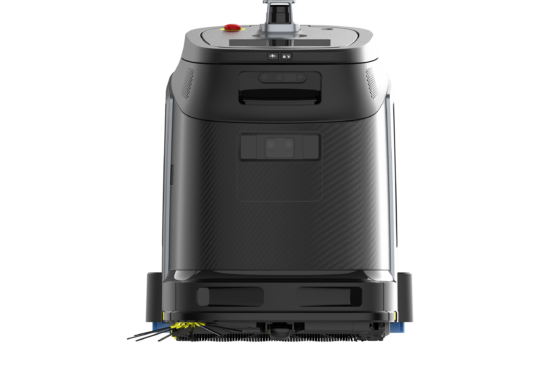
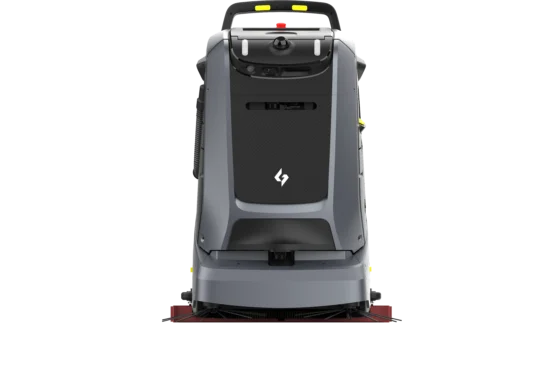
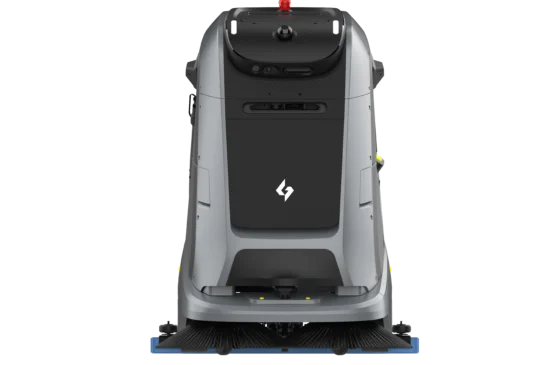
Rather than one machine for every building, Gausium matches each model to floor area, surface and task:
|
Model |
Recommended floor area |
Floor surfaces |
Main task |
|
Phantas |
Small spaces, about 100–1,500 m² (1,100–16,000 ft²) |
Ceramic tile, natural stone, PVC/vinyl, hardwood, epoxy, concrete, low-pile carpet |
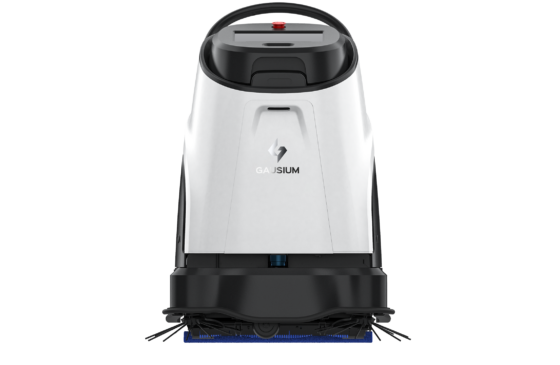
Scrubbing, sweeping, vacuuming and dust mopping in one compact robot |
|
Mira |
Mid-sized spaces, about 800–2,000 m² (8,600–21,500 ft²) |
Natural stone, artificial marble and granite, ceramic tile, PVC/vinyl, epoxy |
One-pass sweep and scrub for narrow aisles and changing layouts |
|
Marvel |
large spaces, 3000 m² (32,300 ft²) and above |
Hard floors including concrete |
One-pass sweep and scrub for large, heavily soiled floors |
|
Omnie |
Mid-sized to large spaces, 800 m² (8,600 ft²) and above |
Hard floors including concrete |
Scrubbing with dry and wet waste recognition in complex, high-traffic environments |
Phantas is the natural choice where hard floor meets low-pile carpet in a small space. For buildings with larger carpeted areas, see one machine or two for mixed-floor buildings.
For sites above roughly 30,000 m² (320,000 ft²), Gausium designs multi-model fleets: Marvel on open floor plates, Mira in crowded public areas and Phantas in tighter spaces. Fleet sizing for those sites is covered in cleaning robots for very large facilities.
The autonomous floor scrubber has moved well past the route-following machine. What sets the best robotic floor scrubbers apart is whether they can read the site, decide how to clean, and keep themselves supplied and maintained. That is what turns floor care from a repetitive task into a process that can be recorded, verified and improved.
Gausium can match the right model or combination to your floor area, surfaces, cleaning windows and staffing, then run a representative on-site trial. Talk to a Gausium specialist to arrange a site assessment.
A conventional commercial floor scrubber is pushed or driven by an operator. An autonomous floor scrubber maps, localizes and avoids obstacles on its own, completes scrubbing and water recovery independently, and records each task.
Yes, along most boundaries. Phantas cleans right up to the edge at 0 cm, and Omnie uses dual side brushes for edge-to-edge coverage. The deepest point of an inside corner may still need a quick manual touch-up.
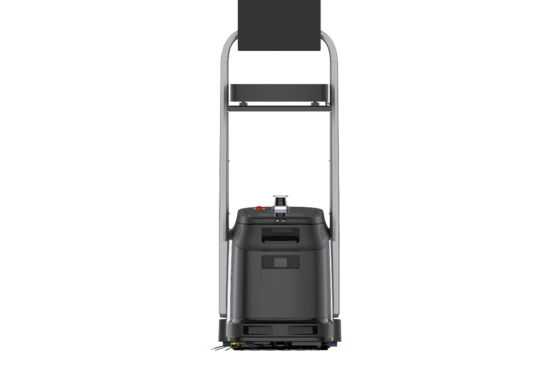
Yes, depending on the model. Mira and Marvel sweep and scrub in a single pass with no pre-sweep required. Beetle is a dedicated sweeper and does not wet-clean.
Yes. Marvel is designed for large sites from 3,000 m² (32,300 ft²) upward.
With a Gausium workstation, it can operate around the clock. Charging, water refill, wastewater discharge and self-cleaning run automatically, so the robot keeps working overnight or during off-peak hours without anyone standing by.
Yes. Gausium robots connect to smart elevator systems through IoT hardware or open API and ride elevators on their own. Compatibility is confirmed for each elevator system during deployment.
Yes, where floors need frequent, consistent cleaning. On São Paulo Metro Line 5, Omnie cut platform cleaning time from about 3.5 hours to roughly 40 minutes and reduced water use from around 980 L to 15 L per operation.
Step 1/2
Please select the type of business you’d like to have with Gausium.
Choose one item from the list
Step 2/2
Thanks for sharing your preference. Please fill out the form below, and we’ll get in touch shortly.
By clicking “Submit”, I authorize Gausium to contact me. Privacy Policy.
Thank you for filling out the form
By clicking “Submit”, I authorize Gausium to contact me. Privacy Policy.