




UP NEXT
One Machine or Two? Cleaning Robots for Mixed-Floor Buildings8月 31, 2026

8月 31, 2026
Automating floor care in a public building appears straightforward at specification stage. In practice, three problems account for most disappointing deployments: the machine proved too loud for the rooms that mattered, no one had agreed who could approve a route change, and the parking and charging position obstructed something it should not have.
None of these are cleaning problems. They arise from specifying a public building as though it were a commercial one.
A public building carries two constraints a shopping center does not: it often cannot be closed, and it can almost never be cordoned. Occupants remain for extended periods, in rooms where quiet forms part of the service, on floors controlled by several departments.
Sound, access obligations and route authority are therefore settled first. Once they are, the machine selection follows quickly. This guide works through those constraints, then sets out where Gausium’s two mapped models fit.
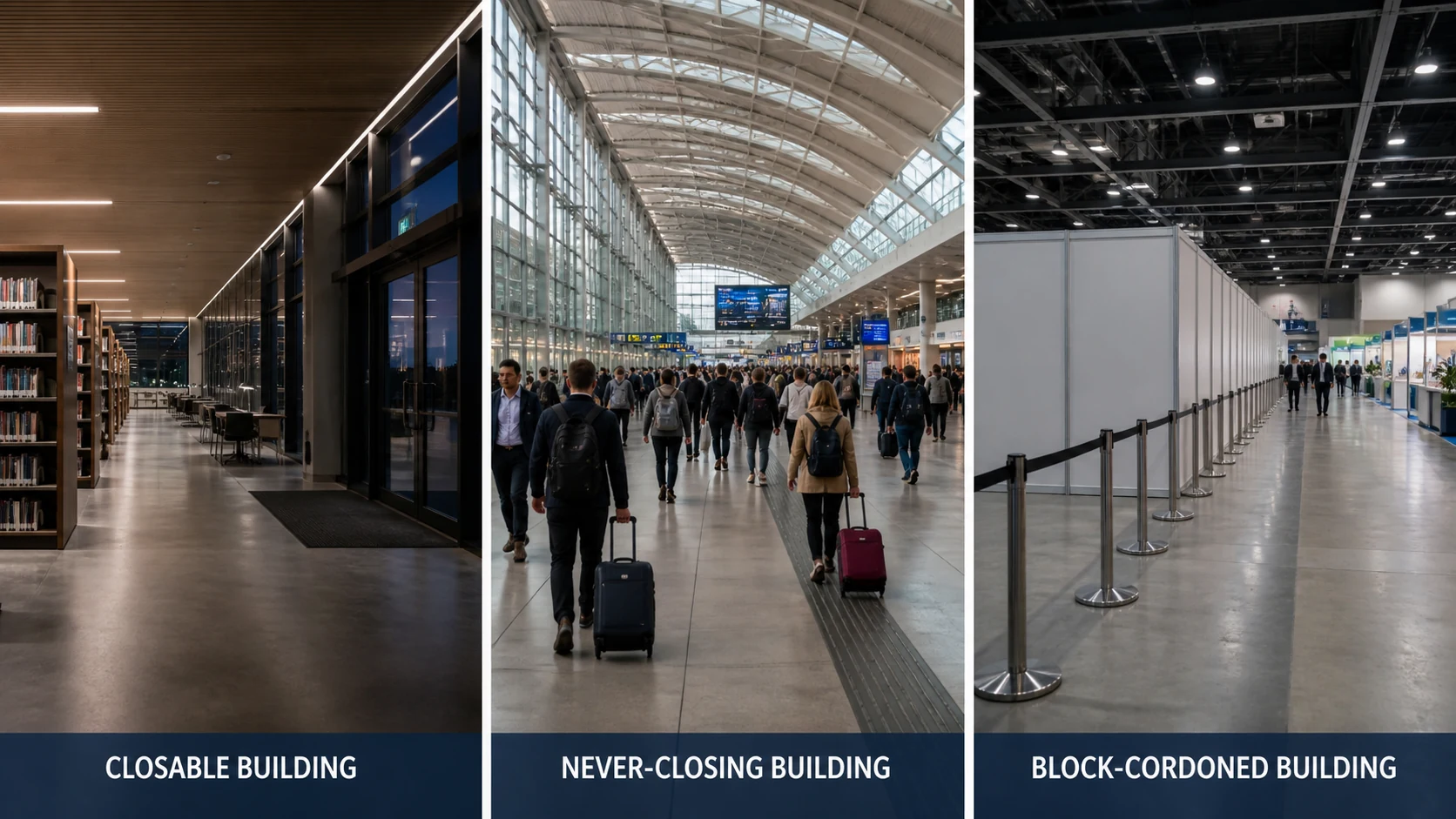
Public estates fall into three operating classes, and the class determines what a machine must be capable of before area or throughput enters the assessment.
The closable building. Libraries, museums, archives, schools and most civic offices. A genuine window exists after closing, so heavy work has somewhere to go. During opening hours, however, the public is at close quarters and cannot be routed around a machine.
The never-closing building. Stations, airports, 24-hour clinics and public service halls at peak. There are only busier and quieter hours. A machine here operates continuously among people who are not attending to it, which makes behavior in crowds an entry requirement rather than a feature.
The block-cordoned building. Exhibition halls, conference and events centers. Between events, whole blocks can be closed off, so the calendar rather than the clock sets the schedule.
Record the class at the top of the specification. It determines more than any figure below it.
Within one public building the floor changes character every few rooms. The table below is the working document to bring to a supplier, and it is worth completing before any demonstration.
|
Zone |
Why it is difficult |
Machine class that fits |
Verify on site |
|
Concourses, main halls, circulation |
Continuous footfall, changing desire lines, spills that cannot wait |
Large autonomous scrubber built for crowded space |
Clearance in queue conditions, not empty-hall width |
|
Reading rooms, courtrooms, exam halls, consulting rooms |
Sound is the binding constraint; work stops if it exceeds the limit |
Compact multi-mode machine with a quiet mode |
Measured sound level in the room, in the mode intended for use |
|
Waiting areas, member rooms, meeting rooms with carpet |
Soft floor; wet cleaning is not an option |
Commercial robotic vacuum |
Carpet pile height per zone |
|
Offices, corridors, back of house |
Compartmented, furnished, mixed hard and soft floors |
Compact multi-mode machine |
Narrowest recurring route and door widths |
|
Entrances and matting |
Where most of the building’s soil arrives |
Manual, supported by higher machine frequency nearby |
Matting replacement and wash frequency |
|
Stairs, escalator approaches, platform edges |
Level changes are a mapping decision, not a sensor decision |
Manual, with mapped boundaries for the machine |
Every drop recorded as a map boundary at commissioning |
|
Forecourts, drop-off areas, covered walkways |
Grit, leaves, packaging, weather |
Industrial sweeper |
Whether the surface and gradient suit an outdoor machine |
Carpeted zones follow their own selection logic, set out in one machine or two for mixed-floor buildings. The general method for splitting a mixed-use site between models is covered in how to choose a sweep-and-scrub rohttps://gausium.com/2026/08/DD/cleaning-robots-mixed-floor-buildings/bot. This guide stays on what is specific to public estates.
“Low noise operation” is the most common phrase in public-sector cleaning tenders and the least enforceable. Reading rooms, courtrooms, waiting areas and teaching spaces either permit a machine during opening hours or they do not. That is a threshold, not a preference.
A specification that holds up has four parts:
Public buildings carry access and egress duties that a cleaning schedule does not override.
Fix docking positions on the floor plan at proposal stage. Left until commissioning, the remaining candidate positions are usually those already rejected for a reason. Power, water and drainage requirements for docks and workstations are covered separately in automatic charging and unattended operation.
In a commercial building the floor belongs to facilities. In a public one it rarely does.
That fragmentation is why routes drift out of date. Settle three questions during procurement: who approves a route, who notifies a layout change, and who receives the performance record. The consequences of an outdated map, and how to structure remapping responsibility, are covered in cleaning robots for very large facilities.
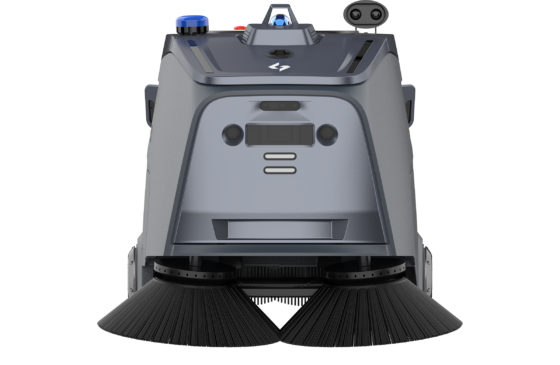
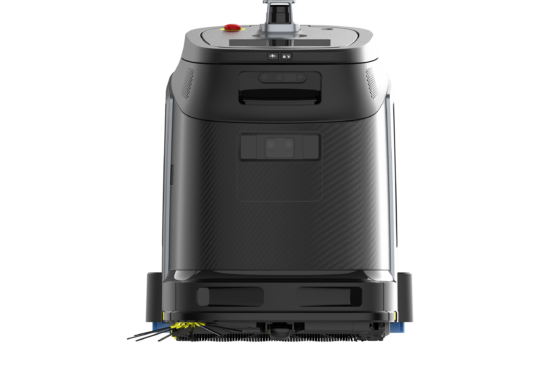
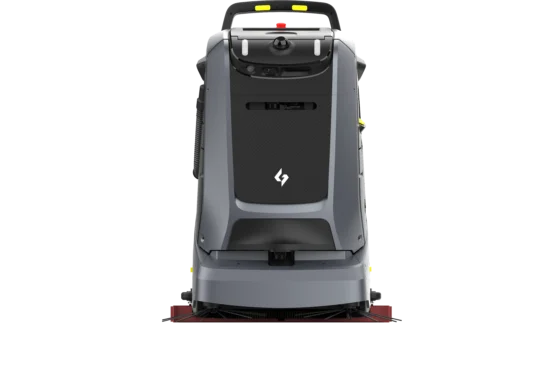
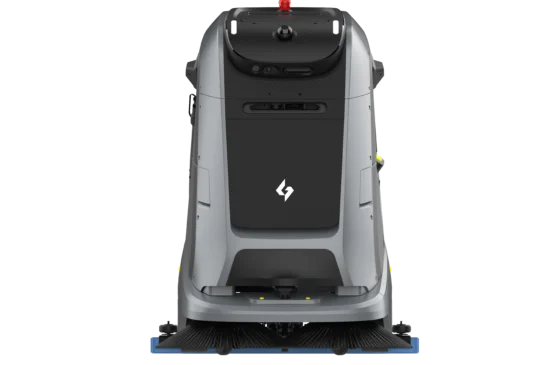
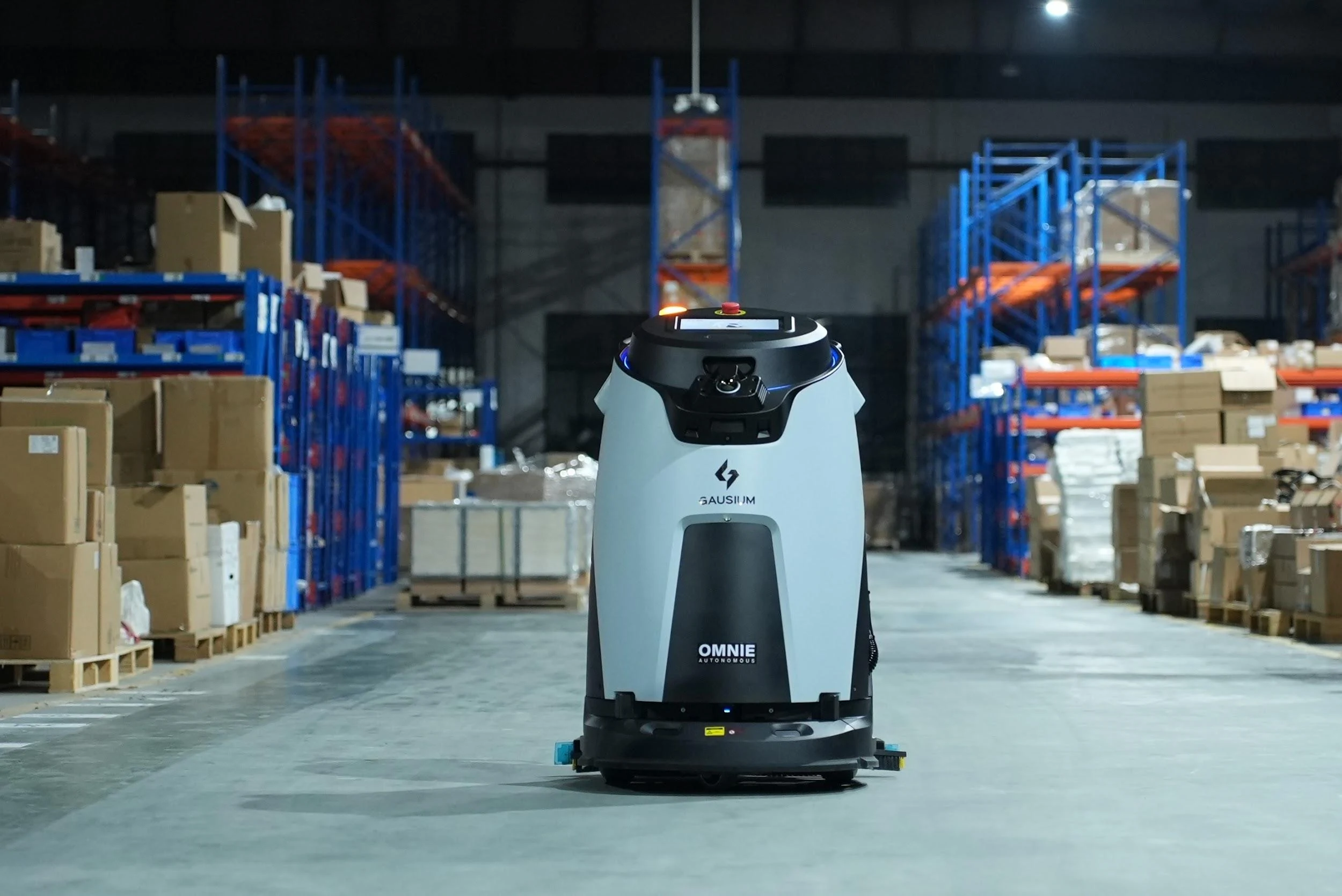
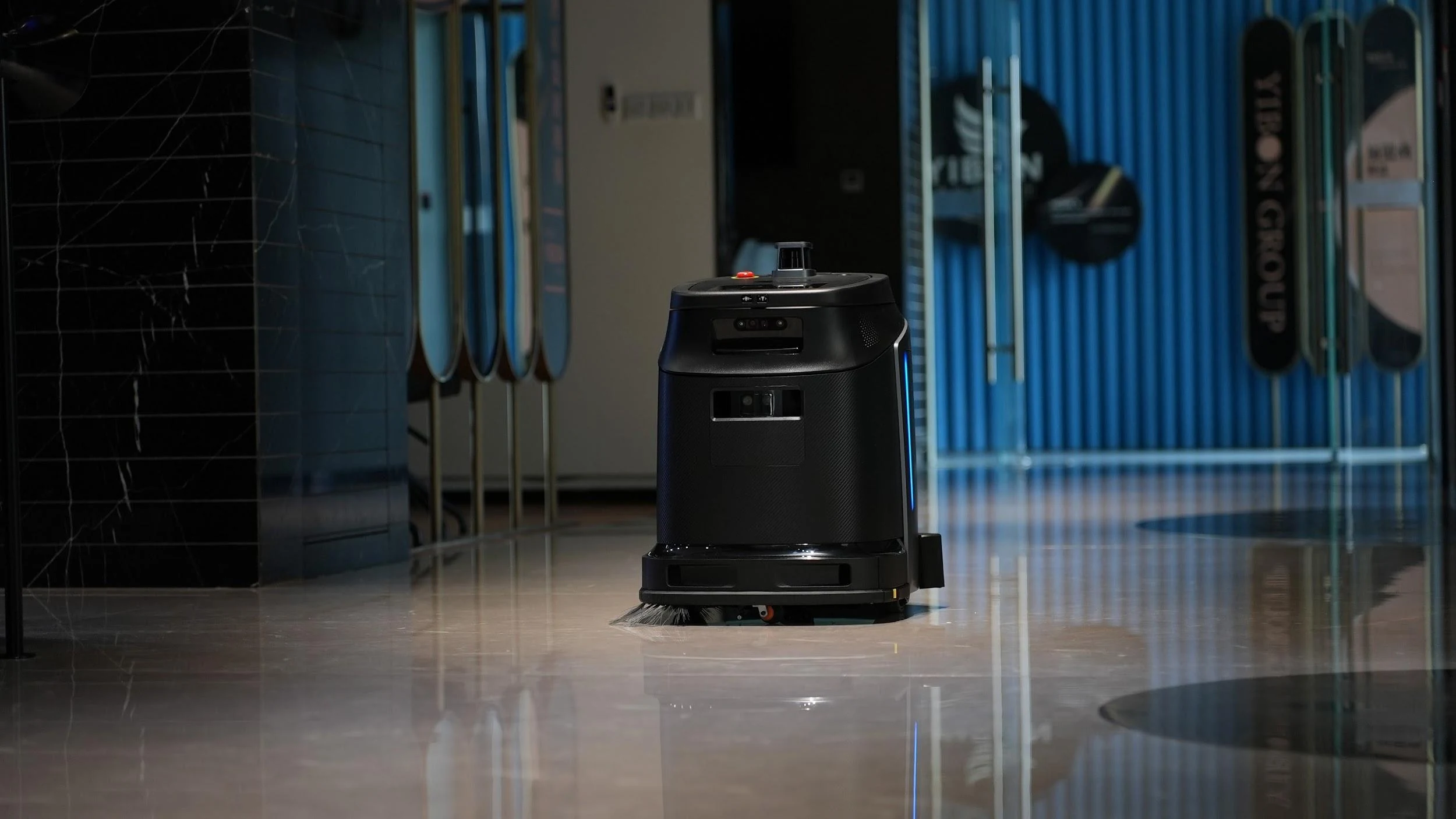
Two models are mapped to public buildings, and they answer different halves of the zone table.
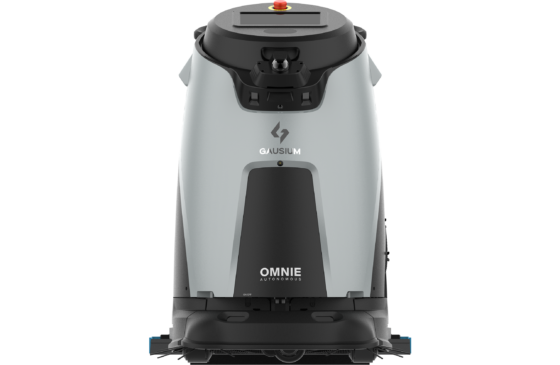
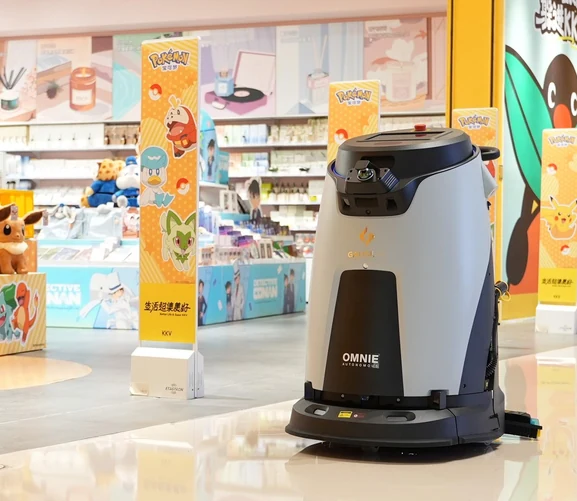
Built for the never-closing building, and for occupied hours in the other two classes.
Verify two conditions on site: clearance through gatelines and between columns under queue conditions, and whether any level is reached by ramp, since Omnie suits level floors. Specifications are on the product page and specification page.
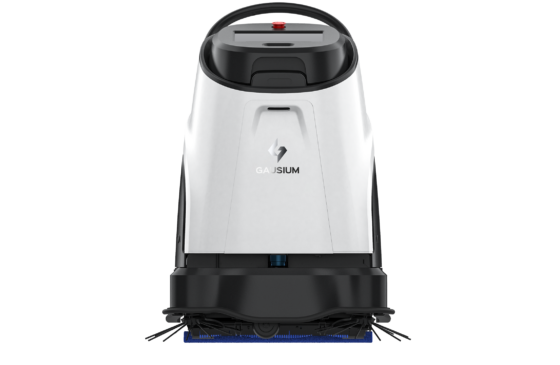
Built for the rooms where the sound limit determines everything.
Verify two conditions on site: the water and drainage provision if the optional workstation is specified, which is a facilities decision rather than a cleaning one, and the carpet pile height in any soft-floor zones. Specifications are on the product page and specification page.
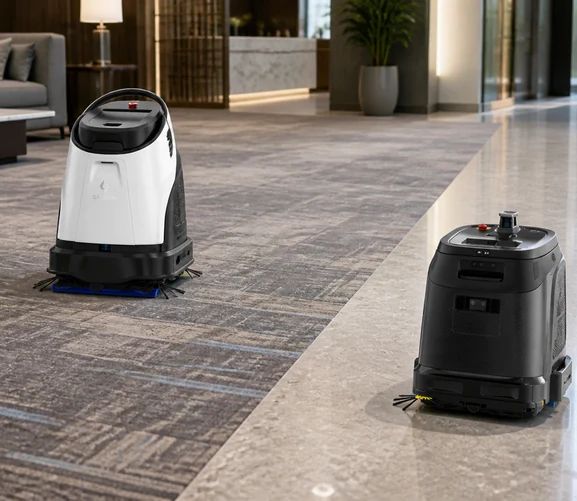
Most public buildings end up with two classes of machine. Estates with significant carpet or an outdoor apron end up with three.
Worth stating in the proposal rather than discovering at handover.
Bring the completed zone table and a floor plan to a site assessment. Request the evaluation in the two hardest places at once: the room with the strictest sound limit, and the hall at its busiest hour.
Concourses, halls and circulation areas suit Omnie; quiet rooms, offices and compartmented floors suit Phantas. Carpeted waiting areas and outdoor forecourts each require a different machine class.
As a figure per room type, with the mode and measurement distance stated, and a re-measurement in the actual room at acceptance. Phantas supports a quiet mode at 60 dB or below.
Whoever owns fire and life safety for the building, not the cleaning contract. Accessible routes, wheelchair turning space and escape routes cannot be occupied, so candidate positions should be marked on the plan during the proposal.
It changes the requirement rather than blocking it. In buildings that cannot be closed or cordoned, safe operation in continuous footfall becomes an entry requirement, and it should be evaluated during a peak hour rather than in an empty hall.
Entrance matting, stairs and escalator treads, edges around columns and seating, and immediate spill response. List these in the schedule with named responsibility, as the machine will not absorb them.
Usually one of three things: a sound requirement written without a number, a docking position agreed too late, or an unnamed route approver, leaving routes to fall out of date after the first layout change.
Step 1/2
Please select the type of business you’d like to have with Gausium.
Choose one item from the list
Step 2/2
Thanks for sharing your preference. Please fill out the form below, and we’ll get in touch shortly.
By clicking “Submit”, I authorize Gausium to contact me. Privacy Policy.
Thank you for filling out the form
By clicking “Submit”, I authorize Gausium to contact me. Privacy Policy.