




UP NEXT
Cleaning Robots for Large Commercial Facilities: Deployment Patterns and Model Configuration8月 26, 2026

8月 26, 2026
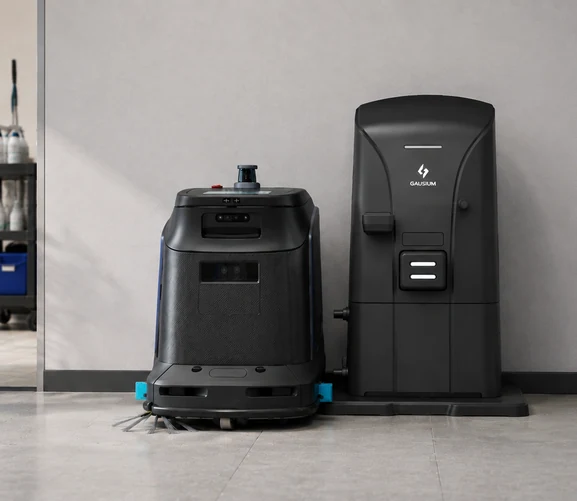
Every Gausium commercial cleaning robot supports autonomous recharging. When the battery runs low the machine returns to its dock, and once charging completes it resumes the task it was running, without anyone attending it.
What varies between models is how much else the dock handles:
|
Model |
Pairs with |
Automated beyond charging |
|
WS-05 workstation |
Water refill, wastewater discharge, suction pipe and squeegee rinsing, recovery tank self-cleaning |
|
|
WS-05 workstation |
Water refill, wastewater discharge, suction pipe and squeegee rinsing, recovery tank self-cleaning |
|
|
Water refill, wastewater discharge, suction pipe and squeegee rinsing |
||
|
Water refill, wastewater discharge |
||
|
CD-01 dock |
— |
|
|
Charging dock |
Automatic HEPA filter cleaning after each task |
Which level a site needs follows from how the machine is scheduled to run.
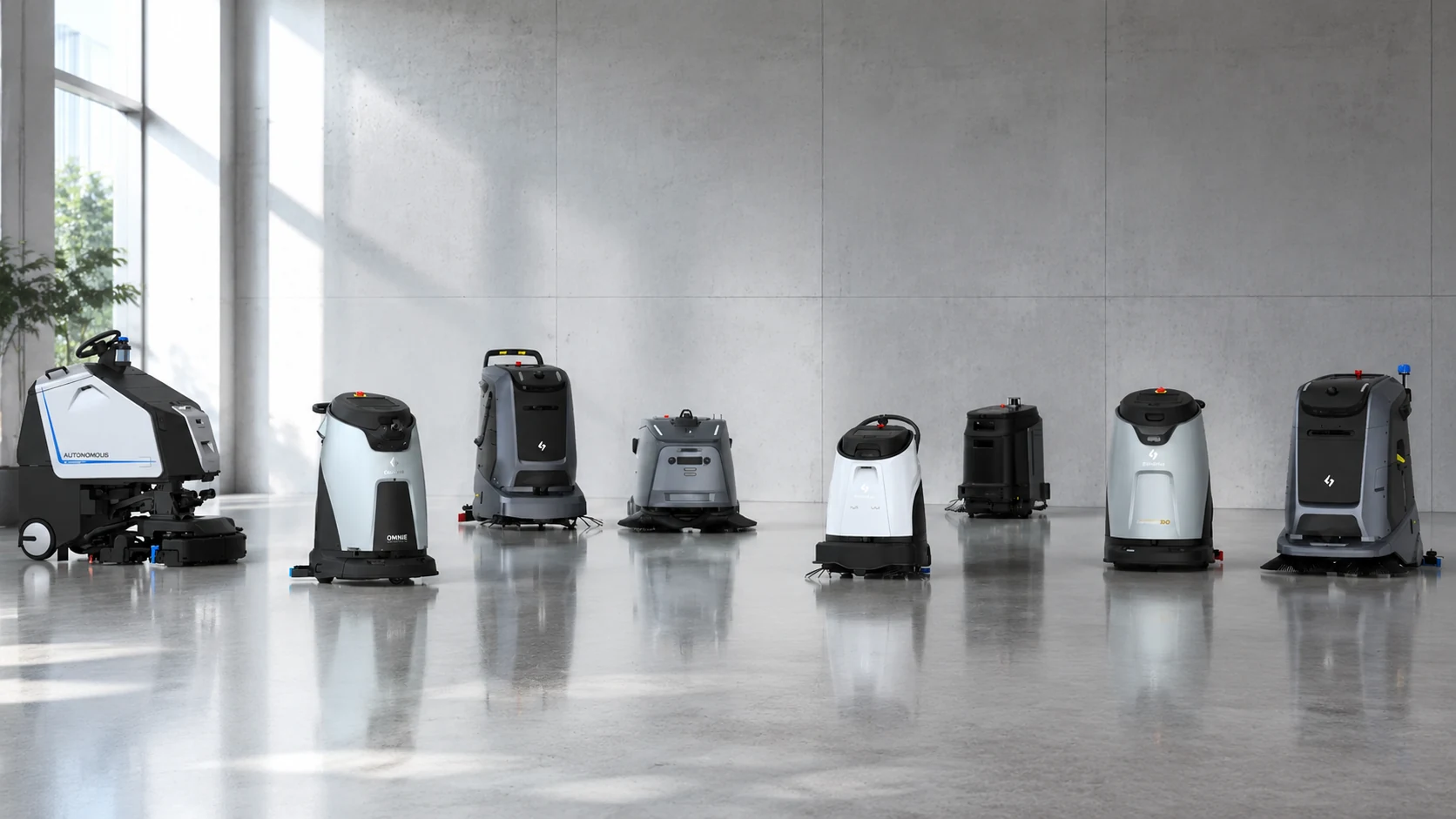
Single-shift operation. Water and battery capacity cover the whole window, and the machine docks afterwards. A charging dock is sufficient, and a workstation adds little.
Continuous operation, from multiple windows a day up to round-the-clock running. The machine will need replenishment mid-schedule, so automatic water refill and discharge become the condition for unattended running — without them, every gap between windows requires someone on site. Where the schedule leaves no natural break, the machine’s own cleaning has to be automated as well: otherwise the recovery tank and suction pathway still need clearing at the end of every shift, and incomplete clearing produces odours and blockages over time.
These two patterns map onto two replenishment approaches.
The machine docks and charging, fresh water refill and wastewater discharge all run automatically. This suits continuous operation across multiple windows.
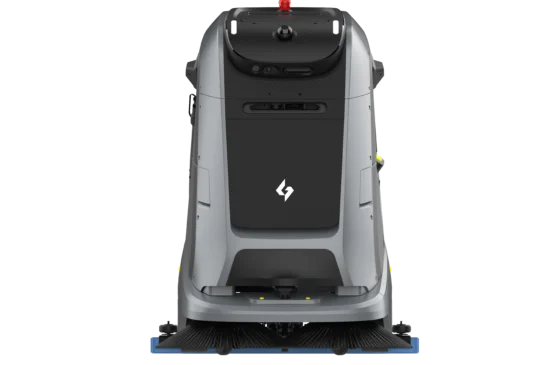
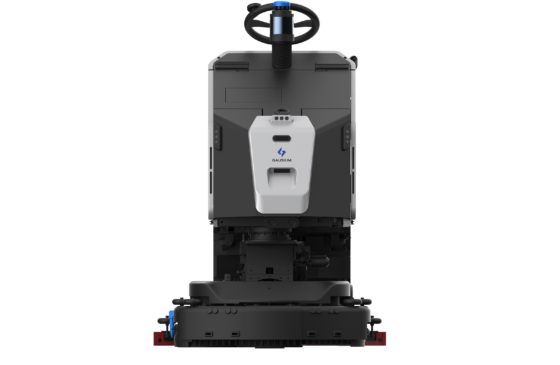
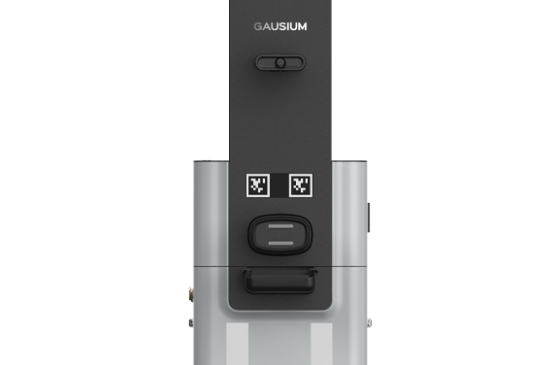
Mira and Marvel with the WS-05 workstation — everything the WS-03-S automates, plus self-cleaning of the recovery tank. This is the most complete replenishment configuration in the range, and the one best suited to schedules that run without a natural break for manual clearing.
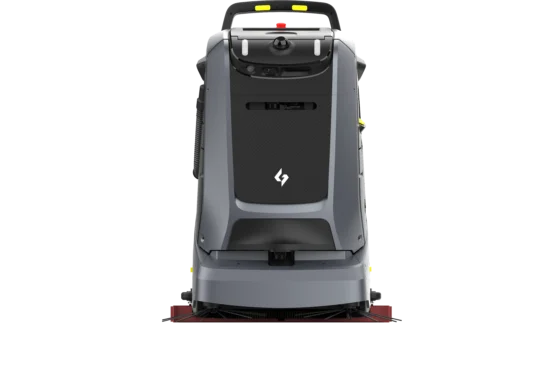
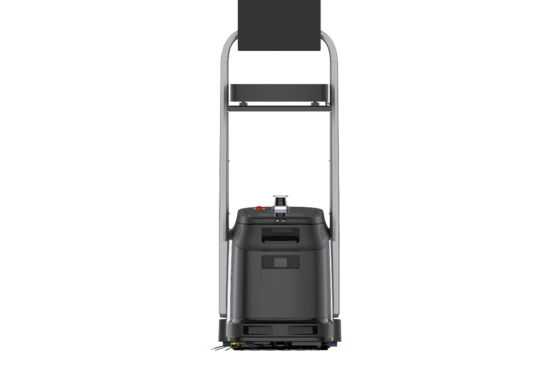
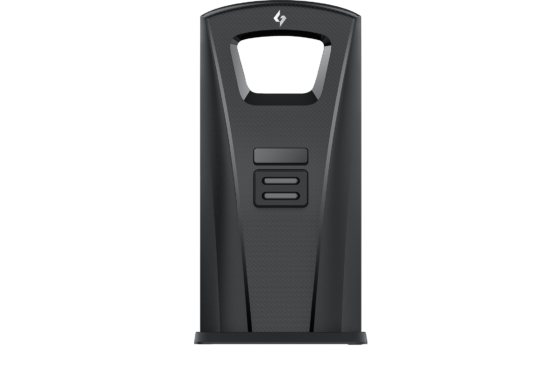
Phantas with the WS-03-S workstation — a single docking action triggers five processes: charging, fresh water refill, wastewater discharge, suction pipe rinsing and squeegee rinsing. An optional mobile water tank covers sites without a fixed water connection.
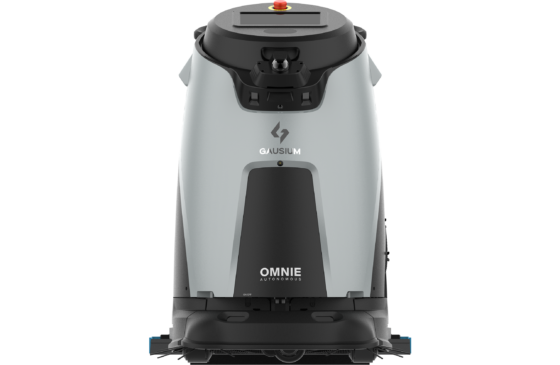
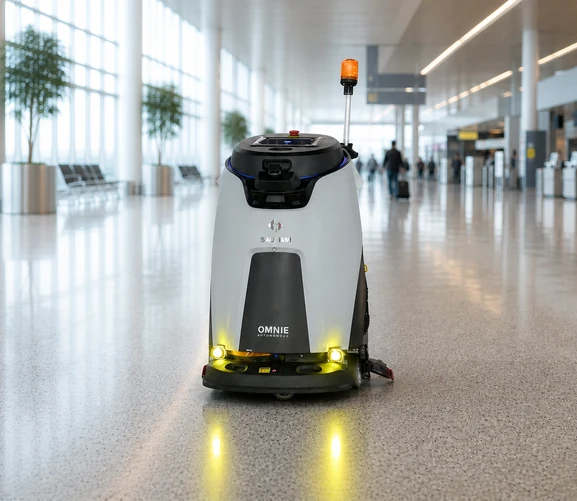
Omnie with the WS-01 workstation — automatic charging, fresh water refill and wastewater discharge.
The constraint on this approach is that workstations require connection to water and drainage lines, so placement is limited by building services.
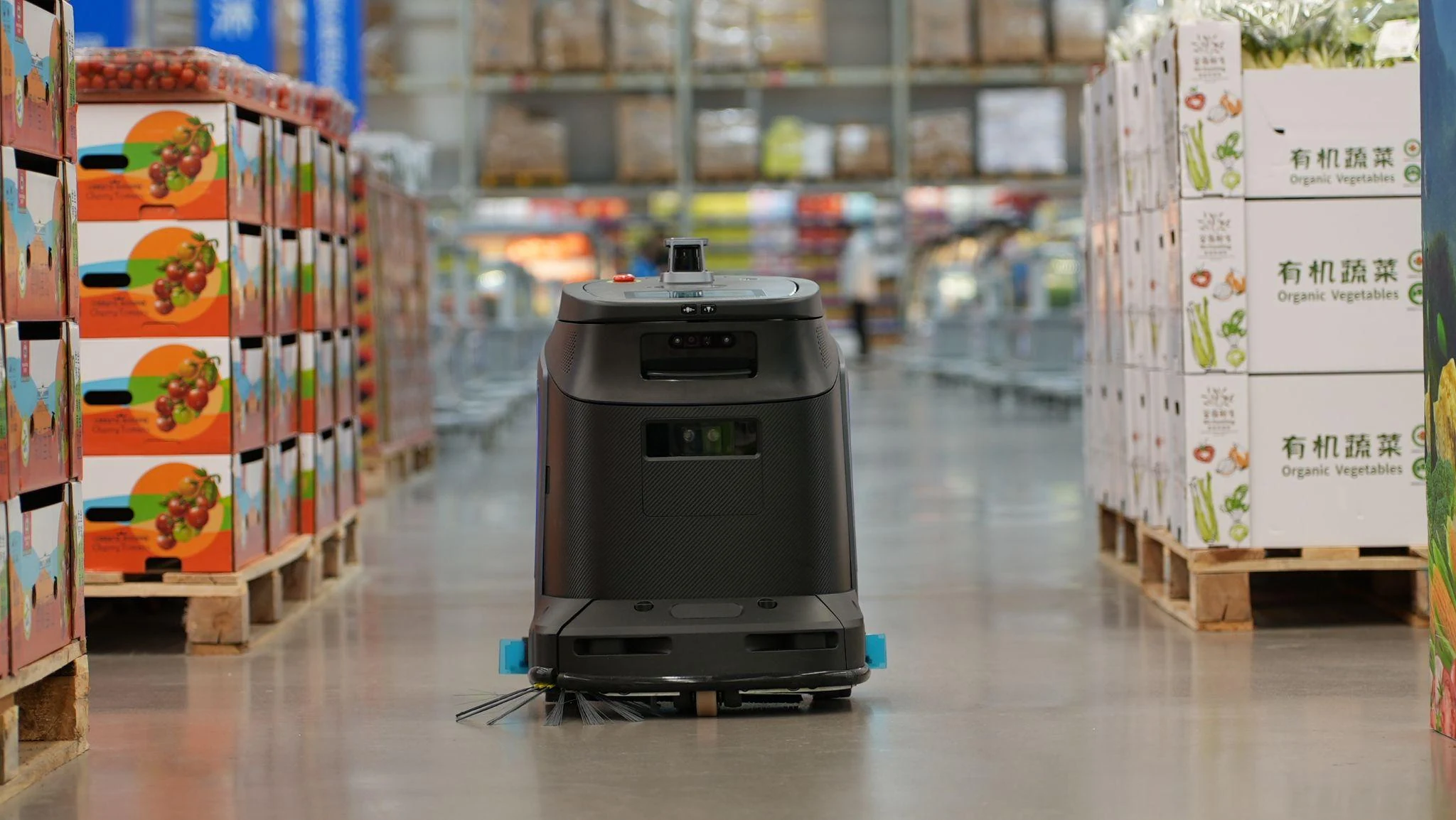
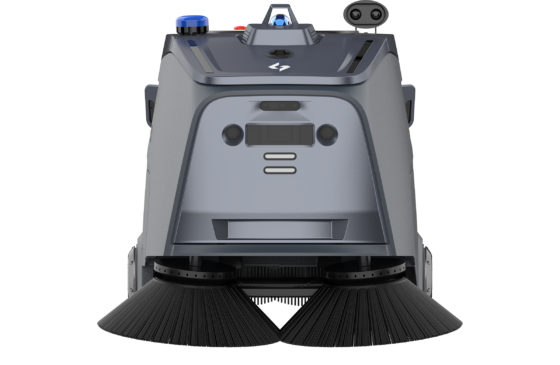
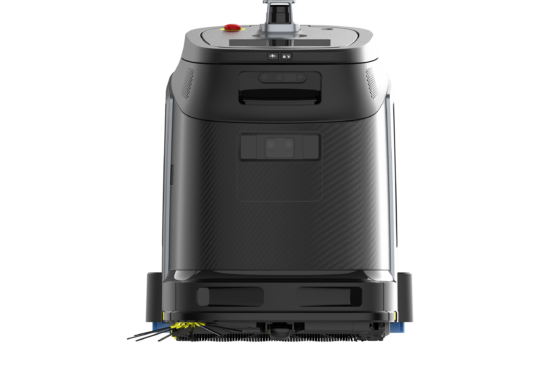
Sweeping and vacuuming machines carry no water system, so the dock needs to handle power alone.
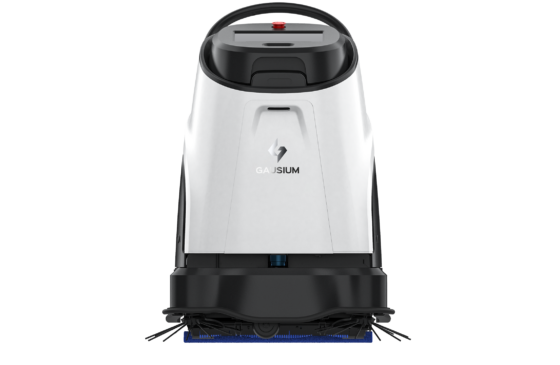
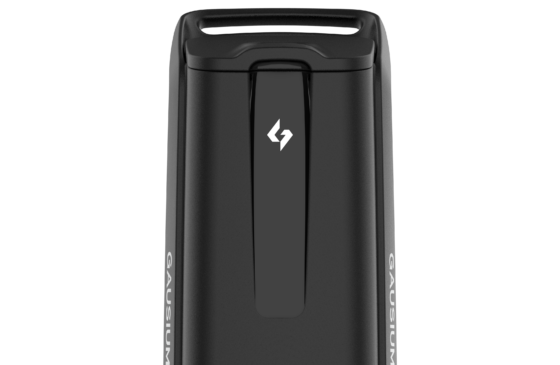
Beetle pairs with a charging dock for autonomous recharging, supporting continuous operation. Its HEPA filter is cleaned automatically after each task, maintaining suction and filtration without anyone clearing the filter between shifts.
Vacuum 40 pairs with the CD-01 charging dock, returning to charge and resuming its task afterwards.
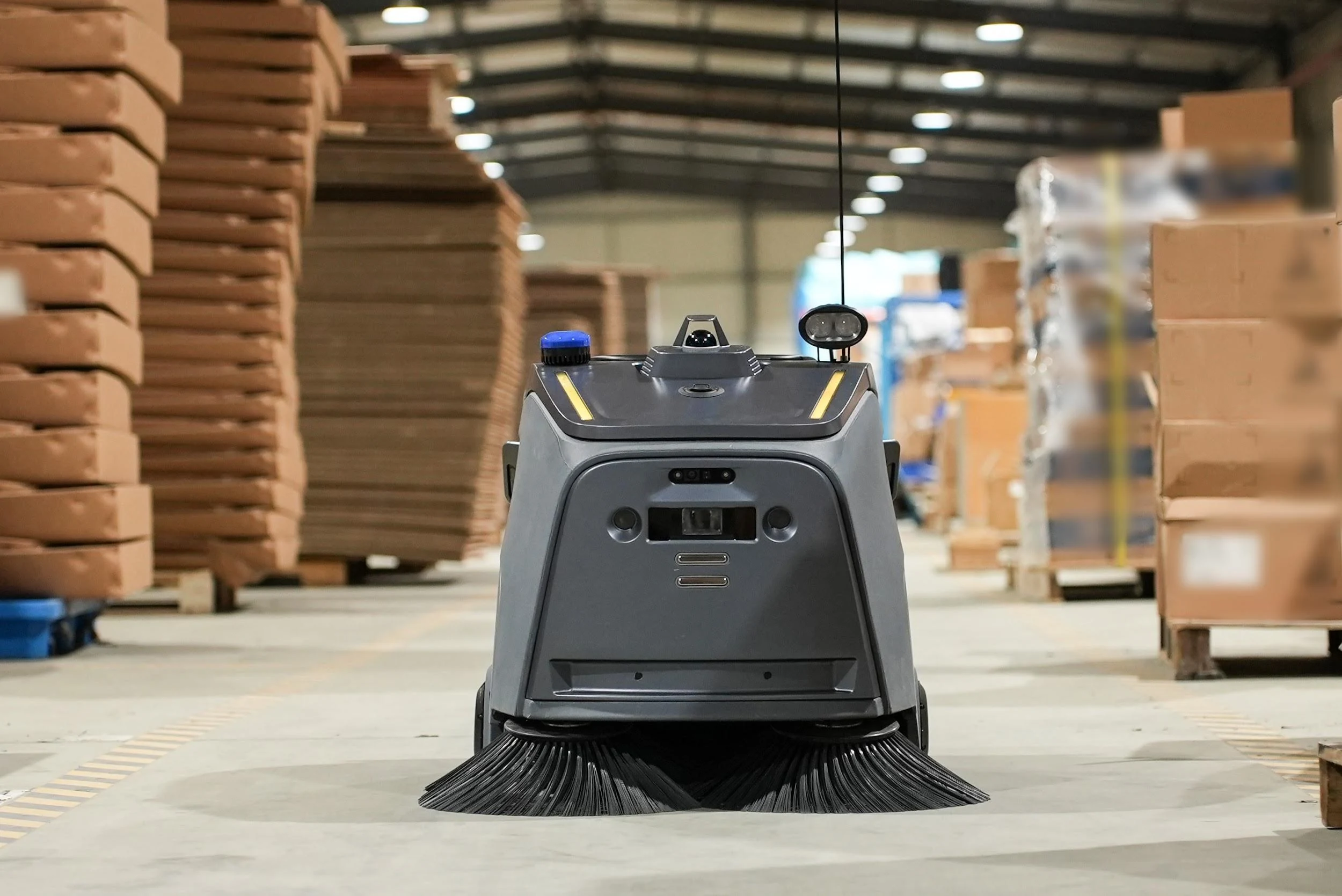
Most buildings were not plumbed around cleaning routes. Underground car parks, large storage areas and many retail sites have usable positions some distance from the working area, and running new lines involves construction cost.
Start with the mobile water tank. The WS-03-S workstation supports an optional mobile water tank, so the replenishment point no longer depends on fixed lines and can be positioned against the working area instead.
Where a tank is not workable, the remaining options are new plumbing or a single-shift schedule with manual replenishment between windows. Both are decisions to settle before machines arrive rather than after — whether a preferred position has water and drainage access, and how the cost of new lines compares, is what a site assessment is for.
|
Constraint |
What to check |
|
Distance from the working area |
Travel to and from the dock consumes the cleaning window directly. Large sites do better distributing points across zones than sharing one. |
|
Charging time against the window |
Where a machine charges once inside a window, that time counts against the window. Duration varies by model and configuration. |
|
Power and plumbing |
Docks need a fixed power point; workstations also need water and drainage. Assess the two separately. |
|
Compliance in public areas |
Positions must clear circulation paths and emergency routes. Rail environments add station fire-safety and equipment rules. |
Across Gausium’s larger deployments, automated replenishment is the baseline that makes unattended running possible. Heathrow’s deployment includes 18 charging docks; Caihong Bridge Station on the Guangzhou Metro runs a single machine with one workstation across multiple blocks each day. Both are documented in the case library.
Replenishment equipment follows two things: the operating pattern, which determines the level of automation required, and the building, which determines whether that level is achievable where it is needed.
Establishing both during a site assessment costs considerably less than relocating a replenishment point afterwards. Full specifications are on the charging dock and workstation pages, and Gausium can carry out the site evaluation.
Every model in the current range. Mira, Marvel, Phantas, Omnie, Vacuum 40 and Beetle all return to a dock or workstation and resume the task afterwards; what differs between them is how much the dock automates beyond power.
A dock covers power and needs only an electrical point. A workstation also refills fresh water and discharges wastewater, so it requires plumbing, and the fuller configurations rinse the suction pathway and clean the recovery tank as well.
Fit the WS-03-S with an optional mobile water tank, which removes the dependence on fixed lines. If that is not workable, the choice comes down to running new plumbing or keeping the machine on a single-shift schedule with manual replenishment.
Once the machine runs in more than one window a day. Mid-schedule replenishment becomes unavoidable, and handling it manually means someone attending between every window.
Step 1/2
Please select the type of business you’d like to have with Gausium.
Choose one item from the list
Step 2/2
Thanks for sharing your preference. Please fill out the form below, and we’ll get in touch shortly.
By clicking “Submit”, I authorize Gausium to contact me. Privacy Policy.
Thank you for filling out the form
By clicking “Submit”, I authorize Gausium to contact me. Privacy Policy.