

UP NEXT
What Can a Multi-Purpose Retail Robot Achieve?November 25, 2025
January 28, 2026
The conversation around commercial cleaning robots has shifted. Five years ago, facility managers were still debating whether autonomous floor cleaning was ready for prime time. Today, that debate is over. The technology works. The ROI is proven. The only question left is which machine deserves a spot on your floor.
But here’s the thing—not all autonomous cleaning robots are created equal. The market is flooded with options ranging from glorified Roombas to sophisticated AI-powered systems that can navigate a 40,000-square-meter warehouse without breaking a sweat. The gap between entry-level and professional-grade equipment has never been wider.
So how do you separate the contenders from the pretenders? After speaking with facility managers, cleaning professionals, and operations directors across retail, logistics, healthcare, and manufacturing, five features consistently emerge as non-negotiable. Miss any of these, and you’re likely to end up with an expensive piece of equipment gathering dust in a storage closet.
Let’s start with the feature that delivers the most immediate impact on your bottom line: smart spot cleaning.
Traditional cleaning—whether manual or robotic—follows a simple logic. Cover every square inch, regardless of whether it actually needs attention. It’s thorough, sure. It’s also wildly inefficient. You’re burning through water, chemicals, energy, and time cleaning areas that were already clean.
The latest generation of commercial cleaning robots flips this approach on its head. Using advanced RGB-D cameras and deep learning algorithms, these machines continuously scan the floor surface, identifying debris, stains, and spills in real time. When they detect something that needs attention, they divert from their planned route, handle the mess, and seamlessly resume their path.
This isn’t just a nice-to-have feature. In high-traffic environments like airports, supermarkets, and logistics centers, spot cleaning technology can improve efficiency by up to 400%. That’s not marketing fluff—it’s the difference between a robot that mindlessly follows a pre-programmed route and one that actually thinks about what it’s doing.
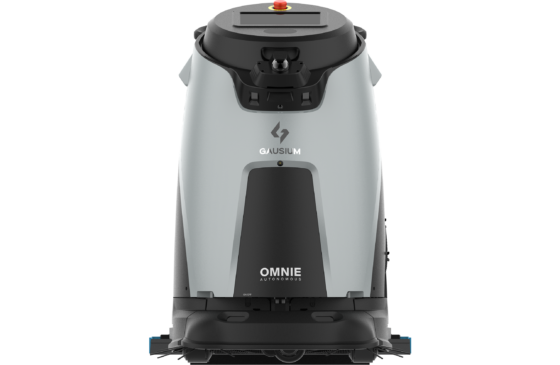
Gausium has been particularly aggressive in pushing this technology forward. Their Phantas, Beetle, and Omnie models all feature what the company calls Spot Cleaning Mode, which combines dirt detection with intelligent obstacle avoidance. When the robot encounters waste that’s too large to handle safely—tangled cables, for instance, or liquid spills that could damage internal components—it flags the issue to operators via the app rather than blindly attempting to clean it. That kind of contextual awareness is what separates professional equipment from consumer-grade toys.
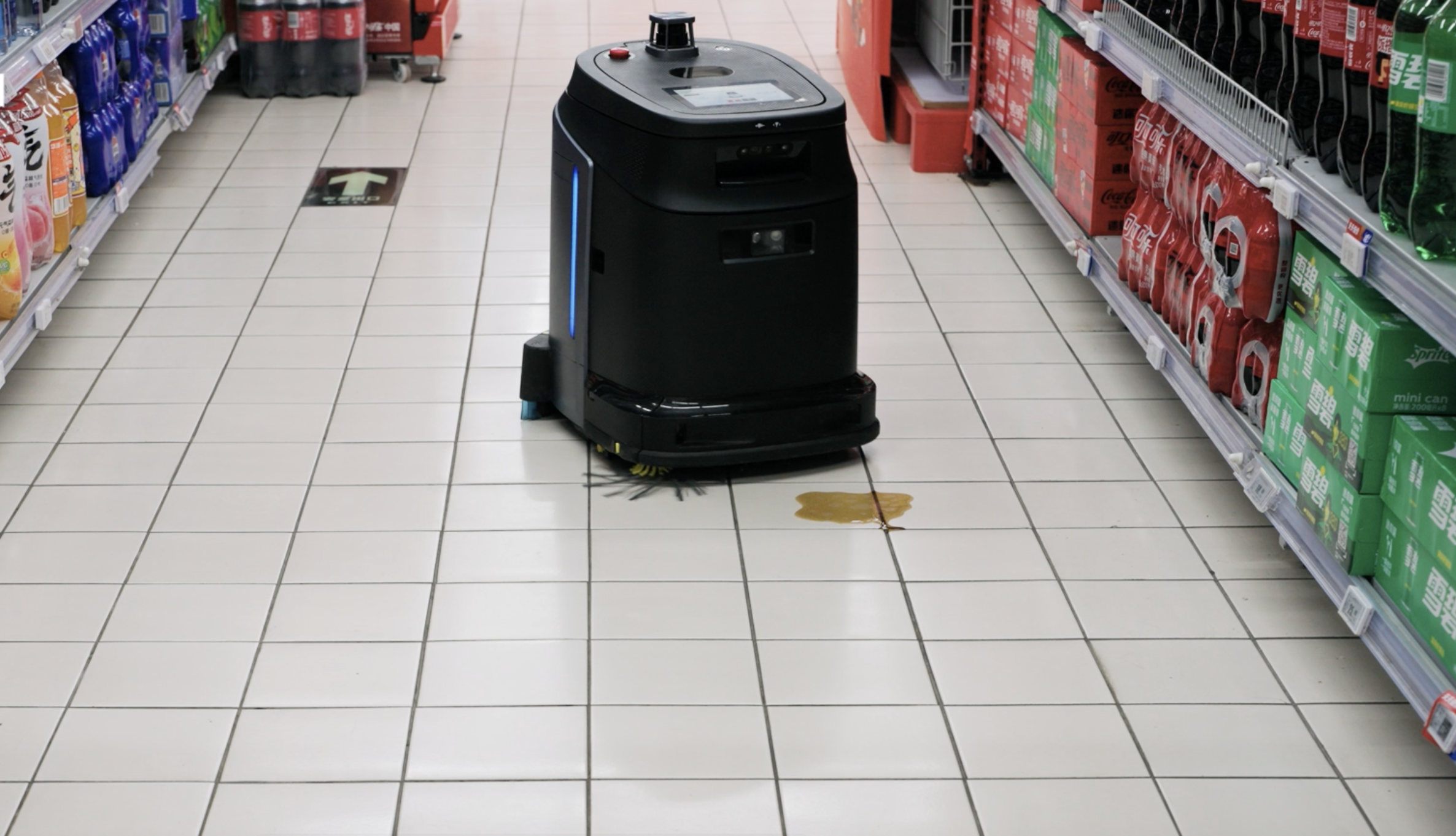
Gausium Phantas in action under Spot Cleaning Mode
Here’s a truth that vendors don’t always advertise: the controlled environments where robots are tested look nothing like the chaotic reality of an actual facility.
Your warehouse has forklifts zipping around at all hours. Your retail floor has shopping carts, promotional displays, and customers who couldn’t care less about staying out of the robot’s way. Your factory has variable lighting, reflective surfaces, and equipment that gets moved around constantly.
A commercial cleaning robot needs to handle all of it without human intervention. That requires serious navigation technology.
The gold standard in 2026 is multi-sensor fusion—combining 3D LiDAR for precise spatial mapping with depth cameras for obstacle detection and RGB cameras for object recognition. This layered approach gives robots the ability to build accurate maps of their environment while simultaneously tracking dynamic obstacles in real time.
Look for specifications like localization accuracy of ±10mm and the ability to map areas up to 100,000 square meters. These numbers matter because they determine whether your robot can operate reliably at scale or whether it’ll get lost, stuck, or confused the moment conditions deviate from the ideal.
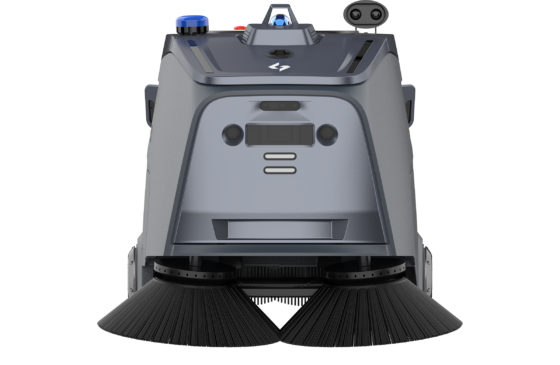
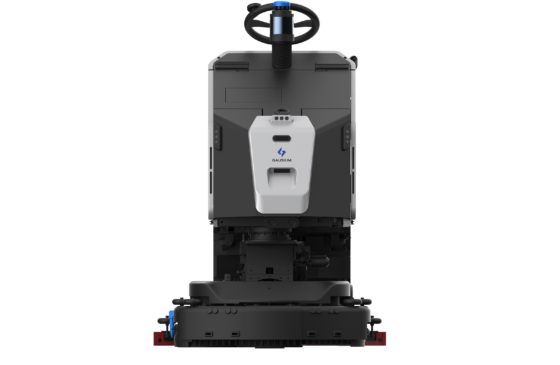
Gausium’s Beetle industrial sweeper is a good example of what robust navigation looks like in practice. Designed for warehouses and manufacturing facilities, it uses 3D LiDAR as its primary navigation system, allowing it to operate confidently in low-light conditions, high-traffic zones, and vast open spaces. The robot can even integrate with warehouse sliding doors through Gausium’s AutoPass solution, enabling autonomous passage without requiring someone to hold the door open.
Commercial facilities rarely have the luxury of uniform flooring. Walk through any modern office, retail space, or healthcare facility and you’ll encounter polished concrete, vinyl, carpet, tile, and probably a few other surfaces thrown in for good measure.
A professional autonomous floor cleaning solution needs to handle this variety without requiring you to purchase separate machines for each surface type. That means looking for robots that integrate multiple cleaning modes—scrubbing, sweeping, vacuuming, and mopping—in a single platform.
The benefit here is obvious: fewer machines to purchase, maintain, and manage. But there’s a subtler advantage too. A multi-mode robot can adapt its cleaning approach based on what it encounters, switching from scrubbing mode on hard floors to vacuuming mode on carpeted areas without missing a beat.
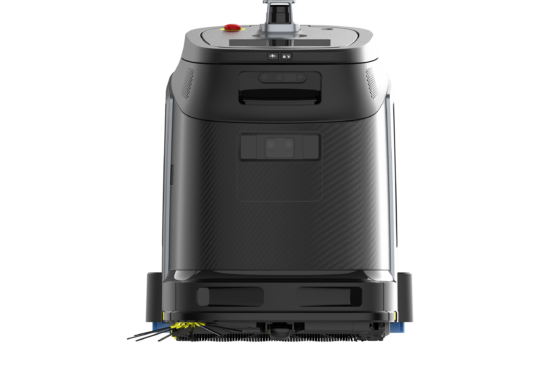
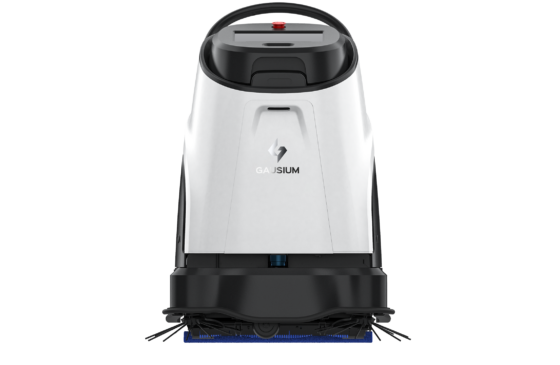
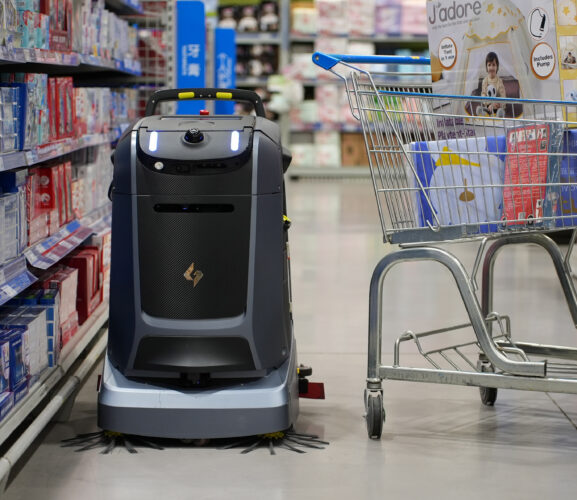
The Gausium Phantas is worth examining here. Despite being one of the most compact commercial floor cleaning robots on the market, it integrates four distinct cleaning modes in a single unit. It handles hard floors and soft surfaces with equal competence, and its integrated handle allows operators to seamlessly transition between autonomous and manual operation when needed. For facilities with diverse flooring requirements, this kind of versatility dramatically simplifies operations.
The promise of autonomous cleaning is that robots handle the dirty work while your staff focuses on higher-value tasks. That promise falls apart if someone needs to “babysit” the machine—refilling water tanks, emptying debris bins, and manually cleaning the robot’s own internal components every few hours.
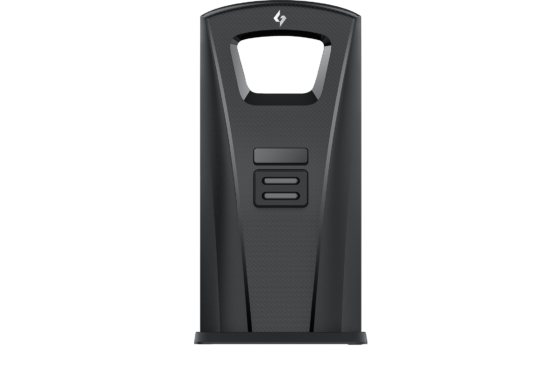
True autonomy requires self-service infrastructure. The best commercial cleaning robots in 2026 come paired with docking stations that handle the full range of maintenance tasks automatically: battery charging, fresh water refill, and wastewater drainage.
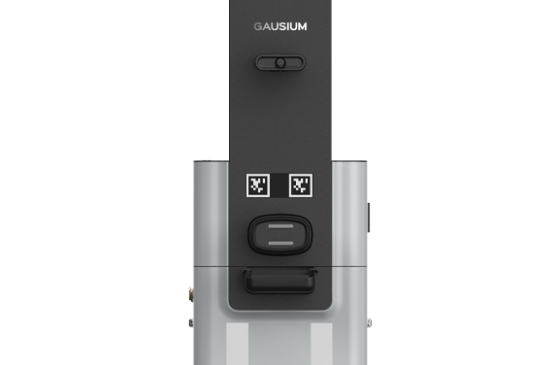
However, the most advanced systems go beyond mere fluid exchange by incorporating automatic self-cleaning features. A common pain point in robotic cleaning is the buildup of sludge and bacteria within the machine itself. Models like the Gausium Phantas and Gausium Mira address this by utilizing workstations that actively rinse and sanitize critical components. This includes high-pressure flushing of the wastewater tank and sewage hose to prevent odors and blockages, as well as automated cleaning of the squeegee. By ensuring the squeegee is free of debris and the internal plumbing is clear, these robots maintain peak suction and hygiene standards without human intervention.
This capability unlocks what operations managers actually want: 24/7 continuous operation. Deploy the robot at the end of the business day, and it cleans through the night—returning to its dock to recharge, refill, and deep-clean its own internal systems—so your facility is spotless and your equipment is hygienic when staff arrives the next morning. No intervention required.
Single-robot deployments are straightforward. But most enterprises aren’t thinking about one robot—they’re thinking about fleets distributed across multiple facilities, potentially spanning different regions or countries.
At this scale, centralized management isn’t optional. You need a cloud platform that provides visibility into every robot’s status, cleaning coverage, and maintenance needs. You need the ability to edit maps and adjust cleaning routes remotely, without sending a technician on-site. And you need intelligent scheduling that prevents multiple robots from duplicating effort or getting in each other’s way.
Remote deployment capabilities deserve special attention. The ability to set up and configure cleaning routes through remote map editing dramatically reduces the time and cost associated with rolling out new robots. Instead of requiring extensive on-site configuration, operators can fine-tune routes from a central location—a game-changer for organizations managing large distributed estates.
Data integration is the next frontier here. Advanced setups can feed robot-generated maps into digital twin models, giving facilities teams a live view of space usage, cleaning coverage, and obstacle patterns. This isn’t just about clean floors anymore—it’s about operational intelligence.
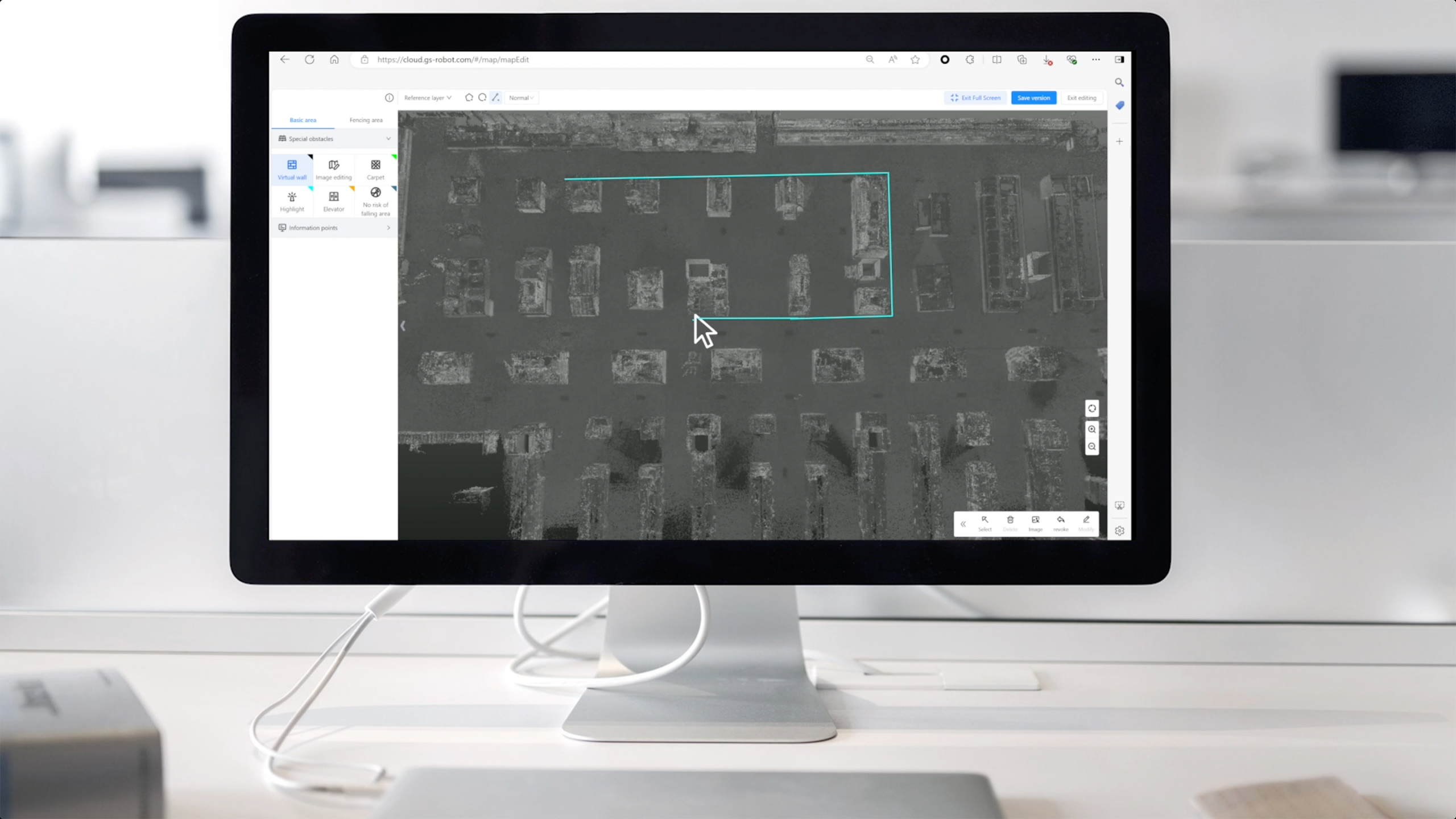
Remote Map Editing (cr: Gausium)
The autonomous cleaning market has matured rapidly. The technology that seemed experimental just a few years ago is now deployed in thousands of facilities worldwide, delivering measurable improvements in cleaning consistency, labor efficiency, and operational costs.
But maturity brings complexity. The range of options available today means facility managers need to be discerning about which features actually matter and which are marketing fluff.
Focus on the fundamentals: intelligent spot cleaning that maximizes efficiency, robust navigation that handles real-world chaos, multi-mode versatility that adapts to your facility’s needs, self-service infrastructure that enables true autonomy, and fleet management capabilities that scale with your operations.
Get these five elements right, and you’ll have a commercial cleaning robot that actually delivers on the promise of autonomous floor cleaning. Get them wrong, and you’ll have an expensive reminder of why due diligence matters.
The technology is ready. The question is whether you’re choosing equipment that’s ready for your facility.
Gausium is a leading company of AI-powered autonomous cleaning solutions with more than 6,500 customers in more than 70 countries and regions. Products and services of Gausium include commercial floor cleaning robots, docking stations, cloud platform and application software, and more in the pipeline. Driven by a vision to lead the intelligent digital transformation of the cleaning and service industry, Gausium offers the world’s most comprehensive portfolio of commercial cleaning robots, empowering individuals to work smarter and lead more fulfilling lives.

Step 1/2
Please select the type of business you’d like to have with Gausium.
Choose one item from the list
Step 2/2
Thanks for sharing your preference. Please fill out the form below, and we’ll get in touch shortly.
By clicking “Submit”, I authorize Gausium to contact me. Privacy Policy.
Thank you for filling out the form
By clicking “Submit”, I authorize Gausium to contact me. Privacy Policy.