




UP NEXT
Upgrading the Retail Experience: Why Phantas is not your Average Floor Cleaner.July 15, 2022


August 02, 2022
Incomplete floor coverage in public buildings rarely reflects insufficient cleaning power. It reflects the limits of physical access.
Areas beneath desks, between partitions, under shelving, around fixed seating and in corridor corners represent a modest share of total floor area.
They also account for the entirety of the manual labour that remains once machine cleaning is complete.
There are good reasons to use autonomous technology in these facilities, where visible and consistent cleaning is essential to public perception. Advances in robotics, artificial intelligence, cloud computing and mobile data transmission have made robotic floor cleaners a technically reliable alternative to conventional operator-driven equipment.
The question in a public building is not whether the technology is capable. It is which areas the machine can reach.
Commercial cleaning equipment — walk-behind, ride-on and autonomous alike — is predominantly designed around productivity across open floor plates. Wider cleaning paths and greater area per pass produce stronger efficiency figures.
That logic holds in warehouses and retail floors. It does not transfer to public buildings:
In these environments, machine footprint determines access rather than productivity. Cleaning path width has no bearing on areas the machine cannot enter.
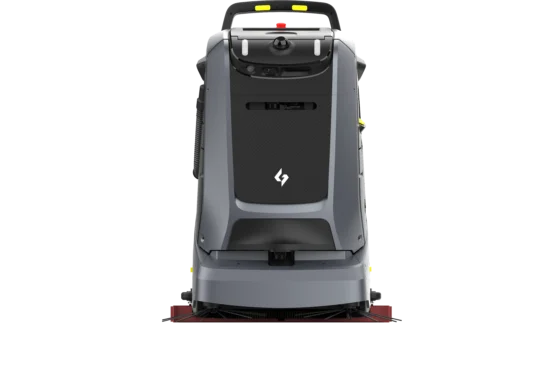
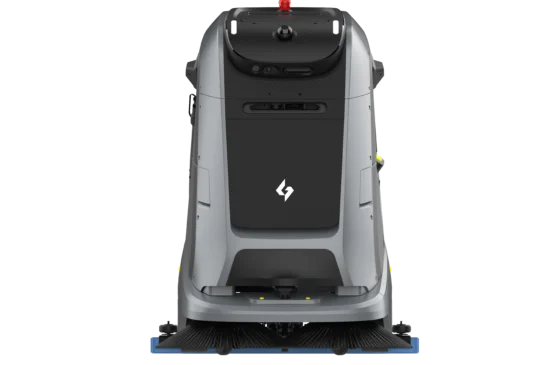
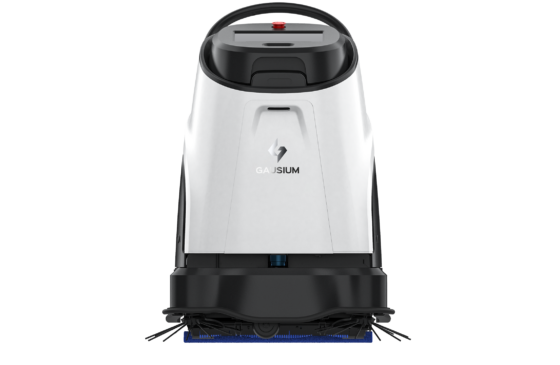
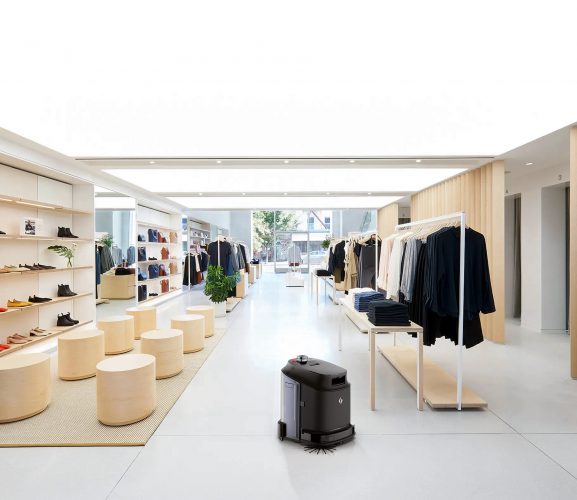
Phantas is designed against the prevailing approach. It accepts a smaller area per pass in exchange for the ability to enter constrained spaces — beneath desks, between furniture and under shelving.
Three consequences follow from that design decision.
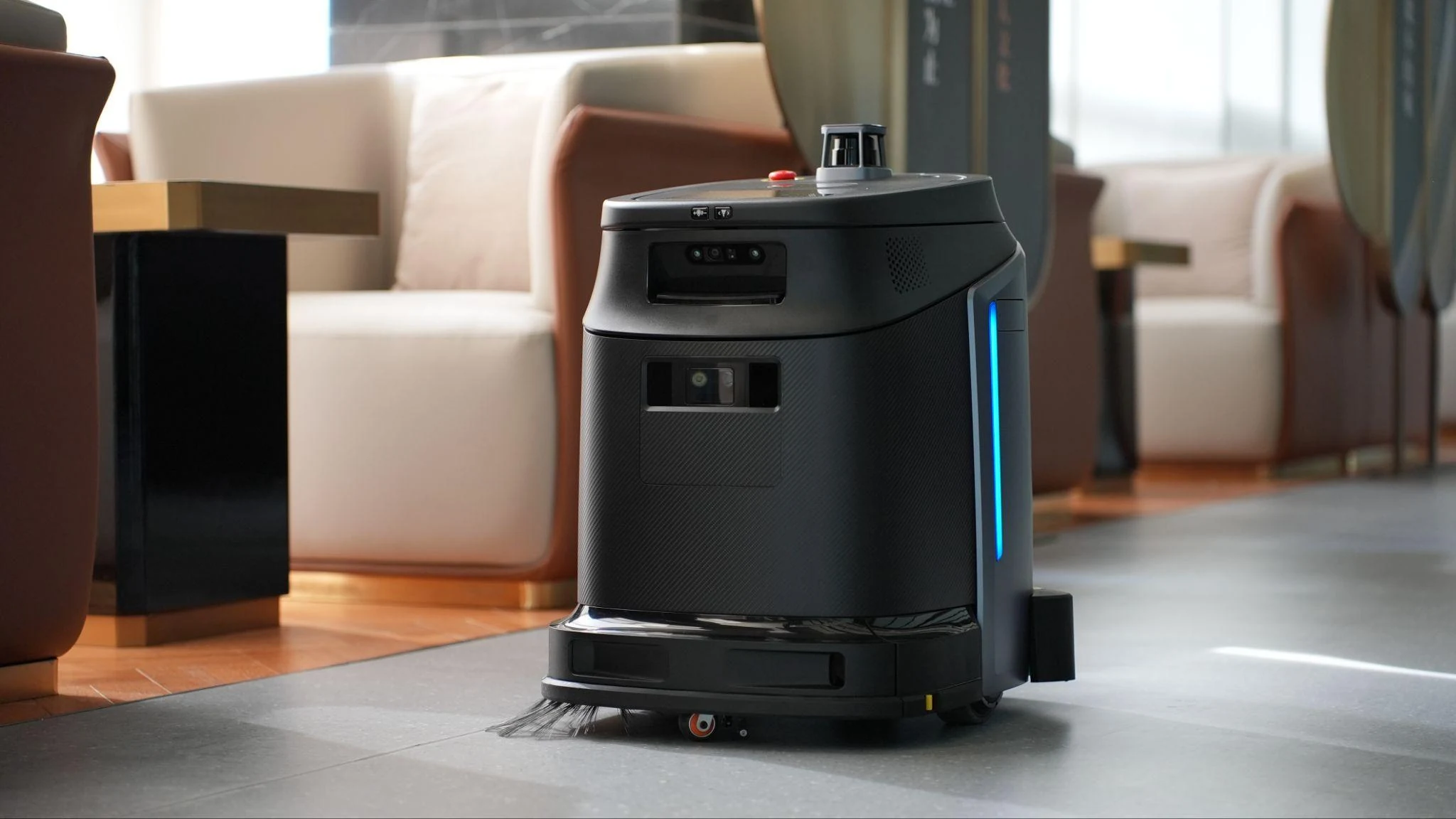
Public buildings combine complex layouts with hard-to-reach boundaries, which makes it difficult for most commercial machines to navigate the exact perimeter, leaving areas uncovered.
Phantas supports Drop & Go deployment. On first power-up it scans the site and generates a semantic map without external tools or installation professionals, removing the requirement to manually walk the machine around the periphery.
Layout changes require no remapping — a material consideration in buildings where furniture and temporary installations move regularly.
Full-coverage routing is inefficient in subdivided areas, since much of the distance travelled crosses floor that is not soiled.
Phantas incorporates Gausium’s Auto Spot Cleaning into its path planning. The machine scans surrounding floor condition and cleans where waste or staining is detected.
This matters in public facilities for two reasons:
The machine does not follow a predetermined plan but operates according to real-time conditions. Cleaning staff no longer have to locate a spill and walk a machine to the position to treat it.
Public buildings commonly combine several surfaces on a single storey — stone in the lobby, carpet in office areas, tile along corridors.
Phantas operates on most hard flooring materials including marble, concrete, ceramic and hardwood, and performs equally well on the low-pile carpet common in offices and libraries.
Vision sensors enable floor type recognition, and the machine switches cleaning mode to suit each surface.
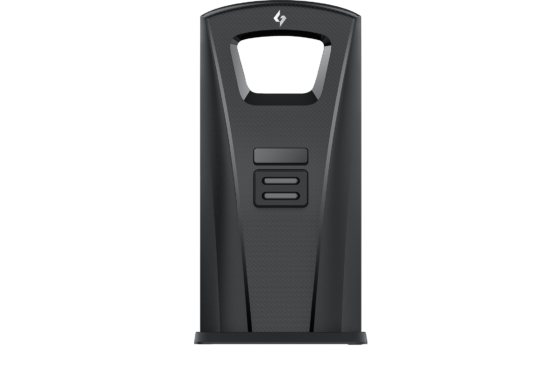
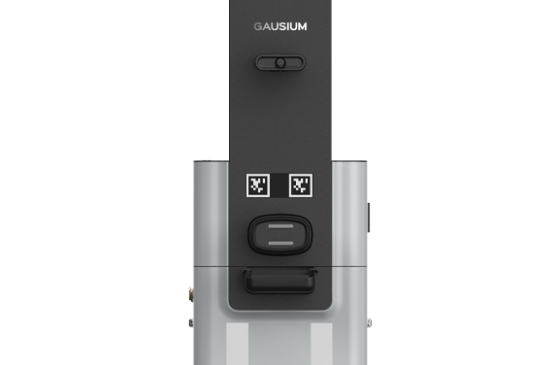
Paired with a docking station for autonomous charging, Phantas remains available around the clock.
Through the Gausium App, operators control cleaning from any mobile device. Task scheduling and remote control make cleaning available at night, or during any period when the building is closed to the public.
Public buildings are not composed solely of constrained spaces.
Civic hall concourses, library reading rooms, hospital public lobbies and school auditoriums are large and carry continuous foot traffic. A compact machine covers these at low efficiency, requiring multiple passes to complete a single hall.
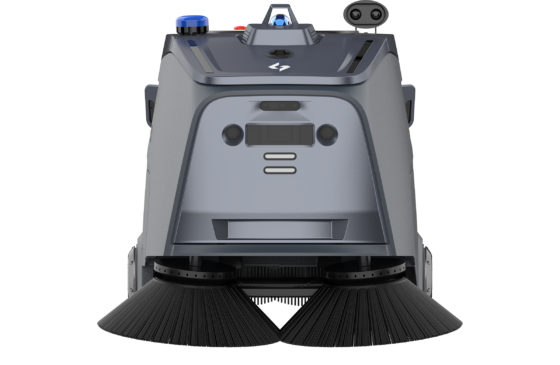
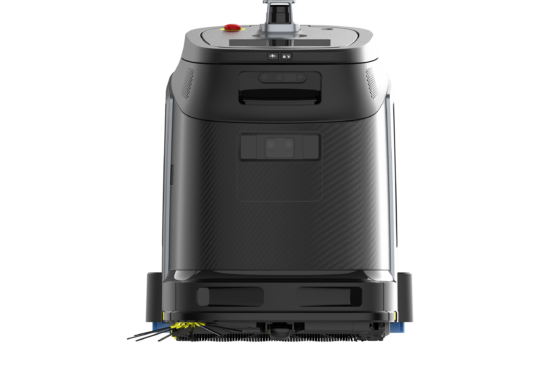
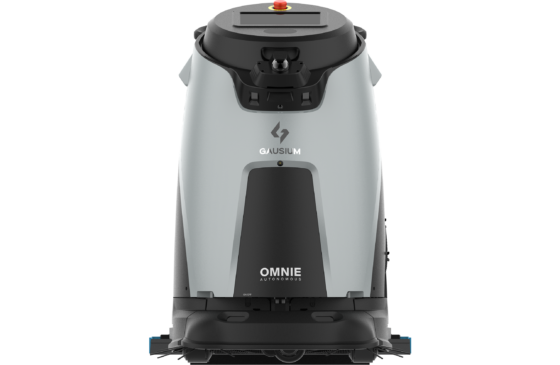
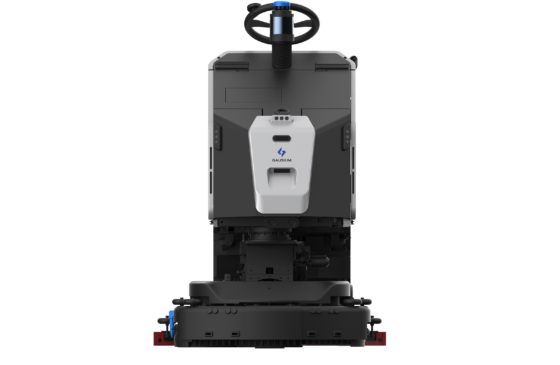
Omnie is built for these conditions. It offers scrubbing, sweeping, dust mopping and spot cleaning, with multimodal SLAM, 3D LiDAR and a 360-degree panoramic camera providing zero-blind-spot perception for operation among building users.
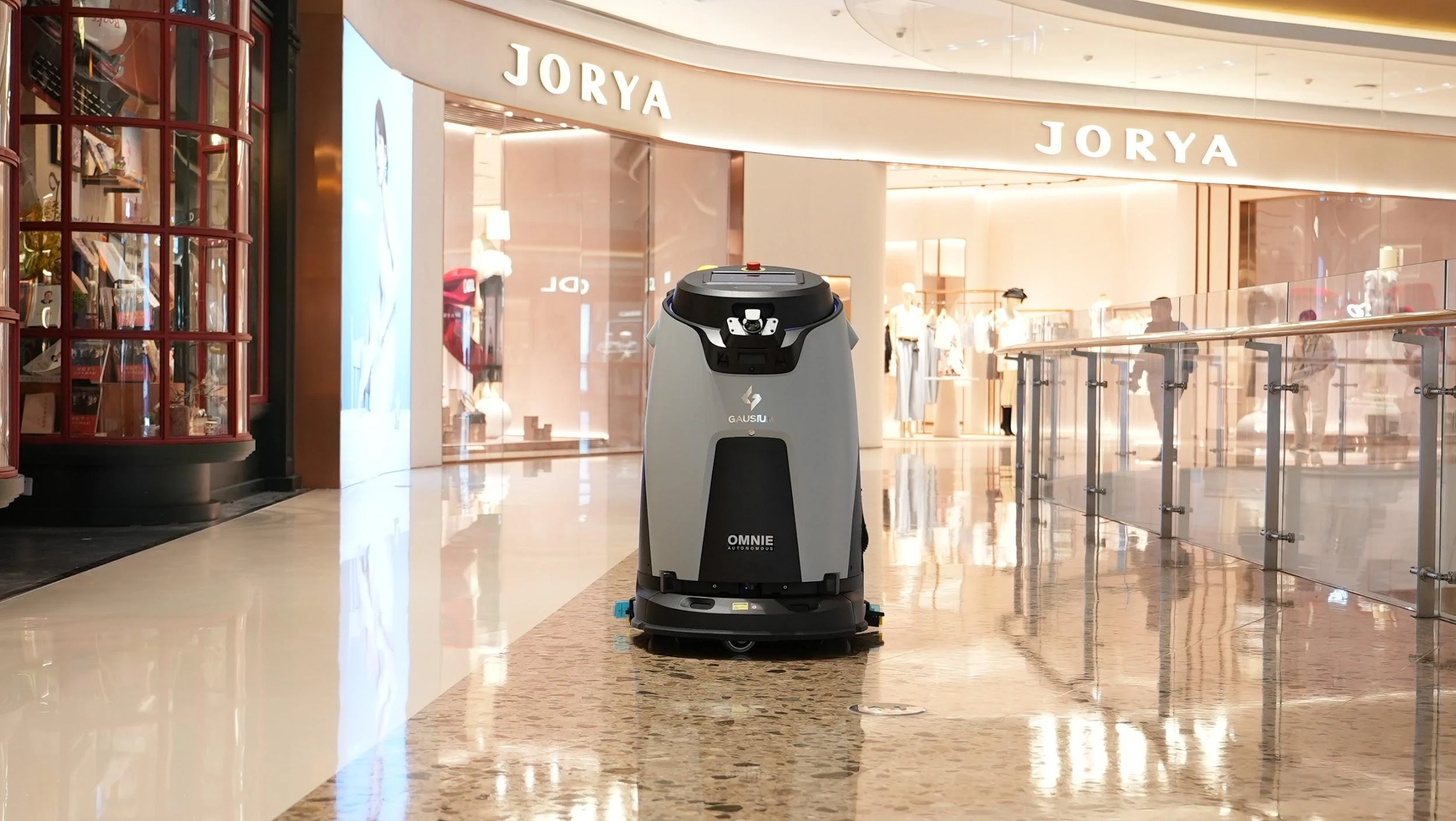
Most public buildings contain both categories of space, so configuration follows zone rather than site.
|
Building type |
Omnie covers |
Phantas covers |
|
Government offices |
Lobbies, public corridors |
Office areas, between workstations, meeting rooms |
|
Libraries |
Reading rooms, entrance halls |
Shelving aisles, study areas |
|
Schools |
Auditoriums, sports halls, main corridors |
Classrooms, administrative offices |
|
Healthcare facilities |
Public lobbies, waiting areas |
Ward corridors, consultation rooms |
|
Civic venues |
Service halls, waiting areas |
Administrative areas behind the counter |
One measurement governs the division: the narrowest clearance within the zone.
Where clearance permits, Omnie delivers higher coverage efficiency. Where it does not, Phantas maintains access.
Current specifications are on the respective product pages, and the Gausium solutions overview covers the wider deployment picture.
Determining whether a machine suits a given public building depends less on comparing productivity figures than on walking the route the machine will take and recording the narrowest clearance along it.
That figure accounts for:
Take the smallest value across the full route rather than an average.
It determines which zones a machine can enter, which zones remain manual, and therefore how many hours the deployment actually displaces.
With that measurement and the available hours for each zone, Gausium can arrange a site assessment by building type.
Configuration follows zone rather than building. Subdivided areas with tight furniture spacing suit Phantas; open halls with continuous foot traffic suit Omnie. Most public buildings contain both.
A compact machine can. Phantas is dimensioned to enter beneath desks and between furniture, positions that larger machines cannot access.
Phantas supports Drop & Go deployment and adapts to layout changes in real time, so remapping is not required after furniture or equipment is moved.
The machine identifies where the floor is actually soiled and treats those positions, rather than following a fixed route across the whole area. In public spaces with frequent spills, this allows a spill to be addressed before it spreads, and delivers up to 400% efficiency improvement by cleaning only where required.
That follows zone division rather than total floor area. A building with one large hall and several subdivided floors may need one machine of each type; a single-storey facility with consistent conditions throughout may be served by one.
UP NEXT
Upgrading the Retail Experience: Why Phantas is not your Average Floor Cleaner.July 15, 2022
Step 1/2
Please select the type of business you’d like to have with Gausium.
Choose one item from the list
Step 2/2
Thanks for sharing your preference. Please fill out the form below, and we’ll get in touch shortly.
By clicking “Submit”, I authorize Gausium to contact me. Privacy Policy.
Thank you for filling out the form
By clicking “Submit”, I authorize Gausium to contact me. Privacy Policy.