




UP NEXT
How Airports Use Cleaning Robots Across Check-in Halls, Concourses and Gates11月 03, 2026

11月 03, 2026
Epoxy floors are used in warehouses, factories, laboratories, car parks and retail back-of-house areas. Cleaning them well comes down to three habits: remove loose grit often, wet clean with a cleaner and pad suited to the coating, and deal with spills promptly. The coating manufacturer's maintenance instructions decide which products and tools are suitable for a specific system.
Even a durable coating needs appropriate care. Grit, unsuitable chemicals and the wrong tools can scratch or dull the finish, and a damaged surface is harder to clean and more expensive to restore. A good routine protects the finish while keeping the floor safe to walk and drive on.
An epoxy coating creates a finished surface over the concrete substrate. Depending on the system, that surface may be smooth, textured, glossy or matte, and its traffic and chemical resistance vary from one product to another. Cleaning needs to preserve the specified finish rather than treat every epoxy floor as the same material. The differences between coating types are explained in A Comprehensive Guide to Common Floor Coating Systems and Agents.
Most damage comes from three sources. Grit acts like sandpaper under foot traffic, carts and forklift wheels. Strong cleaners that the coating system is not designed for can etch or dull the surface. Dirty or reused cleaning solution spreads soil instead of removing it and leaves a film that attracts more dirt. A routine built around these risks keeps the floor looking good and makes emerging damage easier to spot.
A new or recoated floor needs time before it can be scrubbed. High-performance floor coatings can take up to 14 days to reach full cure. Sika's maintenance guide, for example, advises waiting seven days at 70°F before scrubbing and taking extra care during that period. Permission for foot traffic does not mean permission for wet scrubbing, so the coating supplier's handover instructions should be in place before the first machine clean is scheduled.
Loose grit is the main source of wear, so removing it often matters more than any wet cleaning step.
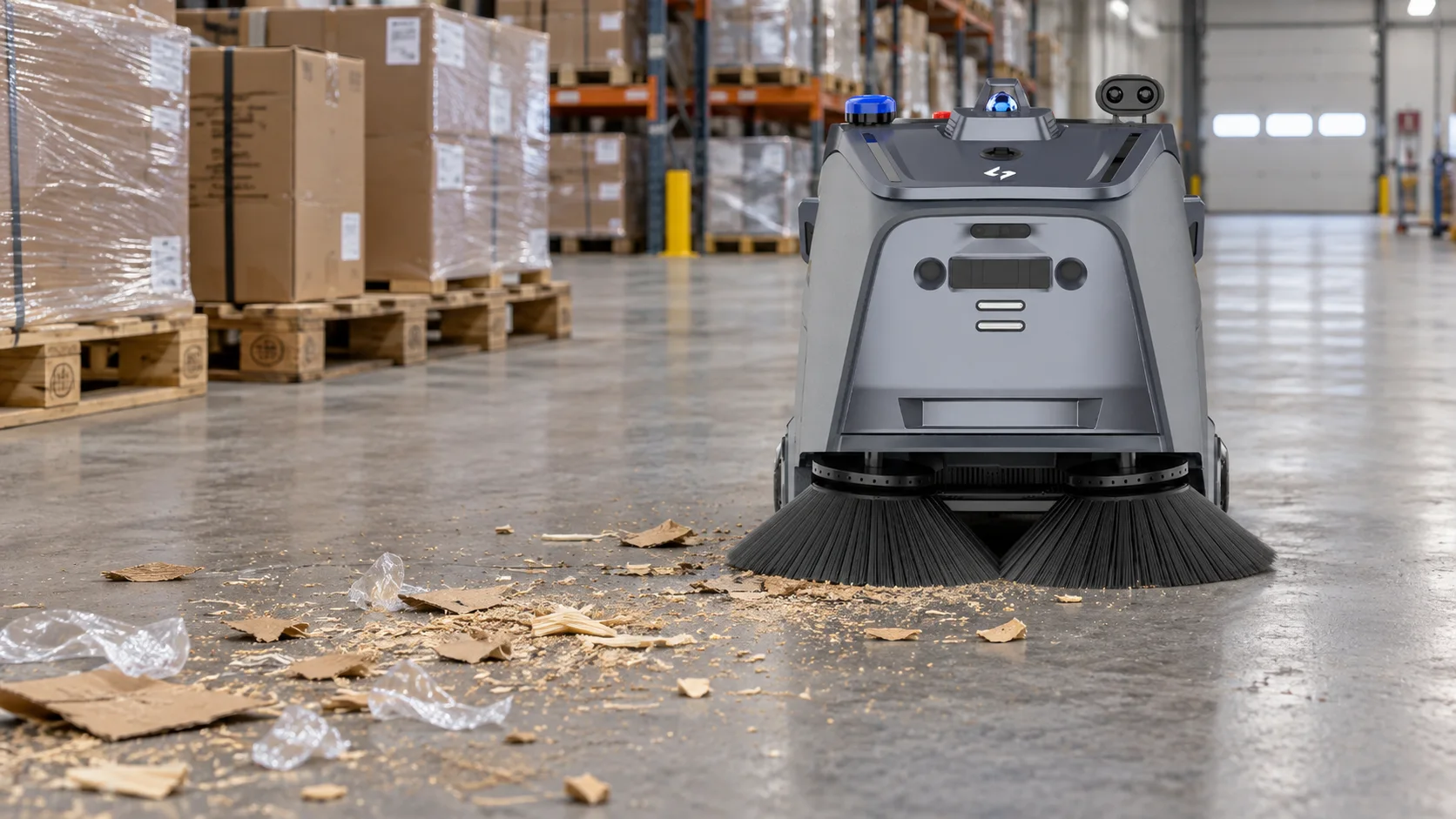
In industrial settings, dry soil often includes wood splinters from pallets, packaging scraps and fine dust from production. A sweeper with effective dust control keeps fine particles from settling back on the floor.
Regular wet cleaning removes the film of dirt that sweeping leaves behind. A typical sequence:
Frequency follows observed soil, traffic and the required condition of the floor. Busy production aisles usually need a different schedule from lightly used storage areas.
Spills should be cleaned promptly, without spreading them over a larger area. Chemicals, oils and process fluids may require a specific response under the facility's safety procedures, so the substance is identified first.
Oil and grease call for a degreasing cleaner and method recommended for the coating system, followed by full recovery of the dirty solution. Spreading oily residue with a mop or an unprepared machine makes the contaminated area larger.
Wheels that spin or pivot on the spot are a common cause of marks, so driver training is the first line of prevention. Regular scrubbing limits build-up. Whether established marks can be removed, and with which product, depends on the coating.
Many industrial epoxy floors include anti-slip aggregate. The texture improves traction but holds more dirt than a smooth finish.
Scratches, gouges and chips should be reported for assessment and repair rather than scrubbed harder.
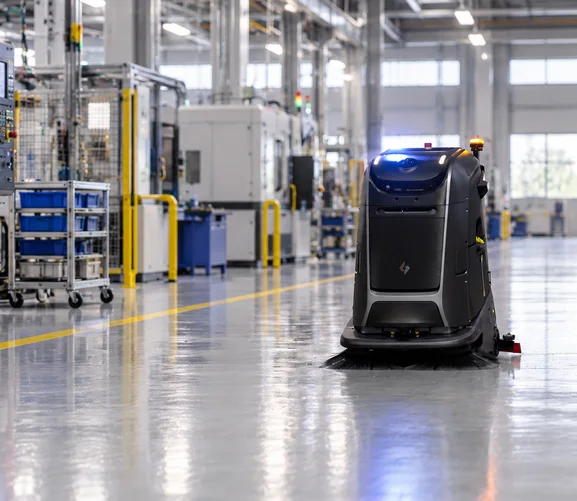
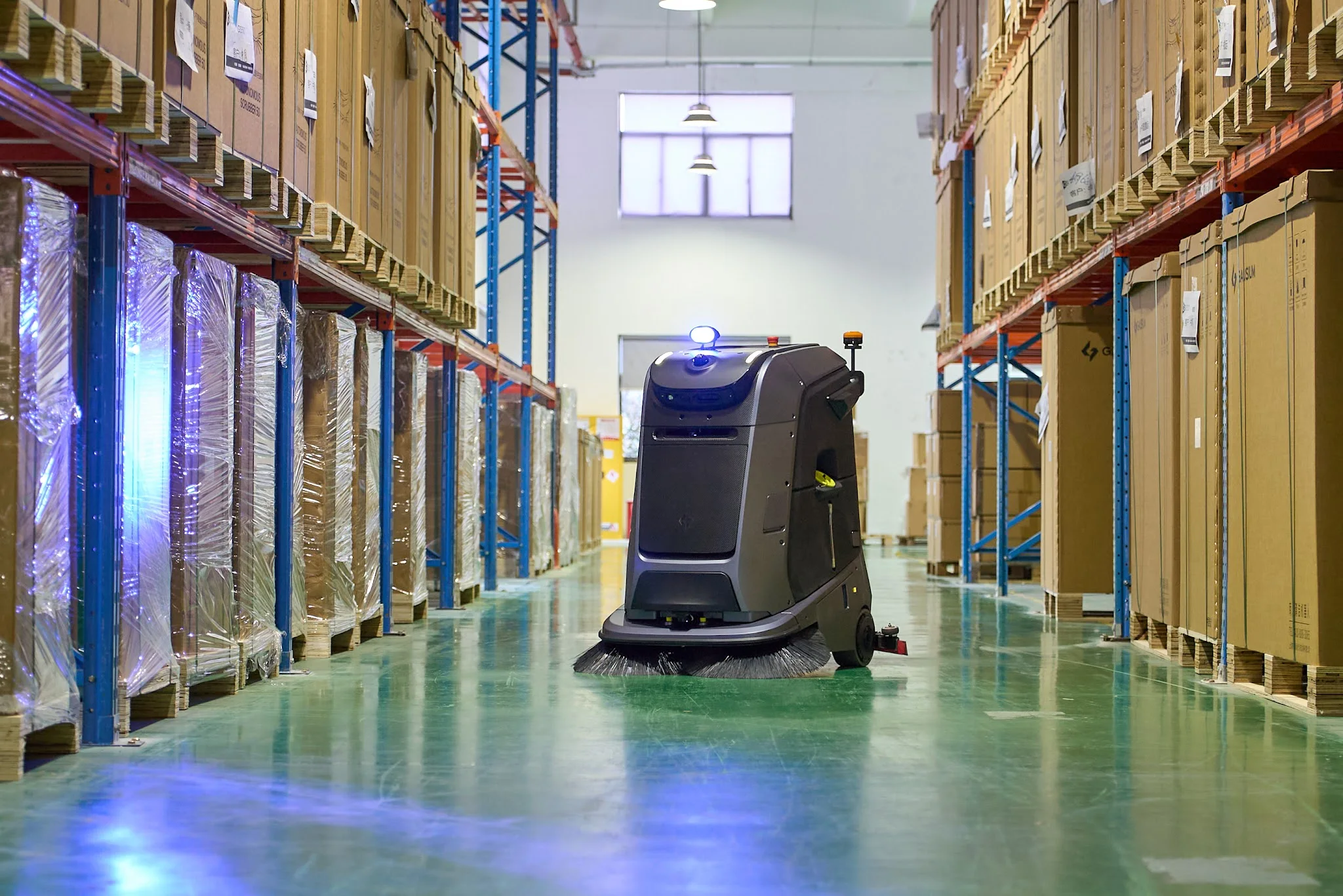
Large epoxy floors suit robotic cleaning because the work is repetitive: the same aisles need sweeping or scrubbing every day. Robots take on that recurring work, while the cleaner, brushes and operating method are confirmed for the coating before deployment.
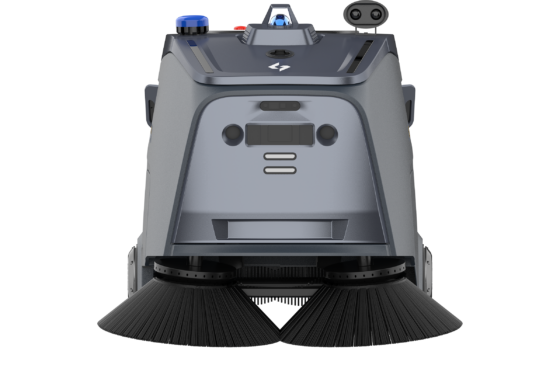
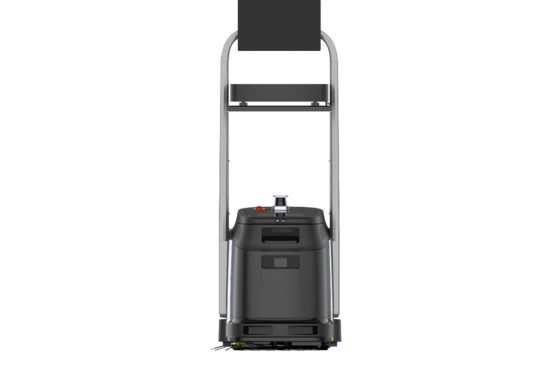
Beetle is an autonomous sweeping robot with high-power suction and HEPA filtration for warehouses and production areas, indoors and outdoors. It collects fine dust and sand as well as larger debris such as paper scraps, bottles and wood chips, and it does not wet-scrub.
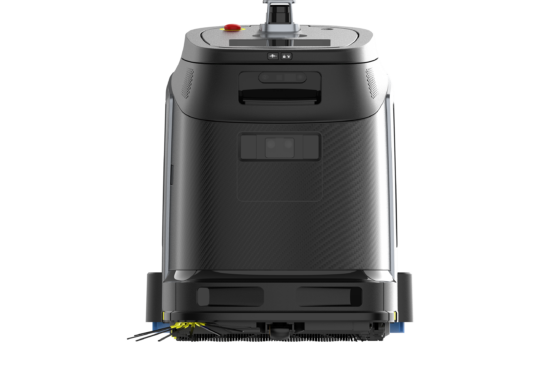
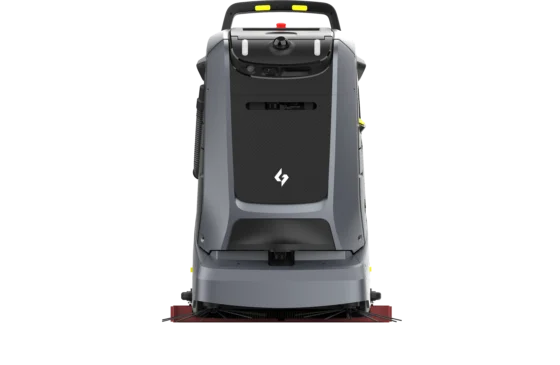
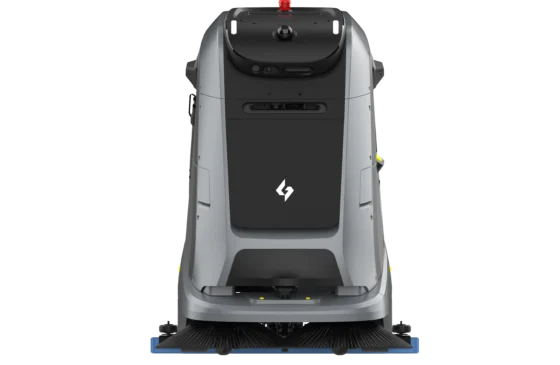
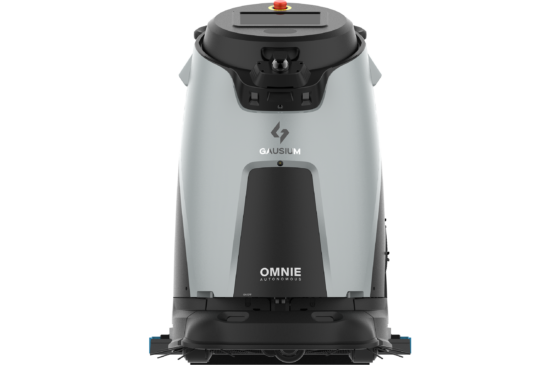
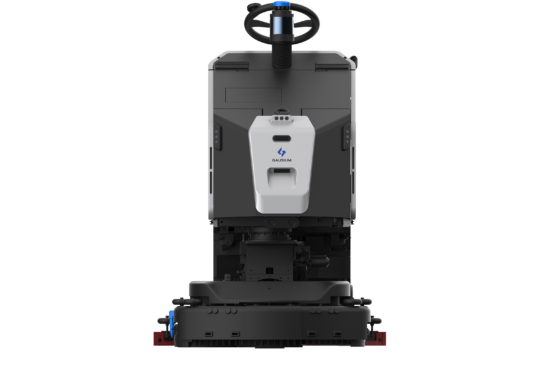
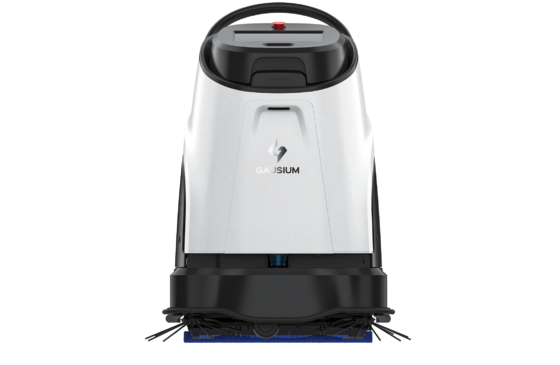
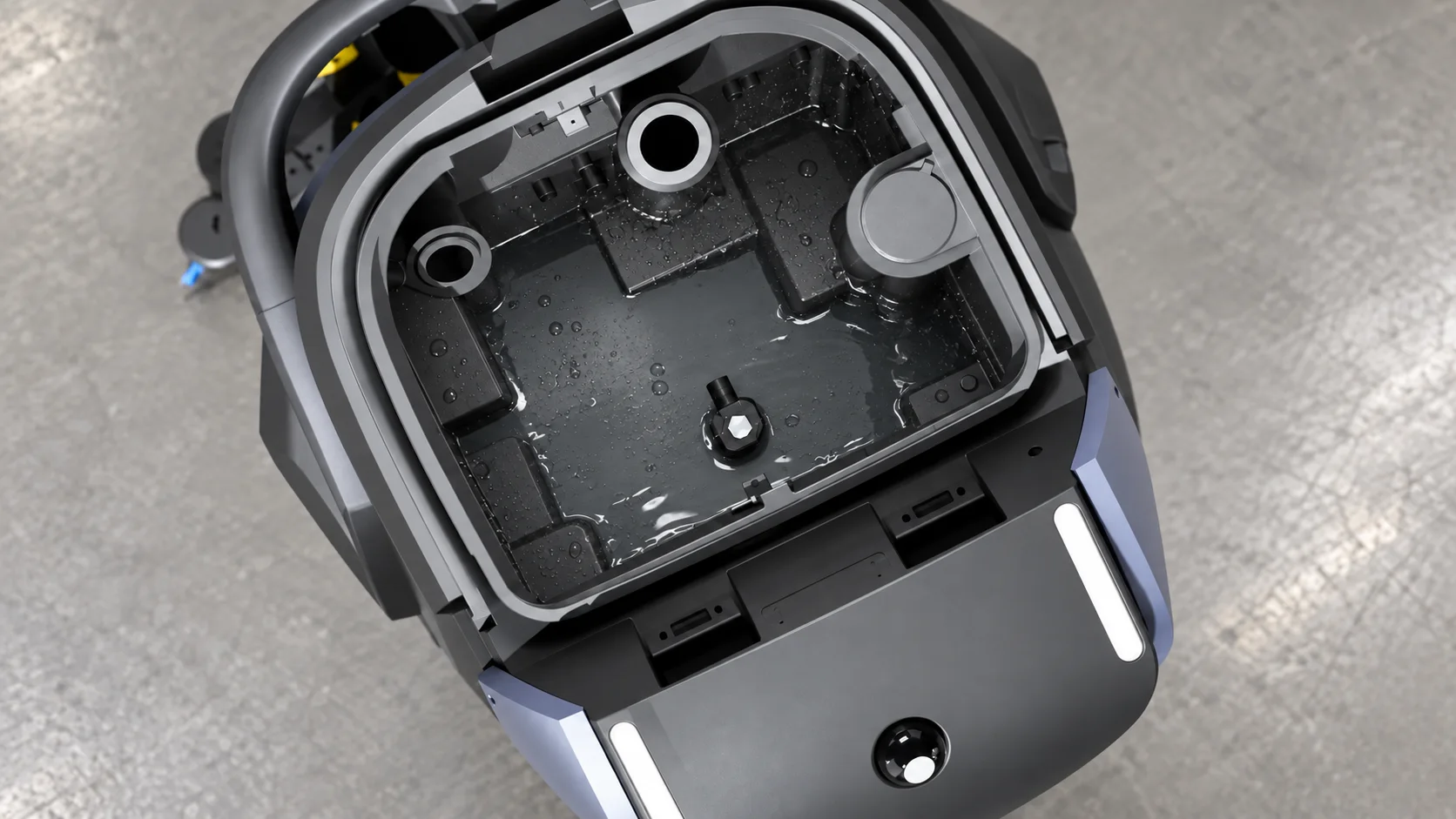
For dirt that sweeping does not remove, a scrubbing robot applies and recovers the cleaning solution in one pass. Marvel sweeps and scrubs in one pass on large and complex floors. Mira does the same in mid-sized spaces and narrow aisles. Omnie scrubs and uses AI to identify and clean dry and wet waste in high-dynamic areas.
Factory floors with heavy soil are covered in more detail in the guides to heavy-duty cleaning robots for industrial floor scrubbing and industrial floor scrubbers for factories.
Staff still handle spills of unknown substances, edges and areas the robot cannot reach, and periodic deep cleaning. Keeping brushes and squeegees in good condition also protects the coating, as described in the guide to robot floor scrubber maintenance.
To plan robotic cleaning for an epoxy-coated facility, contact Gausium.
Remove loose grit regularly, then wet clean with a cleaner, dilution and brush or pad suited to the coating, and recover the dirty solution. The coating manufacturer's instructions set the details for each system.
A neutral cleaner is the usual choice for routine cleaning, unless the coating manufacturer specifies otherwise. Greasy areas may need a degreaser that the coating can tolerate. Strong chemicals the system is not designed for should be avoided.
It depends on traffic and soil. Busy aisles and entrances need daily sweeping and regular wet cleaning; quieter areas need less. Harsh environments need more frequent cleaning overall.
Yes, once the coating has fully cured and the cleaner, brushes or pads are suited to the system. Sika, for example, advises waiting seven days at 70°F before scrubbing a new floor.
Driver training is the first step, since spinning or pivoting wheels cause most marks. Regular scrubbing limits build-up. Whether established marks can be removed depends on the coating and the recommended products.
Yes. Textured surfaces hold more dirt, so they usually need more frequent sweeping and scrubbing, with brushes that reach into the texture within the manufacturer's guidance.

Step 1/2
Please select the type of business you’d like to have with Gausium.
Choose one item from the list
Step 2/2
Thanks for sharing your preference. Please fill out the form below, and we’ll get in touch shortly.
By clicking “Submit”, I authorize Gausium to contact me. Privacy Policy.
Thank you for filling out the form
By clicking “Submit”, I authorize Gausium to contact me. Privacy Policy.