




UP NEXT
How to Maintain a Robot Floor Scrubber: Daily, Weekly & Monthly ChecklistJune 24, 2026

August 10, 2026
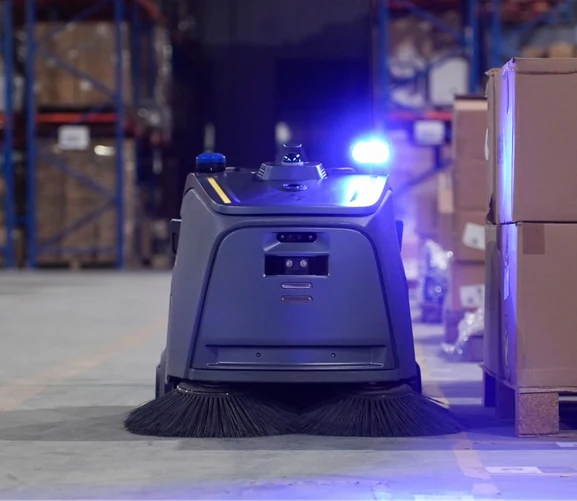
Most teams searching for an industrial floor scrubber are not looking for a product roundup. The real question is whether a machine can take over a full cleaning route in a plant or warehouse without becoming one more thing operations has to supervise.
That question changes what you compare. Scrub width and runtime matter less than route ownership, debris load, refill and recovery workflow, and who is accountable when the layout changes. The test is not how well a machine runs on day one. It is whether it still finishes the route in month two, and how much human intervention each shift still requires.
This guide explains how to match machine class to your route, what to verify before you request pricing, and where Gausium’s three industrial models fit.
Plants usually start by comparing spec sheets. Starting there produces quotes for the wrong class of equipment. Work through these first:
How much of the route is genuinely repeatable? Are layout and material staging stable enough that a map holds for months?
How much dry debris is on the floor? Does the route need a pre-sweep, or a separate sweeper altogether?
Which class of machine does the site actually need? The first two answers decide this.
Skip the sequence and you end up comparing a sweeper quote against a sweeper-scrubber quote. Those machines solve different problems, so a large price gap is expected rather than meaningful.
|
If the route looks like |
Usually the right class |
Why |
|
Narrow aisles, partitioned areas, support paths between equipment |
Compact autonomous machine |
Path clearance and turning radius matter more than cleaning width |
|
Main aisles, rack lanes, large production and warehouse circulation paths |
Mid-size or large autonomous machine |
Best balance of unattended output, tank capacity and route completion |
|
Open concrete, heavy debris, a dedicated operator on every shift |
Ride-on equipment, or sweep-then-scrub as two passes |
Operator-led recovery is already built into the workflow |
|
Outdoor yards, loading areas, asphalt or gravel surfaces |
Sweeper |
These surfaces absorb water and are too uneven for recovery |
|
Layout changes frequently, staging positions move |
Walk-behind or ride-on |
When re-mapping outpaces cleaning frequency, path maintenance costs more labor than it saves |
A wider machine does not automatically produce more per shift. Stops to refill, drain, or clear an obstruction erase the advantage that width creates. These four factors decide whether a machine can own a route.
|
Comparison factor |
Why it matters on a plant floor |
What to verify |
|
Route ownership |
A machine that finishes half the route leaves the other half on the schedule, so the labor problem remains |
Area covered per fill, per shift, and within the actual cleaning window |
|
Debris and prep load |
Shrink wrap, pallet splinters and metal swarf change whether autonomy holds up |
Whether the route needs a manual pre-sweep or a separate sweeping machine |
|
Refill and recovery workflow |
Frequent refills, drains and restarts consume the labor the machine was bought to release |
Location of water and drain points, dirty water handling, dock placement, and how many interventions actually occur per shift |
|
Service accountability |
In a plant running around the clock, one missed route becomes a safety and audit issue |
Who edits maps after a layout change, who stocks consumables, delivery lead time, and who responds to faults |
The cost of an autonomous machine sits in deployment: mapping, route setup, and tuning obstacle behavior. That cost is paid once and amortizes across every run. Deciding whether autonomy fits is really deciding whether the route will be run repeatedly.
Autonomy is the stronger choice when:
Conventional equipment still wins in specific cases: very heavy debris, chaotic traffic in every aisle, or a site that already staffs a dedicated operator each shift and places no value on unattended work. Plants tend to overestimate how often this applies. In light manufacturing, food distribution and warehousing, the binding constraint is usually labor consistency rather than machine capability.
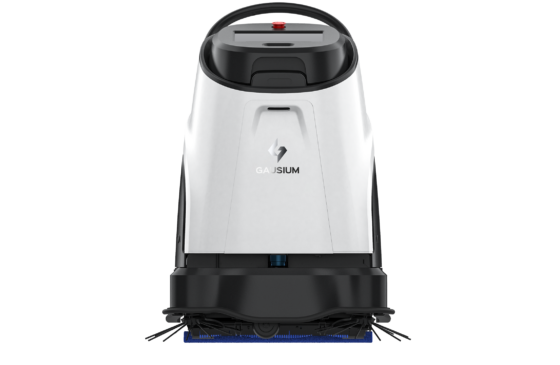
Gausium builds one machine for each of the three cleaning methods used in plants: scrubbing, sweeping, and sweep-and-scrub in a single pass. In IDC’s Worldwide Annual Commercial Cleaning Robotics Tracker, 2025, announced in July 2026, Gausium ranked first worldwide among commercial cleaning robot suppliers by both shipments and revenue.
Each model below is described against the four comparison factors above.
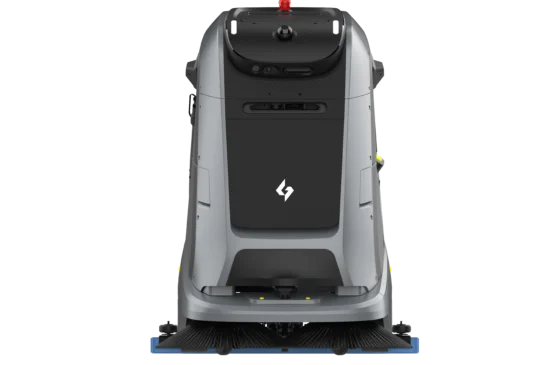
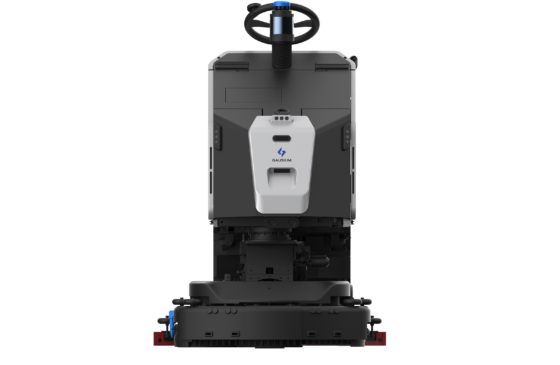
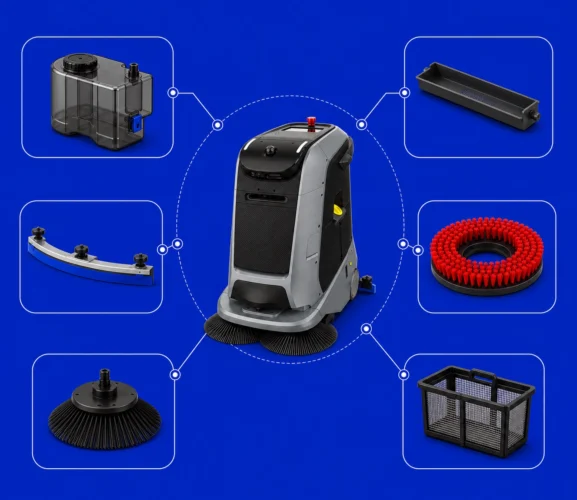
Route ownership. Marvel carries an 80 L clean water tank and a 70 L recovery tank, which reduces refill and drain stops across large areas. A 120 Ah LFP battery supports 5 to 10 hours of continuous operation, enough to cover a full night shift window.
Debris and prep load. Front-mounted dual side brushes collect fine dust and larger debris into a built-in tray, and rear disc brushes scrub immediately behind. Both steps happen in one pass, so the route does not need a separate manual pre-sweep. 55 kg of cleaning pressure handles oil and grime that has worked into the surface.
Refill and recovery. An internal self-cleaning system flushes the recovery tank and rinses the suction pathway automatically, which removes most of the end-of-shift cleanup. A 3D LiDAR and 360 degree vision system supports operation in mixed forklift and pedestrian traffic.
Applicable surfaces include concrete, epoxy, PVC and vinyl, ceramic tile, natural stone, and artificial marble or granite.
Not the right fit when the narrowest point on the route cannot accommodate a large machine.
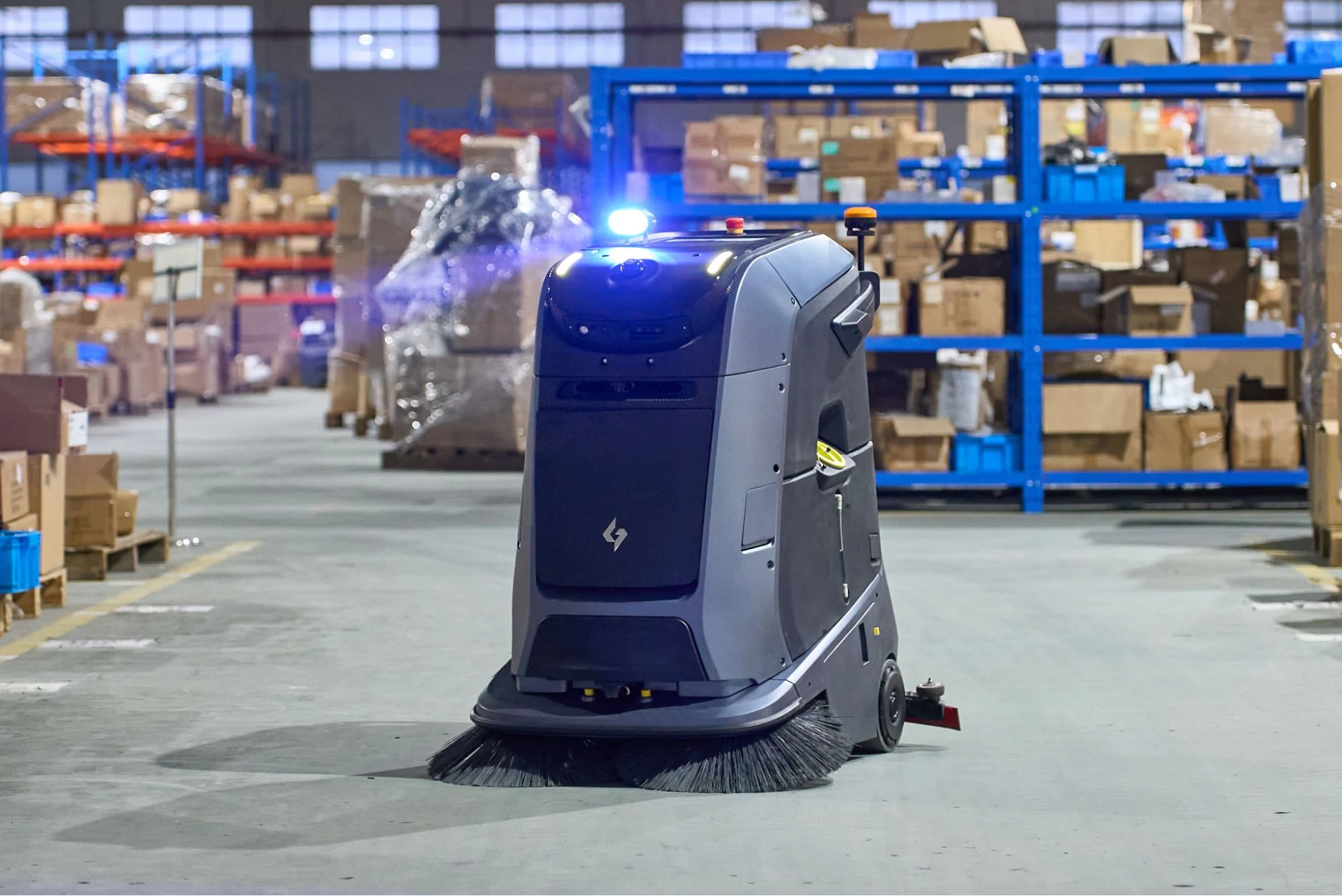
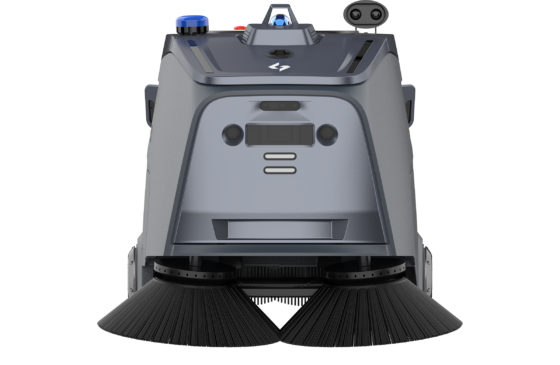
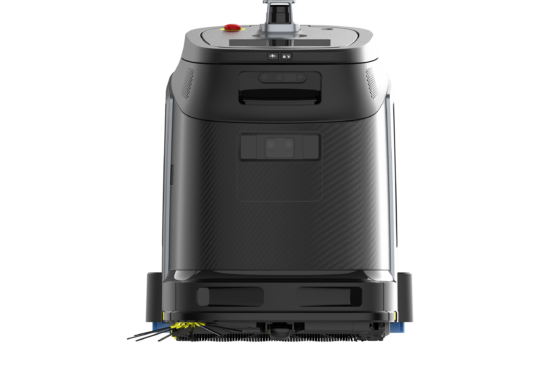
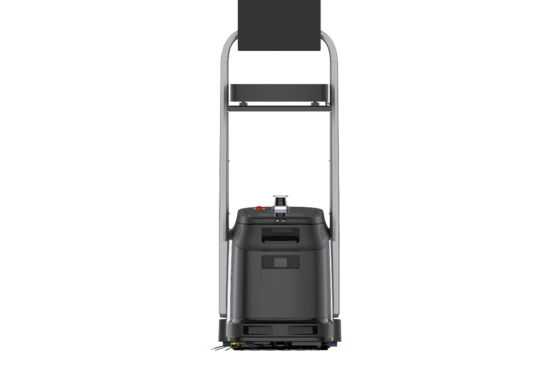
Beetle is an autonomous sweeper and does not scrub. If the problem is oil and embedded soil, Beetle will not solve it. If the problem is dust and debris, running a scrubber over it turns the debris into slurry.
Route ownership. A 45 L trash bin and 60 Ah LFP battery support 4 to 8 hours of operation, with autonomous recharging at a docking station. In Spot Cleaning Mode, RGB-D cameras and AI identify waste so the machine cleans where there is something to clean, which Gausium measures as a 400% efficiency improvement.
Debris handling. A high-power suction motor takes everything from fine dust and sand to paper, bottles and wood chips. HEPA filtration with automatic filter cleaning after each task keeps the sweeping itself from raising dust.
Access. A 750 mm path clearance fits narrow rack aisles. Applicable surfaces include concrete, epoxy, PVC and vinyl, rubble flooring and bituminous surfaces, so the same machine can extend to outdoor yards and loading areas.
At Loulis Food Ingredients in Greece, one Beetle with a charging dock covers 2,500 sqm per day, with cleaning time down 60% and manual inspection effort down 80%. The inspection figure comes from a simple change: once scattered debris is cleared on a schedule, nobody has to walk the floor looking for it.
Not the right fit when the main problem is oil, spills or embedded soil.
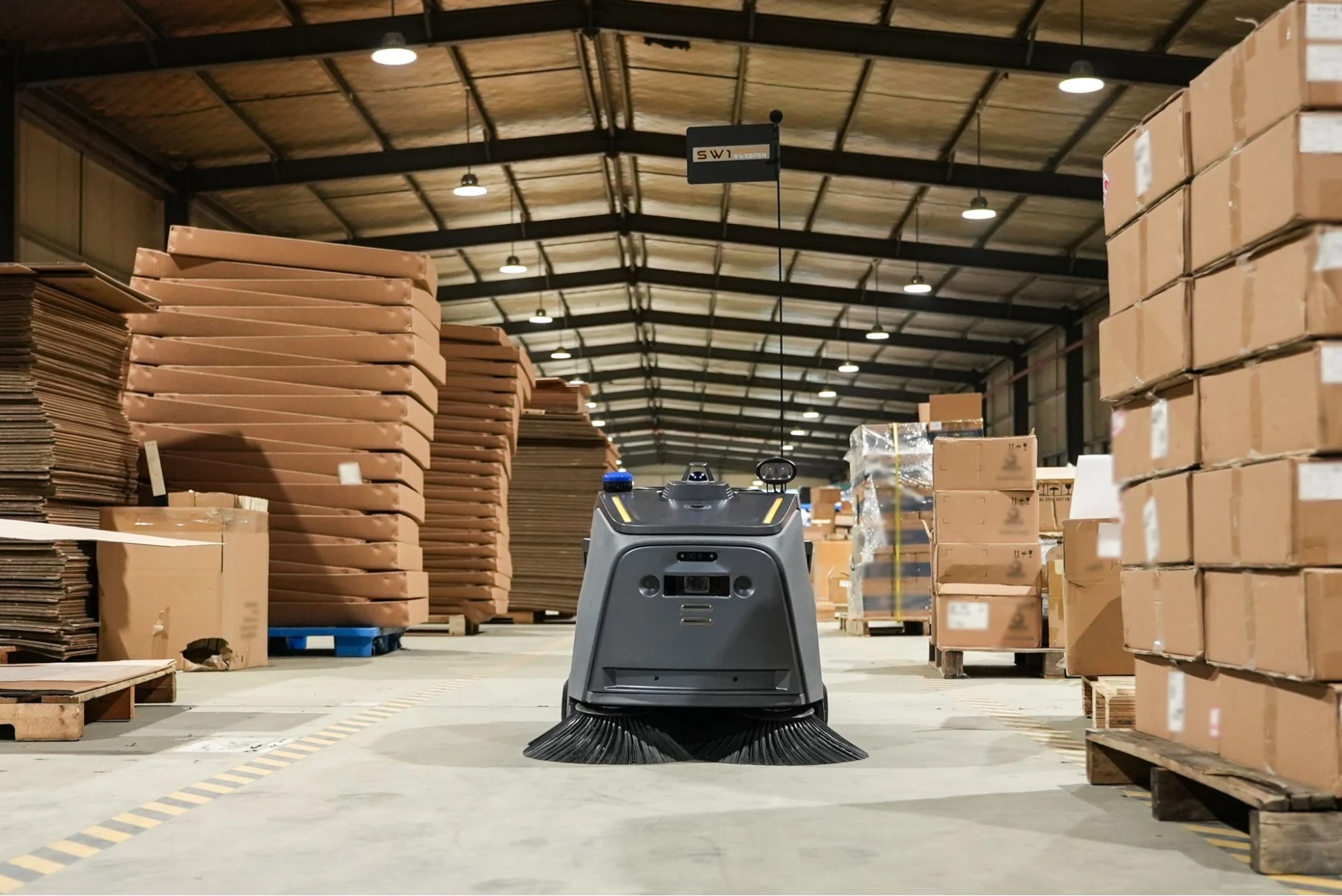
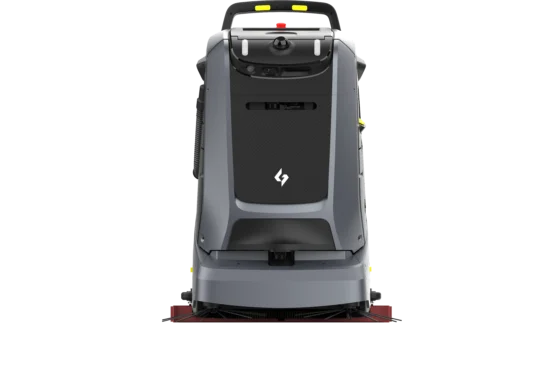
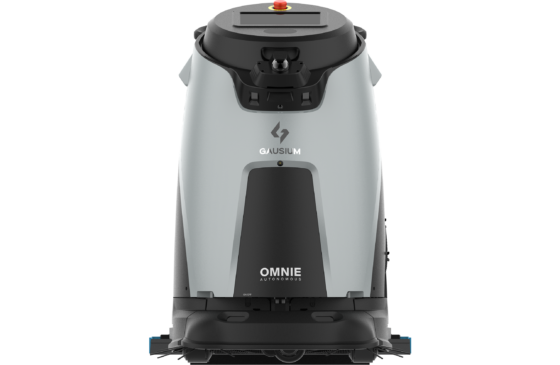
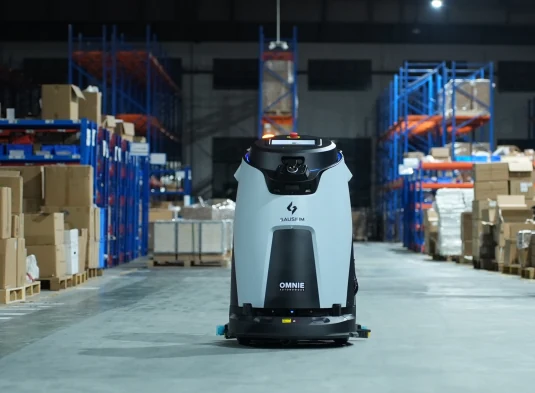
Mode switching. Omnie offers scrubbing, sweeping, dust mopping and spot cleaning, and is the only one of the three that can switch method within the same area. Plant soiling is rarely uniform. It concentrates around equipment and along walking routes, so cleaning where the floor is actually dirty uses less water and power than covering a fixed path repeatedly, and holds a steadier standard.
Dynamic environments. Multimodal SLAM with a 3D LiDAR and a 360 degree panoramic camera handles areas where people and vehicles move throughout the shift. Predictable behavior matters as much as detection here. A machine that stops abruptly or reroutes without warning teaches forklift drivers to slow down near it.
Cleaning width. 780 mm, with dual roller brushes and dual side brushes.
Not the right fit when the floor is cleared overnight and the layout is fixed, where a simpler machine will do.
Compare cost after the trial, once you have measured output from your own floor. Talk to a Gausium expert to arrange a site assessment and a route-by-route recommendation.
It depends on route length, debris type, water access, and how unattended the work needs to be. Across Gausium’s industrial range, Marvel covers main aisles and large floor plates, Beetle handles dry debris, and Omnie suits plants where soiling is uneven.
Workflow, in most plants. A wide machine that stops repeatedly to refill or clear an aisle returns the labor it was meant to save. Check route ownership and refill workflow before comparing width figures.
Yes. That class is called a sweeper-scrubber, and Marvel works this way, sweeping with front side brushes and scrubbing with rear disc brushes in a single pass. It is larger and costs more than a single-function machine, so narrow aisles may not justify it.
They suit repeatable routes and sites under overnight staffing pressure, including warehousing, light manufacturing and food distribution. They fit poorly where debris is produced continuously or every aisle carries active forklift traffic. Gausium supplies autonomous machines for all three cleaning methods.
It depends on how often the route repeats, since deployment cost amortizes across runs. One Beetle at Loulis Food Ingredients covers 2,500 sqm per day and cut cleaning time by 60%. Sites that re-map frequently see those gains offset.
Gausium industrial machines use 3D LiDAR with vision to detect people and vehicles and adjust their path, and Omnie adds a 360 degree panoramic camera for continuous traffic. Route rules should still be agreed during the site assessment.
Beyond purchase price, include consumables and their lead time, service response, and the cleaning hours the machine actually displaces. Slow parts delivery puts labor back on the schedule, so it belongs in the total cost. Compare after a trial on your own floor.
Step 1/2
Please select the type of business you’d like to have with Gausium.
Choose one item from the list
Step 2/2
Thanks for sharing your preference. Please fill out the form below, and we’ll get in touch shortly.
By clicking “Submit”, I authorize Gausium to contact me. Privacy Policy.
Thank you for filling out the form
By clicking “Submit”, I authorize Gausium to contact me. Privacy Policy.