




UP NEXT
Best Floor Cleaning Machines for Public Buildings and FacilitiesAugust 31, 2026

August 31, 2026
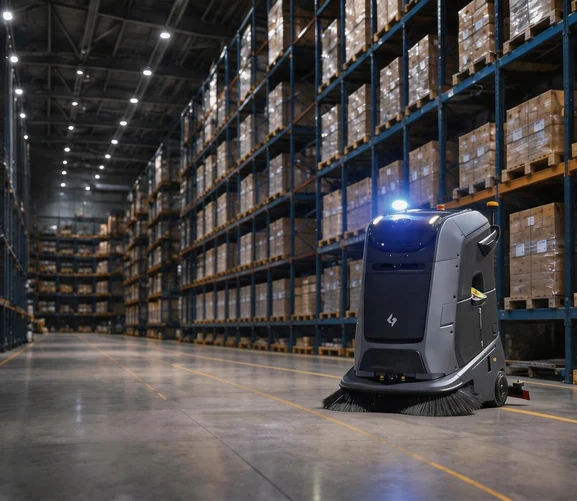
For a very large site the appropriate machine is the one that completes the shift, not the one with the highest coverage rate. Cleaning ability is rarely the constraint above 10,000 m². Service stops, access geometry, the available window and machine count are.
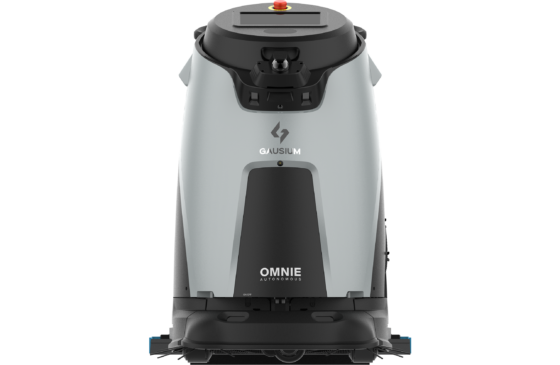
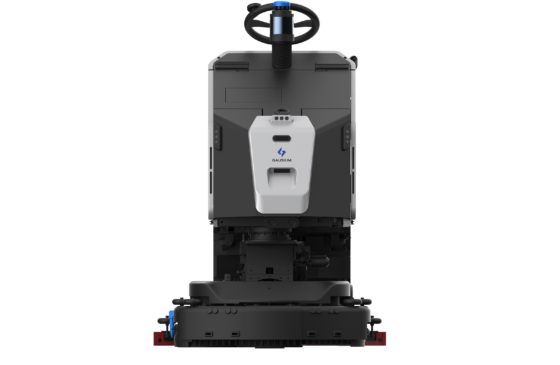
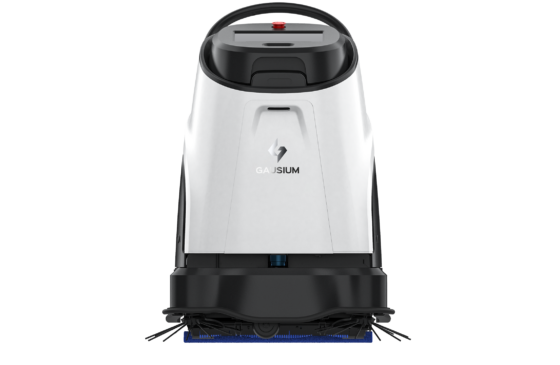
Gausium maps two models to large sites:
Four factors separate them, and together they produce the number of units a site requires:
On a large scrubbing job the tank empties well before the charge does, and every empty tank means a person walking out to the machine.
Of the two, Marvel is built for the longer uninterrupted run, with the larger clean and waste water capacity and the longer scrubbing runtime. Omnie is the more compact and maneuverable machine, and requires service more frequently on the same scrubbing job.
Published capacities and runtimes are on the Marvel specification page and the Omnie specification page.
Two matters to settle before comparing anything else:
Marvel runs an internal self-cleaning system with auto tank flushing and auto suction system rinsing. Across a 30,000 m² building, manual rinsing of a recovery tank every night is not a realistic assumption, which is where that feature earns its place.
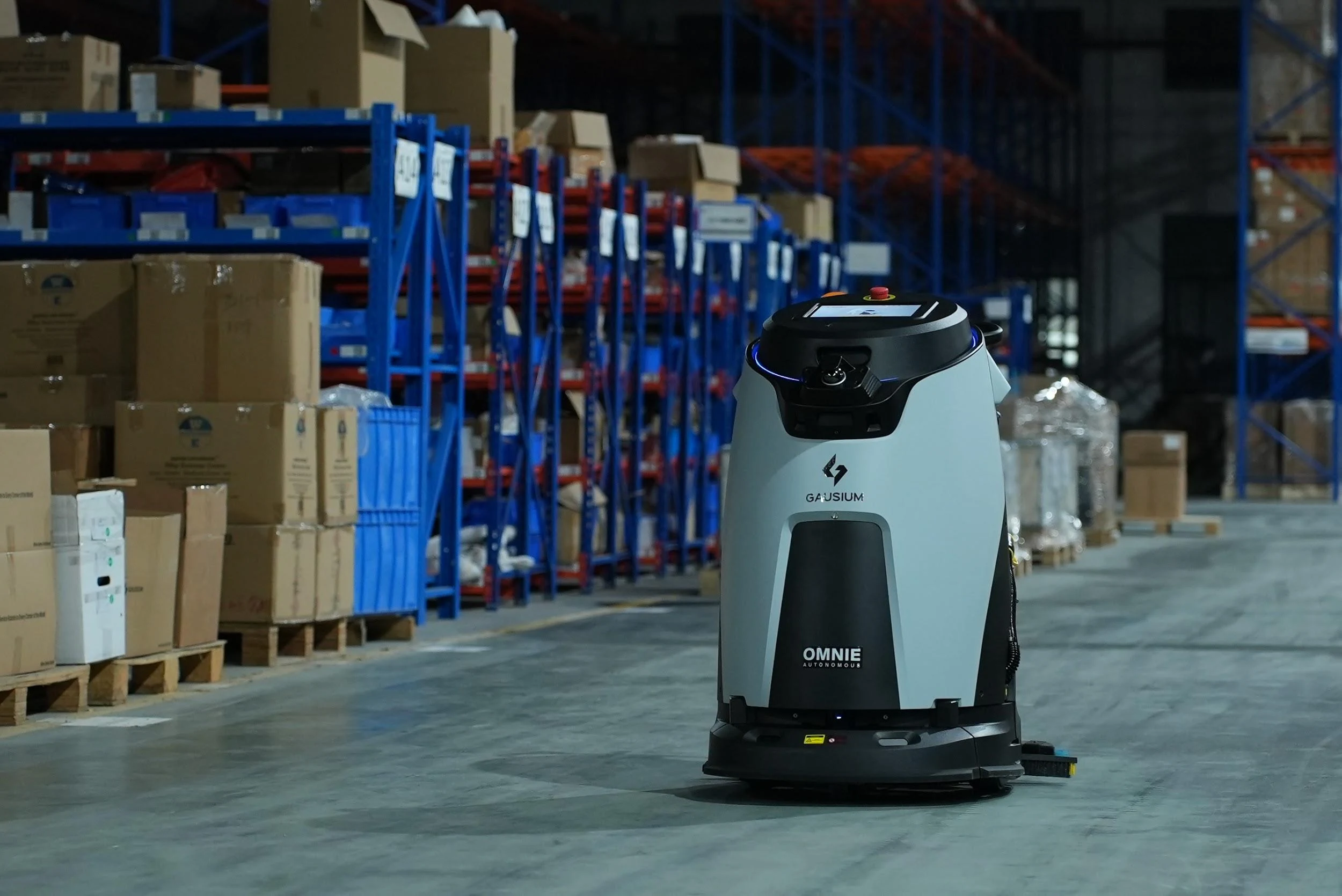
Large sites are not open. They are large and obstructed, and the geometry was fixed long before the cleaning contract was written.
Two measurements should be taken from the building before any shortlist is drawn up:
Then consider what shares the floor during the cleaning window:
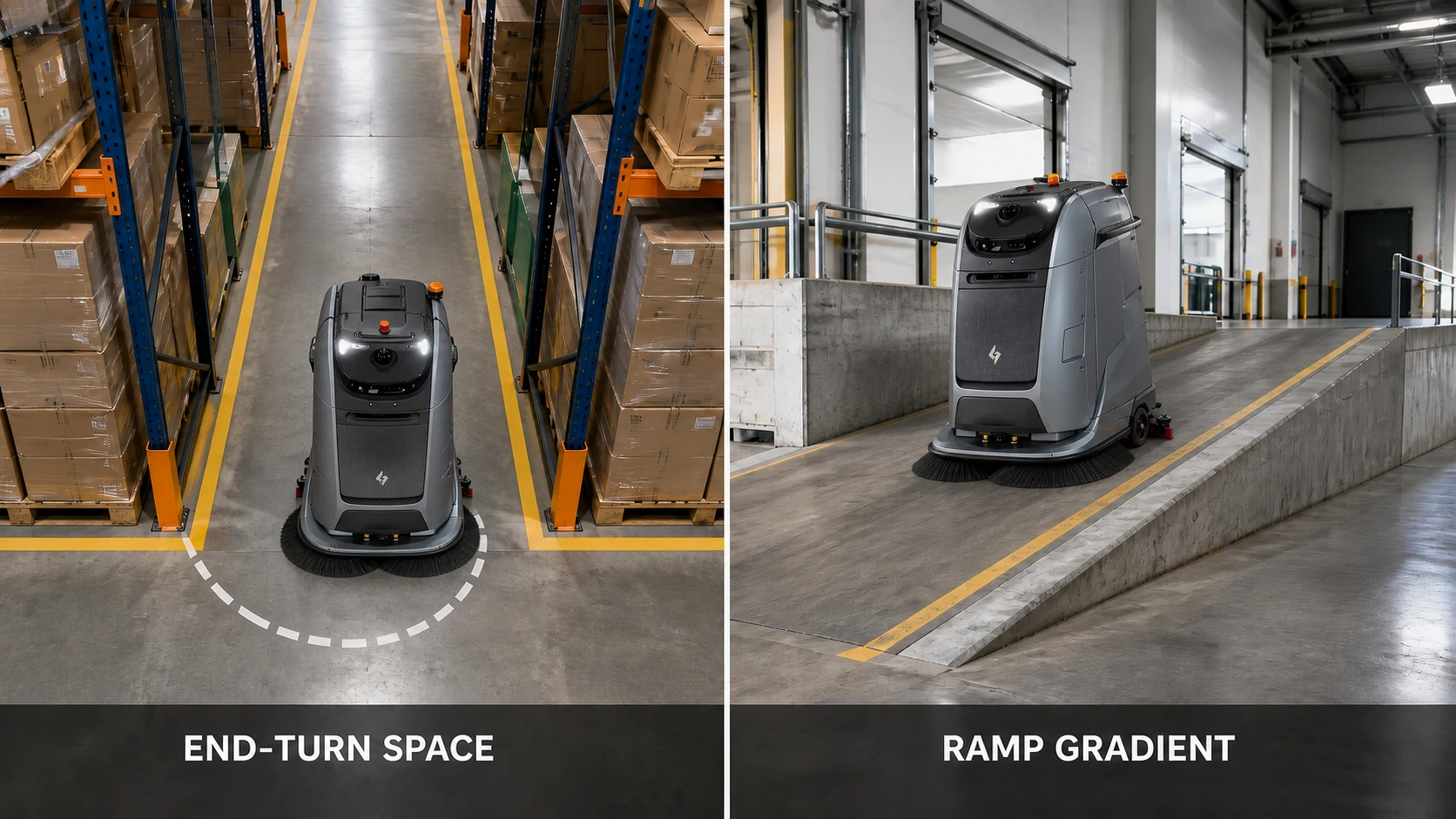
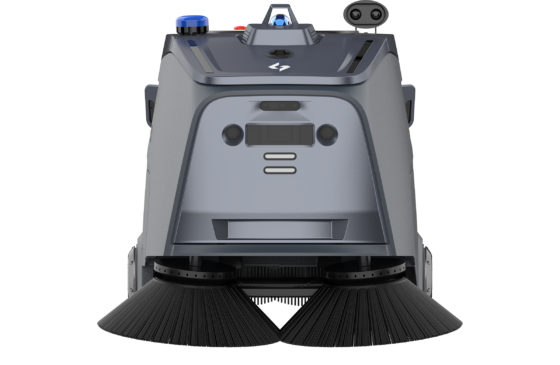
Marvel also sweeps and scrubs in a single pass, with dual side brushes ahead of rear disc brushes. That mechanism, and the conditions under which it pays, are covered in how to choose a sweep-and-scrub robot.
|
|
Marvel |
Omnie |
|
Floor plate |
Open, long runs, few obstructions |
Large but busy, frequent human and vehicle traffic |
|
Typical sites |
Warehouses, plants, warehouse clubs, underground garages |
Airports, subway stations, warehouses, shopping centers, car parks |
|
Cleaning approach |
Sweep and scrub in one pass |
Sweeping, scrubbing and dust mopping, disc or roller brush configuration |
|
Between service stops |
Longer, larger water capacity |
Shorter, more frequent attention |
|
Access in tight space |
Requires more turning room |
More maneuverable |
|
Ramps and split levels |
Rated for the steeper gradient |
Suited to level floors |
|
Waste handling |
Recovery tank with self-cleaning |
Collects dry and wet waste in a debris tray |
Full specifications for both are published on the Marvel and Omnie product pages.
Read this as a pair of trade-offs rather than a ranking. Marvel buys range and width at the cost of turning circle and footprint. Omnie buys access and maneuverability in busy space at the cost of capacity between stops.
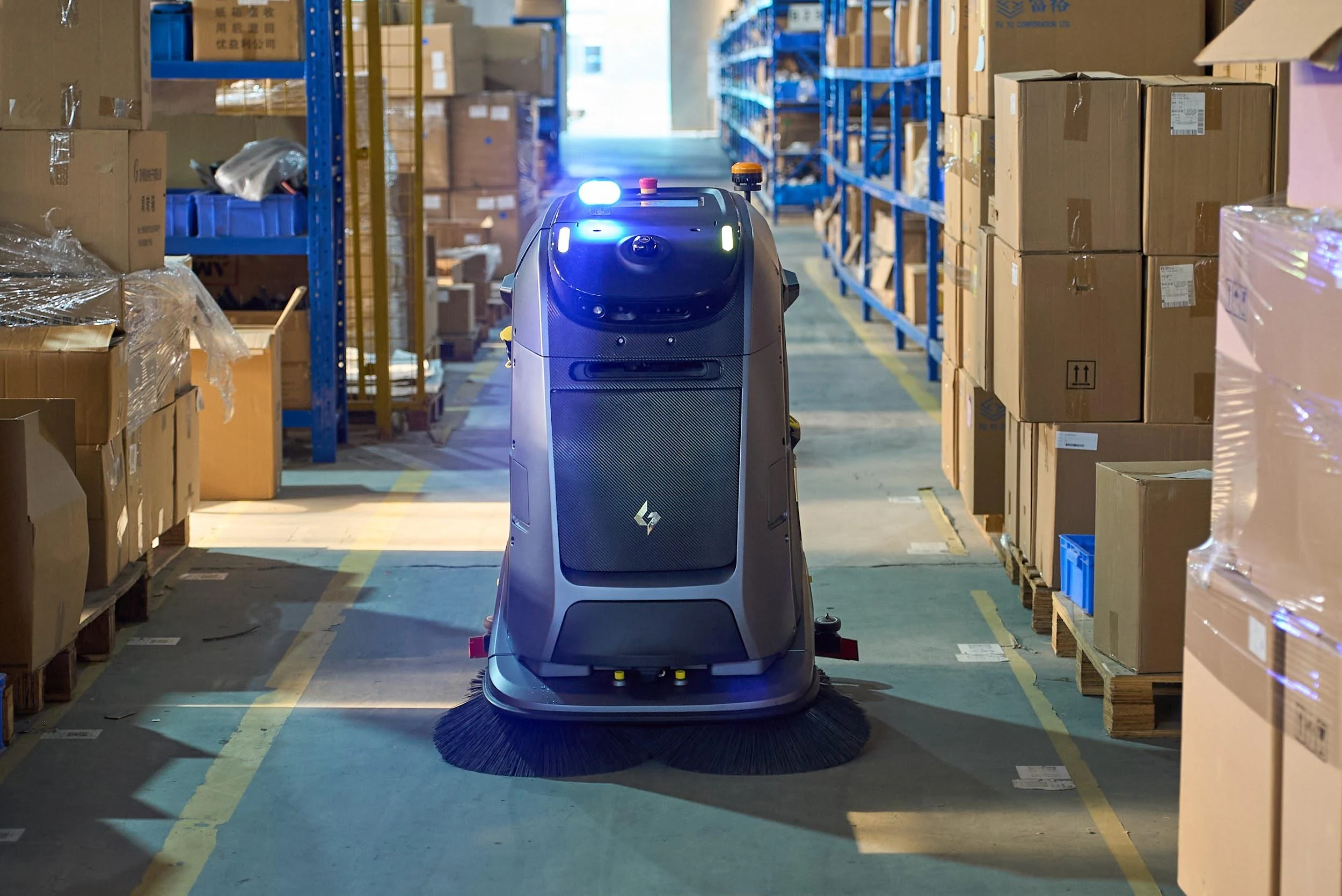
Small sites close. Large sites often do not, and the window assumed during procurement is usually shorter than the one available in practice.
Three patterns cover most large facilities:
Continuous production. There is no shutdown, only quieter hours. Cleaning takes place alongside operations, which makes obstacle behavior in moving traffic a specification requirement rather than an advantage.
Fixed overnight window. Retail, distribution and office sites clear out, but the window is short and fixed. Range and working width matter more here than maneuverability in traffic, since the machine has to cover ground quickly and finish.
No closure at all. Transport hubs and 24-hour facilities never empty. Work is divided into short runs between peaks, which affects machine count more than any other factor on this list.
Two steps before the specification is written:
Two shorter runs frequently outperform one long one. Splitting a job around a shift break aligns service stops with periods when a person is already nearby, which removes the interruption a single long run creates.
Very large sites are served by a set of machines, and the split follows zones rather than preference.
Work it in four steps:
A production floor free for four hours after second shift and a public concourse free for ninety minutes before opening are different problems within one building.
For factory and warehouse zones, the factory selection guide and the warehouse selection guide go deeper into per-zone criteria.
Above roughly 30,000 m², Gausium’s guidance is a combination of models rather than a single machine. An open production floor, a racked storage hall, an outdoor apron and a customer-facing concourse rarely reward the same specification. What holds a set together is administrative: one map convention, one platform, one owner for route changes.
On a small site the map is produced in an afternoon. On a large one it is a set of decisions that the following three years inherit.
Settle these before the first zone is mapped:
Commission in stages rather than site-wide. Map one representative zone, run it for two weeks, correct what the reports show, then extend. A site-wide map built on first-week assumptions takes longer to correct than it took to create.
Name the individuals to be trained, and plan for turnover. Training held by a single supervisor becomes a single point of failure across a three-year deployment.
Small sites look the same for years. Large ones do not, and nothing announces the drift.
Racking moves, a line is relocated, a pallet zone becomes staging, and the route commissioned in March is cleaning a floor that no longer exists in September. The machine completes its task, the report shows a finished run, and a strip of floor has been out of scope for two months.
Three questions for procurement:
Scale also does not resolve unreachable ground. Edges, corners, the strip beneath fixed equipment and any area obstructed during the cleaning window remain with the cleaning team.
Three figures settle most large-site shortlists: the narrowest recurring aisle, the steepest ramp between working levels, and the genuine cleaning window per zone. All three come from the building rather than the specification sheet, and all three should be recorded before coverage rates are compared.
The fourth figure comes from the site itself. Throughput validated on the actual floor, in the most congested zone rather than an open one, is what converts zone areas into a defensible machine count.
Bring the zone areas, windows and access measurements to a site assessment.
For large open floor plates such as warehouses, plants and garages, Marvel is the mapped option. For large spaces busy with people and vehicles, Omnie is. Where both fit, capacity between service stops and turning clearance decide it.
By measurement rather than calculation. Run a timed scrub over a known area, record the water consumed, and divide. Two runs under different soil loads give a working range. Published capacities are on the Marvel and Omnie specification pages.
No. Outdoor aprons, yards and bituminous surfaces are a different machine class, handled by an autonomous industrial sweeper such as Beetle. Plan outdoor areas as a separate line item.
Request it as a schedule rather than a single figure, divided into mapping, staged rollout and training. Sites that commission one zone first and extend afterwards correct fewer routes later than sites mapped in full on day one.
Through the fleet record rather than inspection. Cloud reporting shows which zones ran, when, and how much area was covered. Performance reporting covers what to track and what it does not demonstrate.
Four figures: actual coverage per hour in the most congested zone, water consumed per 1,000 m², interventions per shift with their causes, and any zone the machine failed to enter. The last is the most useful and the most frequently omitted.
Step 1/2
Please select the type of business you’d like to have with Gausium.
Choose one item from the list
Step 2/2
Thanks for sharing your preference. Please fill out the form below, and we’ll get in touch shortly.
By clicking “Submit”, I authorize Gausium to contact me. Privacy Policy.
Thank you for filling out the form
By clicking “Submit”, I authorize Gausium to contact me. Privacy Policy.