




UP NEXT
School Cleaning Robots: Matching the Machine to the Campus Route9월 30, 2026

9월 30, 2026
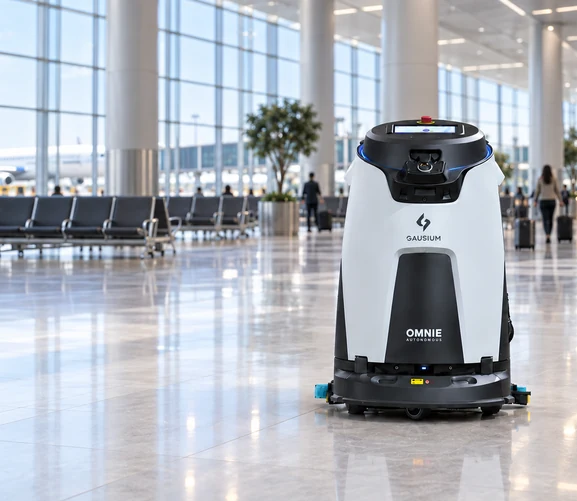
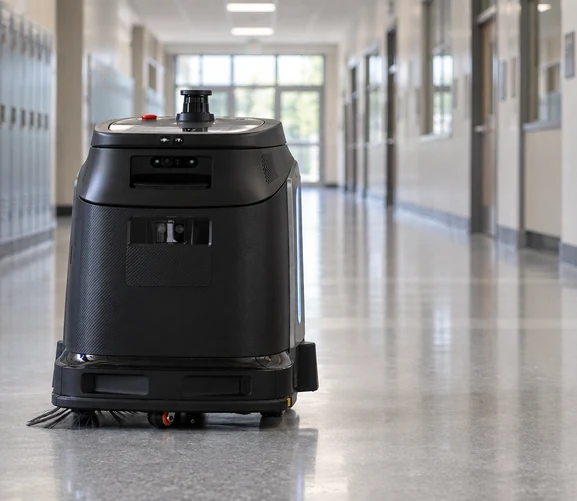
Cleaning robots now run in occupied spaces as a matter of routine: shopping centres during trading, airport concourses, hospital corridors, school buildings between lessons.
In those conditions, safety means more than not hitting anyone. It rests on four things: perception without blind spots, responses that stay consistent, behaviour people can anticipate, and capabilities backed by verifiable certification.
This article explains how each of those works, what standards apply, and what the site itself has to put in place. For the standards themselves, see Gausium’s guide to commercial cleaning robot safety.
At night, a robot works against walls, columns and racking. Obstacles hold their position, and a map stays valid for a long time.
During the day, three things change at once.
People do not behave like obstacles. They stop to look at the machine, reach toward it, walk backwards while talking, and push carts across its path without seeing it. Children approach deliberately. A static obstacle can be mapped; a person cannot be predicted, so the machine has to keep re-evaluating rather than following a plan.
The floor plan itself moves. Promotional displays appear overnight, matting shifts, chairs come out from tables, boxes sit in a corridor for an afternoon. Any map built on an empty floor is already out of date once the space is in use.
Density swings within the same space. A school corridor is empty during lessons and full for four minutes between them. A concourse at an airport changes with arrivals. The same route presents entirely different conditions depending on when the task runs, which is why scheduling is part of the safety question rather than separate from it.
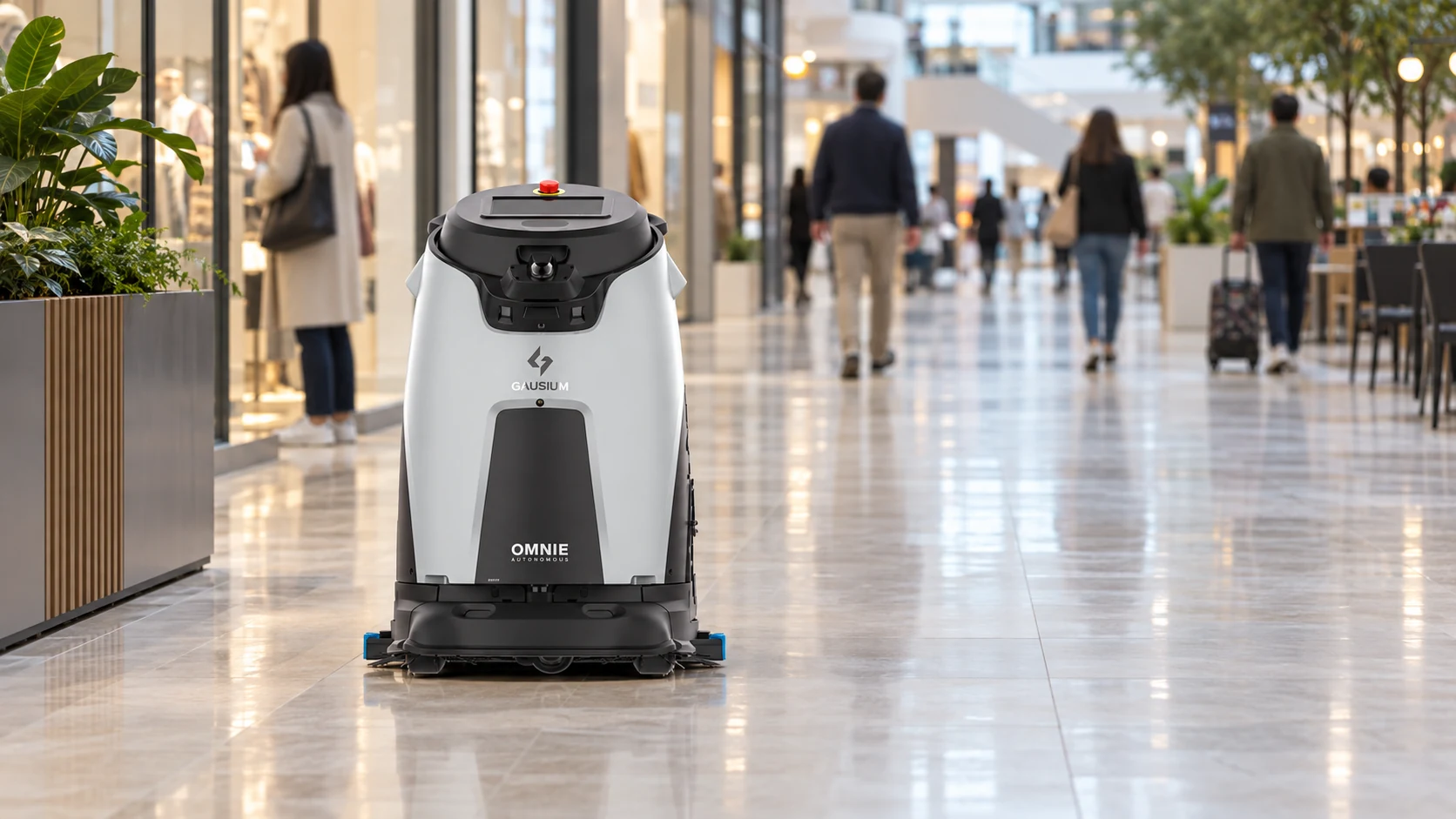
A single sensor type is not sufficient in an occupied space. Two-dimensional laser scanning reads one horizontal plane, so low objects on the floor and overhanging table edges fall outside it.
Occupied operation calls for sensor fusion: 3D LiDAR for spatial mapping and localisation, depth cameras for obstacle detection, RGB cameras for object recognition. Working together, the machine holds its position while tracking people and objects that move.
What to verify: whether coverage is a full 360°, whether obstacles at different heights are detected, and whether performance holds when lighting changes.
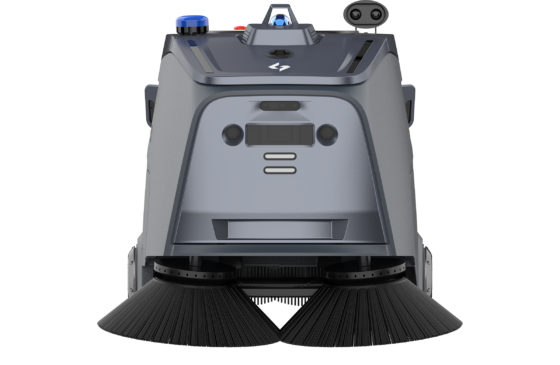
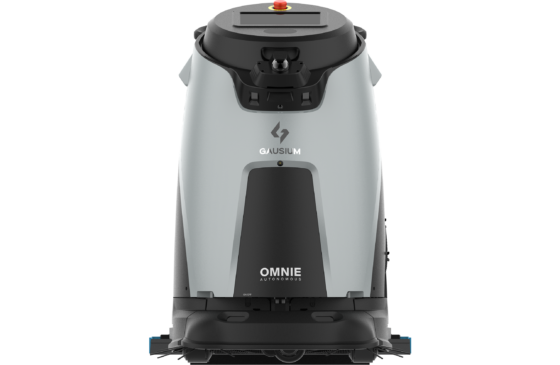
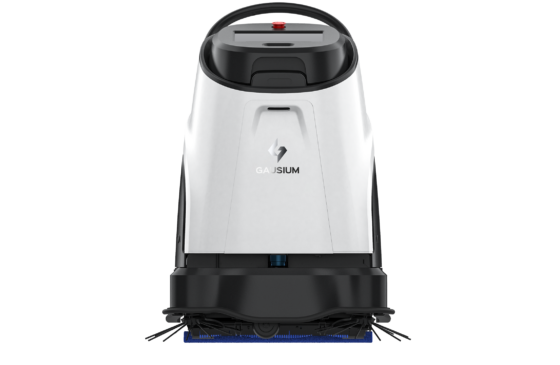
Omnie combines multimodal SLAM with 360° 3D LiDAR and a 360° panoramic camera for zero-blind-spot awareness, which is the basis for its positioning in airports and metro stations. Phantas recognises obstacles down to 20 mm, covering the small items typically found on a floor in use.
How a machine responds matters more in practice than how precisely it detects. A robot that stops dead every time someone walks past, and needs a person to restart it, stops being used within a few weeks.
Three situations need distinct handling:
That last behaviour protects the machine and prevents a contaminant being spread across the floor.
What to verify: whether responses are consistent for the same situation, and how the machine resumes afterwards. Automatic resumption once the path clears is what keeps an occupied-hours task viable; a machine requiring manual restart shifts the work back to staff.
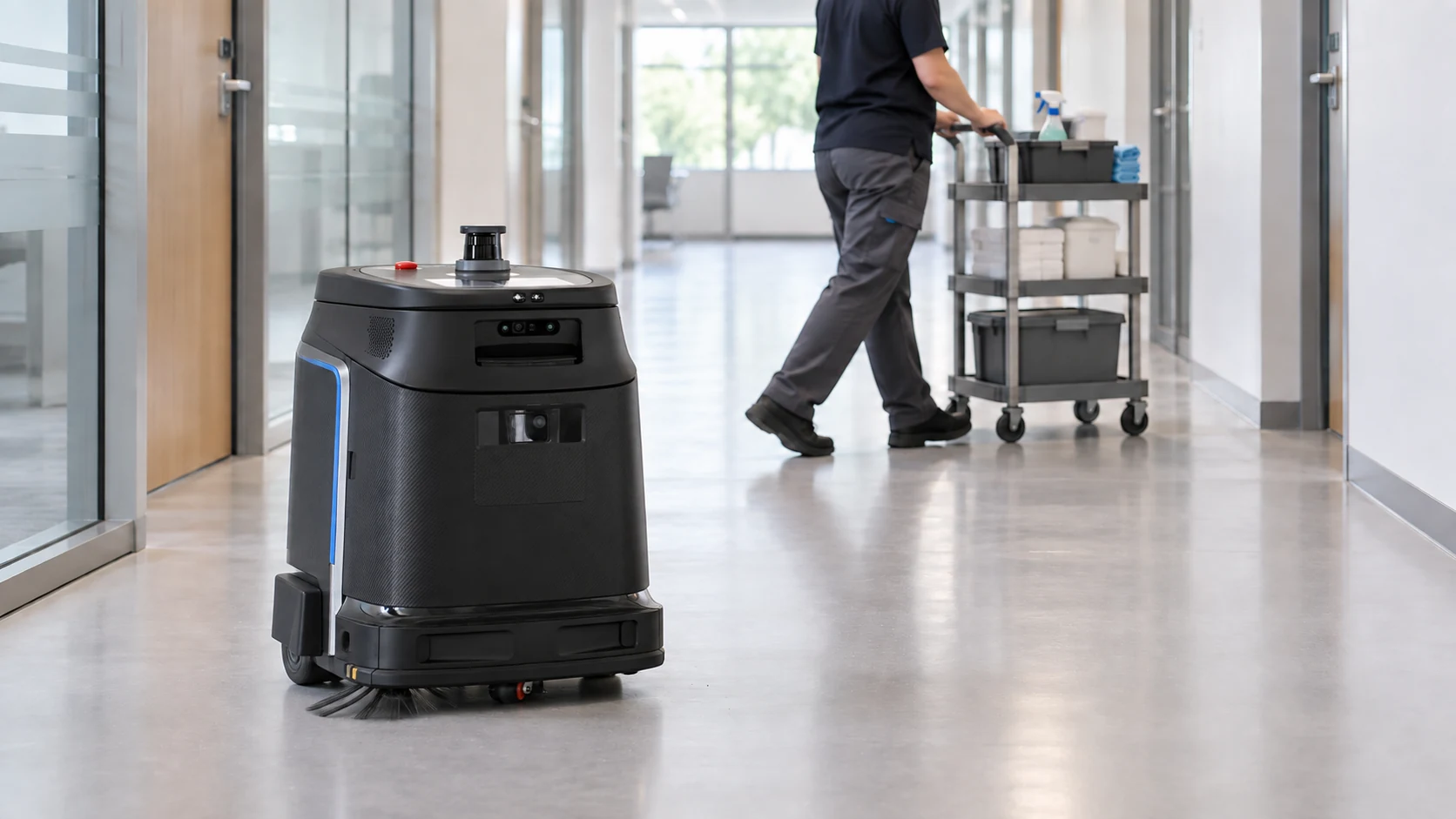
The same machine should not run through a trading floor the way it runs through an empty warehouse.
Operating speed can be set per zone, and peak periods can be scheduled separately. Spot cleaning is particularly useful with people present: handling a spill where it occurred takes less time in the aisle than running a full-coverage pass through an occupied area.
What to verify: whether speed is configurable by zone, whether scheduling can be split by time of day, and whether spot cleaning is available on the model in question.
Occupied buildings contain edges that an empty warehouse does not: stair heads, escalator approaches, mezzanine openings, loading dock edges, sunken service areas.
These matter for two reasons. A machine leaving a floor level is a hazard to people below as well as to itself, and these locations are usually the busiest part of a building because they are where people transition between areas.
What to verify: how drop detection works, whether virtual no-go zones can be set around stair and escalator approaches, and whether those zones survive a map update. Stairs remain manual cleaning in every case.
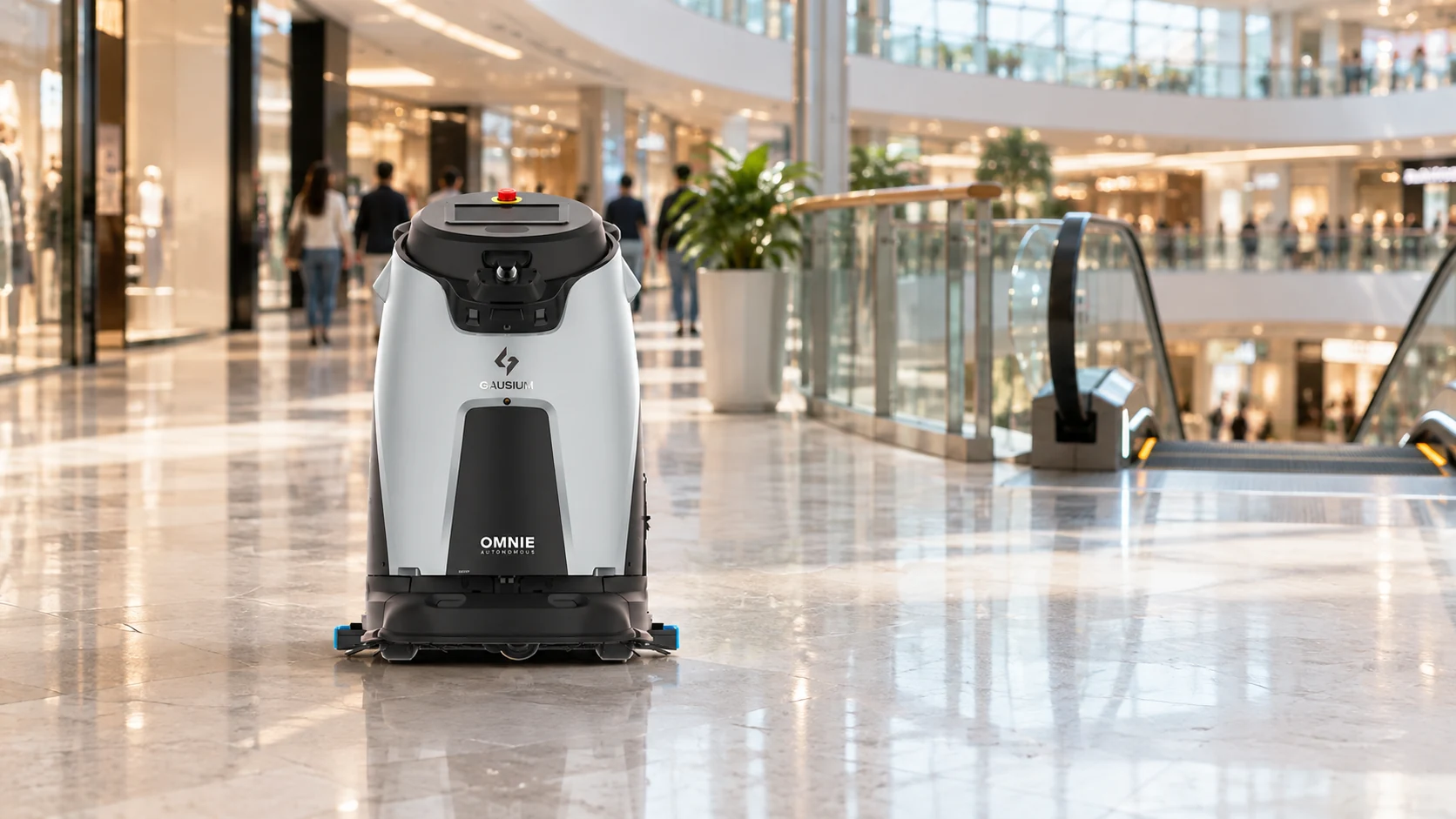
This is the part most often left out, and it decides whether site staff still cooperate after a few weeks.
Visual indicators tell people nearby that the machine is working and where it is heading. Noise level determines whether it interferes with teaching, treatment or conversation; Phantas holds noise within 60 dB in quiet mode, which suits operation while adjacent areas remain in use.
A route that follows the same pattern each day also contributes. People learn where the machine will be and stop treating it as an obstruction.
What to verify: whether indicators are visible from the directions people approach from, whether noise suits the setting, and whether the route is regular enough to be anticipated.
Larger sites run more than one machine, and two robots meeting in a corridor with people present is a different situation from two robots meeting at night.
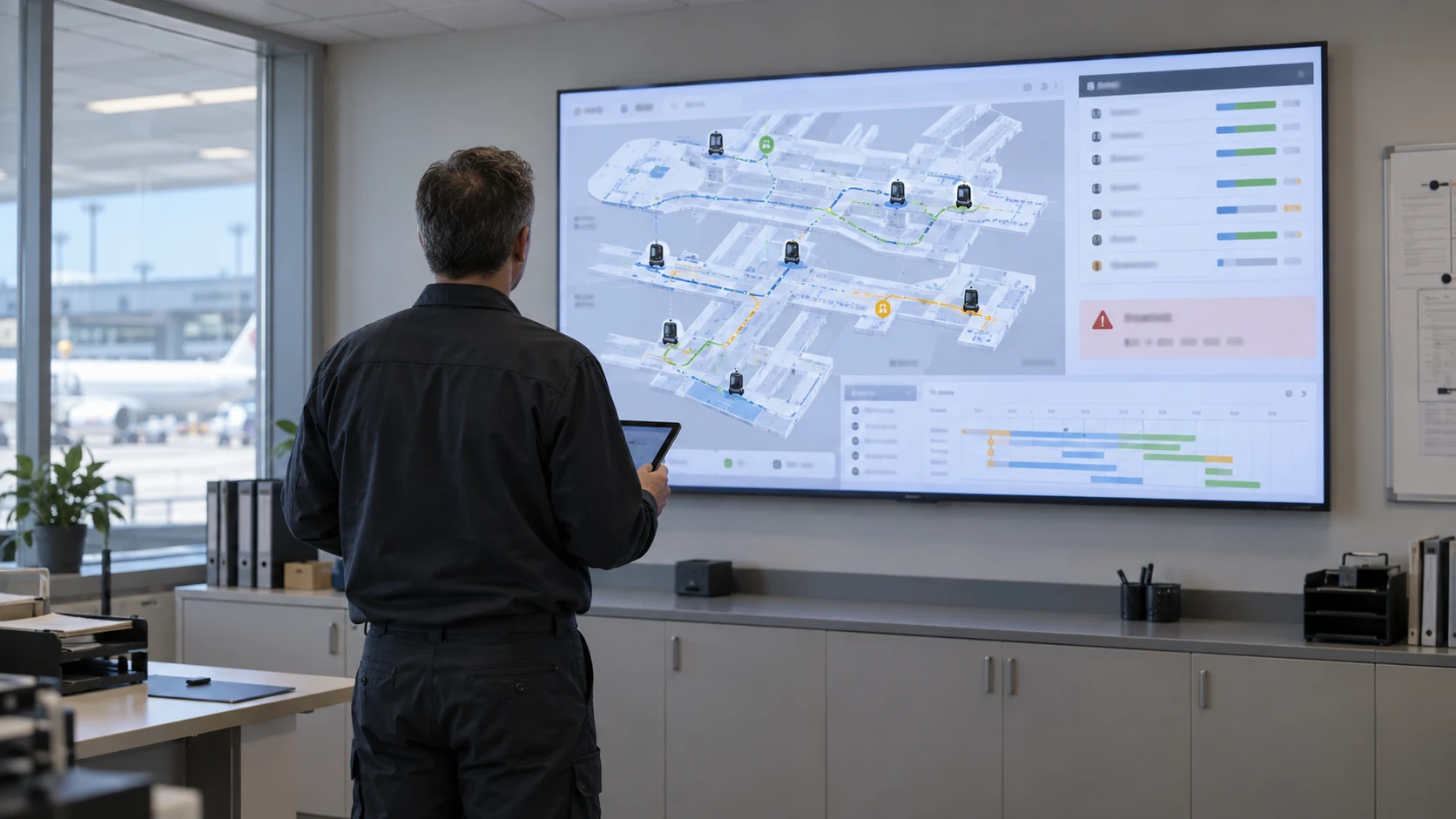
Where several machines share a building, confirm how they coordinate: whether routes are scheduled to avoid overlap, whether the fleet platform shows live positions, and who is notified when two tasks conflict. Across Gausium models this is handled through the cloud platform, where tasks across a site are visible in one place.
These capabilities are not only product descriptions. There is a standard against which they can be verified.
EN IEC 63327 is the specific safety standard for automatic floor treatment machines in commercial use, and it covers operation in automatic mode. For Class II commercial cleaning robots, characterised by greater weight, volume and speed, the standard sets functional safety requirements at Performance Level d (PL=d).
TÜV Rheinland tested and evaluated the circuit design, architecture and mechanical structure of Gausium’s Phantas against EN IEC 63327 and confirmed that it meets the PL=d functional safety requirements. Alongside the EU CE-MD certificate of conformity, Gausium products have also passed TÜV Rheinland testing, auditing and factory inspection against North American standards to obtain the cTUVus certificate.
Ask any supplier for the conformity documentation covering the specific model, and confirm that it covers the configuration being purchased.
Machine capability is one half of occupied-hours safety. The other half is site procedure, and no certification substitutes for it.
Routes and no-go zones. Mark them on the floor plan before deployment: which corridors the machine may use, which areas it never enters, which sections change during events or examinations.
Peak-period handling. Decide in advance whether the machine pauses or moves to another area during the busiest minutes, rather than judging it in the moment.
Who responds when it stops. Every occupied deployment produces occasional stoppages. Name the person, and make sure they are reachable during the hours the machine runs. This is the most frequent real-world issue and the one most often left unassigned.
Telling people. Staff need to know when and where the machine appears, what the indicators mean, and who to contact. In schools and hospitals, a short notice to students, staff or patients is usually worth issuing before the first task.
Safety with people present is produced jointly by the machine and the site. Sensor fusion, consistent response, configurable speed, drop protection and clear indicators are what the manufacturer supplies, and EN IEC 63327 with PL=d certification is how those are verified independently. Routes, peak-period rules, a named responder and a short notice to occupants are what the building supplies.
Deployments that treat both halves as part of the same plan settle these before the first task rather than after an incident.
In most settings, yes. Machines designed for high-dynamic environments hold their route through continuous movement and changing light. Site traffic rules and no-go zones are still agreed with the building before the first task.
It slows, routes around, or waits, depending on clearance. What matters equally is how it resumes: automatic resumption once the path clears keeps the task running, while a machine needing manual restart returns the work to staff.
Gausium machines flag the item to operators through the app rather than driving into it, which protects the machine and prevents a contaminant being spread.
Through drop detection and virtual no-go zones set around the approaches. Stairs themselves remain manual cleaning.
Yes. EN IEC 63327 applies to automatic floor treatment machines for commercial use and sets PL=d functional safety requirements for Class II machines. Request the conformity documentation for the specific model.
Phantas holds noise within 60 dB in quiet mode. Confirm on site during a trial, since acoustics vary considerably between buildings.
Routes are scheduled to limit overlap, and live task status across a site is visible on the cloud platform. Confirm the coordination arrangement before running more than one machine in the same occupied area.
Step 1/2
Please select the type of business you’d like to have with Gausium.
Choose one item from the list
Step 2/2
Thanks for sharing your preference. Please fill out the form below, and we’ll get in touch shortly.
By clicking “Submit”, I authorize Gausium to contact me. Privacy Policy.
Thank you for filling out the form
By clicking “Submit”, I authorize Gausium to contact me. Privacy Policy.