




UP NEXT
Cleaning Robot Performance Reporting: What Facility Teams Should Track8월 10, 2026

8월 18, 2026
Most factory scrubber comparisons come down to a spreadsheet of cleaning widths, tank sizes and rated productivity. Those figures are accurate and they rarely settle the decision, because none of them answers whether a given machine finishes a given route on a given floor.
Four criteria do: the floor surface, the plant layout, the debris mix on the ground, and how much of a machine’s stated output survives a working shift.
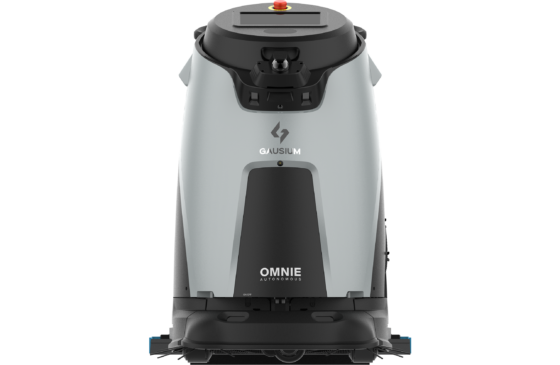
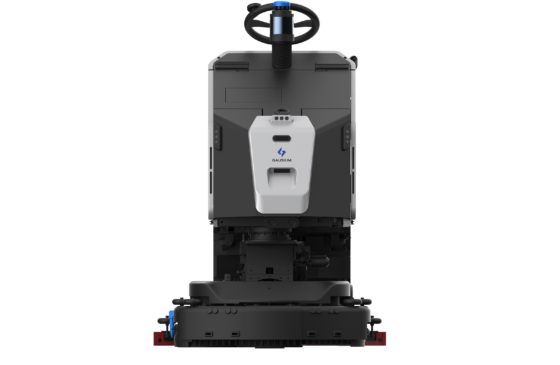
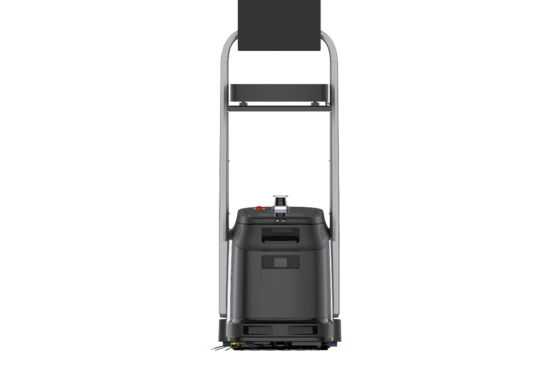
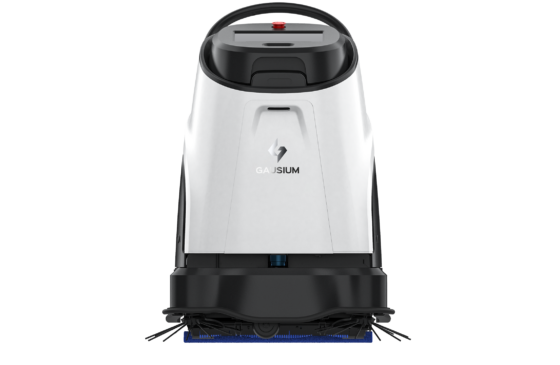
This article works through each one, and shows where Gausium Marvel, Beetle and Omnie fall against them.
Floor surface sets the brush configuration, and floor condition can rule out mechanical cleaning altogether.
Rough or oil-soaked concrete needs downward pressure and an aggressive brush profile. Epoxy and polished surfaces need enough pressure to lift soil without hazing the finish. Bituminous and rubble surfaces cannot be scrubbed at all — they absorb water and are too uneven for recovery.
Applicable surfaces by model:
Condition matters as much as surface. Spalling slabs shed grit that wears squeegees and enters the suction path. Cracked sections hold water that cannot be recovered, so the floor stays wet after the machine has passed. Neither is a machine problem and no specification compensates for either, which is why this criterion comes first.
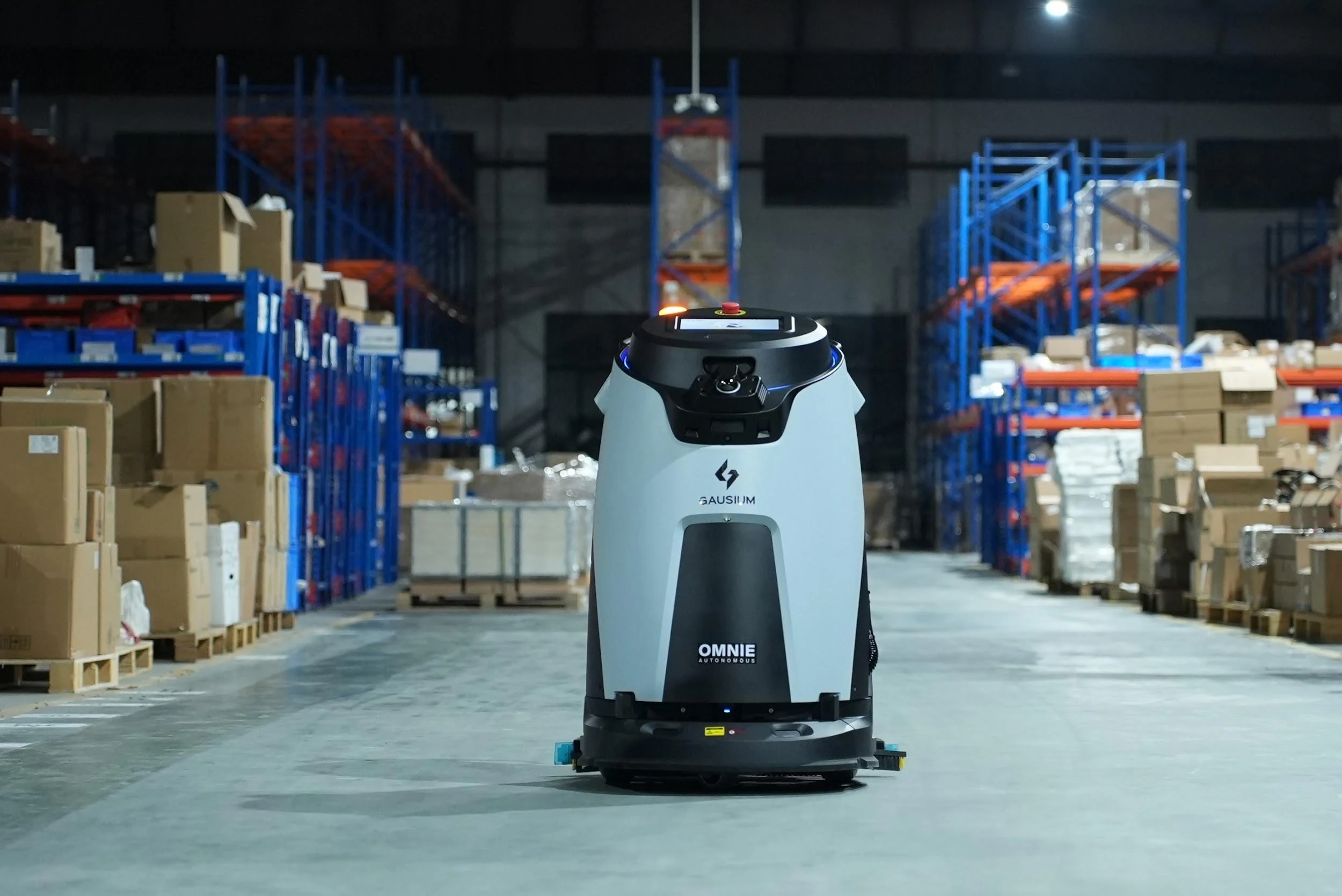
Layout sets the size ceiling, and the binding figure is the tightest point on the route rather than the average aisle width.
Gausium’s manufacturing solution page sets out the conditions: large areas, complex layouts, tight corners and narrow aisles, staff and AGVs moving in and out, dust and debris, spillage and contamination, and hazardous substances.
Two figures decide it:
Traffic is the second layout question. Machines running during production hours coexist with forklifts, pallet trucks and AGVs. Marvel carries 3D LiDAR with a 360° vision system for zero-blind-spot perception, detecting people, vehicles, cables and glass doors. Predictable behaviour matters as much as detection: a machine that stops abruptly or reroutes without warning teaches drivers to slow down near it, and that cost lands on production rather than on cleaning.
Where dry debris and liquid soil occur together, a machine that sweeps and scrubs in one pass removes the pre-sweep step. Where they occur separately, one function is being paid for and not used.
This criterion is the one most often misjudged. Running a scrubber over loose grit turns debris into slurry and spreads it, producing a second clean-up rather than a finished floor.
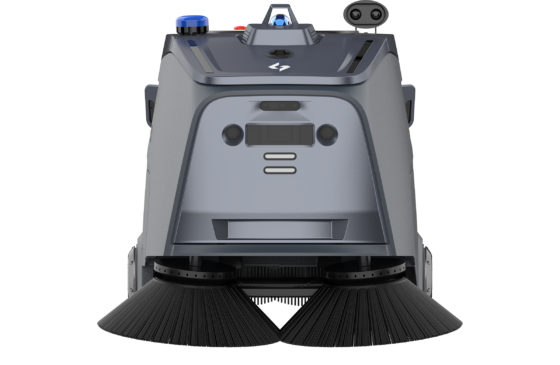
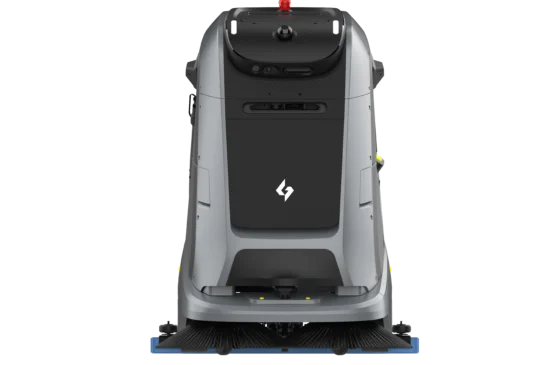
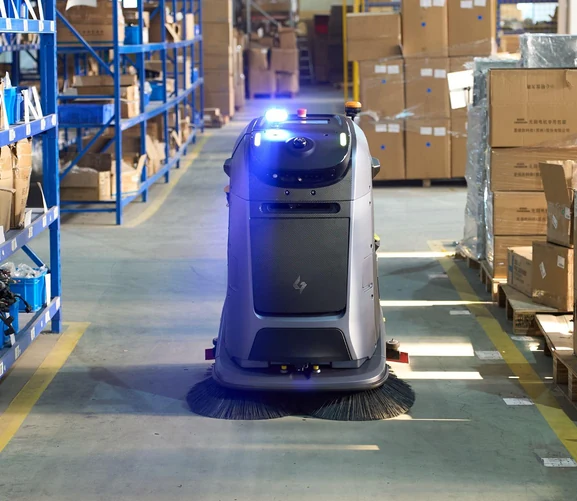
Marvel — dry and wet together. Front-mounted dual side brushes collect fine dust and larger debris into a built-in tray, and rear disc brushes scrub immediately behind on the same pass. The side brushes work as a complete sweeping system rather than feeding a roller, which is what lets them capture larger fragments. 55 kg of cleaning pressure handles oil worked into the texture; 80 L clean and 70 L recovery tanks with a 120 Ah LFP battery support 5 to 7 hours of scrubbing.
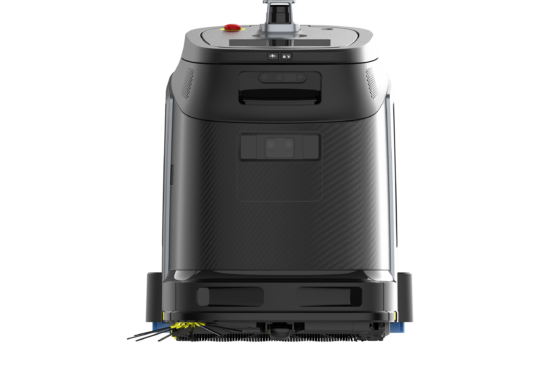
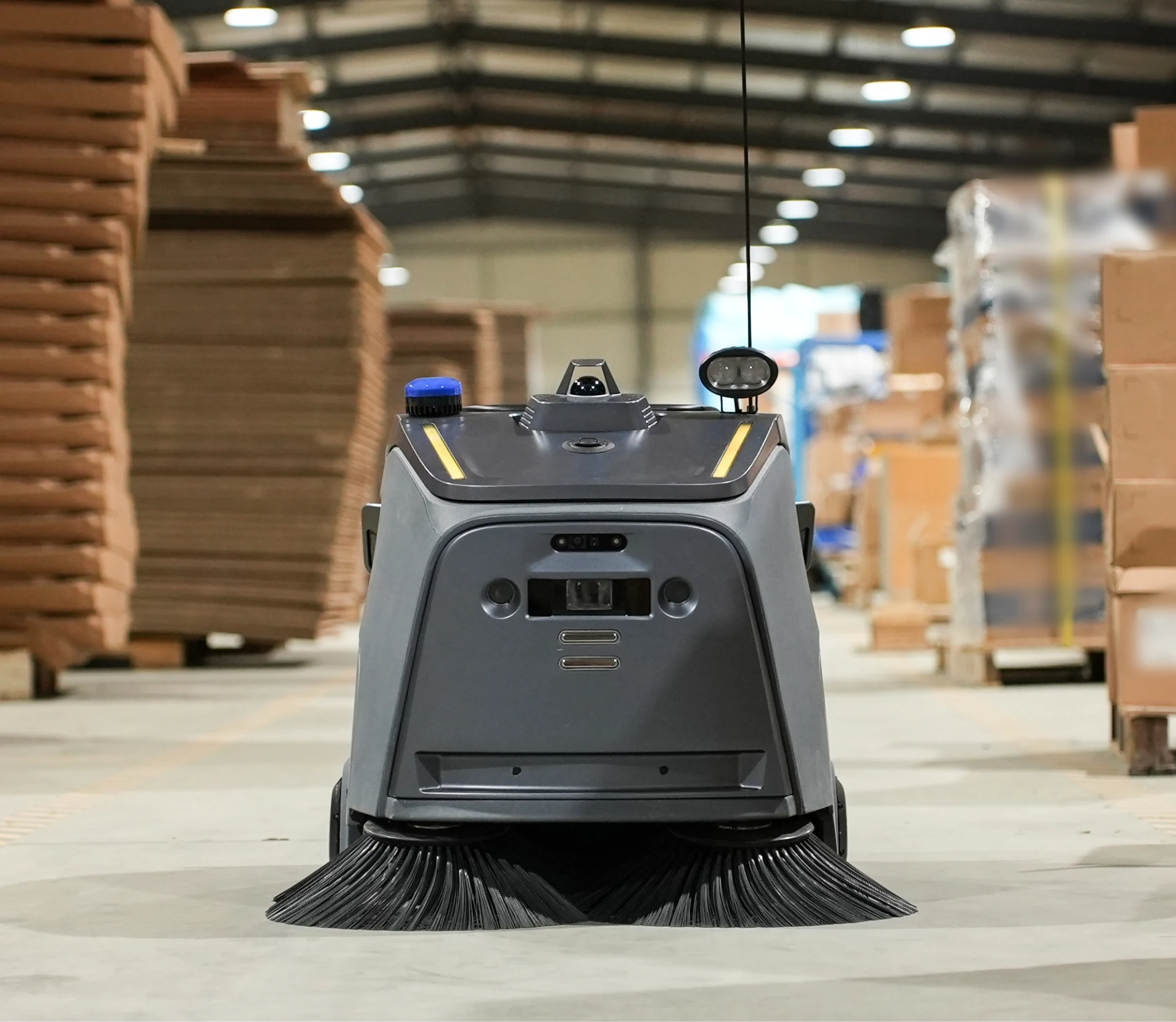
Beetle — dry debris only. Beetle is an autonomous sweeper and does not scrub. A high-power suction motor takes everything from fine dust and sand through to paper, bottles and wood chips into a 45 L bin, with a 60 Ah battery giving 4 to 8 hours and autonomous recharging at a docking station.
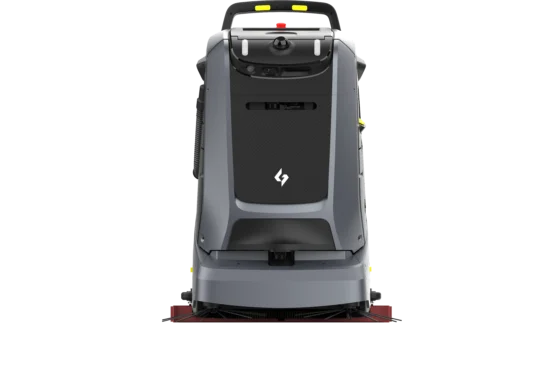
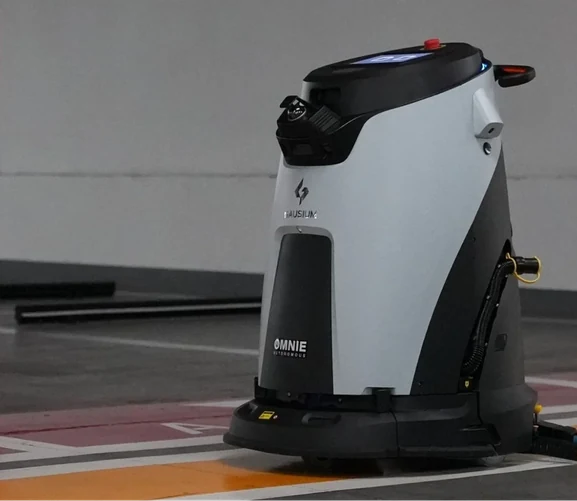
Omnie — uneven soiling. Where soil concentrates around equipment and along walking routes rather than spreading evenly, AI spot cleaning identifies both dry and wet waste and works where the floor is actually dirty rather than covering a fixed path regardless.
Published cleaning rates are theoretical maximums measured under standard test conditions. A shift planned against them will not hold.
Four things consume the difference:
A published deployment gives a more usable planning figure than a rated maximum. At Loulis Food Ingredients in Greece, one Beetle with a charging dock covers 2,500 sqm per day across the main distribution area, storage aisles and general warehouse zones, with cleaning time down 60% and manual inspection effort down 80%.
For comparison, Gausium states Beetle can cover over 40,000 sqm in a single night under spot-cleaning conditions. Both figures are accurate and they describe different conditions — one is a measured daily route in a working warehouse, the other a maximum under favourable conditions. Plan against a trial figure from your own floor.
The sequence matters, because each criterion narrows what the next one has to consider.
Applying them out of order is the common failure. A machine chosen on rated productivity and then found to be 200 mm too wide for the tightest aisle has failed on the second criterion, and the first two rule out faster than the last two ever will.
Contact Gausium to arrange a site assessment against these four criteria.
It depends on floor and debris. Marvel sweeps and scrubs in one pass at 55 kg cleaning pressure with 80 L and 70 L tanks, for production floors carrying oil and dry debris together. Beetle is an autonomous sweeper for dry debris indoors and outdoors. Omnie suits plants where soiling is uneven.
Oil and coolant residue bonded into concrete or epoxy does not lift at 25 kg. Marvel applies 55 kg, which is the configuration suited to that condition. Routine surface soiling needs considerably less.
No. Beetle is an autonomous industrial sweeper for dry debris including dust, sand, paper, bottles and wood chips. It does not scrub. For scrubbing, Marvel or Omnie apply.
Published rates are theoretical maximums under standard test conditions. Refill and drain stops, detours around traffic and storage, turning, and manual edge work all reduce them. Plan against a measured figure from a trial on your own floor.
Floor condition, then layout. A slab that needs repair rules out mechanical cleaning regardless of machine, and a machine that cannot clear the tightest aisle leaves the remaining area on the schedule. Both eliminate candidates faster than productivity figures do.
Beetle. Its applicable surfaces include rubble flooring and bituminous surfaces, so the same machine covers yards and loading areas alongside indoor industrial floors. Marvel and Omnie are for hard floors inside the building envelope.
Step 1/2
Please select the type of business you’d like to have with Gausium.
Choose one item from the list
Step 2/2
Thanks for sharing your preference. Please fill out the form below, and we’ll get in touch shortly.
By clicking “Submit”, I authorize Gausium to contact me. Privacy Policy.
Thank you for filling out the form
By clicking “Submit”, I authorize Gausium to contact me. Privacy Policy.