




UP NEXT
Office Cleaning Robots: How to Choose the Right Solution for Your Workplaceoctubre 20, 2026

octubre 20, 2026
A cleaning robot working well in one building gives a facilities team a useful starting point. Expanding that operation introduces new questions. Another site may have different floors, a shorter cleaning window or a team that needs its own operating routine. The next deployment has to fit those conditions while contributing to the wider program.
For organizations managing several facilities, the challenge is making cleaning dependable across those differences. A repeatable process helps teams assess each site, choose suitable equipment and review results. Shared management tools then help keep daily tasks visible as the number of robots grows.
Gausium supports autonomous floor care through its cleaning robots, cloud platform and app. Building a wider program starts with the site’s requirements and connects them to schedules, daily responsibilities and support.
Before extending a program, review the first deployment against the cleaning requirement it was intended to meet. This helps distinguish a useful operating routine from a demonstration that only worked under limited conditions.
Three questions are worth answering:
Buildings with similar floor areas can have very different workloads. A carpeted office and an industrial warehouse require different cleaning methods. Even two warehouses may differ in the debris they generate, their aisle access and the time available for cleaning.
A site assessment should cover the following:
|
What to record |
Why it matters |
|
Usable cleaning area |
Defines what the robot will actually cover |
|
Floor surfaces |
Determines the cleaning method, from sweeping to wet floor care or carpet vacuuming |
|
Typical material on the floor |
Shapes equipment choice and task frequency |
|
Operating hours |
Sets the windows when each area can be accessed |
|
Changes during the day |
An aisle clear in the morning may become a staging area later; a reception floor may carry more dirt during busy arrival periods |
Involve the people responsible for daily cleaning and those who manage the site’s traffic or production schedule. Their experience helps turn the assessment into a workable task plan.
Some facilities contain several cleaning requirements within the same building. Assign equipment according to those tasks and confirm which surfaces each deployment will cover.
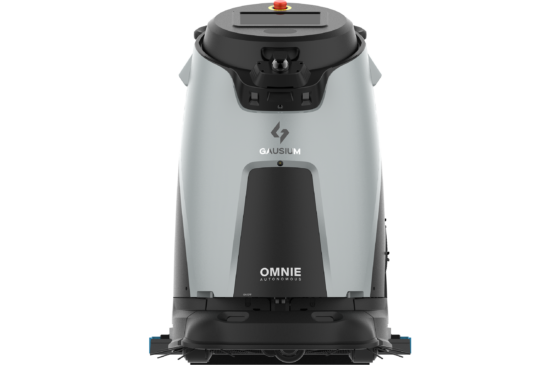
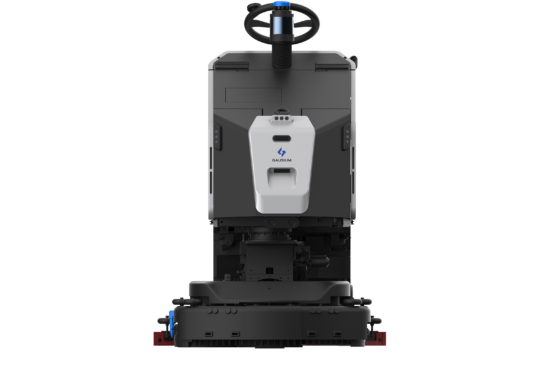
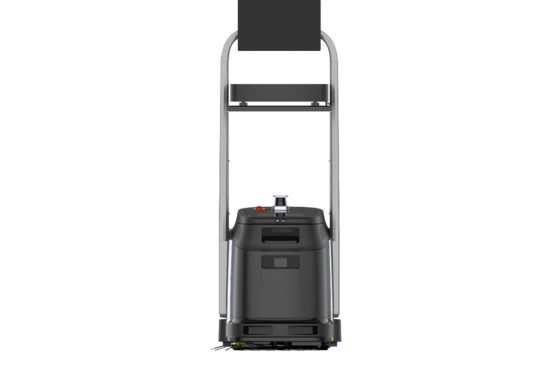
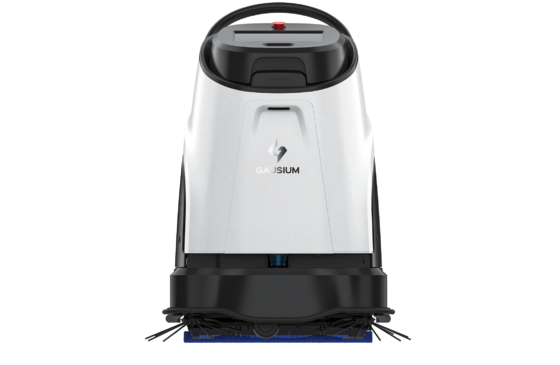
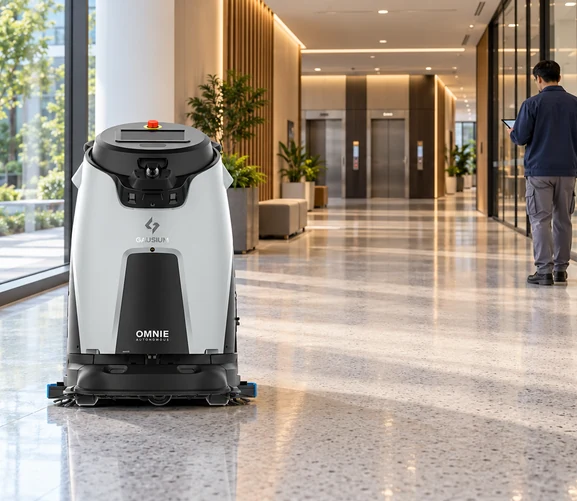
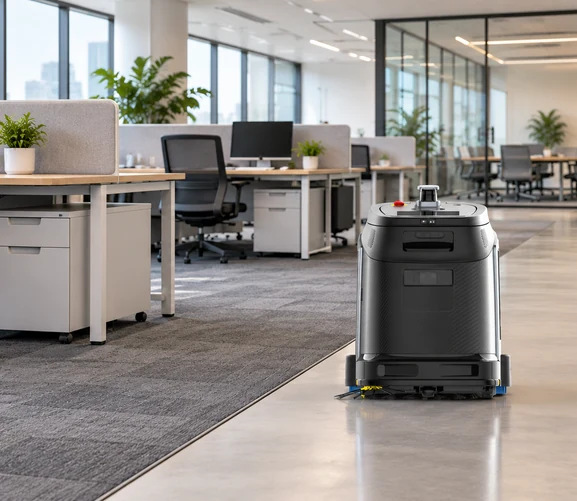
At AE Partner in Latvia, Beetle and Omnie serve the warehouse, while Phantas cleans roughly 1,000 square meters (10,764 ft²) of carpeted office space each night.
In this example, the equipment and task timing follow the floor-care requirement in each area.
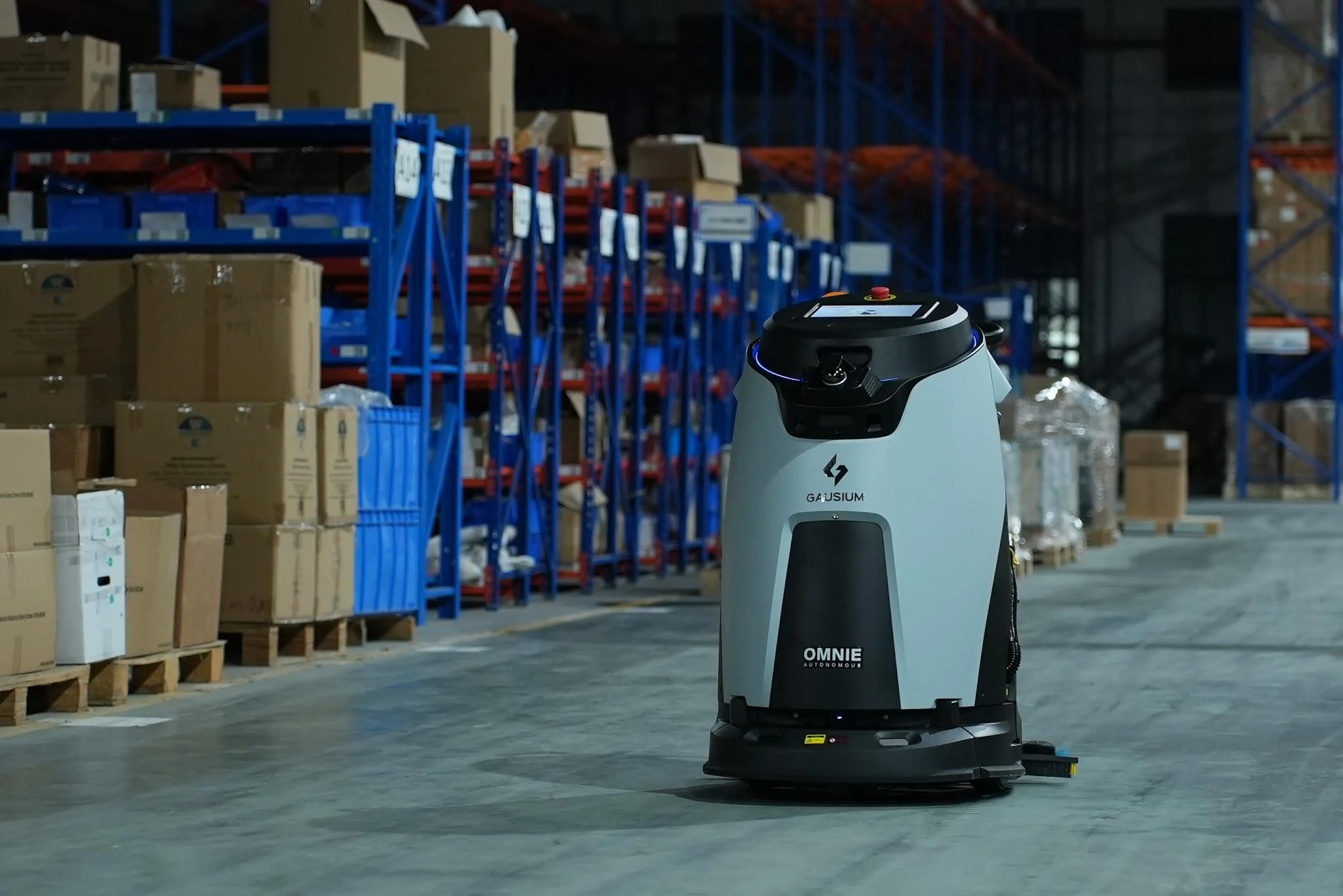
Identify work that remains with the cleaning team, including detailed tasks and areas outside the robot’s assigned floor. Give those responsibilities the same attention as the autonomous task. The deployment succeeds when the whole cleaning program meets the required standard.
At the next site, reassess that division of work. Differences in floor layout or service requirements may change which tasks suit automation and which remain with staff.
A multi-site program needs schedules that follow local operations. An office may offer a clear evening window, while a production hall or shopping center needs another approach. Define when each assigned floor is accessible before deciding how often a robot should clean it.
Check the transitions between shifts as well as the shifts themselves. Deliveries, preparation work and handovers can affect the cleaning window, so build task start times around usable access.
Three deployments show how differently the schedule and the division of work can look:
|
Site |
Robots |
How cleaning fits the operation |
|
MAKELIS, Greece (production hall) |
Beetle |
Sweeps twice every 24 hours after production ends, addressing a recurring dry debris load |
|
AE Partner, Latvia (warehouse and offices) |
Beetle, Omnie, Phantas |
Different robots for different areas, with Phantas cleaning the carpeted offices each night |
|
Origo Shopping Centre, Riga |
Omnie |
Cleanhouse uses Omnie on the ground floor while employees work on other levels during busy visitor periods |
Each site should establish its own timing through the assessment and demonstration, with task frequency based on floor conditions and the service standard required.
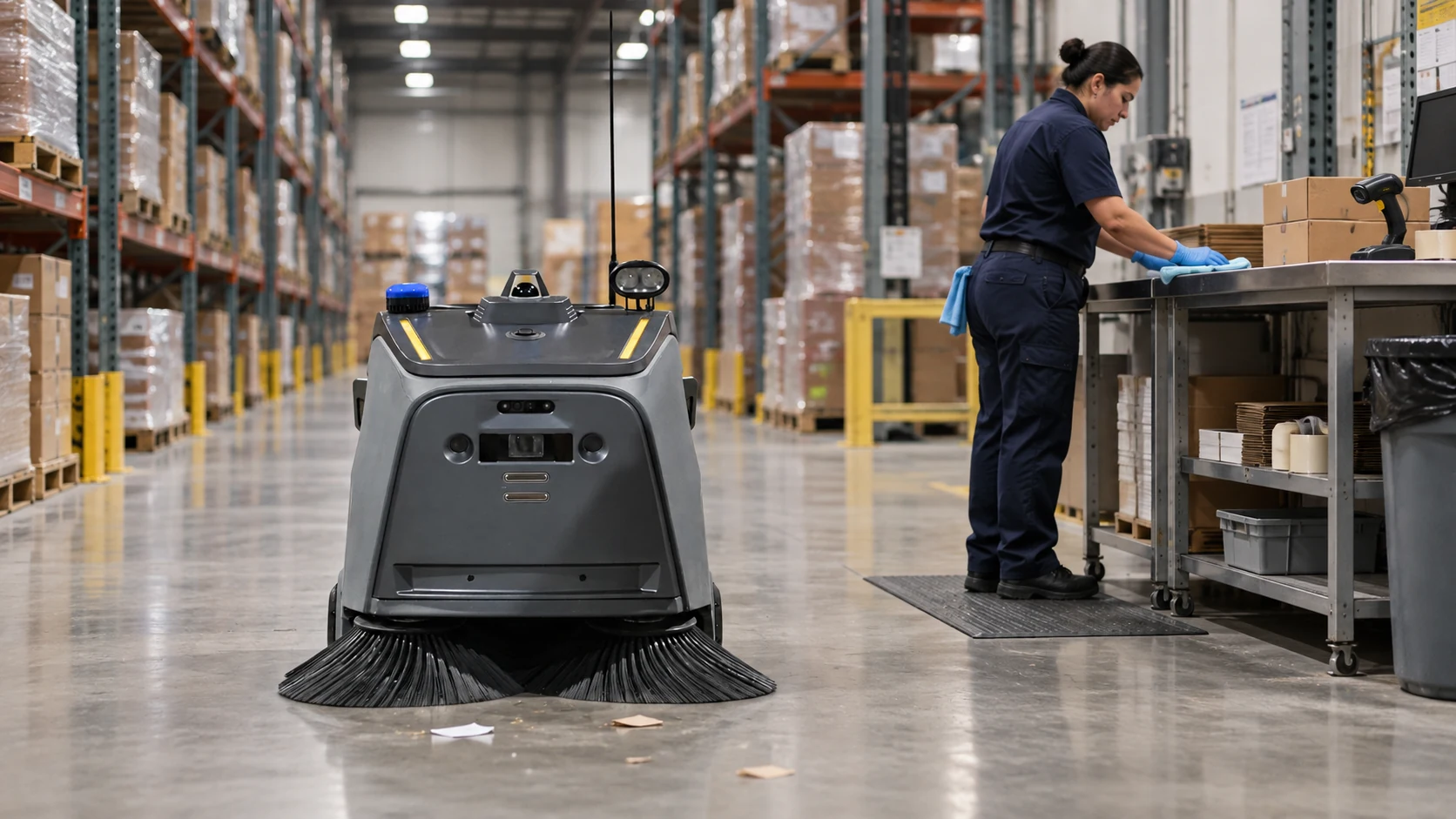
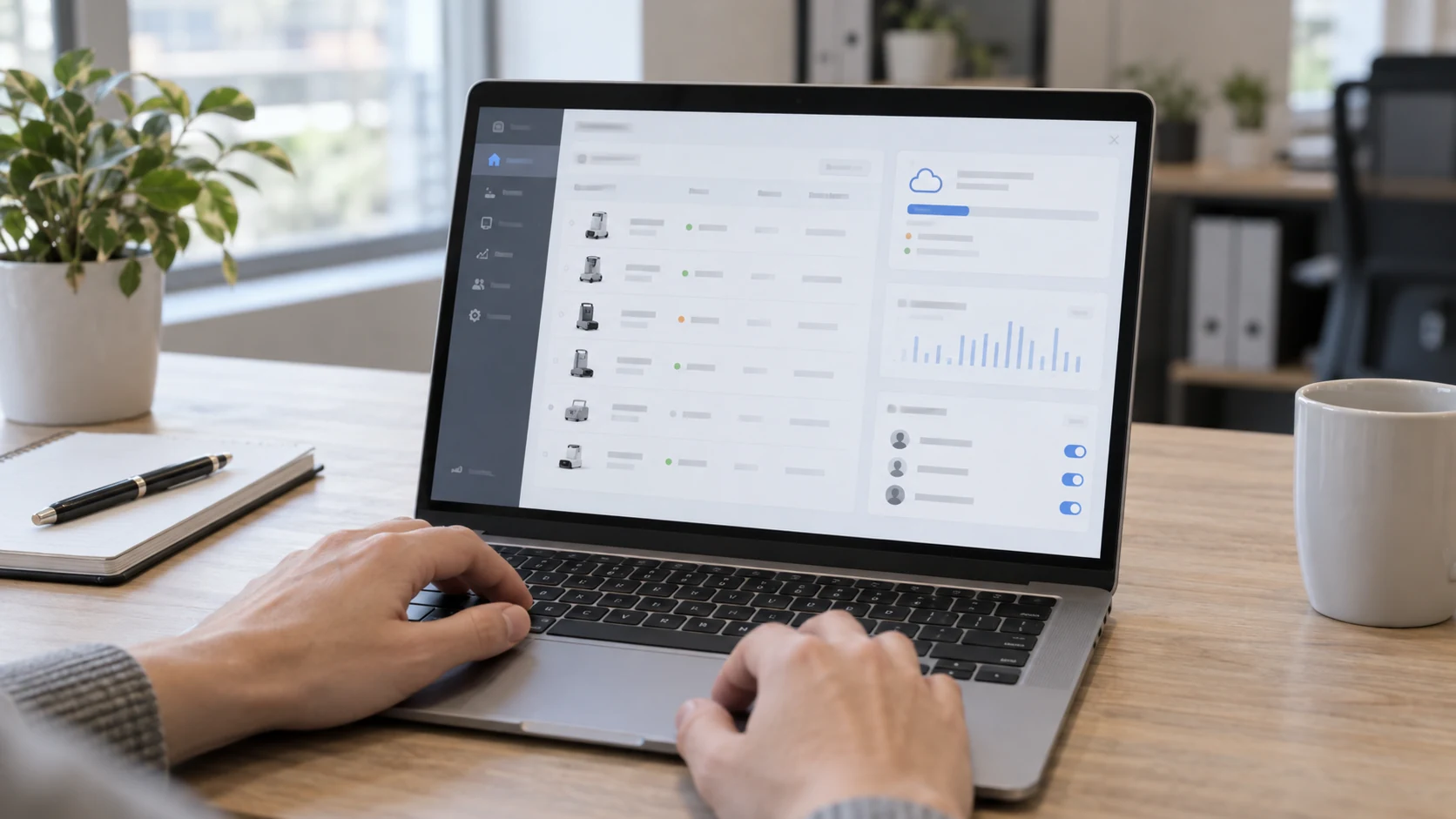
As the program grows, teams need a clear way to see task progress and organize recurring work. Gausium’s app and cloud platform support:
A useful management routine connects task records to daily decisions. If an area is incomplete, staff can check the local cause. A temporary obstruction may require follow-up when access returns; a recurring problem may call for a change to the schedule or cleaning area.
Keep the map aligned with the site’s working arrangements. Changes to the physical layout should be communicated by the local team so the plan can be reviewed.
The operational goal is straightforward: responsible staff should know which work is scheduled, what has been completed and which exceptions need attention.
Training helps turn equipment handover into daily operation. A common foundation can be reused across sites, with the practical instructions adapted to each robot and floor-care requirement.
A handover checklist for each shift can cover:
Document these steps in the site’s normal operating materials so the information remains available when staff change. Using the same checklist across sites, while recording the details that differ, helps managers track readiness.
Gausium’s Latvia deployment story shows what this process looks like at scale.
At AE Partner, the motivation included reducing the need to recruit additional staff or establish a second cleaning shift. Robots took on repetitive floor work, allowing cleaning staff to walk fewer kilometers and spend more time on other duties. That is a project-specific staffing outcome that can inform another organization’s own assessment.
The services listed above are part of VVT’s local offering. An organization planning deployments elsewhere should establish the support arrangement for those locations as part of its own program.
Use the next deployment to test whether the process can be repeated under different conditions. Retain the assessment and handover structure, then adjust the equipment, cleaning area and schedule to the new site.
Review results against the agreed requirements:
A regular review can identify where a site needs a revised schedule, another cleaning method or clearer daily responsibilities. It can also establish which arrangements are ready to use as a starting point elsewhere.
Gausium’s portfolio and management tools support that planning process. For setup at new sites, see Which Commercial Cleaning Robots Are Easiest to Deploy. Contact the Gausium team to discuss your buildings, cleaning tasks and shift patterns, and develop a rollout around the conditions at your facilities.
There is no fixed ratio. It depends on each site’s floor area, dirt type and cleaning window, so the number is worked out site by site after an assessment.
Yes. At AE Partner in Latvia, Beetle and Omnie clean the warehouse while Phantas cleans the carpeted offices.
Reuse the process, not the exact setup. The assessment steps and handover checklist can stay the same, while routes, schedules and equipment follow the new site’s conditions.
Agree this before deployment. In Latvia, for example, the local distributor VVT provides training and after-sales technical support.
Through the cloud. Connected Gausium robots receive over-the-air updates, so software improvements can reach each site without an on-site visit.
UP NEXT
Office Cleaning Robots: How to Choose the Right Solution for Your Workplaceoctubre 20, 2026
Step 1/2
Please select the type of business you’d like to have with Gausium.
Choose one item from the list
Step 2/2
Thanks for sharing your preference. Please fill out the form below, and we’ll get in touch shortly.
By clicking “Submit”, I authorize Gausium to contact me. Privacy Policy.
Thank you for filling out the form
By clicking “Submit”, I authorize Gausium to contact me. Privacy Policy.