




UP NEXT
How to Choose a Sweep-and-Scrub Cleaning Robot for Your SiteAugust 18, 2026

August 18, 2026
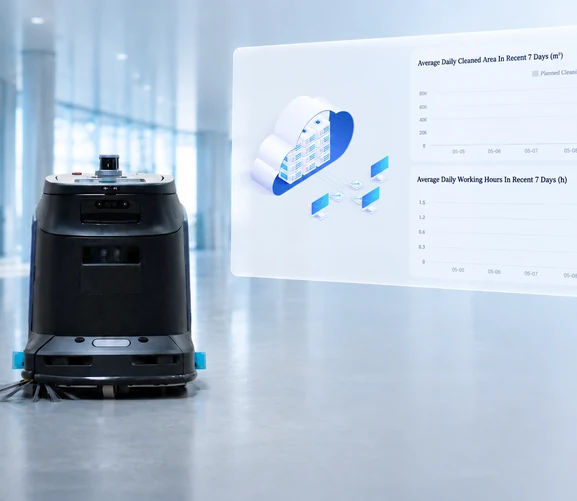
Most teams running cleaning robots can see operational data in the back end. In practice, that data is often used for one thing only: confirming the machine ran that day. That is the shallowest layer of what the reporting holds.
The value sits across five distinct areas — verification, client reporting, multi-site management, maintenance planning and route adjustment. Each draws on different data fields and a different way of viewing them.
This article works through all five, sets out what each one needs, and covers the corresponding functions on the Gausium cloud platform.
The first use replaces a signature with a timestamped record of what the machine did.
Manual cleaning is usually verified through a sign-in sheet, which records attendance rather than outcome. Reporting changes that: which zone, at what time, across how much area, and whether the route finished.
Data needed: planned versus completed tasks, execution timestamps, area covered, interruption records.
One detail is worth attention. Read completion rate rather than total area. High total area alongside a low completion rate usually means the route was blocked by materials or temporary storage, which is a site management issue rather than a machine one. Looking at area alone hides that signal.
The second use matters most to contract cleaners, where cleaning standards are a contractual obligation.
When a dispute arises, neither side can usually produce evidence. A timestamped record changes that position: it can be exported by period and used in service reviews and billing discussions.
Data needed: activity records by day, week and month, grouped by site, in a format that can be shared externally.
The scope of the record needs stating clearly. Reporting evidences machine activity, not cleaning quality. Quality judgements still rest on on-site inspection scoring, and professional cleaning contracts increasingly reference the framework set out in ISSA’s Cleaning Industry Management Standard. The two are complementary: reporting covers whether the work was done, inspection covers how well.
The third use appears once a portfolio grows beyond what a supervisor can inspect directly.
A single site can be managed by walking it. As site numbers rise, the cost of inspecting each one climbs quickly. Centralised data lets a regional team compare completion rates, area per shift and interruption frequency across locations, and adjust equipment or staffing accordingly.
Data needed: a consolidated view across sites, with historical data filterable by location.
The comparison only works where the figures are collected the same way at every site. Where machines report through one platform rather than site by site, a regional team can see where a route is falling behind without visiting to find out.
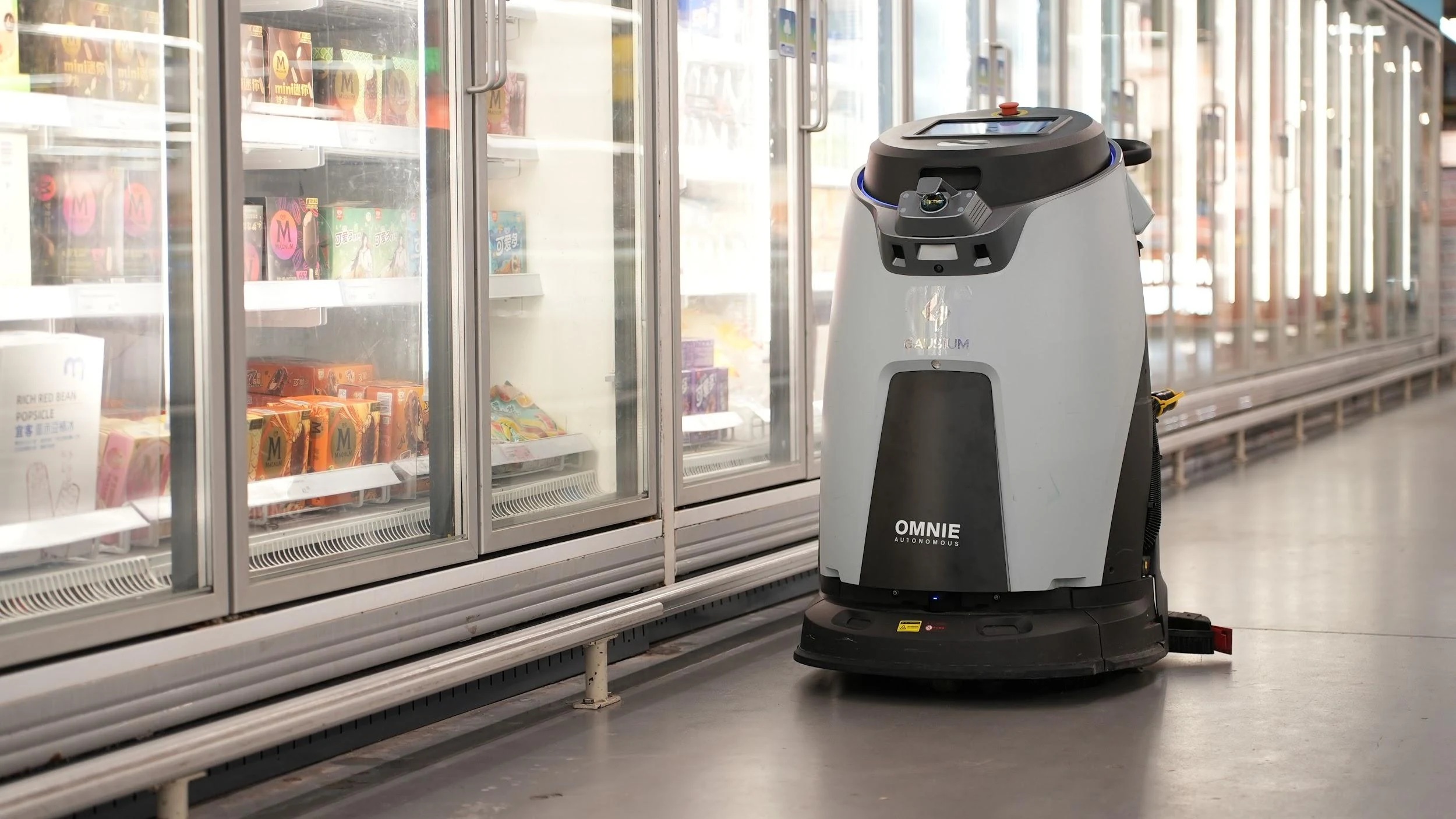
The fourth use depends on seeing consumable life and machine health before either becomes a stoppage.
Brushes, squeegees and filters wear on cycles measured in months, which makes them predictable. When the back end shows a part approaching end of life, replacement can be scheduled outside operating hours rather than happening mid-shift.
Data needed: remaining consumable life, machine health status, fault and alert history.
This connects directly to remote support capability. Gausium’s Remote Maintenance Center provides 24/7 cloud diagnostics, with around 70% of faults resolved remotely, and the continuous status data the machines send back is what makes that possible.
The fifth use looks forward rather than back.
Historical statistics let a team review activity by week or month and see whether a recurring route is holding its efficiency. When the same route takes progressively longer, the cause is usually one of three: deteriorating floor condition, more stored material forcing detours, or consumables approaching end of life. The data narrows it down.
Data needed: historical duration and area covered for the same route, interruption counts and where they occur.
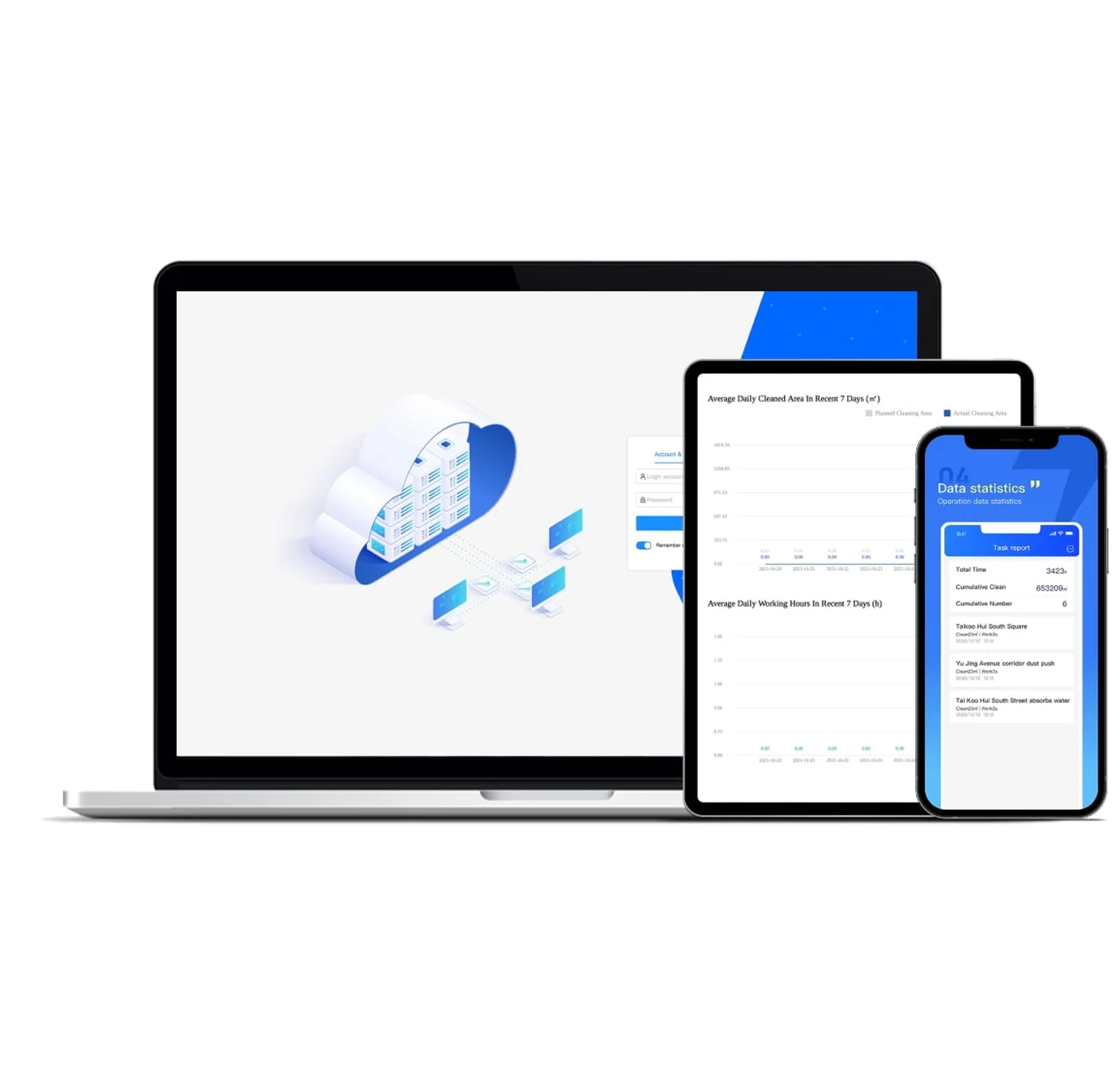
Gausium commercial cleaning robots connect to the cloud platform, where authorised users reach these functions from a smartphone, tablet or computer:
Reporting is delivered through the platform and the Gausium App, so any connected model turns its work into reviewable data regardless of cleaning method. Select the machine against floor type and cleaning method first, then confirm the data access and reporting configuration that model supports — the reporting selection guide covers that sequence.
Three things sit outside what reporting covers, and separating them keeps expectations accurate.
It does not judge cleaning quality. Reporting evidences machine activity. Whether the floor meets a hygiene standard still requires physical inspection.
It reduces inspection frequency rather than replacing inspection. Sites holding a stable completion rate can be inspected less often, not never.
It does not explain causes. Data shows that a route is taking longer. Whether that is a spalling slab, more stored material or worn consumables has to be established on site.
The value of operational data lies in what it replaces: verification that depended on memory, client reporting that depended on assertion, multi-site oversight that depended on travel, maintenance that depended on failure, and route planning that depended on assumption.
Each of the five uses draws on different fields, so it is worth confirming during deployment that everything required is within the queryable range. Contact Gausium to review reporting configuration for specific sites and models.
Five areas: verifying that scheduled tasks ran, evidencing service delivery to clients, comparing performance across sites, scheduling consumable replacement in advance, and adjusting routes based on historical trends.
It can evidence whether scheduled tasks were carried out, since records are timestamped and generated by the machine rather than entered by hand. Cleaning quality judgements still require on-site inspection scoring.
Completion rate, area per shift and interruption frequency, viewed side by side across locations. Total area alone tells you little; completion rate is the figure that surfaces site management problems.
Gausium robotic products comply with GDPR regulations, alongside the relevant ISO and IEC standards. For facilities operating in the EU or handling data subject to it, data processing terms should be confirmed as part of the deployment agreement.
Remaining consumable life and machine health are visible in advance, so replacement can be scheduled outside operating hours. The same continuous status data supports Gausium’s 24/7 remote diagnostics, which resolve around 70% of faults without a site visit.
Reporting comes from the cloud platform and the Gausium App, so any connected model supports it regardless of cleaning method.
Yes. Reporting evidences machine activity, while cleaning quality, hygiene standards and contractual compliance still require physical inspection. Reporting lowers how often inspection is needed rather than removing the need.
Step 1/2
Please select the type of business you’d like to have with Gausium.
Choose one item from the list
Step 2/2
Thanks for sharing your preference. Please fill out the form below, and we’ll get in touch shortly.
By clicking “Submit”, I authorize Gausium to contact me. Privacy Policy.
Thank you for filling out the form
By clicking “Submit”, I authorize Gausium to contact me. Privacy Policy.