




UP NEXT
How to Scale Cleaning Robots Across Sites and ShiftsOctober 20, 2026

October 27, 2026
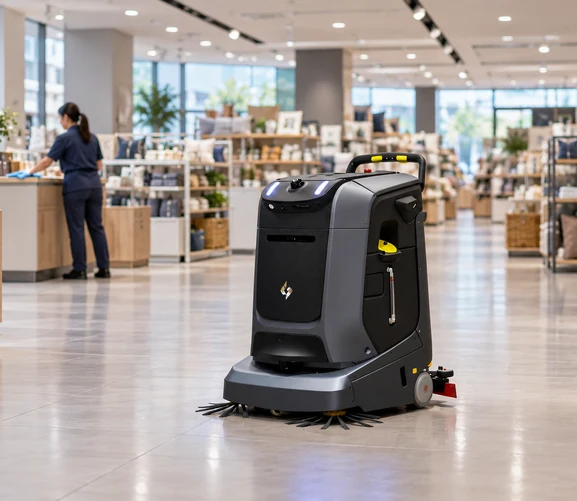
In a retail store, office building or school, floor scrubbing is one part of a much longer cleaning list. Corridors and open areas need attention, while staff also have to clean restrooms, deal with unexpected spills and check the finished work. Choosing a scrubber affects how that work fits into the available shift.
A walk-behind floor scrubber gives an operator direct control throughout the task. A robotic floor scrubber can carry out assigned cleaning tasks without someone continuously steering it. A walk-behind is worth considering for work that benefits from direct control; a robot is worth evaluating for recurring tasks that could release staff time for other responsibilities. Floor area alone does not determine which is more suitable.
The practical question is how much of a facility’s floor-cleaning workload a machine can complete to the required standard, and how much staff involvement it needs along the way. Comparing access, cleaning results, hands-on time and ongoing costs gives a stronger basis for choosing than comparing machine speed alone.
In wet-scrubbing operation, both machine types apply cleaning solution, scrub a compatible hard floor and recover dirty water. The main difference is how they are operated.
A walk-behind scrubber requires an operator to guide the machine during cleaning. The operator decides where to go, adjusts the route and responds directly to conditions on the floor.
Walk-behind floor scrubbers are also commonly called walk-behind auto scrubbers or automatic scrubbers. Here, “automatic” refers to the machine’s solution application, scrubbing and dirty-water recovery functions—not autonomous navigation. A walk-behind auto scrubber still requires an operator to guide it, while a robotic floor scrubber uses navigation technology to carry out assigned cleaning tasks.
A robotic scrubber uses navigation and task controls to clean assigned areas autonomously. Its capabilities depend on the model and configuration, including how it handles obstacles, changes in the environment and different cleaning tasks. It still needs setup, routine care and staff support when an issue requires attention.
|
What to compare |
Walk-behind auto scrubber |
Robotic floor scrubber |
|
Operation during cleaning |
An operator guides the machine throughout the task. |
The robot carries out assigned tasks without continuous steering. |
|
Responding to changing conditions |
The operator assesses the situation and adjusts the work. |
Responses depend on navigation, obstacle handling and task capabilities. |
|
Preparation |
Staff prepare the machine and select suitable cleaning settings. |
Preparation also includes deployment and task configuration. |
|
Staff involvement |
Includes preparation, operation and after-use care. |
Includes preparation, interventions, routine care and result checks. |
|
Operating records |
Manual records or connected usage data, depending on the machine. |
Task reports through the connected platform; available fields vary by system. |
A walk-behind scrubber is worth considering when direct operator control fits the way the work is organized. For a short cleaning task, an accessible machine and a trained operator may be enough to complete the job without adding a separate deployment process.
For short, infrequent jobs, compare the time needed to prepare and run each machine with the cleaning work itself. Frequency alone does not determine whether automation is worthwhile. A large area cleaned weekly may still represent a substantial workload, especially if the same robot can serve other areas between those tasks.
A compact walk-behind can also be useful where its dimensions and maneuverability suit the available access. Check the actual doorways, turning spaces and floor transitions. Small rooms do not automatically rule out a robot, and steps or steep ramps do not automatically make a walk-behind suitable. Either machine must stay within its operating limits; some areas need a different cleaning method.
Direct control is also helpful when a task requires ongoing human judgment. An unusual spill, an unidentified substance or debris unsuitable for the machine should be assessed before cleaning begins. Having an operator at the handle does not make every material safe to collect, but it allows the cleaning team to decide how the task should be handled.
Robotic scrubbing is worth evaluating when recurring floor-cleaning tasks take up staff time that is also needed elsewhere. Connected corridors, sales floors and circulation areas are useful places to start an assessment, provided the selected machine can access and clean them effectively.
The benefit comes from completing suitable tasks without continuous steering. A team member may be able to work on other responsibilities while the robot cleans, then return for machine care or quality checks. How much time becomes available depends on the preparation, interventions and servicing the robot actually needs.
Automation does not require every task to follow an identical route under unchanged conditions. Models differ in their ability to respond to obstacles and layout changes. Evaluate those capabilities against the site’s normal operating environment, including people moving through the area, parked carts and rearranged displays.
Scheduling can help fit cleaning around opening hours or quieter periods. The useful distinction is that a robot does not require a dedicated operator to steer it throughout that window. Staff availability for support, access to the area and the site’s operating rules still matter.
Cleaning records can also support supervision. Gausium’s guide to cleaning robot performance reporting explains how task information can help teams review operations. A completed task record should be considered alongside an inspection of the floor; it does not, by itself, prove that every area meets the required standard.
For facilities currently using a walk-behind scrubber, start with the cleaning tasks and access requirements. A smaller building can still have a recurring workload suitable for automation, while a larger building may contain areas that need a different approach.
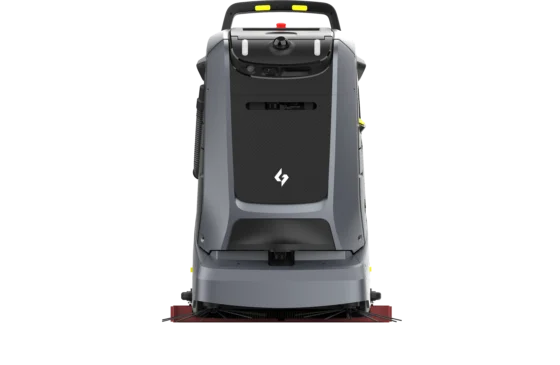
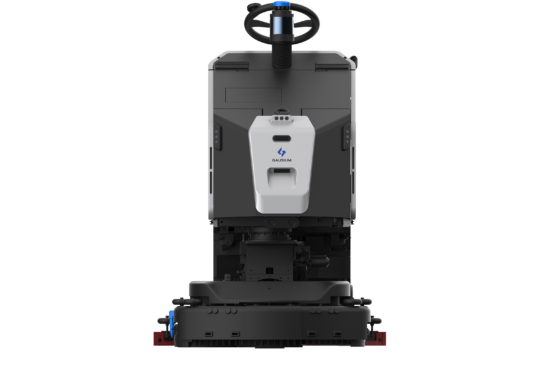
Gausium Phantas combines vacuuming, sweeping, scrubbing and dust mopping in a platform designed for small to midsize spaces. These different modes are relevant where a facility has both hard floors and low-pile carpet.
For an office with hard-floor circulation areas and carpeted rooms, this means evaluating scrubbing and vacuuming as separate tasks. Check the required cleaning result on each surface and how staff will organize the different tasks within the shift.
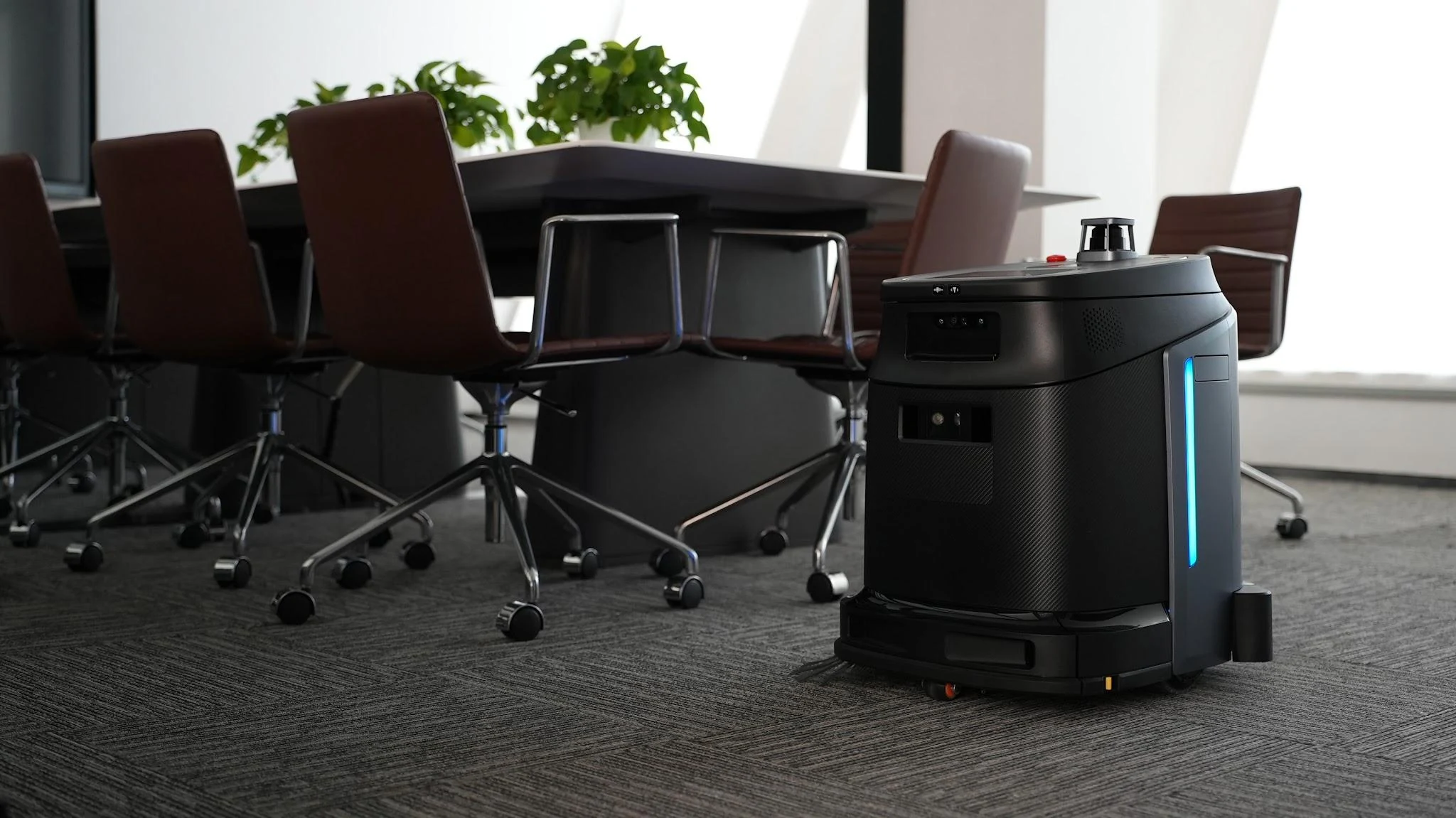
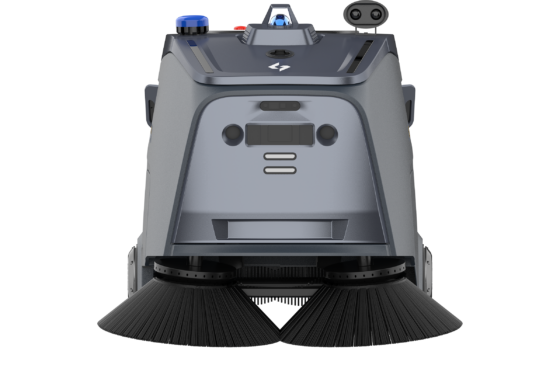
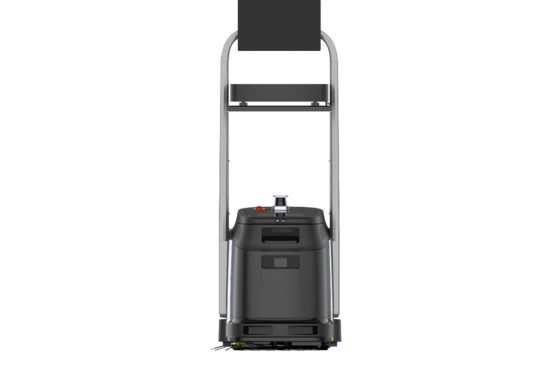
Gausium Mira is designed for midsize spaces and narrow aisles. It combines sweeping and scrubbing in one pass, making it relevant to an assessment of recurring hard-floor cleaning in settings such as retail.
Combined sweeping and scrubbing can reduce separate pre-sweeping for debris the machine is designed to collect. It does not remove the need to clear unsuitable materials before cleaning. During a trial, use the types of debris normally present at the site to assess how much preparation is still required.
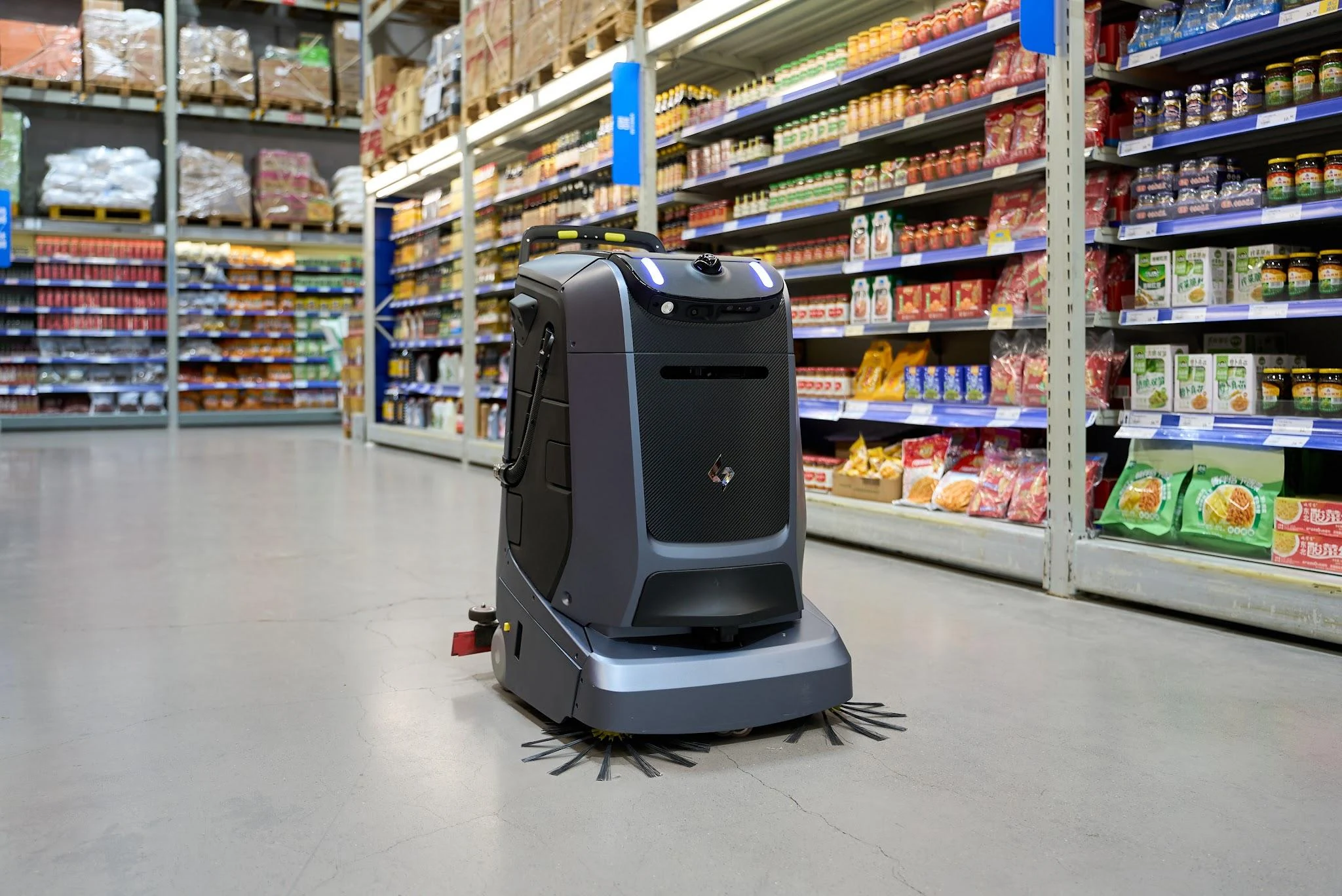
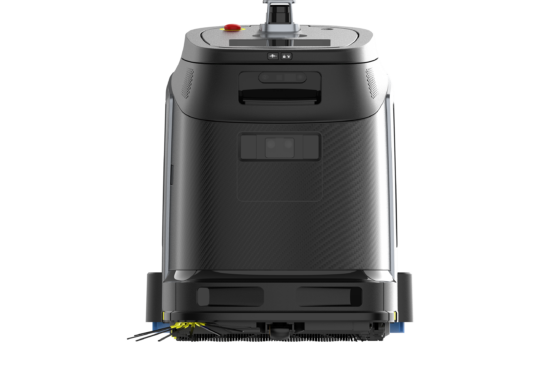
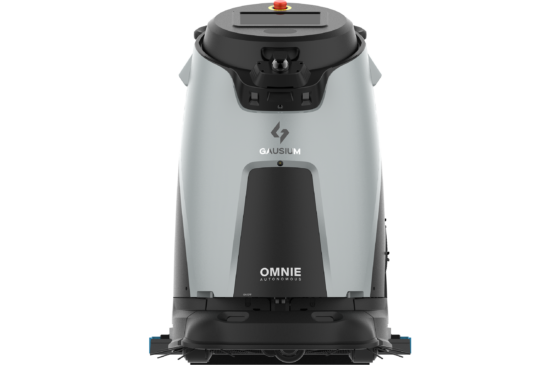
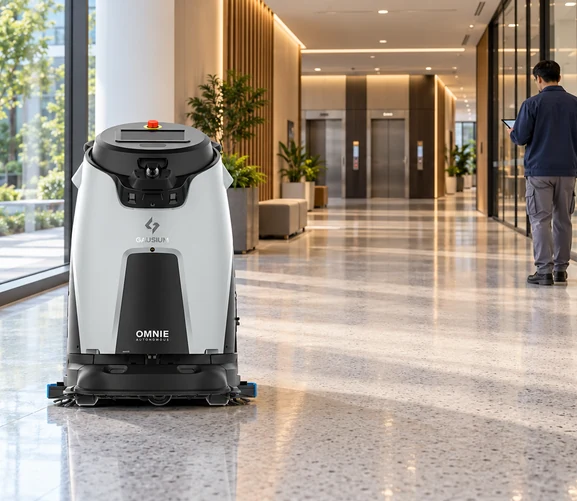
For areas with frequent activity and changing floor conditions, Gausium Omnie offers detection and cleaning of dry and wet waste. Assess this capability using the types of debris and spills normally encountered at the site, within the machine’s operating requirements.
A useful comparison includes the entire job, from preparing the machine to putting it away. Robot cleaning time and staff time saved are different measurements.
With a walk-behind scrubber, hands-on work includes preparing the machine, steering it through the cleaning area and completing after-use care. With a robot, staff still need to prepare the area and machine as required, respond to exceptions and maintain the equipment.
Tasks may include checking brushes and water-recovery components, emptying or refilling tanks where required, and removing collected debris. A compatible workstation may automate some servicing steps, depending on the model and configuration. Include only the functions provided by the proposed installation when estimating staff time.
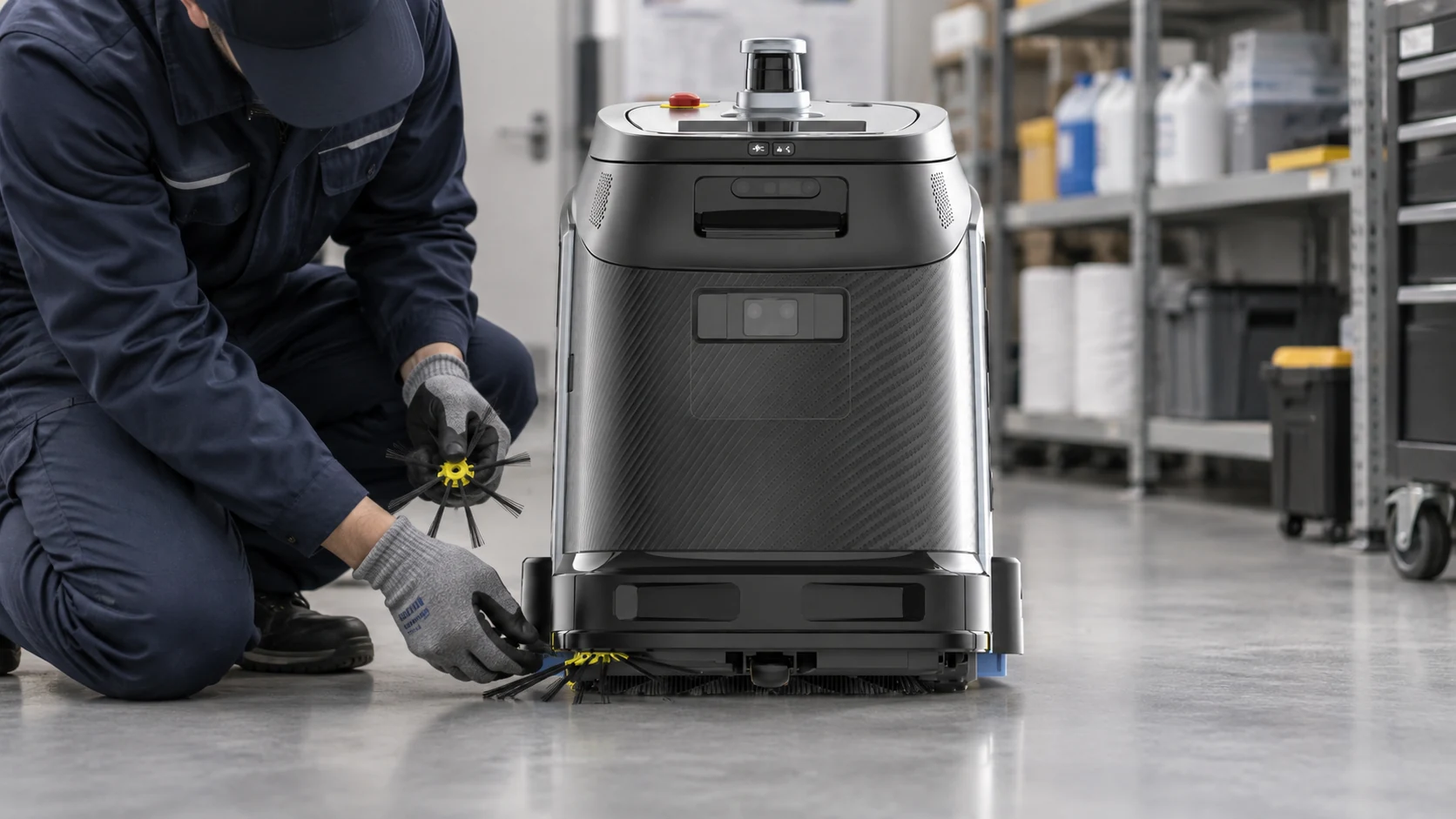
The team also remains responsible for areas outside the robot’s reach, suitable handling of unusual spills and checking cleaning quality. Plan where released operator time will be used. Restrooms, stairs and detail cleaning are possible assignments, but the right allocation depends on the site’s workload and staffing arrangements.
Purchase price matters, but it does not describe the full cost of either option. Compare both machines over the same period and against the same cleaning requirements.
Include equipment or financing costs, deployment and training, consumables, maintenance, servicing and staff time. For a robotic option, check whether the quotation includes any required workstation, installation work, connectivity or software services. Availability and commercial arrangements should be confirmed for the specific proposal.
Use measured hands-on time to estimate the operational benefit. If a robot runs for an hour but needs preparation, assistance and after-use care, that hour is not automatically an hour of labor saved. Equally, time made available for other tasks is not automatically a reduction in payroll costs.
The value may instead come from completing more of the existing workload within a shift, reducing the need for additional operating hours or making recurring floor cleaning easier to schedule. These are outcomes to assess at each facility, rather than assume from a product specification.
Replacement depends on whether the proposed machine can cover the tasks currently assigned to the walk-behind. List those tasks before making the decision, including occasional work that may be easy to overlook during a demonstration.
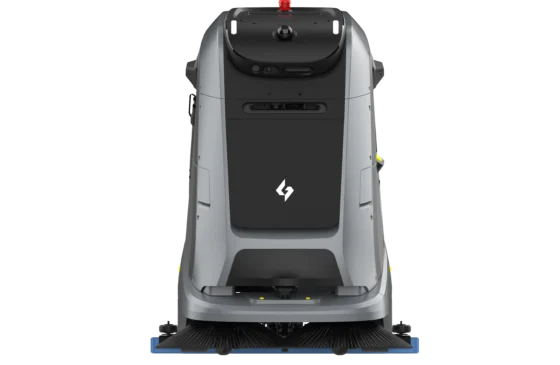
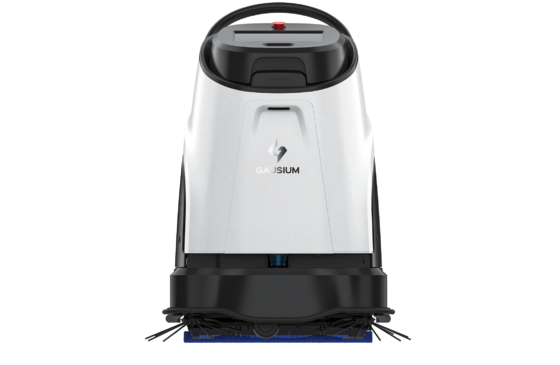
Some Gausium models also offer manual operation. Phantas has an integrated handle that detects its position to switch between Auto and Manual modes. Gausium Marvel offers a manual mode with a power-assisted handlebar. These features add operational flexibility, but they do not establish that a robot can replace every use of an existing scrubber.
A facility may retain a walk-behind for areas or tasks the robot cannot handle, or find that its requirements can be covered without one. Establish this through a task-by-task assessment. For larger floors where a ride-on machine is also under consideration, see Autonomous vs. Ride-On Floor Scrubbers.
A site trial should answer the questions that specifications cannot settle. Select a representative area, agree the required cleaning result and include conditions normally encountered during operation.
Compare the machines on compatible surfaces with similar levels of soil and the same quality expectations. Record both the total elapsed time and the minutes staff actively spend on the task. Separate initial deployment effort from recurring daily work so that neither is overlooked.
During the comparison, check:
Access, floor compatibility and cleaning quality are essential requirements. Once they are satisfied, compare the staff time, costs and operational benefits of the suitable options. Gausium’s guide to cleaning robot performance tests sets out how to structure a trial, and the Gausium team can discuss the cleaning tasks and help identify a robot to evaluate on site.
Yes. Gausium Phantas is designed for small to midsize spaces, and Mira is designed for midsize spaces and narrow aisles. Suitability also depends on floor type, access and cleaning workload. Assess the actual areas the robot needs to reach rather than using building size as the only criterion.
That depends on whether the robot covers the tasks currently assigned to the walk-behind. Review routine cleaning, occasional jobs and difficult-to-access areas before deciding whether to retain it. A robot’s manual mode can add flexibility, but it does not establish that every existing task can be replaced.
Some models offer manual operation. Phantas uses handle-position detection to switch between Auto and Manual modes. Marvel offers a manual mode with a power-assisted handlebar. Confirm the supported operation for the selected model and task.
The time depends on the model, configuration and site. Deployment includes preparing the machine, mapping or configuring the cleaning area, setting up tasks and training staff. Any proposed workstation or building integration adds its own installation requirements. See Which Commercial Cleaning Robots Are Easiest to Deploy.
Staff can use the time made available for other responsibilities, such as detail cleaning, restrooms, stairs and quality checks. They also handle robot care and any required assistance. How much time becomes available should be measured in the actual operation.
Step 1/2
Please select the type of business you’d like to have with Gausium.
Choose one item from the list
Step 2/2
Thanks for sharing your preference. Please fill out the form below, and we’ll get in touch shortly.
By clicking “Submit”, I authorize Gausium to contact me. Privacy Policy.
Thank you for filling out the form
By clicking “Submit”, I authorize Gausium to contact me. Privacy Policy.