




UP NEXT
Commercial Cleaning Robots Without Internet: What Works and What Doesn’tAugust 26, 2026

August 26, 2026
A single terminal, railway station or metro interchange often covers tens of thousands of square metres, operates close to around the clock, and carries passengers throughout the day.
The difficulty in these buildings is not machine capability. It is completing coverage without interrupting operations. Conventional practice compresses cleaning into the hours after the last service and relies on manual spot checks during the day, which limits both coverage and response time to available labour hours.
Gausium’s autonomous cleaning solutions are built around this constraint. Deployments in large public facilities now span airports, railway stations and metro lines, with customers including Network Rail in the UK, SMRT in Singapore, Metro de Madrid in Spain, the Kyushu Shinkansen in Japan, and Guangzhou Metro and Shenzhen MTR in China. Across these projects, the configuration approach follows a consistent sequence of four stages.
Configuration in a large facility begins with zone division rather than total floor area. Three conditions govern the division, and where any one differs, the area belongs in its own zone.
Floor condition. Material, state of repair and soil profile determine which cleaning method applies. Polished terminal floors, platform anti-slip strips and tactile paving, and back-of-house hard-wearing surfaces each require different handling.
Access. The tightest point on a route determines the machine size that zone can accommodate. Retail units and service corridors are typically far narrower than main halls and need separate assessment.
Available hours. Traffic troughs occur at different times in different zones. Concourses, platforms and retail areas rarely share the same window, and each should be scheduled independently rather than aligned across the site.
Applied properly, a facility measured in tens of thousands of square metres usually resolves into four to eight zones, each with its own model and cleaning frequency. Dividing evenly by area is the common error: it assumes uniform cleaning difficulty, while entrances, main circulation routes and back-of-house areas often differ by a factor of several in soil load.
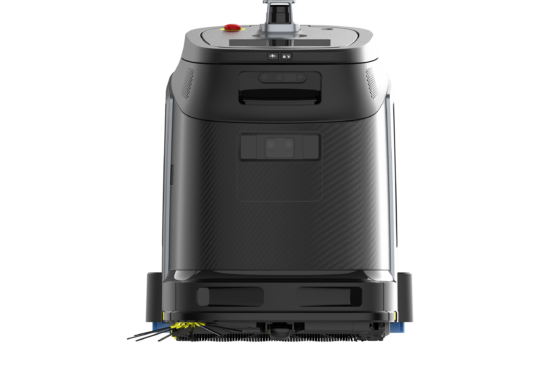
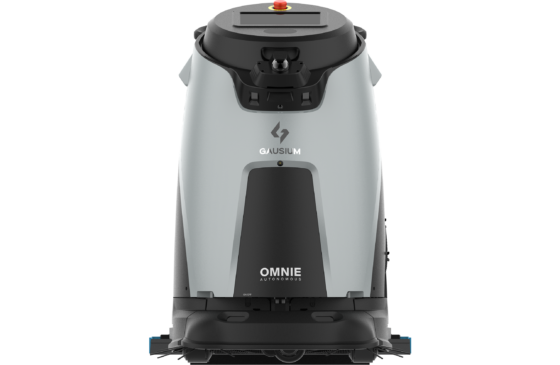
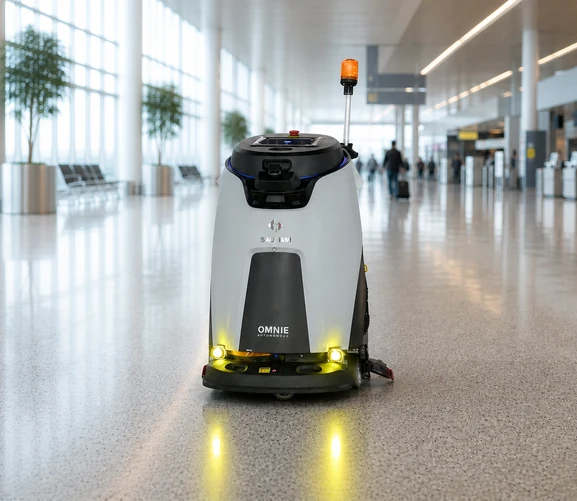
Omnie, previously Scrubber 50, is engineered for complex, dynamic environments and offers scrubbing, sweeping, dust mopping and spot cleaning, switching method within the same area as conditions require.
Multimodal SLAM with 3D LiDAR and a 360-degree panoramic camera provides zero-blind-spot perception, allowing the machine to move safely among passengers, luggage trolleys and staff. AI spot cleaning identifies both dry and wet waste and works where the floor is actually soiled, rather than covering a fixed path regardless.
Suited to transfer passages, platforms and departure areas — zones with uninterrupted traffic, cleaning windows outside peak hours, and uneven soil distribution.
![Cleaning Robots for Large Commercial Facilities: Deployment Patterns and Model Configuration [b]](https://gausium.com/wp-content/uploads/2026/08/body-2-1.webp)
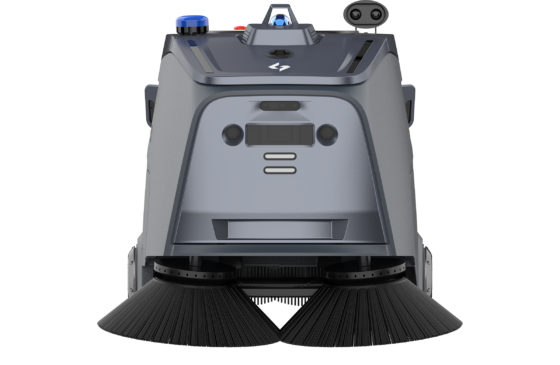
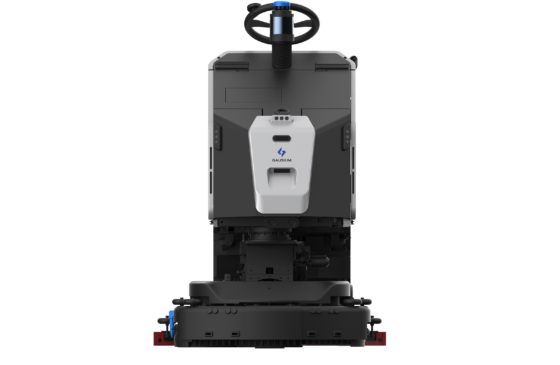
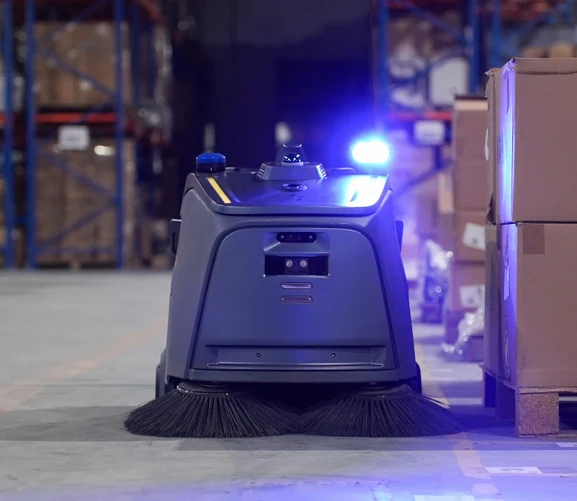
Marvel sweeps with front-mounted dual side brushes and scrubs with rear disc brushes, completing both steps in a single pass and removing the manual pre-sweep. Higher downward pressure lifts soil that has worked into the floor, and large tank capacity reduces refill and drain stops across extensive areas.
An internal self-cleaning system flushes the recovery tank and rinses the suction pathway after each run, without depending on an external workstation.
Suited to large areas carrying dry debris and wet soil together, such as logistics platforms, service corridors and the more industrial sections of transport facilities.
![Cleaning Robots for Large Commercial Facilities: Deployment Patterns and Model Configuration [b]](https://gausium.com/wp-content/uploads/2026/08/body-3-1.webp)
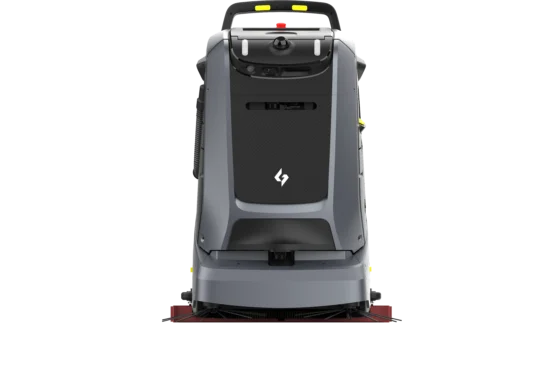
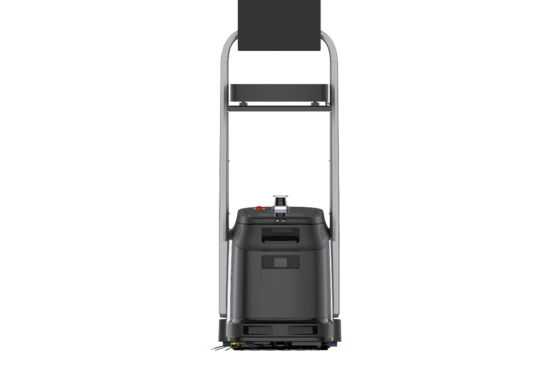
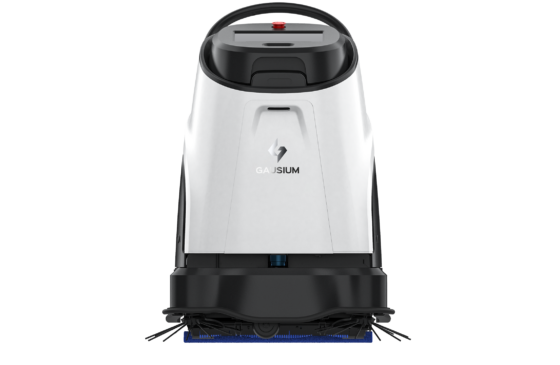
Retail units, offices and back-of-house routes generally offer less clearance than main halls and require a smaller machine such as Phantas. These areas represent a modest share of total floor space, but leaving them outside the automated scope means the manual hours they consume continue indefinitely.
Current specifications for each model are on the respective product pages, and the public transport solution page covers the wider deployment picture.
![Cleaning Robots for Large Commercial Facilities: Deployment Patterns and Model Configuration [b]](https://gausium.com/wp-content/uploads/2026/08/body-4-1.webp)
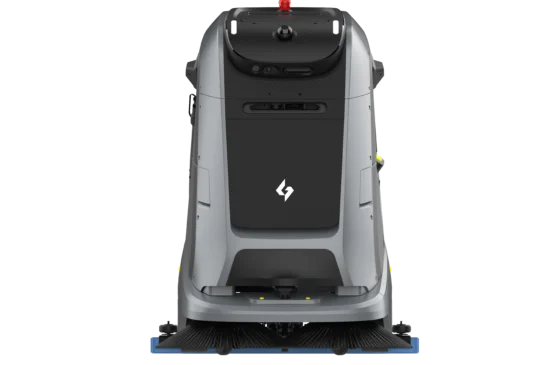
Retail units, offices and back-of-house routes generally offer less clearance than main halls and require a smaller machine such as Phantas. These areas represent a modest share of total floor space, but leaving them outside the automated scope means the manual hours they consume continue indefinitely.
Current specifications for each model are on the respective product pages, and the public transport solution page covers the wider deployment picture.
Replenishment points should be fixed on the drawings before machines arrive. Automated refill, discharge and charging are what make unattended operation possible in a large facility, and a position settled after delivery usually costs either building-services work or cleaning-window time.
Start by separating the two categories of equipment, because their site requirements are not the same:
Where a preferred position has power but no water or drainage, a mobile water tank configuration is worth evaluating before the position is ruled out.
Four considerations govern placement:
In rail environments in particular, charging and parking positions must also satisfy station fire-safety and equipment management rules, which typically requires agreement with the operator early in the project.
The cleaning window in a large facility is not the inverse of opening hours. It is a set of low-traffic periods distributed through the day.
The working pattern is straightforward: the fully clear overnight window carries broad coverage, and daytime troughs carry maintenance and incidental response.
The schedule at Caihong Bridge Station on the Guangzhou Metro illustrates the approach — a single machine runs four separate blocks across the day, covering the concourse outside the fare gates, transfer passages and platforms, producing around 7,500 m² of coverage across roughly 45 operating hours per week. The full schedule is set out in the Guangzhou Metro case study.
What matters is that troughs do not coincide between zones. Scheduling them separately is what allows every area to be covered; aligning the site to one window leaves some zones without one.
Autonomous machines take on repeatable large-area work; people take on the work that requires judgement. The structure of the cleaning team’s responsibilities changes accordingly:
This division should be established before deployment and reflected in the roster. Where it is not, the pattern is familiar: machines run, the manual roster stays unchanged, and the hours released are never actually recovered.
Published Gausium projects in large public facilities give a sense of configuration scale:
|
Project |
Deployment |
Coverage |
|
Heathrow Airport |
34 cleaning robots + 18 charging docks |
Check-in areas and airside locations |
|
Network Rail |
13 machines, including Phantas and Omnie |
Station concourses, waiting areas and offices across multiple stations |
|
Guangzhou Metro, Caihong Bridge Station |
1 Omnie + 1 workstation |
Core passenger areas within an 86,000 m² station |
|
São Paulo Metro Line 5 |
2 Omnie units |
Platforms and mezzanines across three stations |
Full background, implementation detail and results for each project are available in the Gausium case library.
Machine count follows zone division and cleaning windows rather than total floor area. Guangzhou Metro covers its core passenger areas with a single machine; Heathrow required a substantially larger fleet because check-in and airside windows overlap.
Contact Gausium to arrange a site assessment and configuration recommendation for a specific facility.
Two buildings of the same size can differ several-fold in machine count, because what sets the count is how many zones the site breaks into and how much of each zone’s window a machine can actually use. A site with overlapping busy periods needs more units than one with a single long clear window.
The tightest constraint governs rather than the average, so a hall with a narrow retail spur is two zones. Merging on a two-out-of-three match tends to produce a zone that no single machine can serve properly.
People-dense concourses, passages and platforms suit Omnie. Large open floor plates carrying dry debris and wet soil together suit Marvel. Tight retail units and back-of-house routes suit a compact model such as Phantas.
Water and drainage, rather than where there happens to be spare floor space. Charging docks can follow the working area because they need power only, while workstation positions are effectively chosen by the building services and should be agreed with facilities engineering before the order rather than after delivery.
Yes, within traffic troughs, provided the machine can perceive and avoid people. Daytime runs should be scoped as maintenance passes over the areas that soil fastest; treating a trough as a full-coverage window is what leaves runs abandoned mid-route.
Not by itself. The released hours only convert into capacity if the roster is rewritten before go-live, with detail and response work formally reassigned and supervision moved from running machines to verifying results.
Step 1/2
Please select the type of business you’d like to have with Gausium.
Choose one item from the list
Step 2/2
Thanks for sharing your preference. Please fill out the form below, and we’ll get in touch shortly.
By clicking “Submit”, I authorize Gausium to contact me. Privacy Policy.
Thank you for filling out the form
By clicking “Submit”, I authorize Gausium to contact me. Privacy Policy.