




UP NEXT
How to Assess Data Security When Buying Commercial Cleaning Robotsseptiembre 07, 2026

septiembre 07, 2026
«Outdoor» is not one cleaning environment. A covered parking deck, an industrial yard and a retail courtyard differ in surface, debris and pedestrian traffic, and each one narrows the machine choice differently.
The single fact that decides whether an area can be automated is whether its surface appears on the machine’s published list of applicable floor types. Debris size, lighting and traffic then decide how well the route runs.
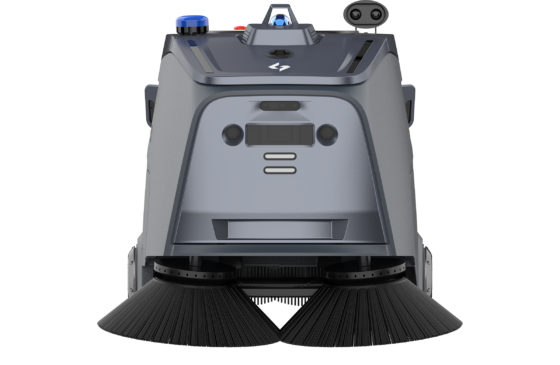
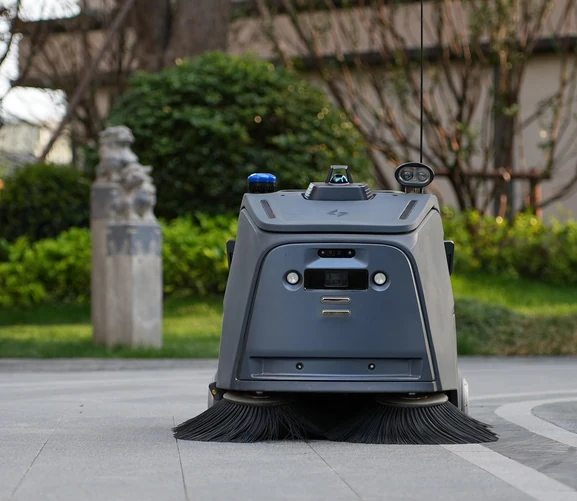
Gausium’s outdoor sweeper line is the Beetle series, specified for indoor and outdoor use, with applicable surfaces of bituminous road, concrete, rubble flooring, PVC vinyl and epoxy. The current generation, Beetle 2.0, was introduced at Interclean Amsterdam 2026 and is built to operate across uneven terrain, mixed pedestrian and vehicle environments, and variable weather.
|
Outdoor area |
Robot type that fits |
Verdict |
|
Covered parking structures and semi-outdoor plazas |
Autonomous sweeper with low-light navigation |
Strong fit |
|
Large open industrial yards |
Heavy-duty autonomous outdoor sweeper |
Strong fit |
|
Loading bays and warehouse-to-yard routes |
Outdoor sweeper with door integration |
Strong fit |
|
Open-air retail walkways and campus courtyards |
Outdoor sweeper on off-peak scheduling |
Workable, traffic-dependent |
|
Grassed and soft landscaped ground |
None in this category |
Outside the specification |
Parking structures pair outdoor surfaces with basement lighting, so navigation decides the outcome rather than cleaning capability. Decks are repetitive, open, and short on landmarks, and the parked vehicles that defined last week’s map have since moved.
Beetle navigates using 3D LiDAR for mapping and localization, an approach suited to low-light, high-dynamic and wide-open conditions rather than to feature-rich interiors.
Beetle 2.0 extends that with a rear-mounted 2D LiDAR and full-surround vision including intelligent detection of moving vehicles, and Gausium names underground parking facilities among its target environments.
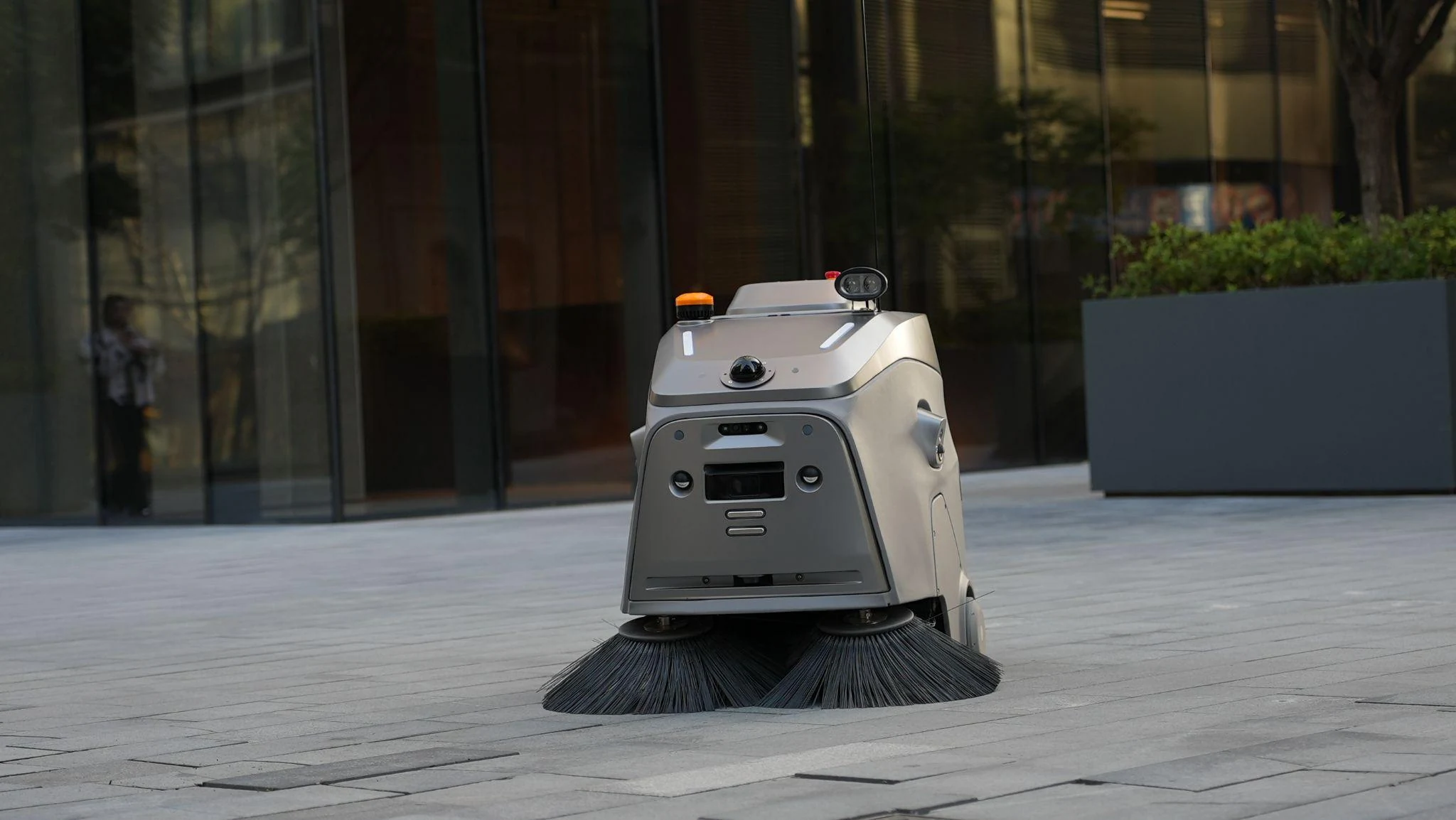
Grit is also the dominant debris here, and it loads filters far faster than indoor dust, which is why automatic HEPA cleaning after each task matters more on a deck than any cleaning-performance figure.
Yards are the strongest case in this category and usually the first area a facility team automates, because they are busy whenever the site is running and therefore cleaned rarely.
Beetle’s high-power suction motor is specified to handle everything from fine dust and sand through to paper scraps, bottles and wood chips, which is what allows a mixed-debris yard to be cleaned in one pass rather than sorted first. On Beetle 2.0 the roller brush is specified to handle debris from fine dust through to gravel and leaves.
That range, not a throughput number, is what makes a yard automatable.
This is where most outdoor programs either succeed or stall, and the obstacle is rarely the floor. Epoxy and concrete are both on the applicable list, so the door is the constraint.
Beetle addresses that boundary with AutoPass, which integrates the robot with warehouse sliding doors so a crossing does not require someone to hold a door open. For sites weighing interior warehouse coverage alongside the yard, the criteria for the indoor half are set out in Gausium’s guide to selecting a warehouse floor cleaning robot.
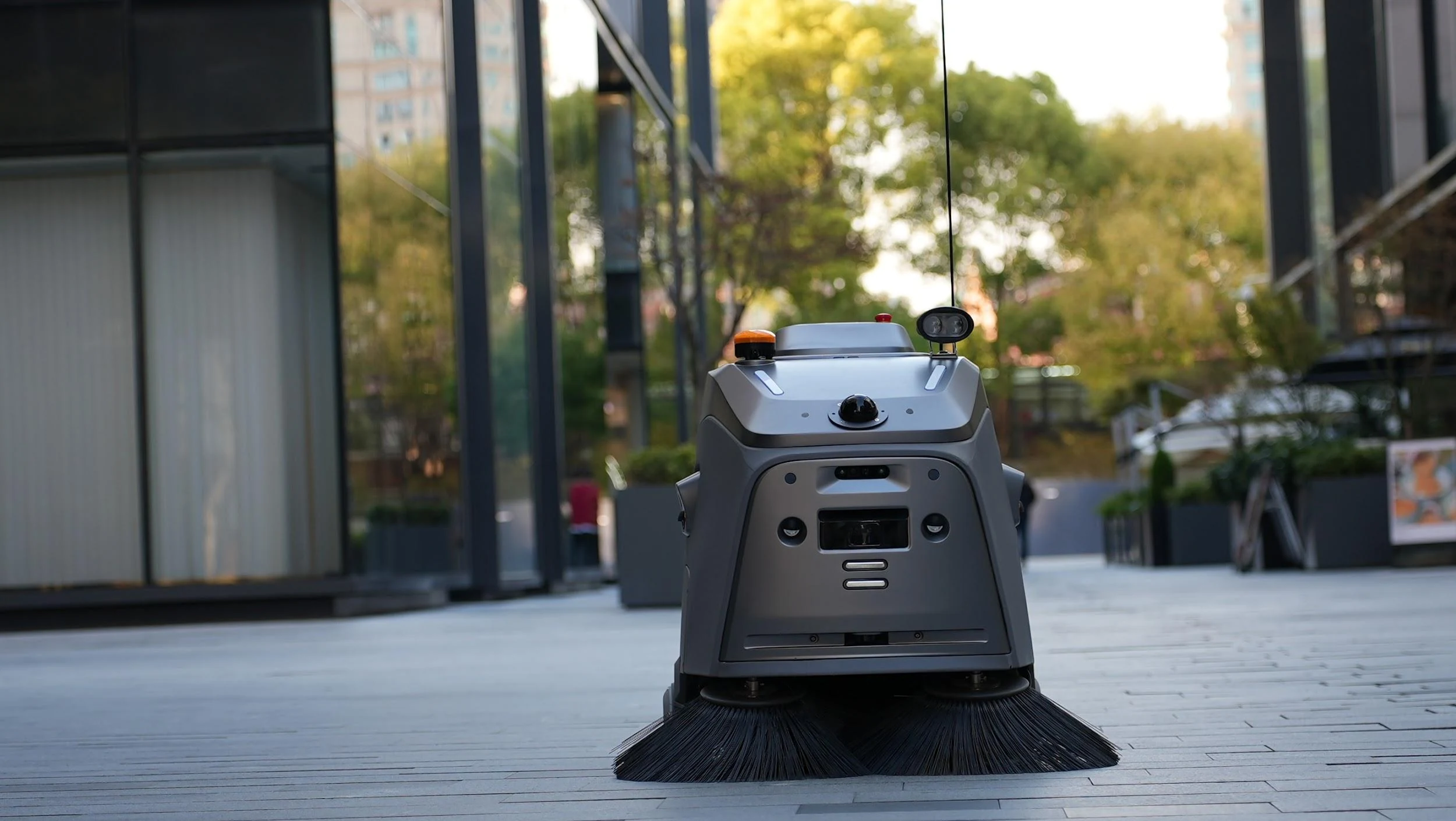
Bituminous road and concrete walkways are within specification, so the variable here is people. A university path or an outdoor retail street automates comfortably early in the morning and awkwardly at midday.
Gausium names campuses, public squares and residential areas among Beetle 2.0’s target environments, which are precisely the areas where pedestrian movement rather than surface type sets the schedule.
The useful question during a site assessment is which hours are actually free, because pedestrian density governs the achievable schedule far more than any coverage rate does. Seasonal change matters equally: a walkway with light summer dust and wet autumn leaves is two cleaning tasks, and a schedule built around one will underperform for part of the year.
Turf, soil and loose gravel do not appear among Beetle’s applicable surfaces, and an autonomous sweeper is not the tool for them.
Naming this boundary during the site assessment prevents a failed pilot. It is far cheaper to draw the line on the site plan than to discover it during a trial.
Every outdoor deployment eventually meets rain, and this is the difference between an outdoor sweeper and an indoor machine parked near an exit.
Beetle 2.0 carries WeatherSense™ Guard for real-time rain monitoring, together with an IP54-rated protective design. On detecting precipitation the system triggers an automatic return to the docking station, protecting the robot’s sensors and internal hardware from water. Gausium introduced the capability for the Beetle line in January 2026 and confirmed it as part of the Beetle 2.0 configuration at Interclean Amsterdam 2026.
Two questions still belong in any outdoor assessment, and neither appears on a product page:
Combined with autonomous charging at the dock, a weather-triggered return is what turns an unattended outdoor schedule from a plan into a routine.
At the Coca-Cola Knetzgau warehouse in Germany, a 2,000 m² facility running a 24/6 shift model with significant forklift traffic, CCEP piloted two Gausium machines.
Beetle’s role is the one that matters for this discussion: its compact design enables navigation through tight spaces and complex layouts, sweeping and collecting dust and debris in areas beyond the reach of larger machines.
Christoph Kober, Junior Logistics Specialist Supply Chain at CCEP, noted that «the level of tidiness could be maintained at a very high standard because the robots operate automatically on weekends and outside of working hours,» and singled out «the easy installation in the warehouse and, of course, the cleaning performance of the machine.»
That is the pattern across every workable area type above: outdoor and semi-outdoor space is awkward to service while a site is operating, which makes off-peak capacity the metric that decides the business case.
Sealed outdoor surfaces. Gausium’s Beetle series is specified for bituminous road, concrete, rubble flooring, PVC vinyl and epoxy, which covers parking structures, industrial yards, loading bays, walkways and courtyards.
Turf, soil and loose gravel fall outside the applicable surface list. Automated routes are planned to the edge of the sealed surface, with soft landscaped ground kept on a separate schedule.
Not reliably. Indoor machines are specified for sealed interior floors and fine dust, while outdoor surfaces, grit and bulky litter fall outside those parameters.
Beetle 2.0 carries WeatherSense™ Guard for real-time rain monitoring and an IP54-rated protective design, and returns automatically to the docking station when precipitation is detected.
Beetle uses 3D LiDAR for mapping and localization, and Beetle 2.0 adds a rear-mounted 2D LiDAR and full-surround vision with intelligent detection of moving vehicles.
Yes, where both surfaces are on the applicable list. Beetle’s AutoPass integrates with warehouse sliding doors so the route can cross the building envelope without someone opening one.
Area suitability rests on published surface and debris specifications, so product documentation is the primary source here.
Step 1/2
Please select the type of business you’d like to have with Gausium.
Choose one item from the list
Step 2/2
Thanks for sharing your preference. Please fill out the form below, and we’ll get in touch shortly.
By clicking “Submit”, I authorize Gausium to contact me. Privacy Policy.
Thank you for filling out the form
By clicking “Submit”, I authorize Gausium to contact me. Privacy Policy.