





UP NEXT
Preventing Your Robots from Getting Lost — Gausium Marker-free Ceiling Vision Localization SystemAugust 12, 2022

August 18, 2022
Most commercial buildings are a hard-floor problem. An office is not.
Carpet covers the majority of trafficked area in most office buildings, and carpet is the line that separates one class of cleaning robot from another. The floor mix, not the floor area, is the first thing to establish.
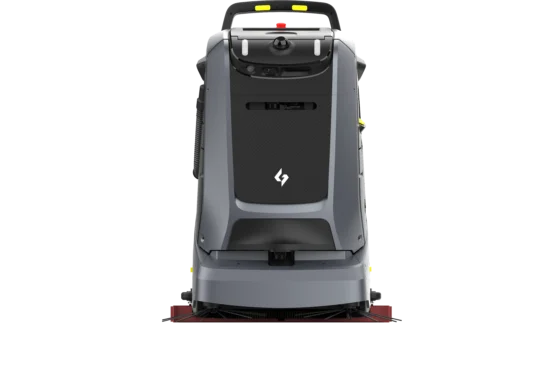
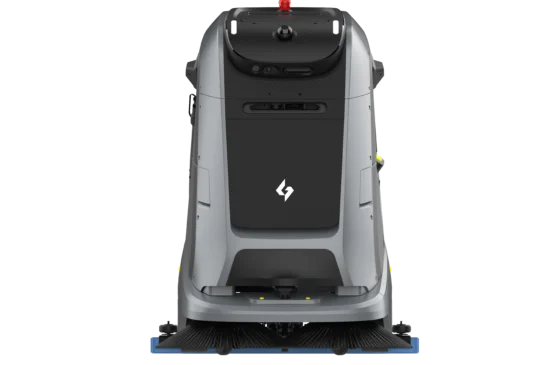
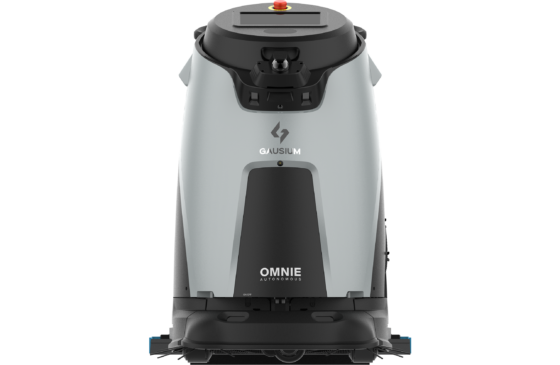
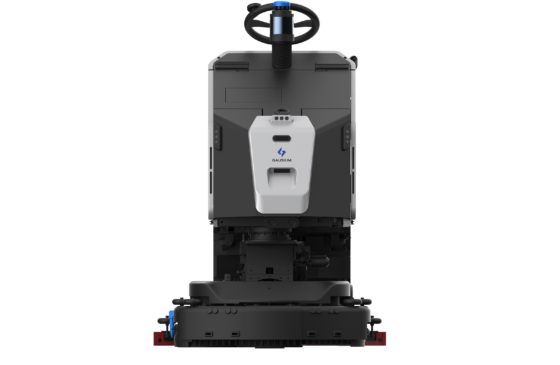
Gausium covers the split with two machines:
Whether a building needs one or both comes down to three checks: the floor types present, how much of the floor a machine can actually reach, and who controls access to each level.
Measure carpeted and hard-floor areas separately, counting trafficked area only. The ratio between them determines the machine class. Total floor area does not.
Mostly carpet. Open plan, meeting rooms and executive floors are carpeted, with hard floor limited to the lobby and back-of-house. This is primarily a vacuuming requirement, and a dedicated commercial vacuum covers most of the work.
Mostly hard floor. Stone, tile or vinyl throughout, with carpet in a few rooms. The building behaves like any other hard-floor site, and one multi-function machine covering hard floors and low-pile carpet tile handles the majority of it.
A genuine mix. Most modern office buildings sit here. Covering the whole floor plate with a single machine usually produces a route that works on one surface and underperforms on the other.
The general framework for mixed-surface buildings is set out in Cleaning Robots for Mixed-Floor Buildings. What follows applies specifically to offices.
Three capabilities matter in an office.
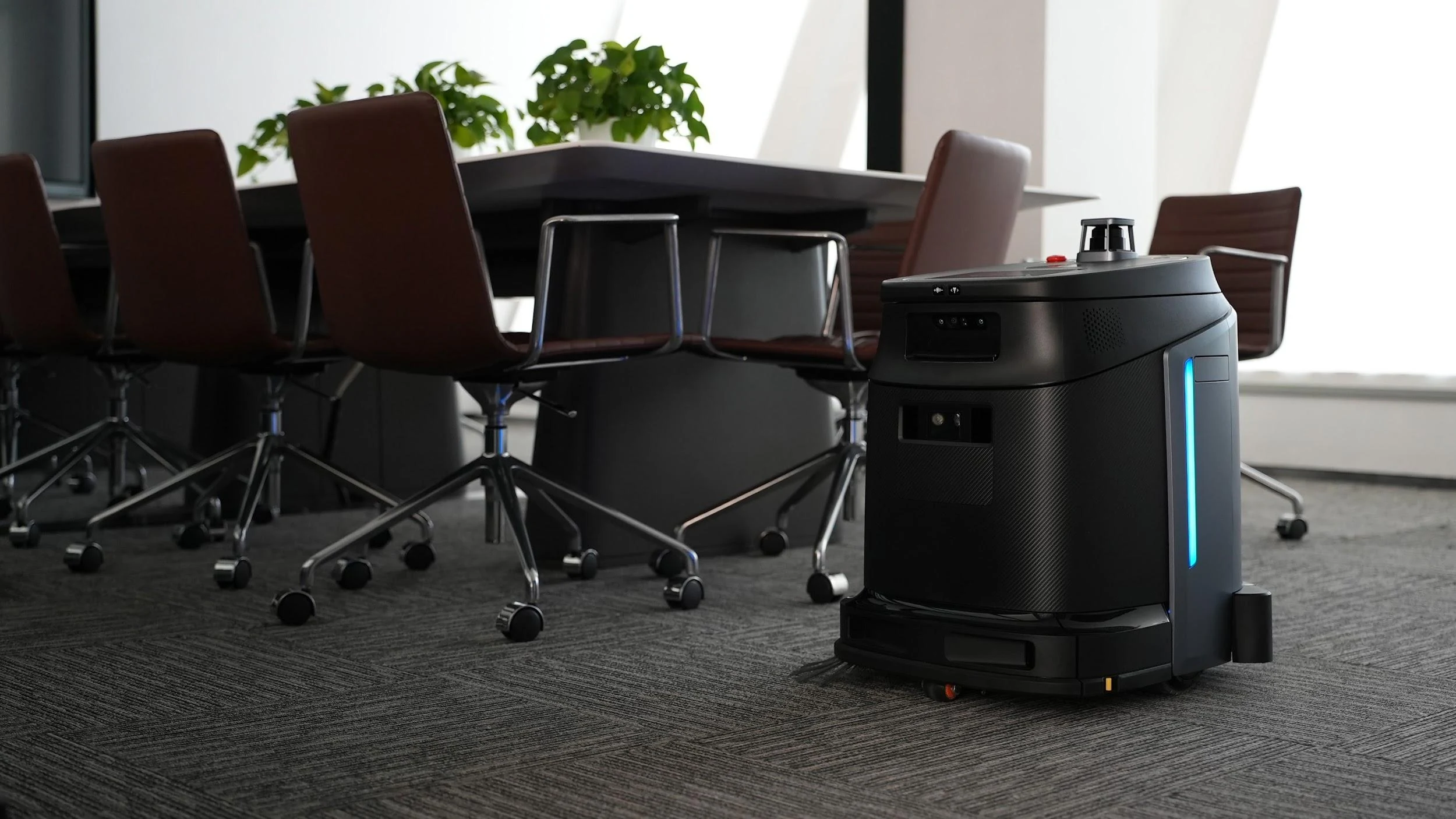
Pile height range. Vacuum 40 offers three carpet cleaning modes, light, medium and deep, to accommodate different pile heights. Offices frequently combine low-pile tile in open plan with heavier carpet on executive floors, and a machine fixed to one mode will underperform on one of them.
Automatic surface detection. The machine uses 3D cameras to identify floor type and switch modes accordingly. On a floor where a route crosses between tile and carpet several times without a threshold to mark the change, that removes a category of manual setup.
Filtration. The product page lists an H13 HEPA filter. In a sealed, air-conditioned building where the same air recirculates through occupied space all day, filtration carries more weight with a facilities director than pickup rate.
Boundary: on hard floors Vacuum 40 sweeps and dry mops rather than scrubs. A lobby with ground-in soil requires the second machine.
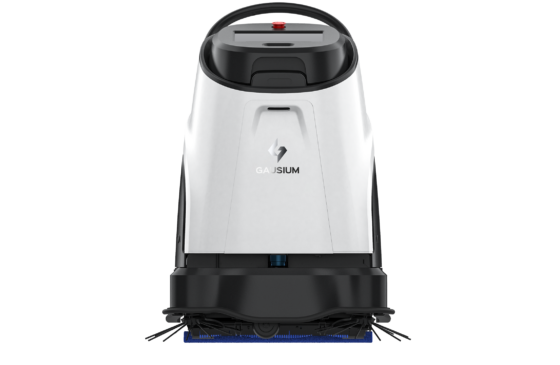
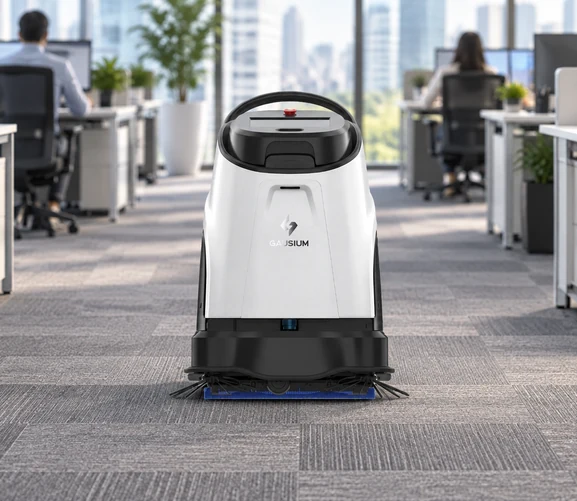
Phantas combines vacuuming, sweeping, scrubbing and dust mopping, with applicable surfaces covering hard floors plus low-pile carpeting. It takes three tasks the vacuum cannot.
Lobby and entrance scrubbing. Ground-in soil at the entrance is a scrubbing task, and it sits on the most visible floor in the building.
Tea points and circulation corridors. Spills, coffee marks and tracked-in moisture concentrate in predictable locations, which suits targeted work rather than a full route.
Low-pile carpet tile in open plan. Where the office carpet is genuinely low-pile tile, Phantas covers it, which can reduce a two-machine building to one. Confirm the pile against the applicable surface list before assuming this.
Phantas supports Auto Spot Cleaning, scanning the surrounding floor and treating only where waste or staining is detected. Cleaning where it is needed rather than across a full route delivers up to a fourfold efficiency improvement, and in an occupied office it keeps any wet area small and short-lived.
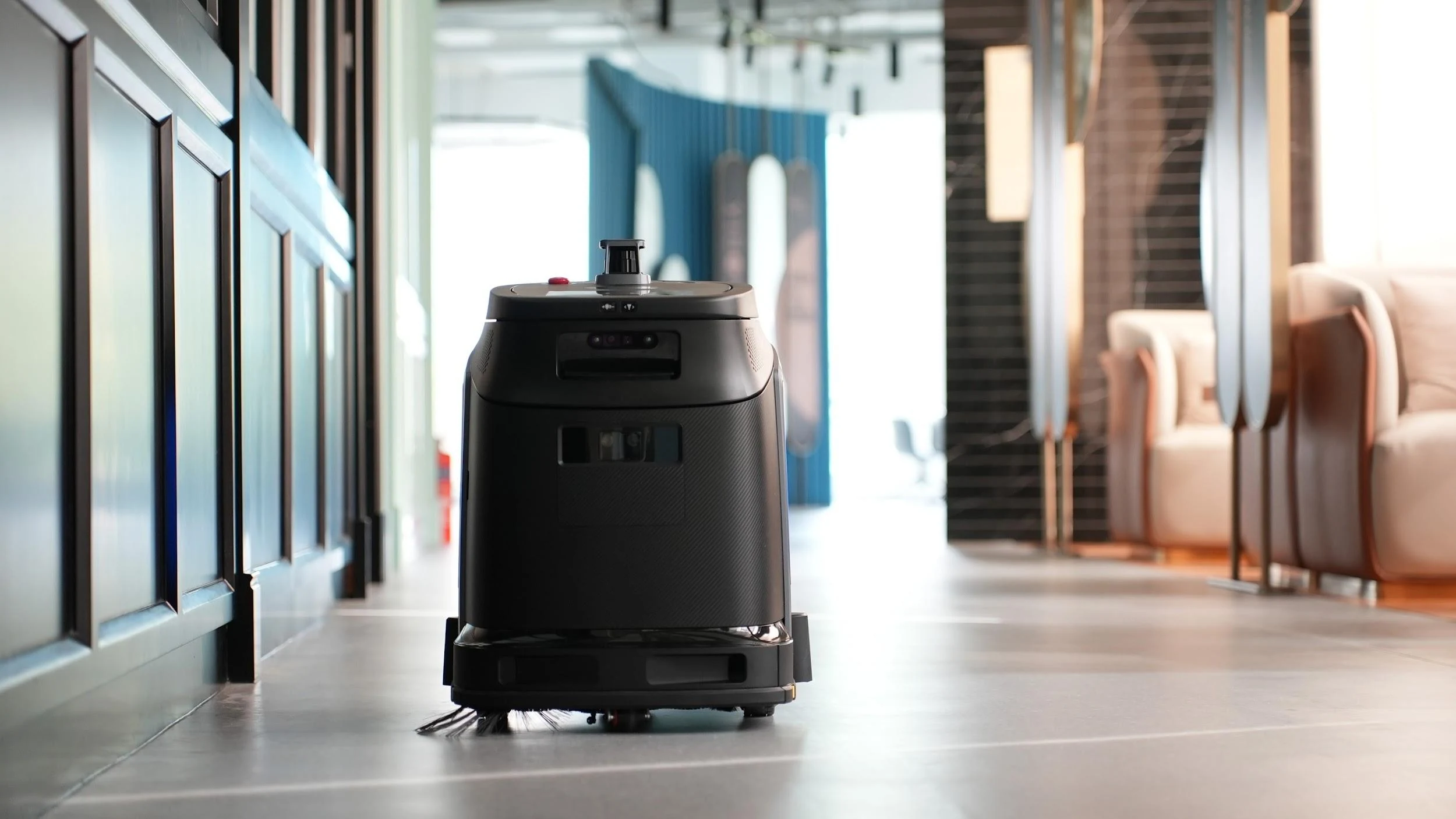
An office floor plate is subdivided by desks, cable trays, storage and meeting room furniture. Coverage figures are only meaningful if the machine can reach into those areas.
Three items to confirm against the floor plan:
Offices also support daytime operation better than most building types, and the pattern is now measurable. Kastle Systems‘ badge data across more than 2,600 buildings shows Tuesday to Thursday running at roughly double the occupancy of Monday and Friday. Those quieter days leave daytime capacity most buildings never schedule against.
Where daytime routes are planned, Phantas detects static and moving obstacles from all directions and avoids them in real time, so occupants are not required to move out of its path.
|
Zone |
Surface |
Machine |
Timing |
|
Entrance and main lobby |
Stone or tile, heavy tracked-in soil |
Phantas |
Early morning, before arrivals build |
|
Elevator lobbies |
Tile, moderate soil, tight footprint |
Phantas |
Between arrival and lunch peaks |
|
Open-plan floors |
Carpet or carpet tile |
Vacuum 40 |
Evening, or daytime on low-occupancy days |
|
Meeting rooms |
Carpet, furniture-dense |
Vacuum 40 |
Between bookings, from the room calendar |
|
Tea points and break areas |
Hard floor, spill-prone |
Phantas |
Mid-afternoon, after lunch traffic |
|
Corridors and back-of-house |
Hard floor |
Phantas |
Any off-peak period |
|
Stairwells, desk-dense zones, restricted floors |
Mixed |
Manual |
Unchanged |
Meeting rooms are the most underused slot in an office building. Their vacant periods are already published in the room booking system, which is a more reliable scheduling input than a footfall survey.
In multi-tenant buildings the obstacles are contractual and access-related rather than technical, and they stop more deployments than any machine limitation.
Cleaning responsibility. Landlord-cleaned common areas and tenant-cleaned demised space are often under separate contracts with separate providers. A machine procured by one party cannot simply run across the other’s floor.
Access control. Elevator permissions, floor-level badge readers and door controls exist to prevent unaccompanied movement between floors. A machine that cannot call an elevator or pass a controlled door is a single-floor machine, and a building with eight tenant floors then needs a transport plan.
Out-of-hours authorisation. Security procedures for after-hours activity vary by building and sometimes by tenant. Resolve this before deployment rather than during the first night run.
Space and services. A dock or workstation requires floor space, power and, for a workstation, water supply and drainage. In a fully let building this is often the hardest item to place.
The workable sequence is to start in landlord-controlled common areas, establish the deployment there, and extend into tenant space through the service agreement. Gausium’s Workspace solutions page sets out coverage across office environments.
Office cleaning budgets are usually defended on headcount, which is the weakest ground for this argument.
Occupants do not assess an office by its floor. They assess it by the washrooms, the kitchen surfaces, the meeting room table and whether the bins were emptied. Those are the tasks that get compressed when a shift runs short, and floor care is the block compressing them.
Automating floor care moves hours toward the surfaces occupants actually touch. That argument holds at the first quarterly review, because occupant satisfaction moves visibly while cost often does not.
It also changes what a building can commit to. A lobby cleaned at 07:00 and again at 14:00 presents differently at 17:00 from one cleaned only overnight, and in a competitive letting market that difference is worth more than the budget line it occupies.
Vacuum 40 where carpet dominates, Phantas for lobbies, corridors, tea points and low-pile carpet tile. Most mid-sized office buildings require both.
Only where the carpet is genuinely low-pile tile, which Phantas lists among its applicable surfaces. Heavier carpet requires a dedicated vacuum, so confirm the pile before assuming single-machine coverage.
Yes, and offices suit it better than most building types. Occupancy data shows Monday and Friday at around half the mid-week peak, which leaves daytime capacity available on those days.
A quiet mode for open-plan areas, and obstacle detection covering static and moving objects from all directions so occupants are not required to step aside. Assess noise on site, since acceptable levels depend on the background environment.
Which areas fall under which cleaning contract, whether the machine can pass controlled doors and elevators, out-of-hours security authorisation, and where the dock or workstation will physically sit.
The reliable gain is redistribution rather than reduction. Hours move from floor care to surfaces, washrooms and detail work, which is what occupants judge the service on.
Step 1/2
Please select the type of business you’d like to have with Gausium.
Choose one item from the list
Step 2/2
Thanks for sharing your preference. Please fill out the form below, and we’ll get in touch shortly.
By clicking “Submit”, I authorize Gausium to contact me. Privacy Policy.
Thank you for filling out the form
By clicking “Submit”, I authorize Gausium to contact me. Privacy Policy.