




UP NEXT
How Hotel Cleaning Robots Fit Into the Housekeeping DayOctober 27, 2026

October 27, 2026
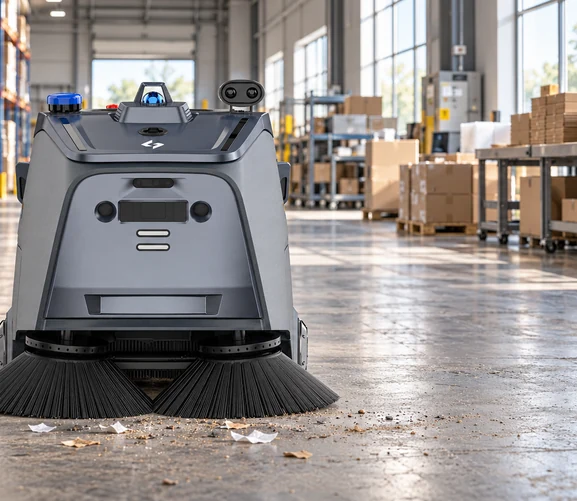
Grit near a loading door, dust along an aisle and scraps around a packing area can all create a sweeping task. Collecting the visible pieces is only part of the work: a machine also needs to manage the finer material disturbed by its brushes.
An industrial floor sweeper collects loose debris into a hopper or waste container. Depending on its design, it may combine mechanical brushing with suction and filtration. Its main function is debris collection rather than washing adhering residue from the floor.
Understanding that collection process makes it easier to compare sweepers and keep them working well. The important questions are what the machine picks up, how it contains dust and what attention it needs between cleaning tasks.
Many powered vacuum sweepers combine brushes, airflow, filtration and a collection container. The arrangement varies between models; a mechanically driven push sweeper may not have the powered suction system found on a larger machine.
Side brushes move loose material inward from the sides and edges toward the main collection path. They help the machine reach debris outside the central brush width. Their role is sweeping, not wet scrubbing.
On a brush-based sweeper, the main brush lifts or directs material into the collection system. Brush condition, adjustment and the type of material affect pickup. Wrapping material caught around a brush can interfere with pickup and needs attention under the machine’s maintenance procedure.
On vacuum sweepers, airflow draws dust toward the collection and filtration system. The filter retains particles from that air stream. Dust containment also depends on seals, skirts and the condition of the rest of the system.
A filter-cleaning mechanism helps remove accumulated material from the filter. The method and operating interval depend on the equipment. Automatic filter cleaning is a useful maintenance feature, but it does not replace inspecting or replacing a filter when required.
The hopper or bin stores debris until it is emptied. How quickly it fills depends on the material being collected: bulky packaging and fine dust can create very different emptying requirements.
Check how staff access and empty the container as well as its stated capacity. The collection process ends with transferring the waste to the site’s disposal arrangement, not simply moving it off the floor.
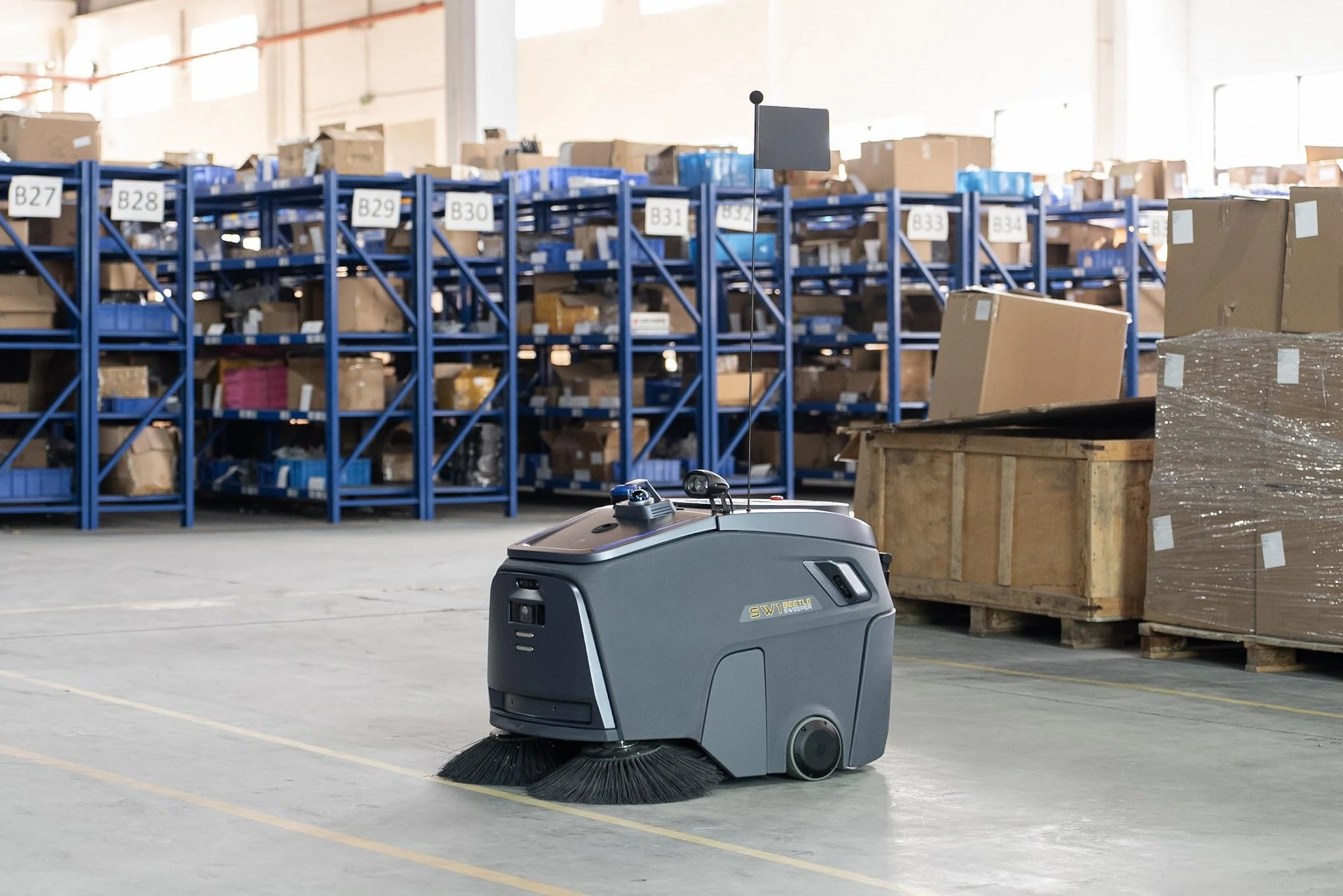
A floor can look clearer because larger scraps have been removed while fine dust remains a problem. Assess both results. Visible debris collection shows one part of performance; containing the material disturbed during sweeping shows another.
Look at the complete dust-control system rather than a filter label alone. Airflow, filter condition, seals and collection capacity work together. A blocked airflow path or damaged seal can undermine a machine that otherwise has suitable filtration.
For routine cleaning, check the swept surface and whether visible dust is escaping during operation. Where airborne-dust exposure needs formal assessment, visual checks are not a substitute for the appropriate site evaluation.
HEPA filtration does not by itself establish that a machine is suitable for hazardous or combustible dust. Such materials require equipment selected for the specific substance and environment.
The operating format describes how the machine is moved and controlled. It does not, on its own, determine cleaning quality, filtration or which debris the machine can collect.
These machines use the operator’s pushing movement to drive the sweeping mechanism. They can provide a straightforward option for localized collection without battery charging or refueling. Check whether the design offers the dust control required for the material present.
The operator walks behind and guides the machine while power drives its cleaning components. Some models also provide traction drive. Both battery-powered and engine-powered versions are available; the appropriate power source depends on the operating environment.
A ride-on sweeper carries its operator. Models vary in size and collection capacity, including compact designs. Check the machine’s dimensions and turning space against the route, including aisle ends and access to the emptying area.
An autonomous sweeper performs assigned tasks without continuous steering. Navigation, obstacle handling and task options depend on the model. Recurring sweeping provides a useful application, but autonomous operation is not limited to one identical route every day.
For large warehouses, Autonomous Sweepers for Large Warehouses covers coverage planning and trial measurements in more detail.
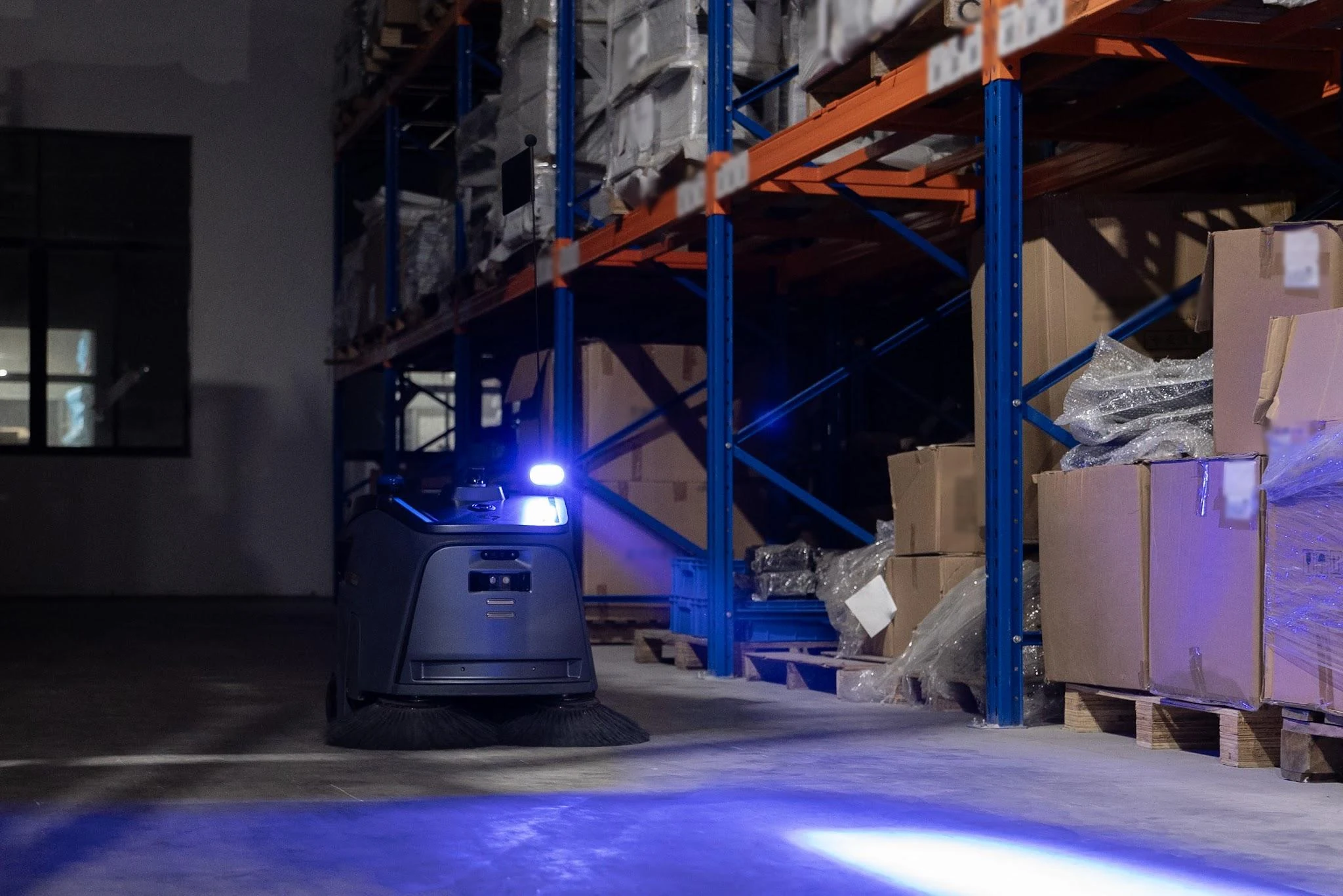
Power source is a separate decision. Battery machines have no combustion exhaust at the point of use and need suitable charging arrangements. Engine-powered equipment requires the operating environment and exhaust to be considered. Include charging or refueling access in the operating plan, alongside the time required to empty the hopper.
Identify the material the floor produces. Loose grit, ordinary dust and small scraps may be appropriate for a sweeper designed to collect them. Identify long strapping, wrapping film and other materials that could entangle the brushes, and arrange for unsuitable items to be removed before sweeping.
For sharp debris or process waste, provide details of the material and its size when discussing equipment suitability. Ordinary packaging scraps and sharp metal offcuts should not be treated as the same collection requirement.
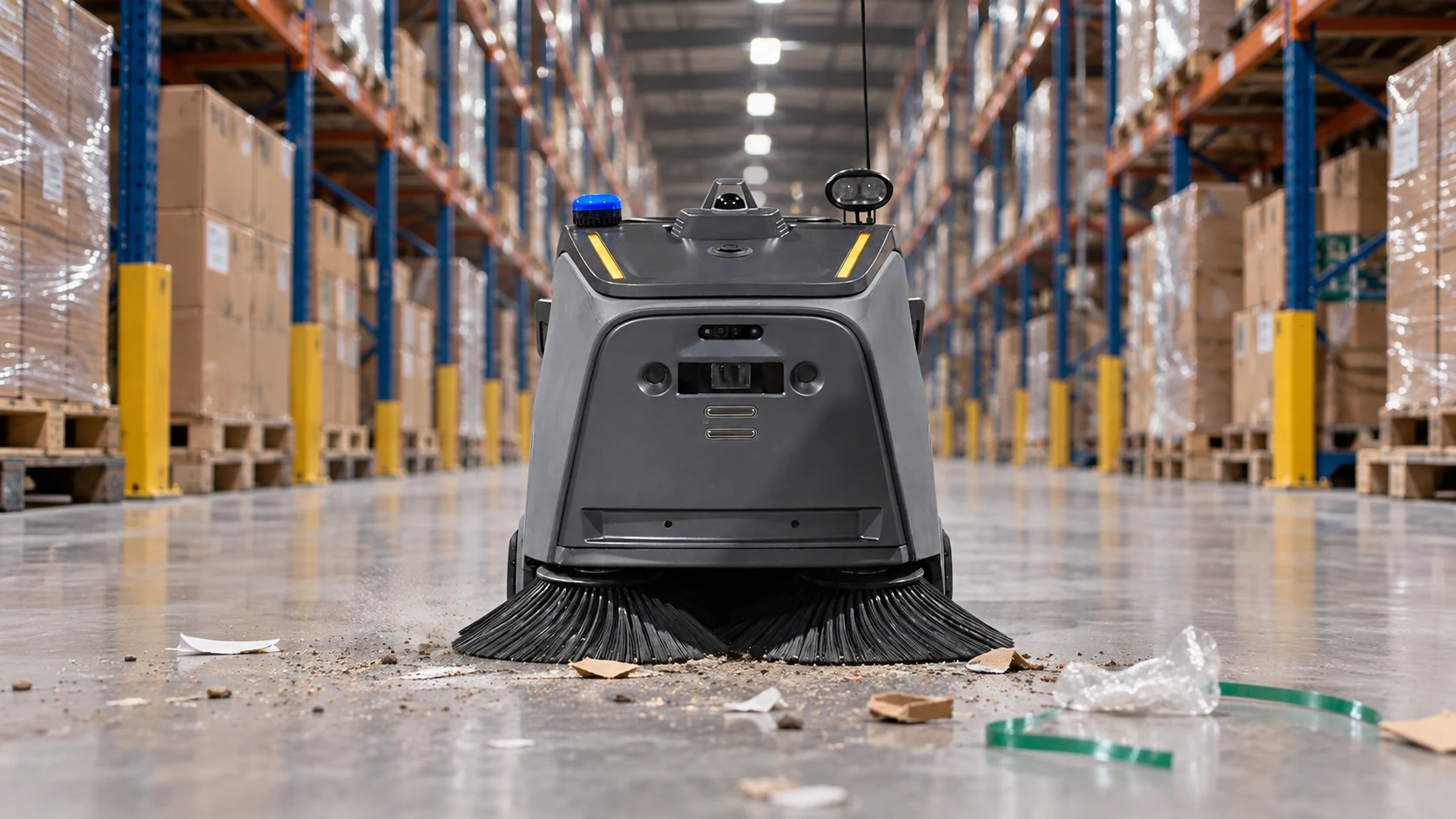
Sweeping and wet scrubbing address different work. A sweeper collects loose material; a scrubber uses a suitable cleaning setup to remove adhering soil from compatible hard floors and recover dirty water. Liquid spills require a response appropriate to their contents, not an automatic switch to any available scrubber.
If the floor also requires wet cleaning, assess that as an additional task. See Heavy-Duty Cleaning Robots for Industrial Floor Scrubbing for guidance on scrubbing requirements.
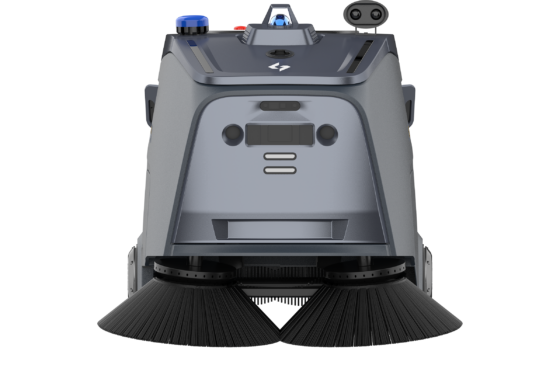
Gausium Beetle is a heavy-duty autonomous sweeper for indoor and outdoor use. It collects materials including fine dust, sand, paper scraps, bottles and wood chips.
Its dust-control system combines airflow with HEPA filtration and automatically cleans the filter after each task. This addresses filter care within the collection process; staff still need to empty the bin and carry out the required inspections and maintenance.
When evaluating Beetle, check both debris pickup and dust containment using representative material from the site. Include access to the bin, brushes and filter in the assessment so that daily care fits the team’s routine.
At MAKELIS, a Greek manufacturer of food-processing equipment, the production hall accumulated dust and debris from pallet handling and metal fabrication. Following the deployment of Beetle by Gausium partner Vamvacas Industrial Equipment S.A., the project reported less airborne dust and improved cleanliness around products and outbound packages.
These are outcomes from that installation, rather than a quantified dust-reduction rating for every site. Read the MAKELIS case study for the deployment details.
Maintenance supports both debris pickup and dust control. Use the operating manual for the specific machine to set inspection intervals and servicing methods. The following points identify what to include in that routine.
Automatic filter cleaning can reduce one recurring task, while hopper emptying, brush inspection and other care remain. Assign responsibility for those steps so that autonomous operation does not depend on an overlooked manual job. For scrubbing equipment, Gausium’s guide to robot floor scrubber maintenance covers brush, squeegee and tank care.
Different symptoms call for different checks. Debris left in the collection path may warrant checking brush condition, entanglement and hopper fill. Visible dust escaping from the machine may warrant inspecting the filter, airflow path and seals.
Note where the problem occurs: across the full cleaning path, along an edge or only around a particular type of debris. Those observations help staff describe the issue and follow the model’s troubleshooting instructions. Faults that need technical service should go to the appropriate support provider.
For an autonomous sweeping proposal, contact Gausium with details of the debris, floor surfaces and operating conditions. Those details help establish whether Beetle’s collection capabilities fit the work.
A sweeper collects loose debris. A scrubber wet-cleans compatible floors and recovers dirty water. Sweeping does not provide the same action as scrubbing adhering residue. Some machines combine both functions.
Yes, when designed for the intended outdoor conditions. Beetle supports indoor and outdoor use. Check the surface, gradients and operating conditions rather than assuming outdoor capability covers every environment.
Compare actual dimensions, turning space, collection capacity and operator requirements. Both formats vary between models. An autonomous sweeper is another option for suitable tasks where continuous steering can be removed.
Low-light operation and running without staff on site are different questions. Beetle is designed to navigate in low-light conditions. Whether a deployment can operate without staff present requires assessment of the site, task and arrangements for responding to interruptions.
A sweeper with appropriate collection and filtration can handle suitable fine dust. Evaluate the complete system and the material involved. HEPA filtration alone does not establish suitability for hazardous dust.
Follow the manufacturer’s schedule and adjust routine checks to the workload as instructed. Include the hopper, brushes, filter and power system. Automatic filter cleaning does not replace all maintenance or eliminate filter replacement.
Step 1/2
Please select the type of business you’d like to have with Gausium.
Choose one item from the list
Step 2/2
Thanks for sharing your preference. Please fill out the form below, and we’ll get in touch shortly.
By clicking “Submit”, I authorize Gausium to contact me. Privacy Policy.
Thank you for filling out the form
By clicking “Submit”, I authorize Gausium to contact me. Privacy Policy.