




UP NEXT
Como a Gausium Mira e a Marvel acabaram com os compromissos entre varrer e esfregarApril 27, 2026

June 02, 2026
Se analisar os números das operações de uma instalação, a limpeza de pavimentos é fácil de negligenciar. Raramente aparece como uma rubrica escrutinada por alguém, e no entanto, num grande armazém, consome silenciosamente horas de trabalho, supervisão e consumíveis todos os dias. Por isso, quando a ideia de um robô de limpeza industrial chega à sua secretária, a pergunta certa não é “a tecnologia é impressionante?”. É “isto realmente se paga a si próprio?”.
Este guia foi escrito precisamente para essa pergunta. Sem exageros, apenas uma forma clara de pensar se a limpeza automatizada de pavimentos tem lugar no seu orçamento.
O preço visível da limpeza é o salário, mas o custo total é mais amplo. Num centro de distribuição típico, uma parte significativa da limpeza de pavimentos ocorre em turnos noturnos ou fora de horas de ponta, que frequentemente implicam suplementos de turno. A isto soma-se o tempo de supervisão, formação e rotatividade (as funções de limpeza registam uma elevada rotatividade), consumíveis e o próprio equipamento.
Existe também um custo de oportunidade que não aparece em nenhum relatório de folha de pagamentos: pavimentos limpos de forma inconsistente. Quando o pessoal é destacado para tarefas de maior prioridade, a limpeza ressente-se. O pó acumula-se à volta das estantes e perto das docas de carga, o que tem efeitos a jusante na manutenção do equipamento, na limpeza do produto e na preparação para auditorias.
Portanto, a verdadeira base de referência não é apenas “o que pagamos ao pessoal de limpeza”. É o custo total e carregado de manter um grande pavimento consistentemente limpo, turno após turno.
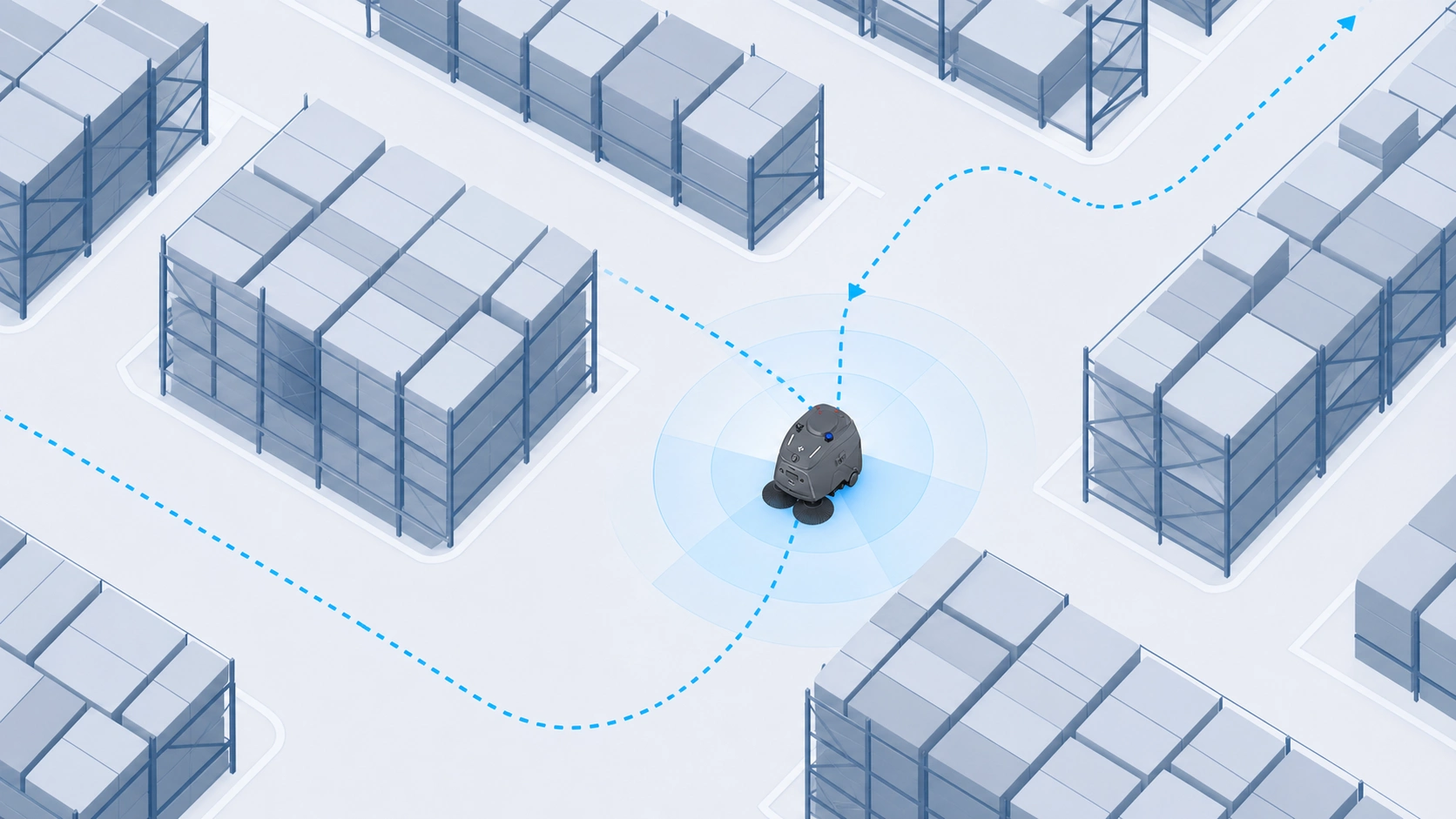
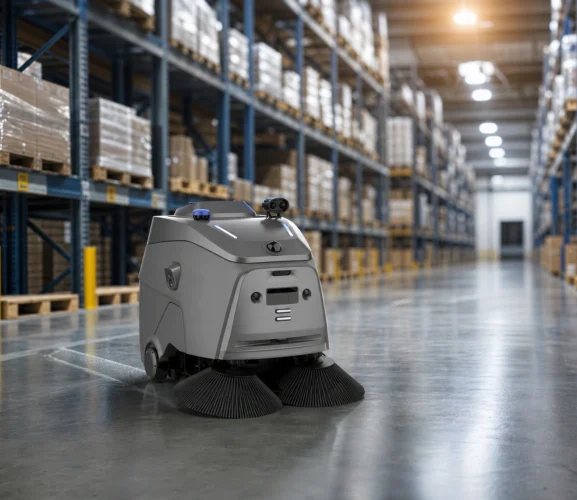
Um robô de limpeza industrial mapeia a instalação e segue uma rota planeada, utilizando sensores integrados para evitar pessoas e obstáculos em tempo real.
Um robô de limpeza industrial é uma máquina autónoma de pavimentos — normalmente uma varredora, uma esfregadora, ou uma unidade combinada de varredura e esfregagem — que se desloca de forma autónoma por uma instalação. Utilizando LiDAR e sensores integrados, mapeia o espaço, planeia rotas de limpeza eficientes, evita pessoas e obstáculos em tempo real, e regressa a uma estação de ancoragem para recarregar ou esvaziar os depósitos.
A diferença prática relativamente a uma máquina tradicional de condutor sentado ou de condução manual é a supervisão. Uma máquina convencional continua a precisar de um operador durante cada hora de funcionamento. Uma unidade autónoma executa uma rota planeada com envolvimento humano mínimo, e é precisamente aí que a matemática da mão de obra começa a mudar.
Vale a pena ser claro quanto ao âmbito. Estas máquinas limpam pavimentos duros extremamente bem em áreas grandes e repetíveis. Não substituem todas as tarefas de limpeza de um edifício. O trabalho de pormenor, as casas de banho e os cantos apertados das zonas de retaguarda continuam a precisar de pessoas. A função do robô é retirar da equipa a maior e mais repetitiva área de pavimento.
A forma mais clara de avaliar um robô de limpeza industrial é comparar o custo por dia com a sua despesa atual. Os valores abaixo constituem um cenário simplificado e ilustrativo, não um orçamento, mas mostram como funciona a lógica. Insira os seus próprios números antes de tomar qualquer decisão.
Imagine um centro de distribuição de 200.000 pés quadrados que atualmente dedica cerca de 5 horas de mão de obra de limpeza por noite aos pavimentos, a um custo totalmente carregado de cerca de 25 $/hora.
Mesmo com pressupostos conservadores e cobertura parcial, é essa diferença que importa. O robô não precisa de eliminar todas as horas de limpeza para se justificar; precisa apenas de absorver área repetitiva suficiente para que a mão de obra libertada valha mais noutro lugar.
Num modelo de compra, muitos operadores enquadram o retorno do investimento assim: (custo do sistema robótico) ÷ (poupanças mensais em mão de obra e consumíveis) = meses até ao ponto de equilíbrio. Se uma unidade reduz os custos em alguns milhares de dólares por mês, os períodos de retorno situam-se normalmente entre um e três anos, dependendo das horas de funcionamento, dos salários locais e de quanta área de pavimento a máquina cobre. Uma maior utilização, turnos mais longos e custos de mão de obra local mais elevados encurtam todos esta janela temporal.
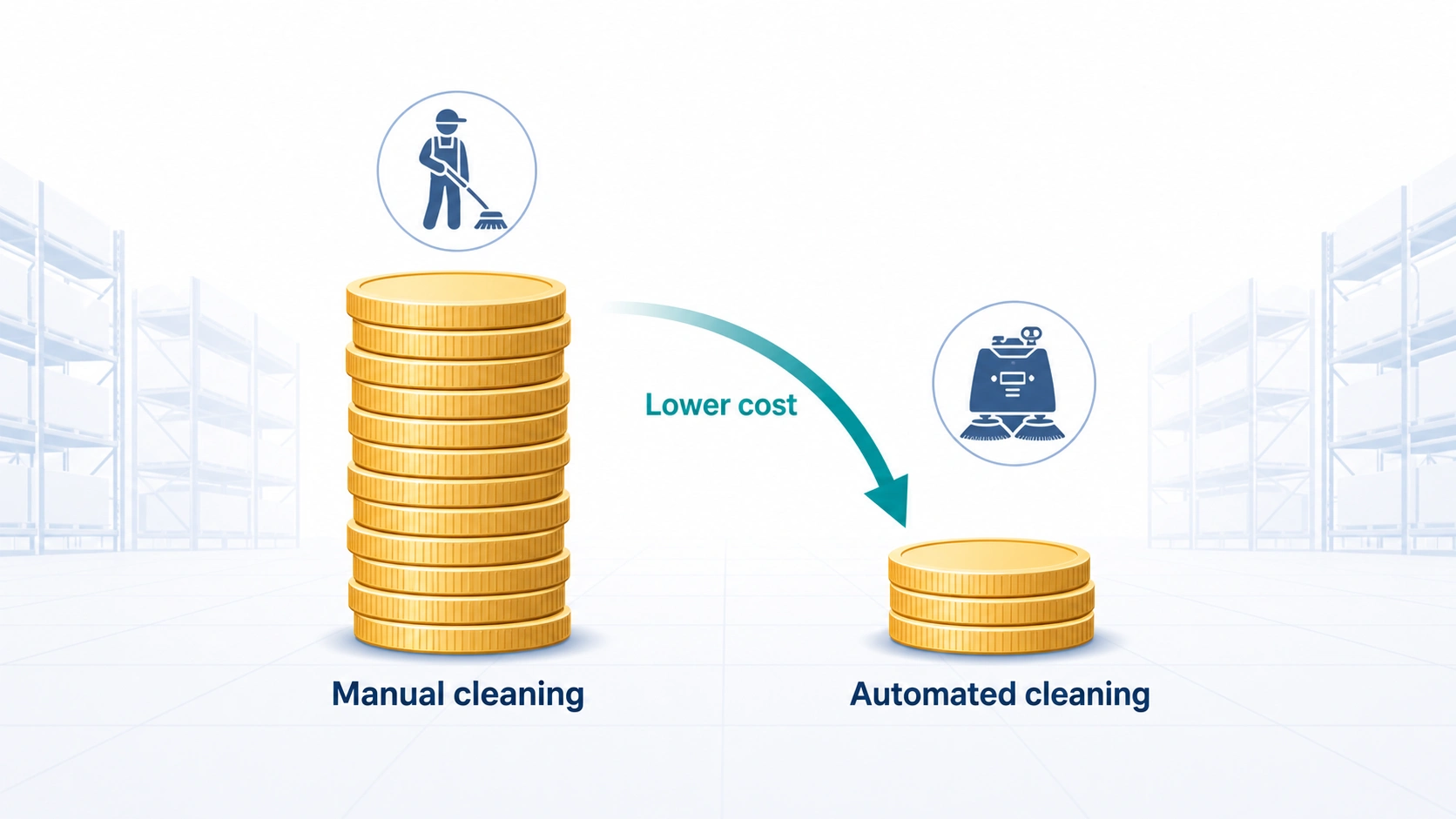
O objetivo da automação não é eliminar todas as horas de limpeza, mas sim transferir trabalho repetitivo de pavimento suficiente para que o custo operacional global diminua.
As poupanças diretas em mão de obra normalmente impulsionam a decisão, mas não constituem todo o retorno.
Consistência. Um robô limpa a mesma rota segundo o mesmo padrão todas as noites, independentemente de falhas de pessoal ou da intensidade do turno. Para instalações com requisitos de auditoria ou higiene, uma limpeza previsível tem um valor real.
Mão de obra redistribuída. As horas poupadas na esfregagem de pavimentos não desaparecem; são transferidas para tarefas mais difíceis de automatizar e frequentemente mais valiosas, o que pode aliviar uma falta crónica de pessoal em vez de reduzir efetivos.
Segurança e rotatividade. A limpeza repetitiva de pavimentos é fisicamente exigente e regista uma elevada rotatividade. Automatizá-la pode reduzir tanto a exposição a lesões como o custo recorrente de contratação e reciclagem.
Dados operacionais. Os sistemas modernos reportam o que foi limpo, quando, e quanta área foi coberta, dando aos gestores de instalações uma visibilidade que os processos manuais raramente proporcionam e facilitando a comprovação de que a limpeza realmente ocorreu.
Uma avaliação honesta funciona nos dois sentidos, e um olhar frio sobre a adequação poupá-lo-á de uma compra desiludente.
A automação tende a compensar quando existem grandes áreas contíguas de pavimento duro; necessidades de limpeza noturna ou multiturno consistentes; layouts relativamente estáveis; e mão de obra dispendiosa, difícil de reter, ou ambos. Armazéns, centros de distribuição e polos logísticos cumprem a maioria destes critérios, razão pela qual estão entre os casos mais sólidos para um robô de limpeza industrial.
É uma opção menos adequada quando a área de pavimento é pequena ou muito fragmentada, quando os layouts mudam constantemente, ou quando a maior parte da carga de limpeza é trabalho de pormenor em vez de área de pavimento aberta. Nesses contextos, o retorno do investimento prolonga-se e uma abordagem tradicional pode simplesmente ser mais económica.
Os fatores decisivos são geralmente a área em metros/pés quadrados, a frequência de limpeza e o custo local da mão de obra. Quanto mais tiver de cada um, mais rapidamente as contas favorecem a automação.
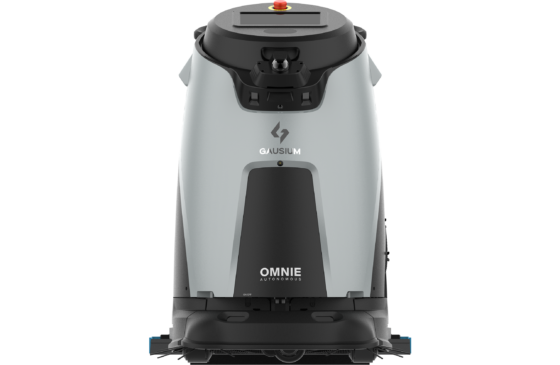
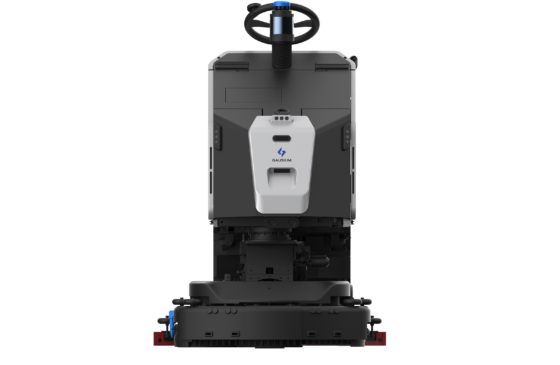
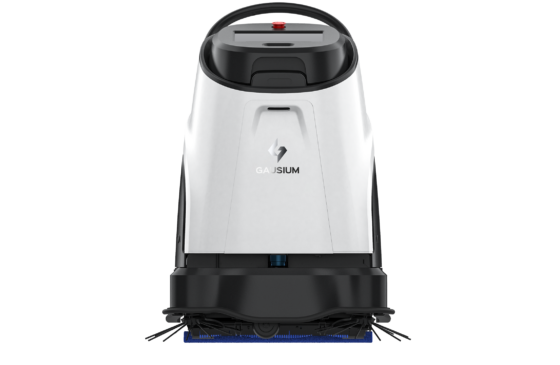
Uma vez validado o caso de negócio, a questão passa a ser qual a máquina que se adequa ao seu ambiente, e é aqui que a Gausium serve como um ponto de referência útil. A Gausium constrói um dos portefólios mais amplos de limpeza autónoma de pavimentos disponíveis, com modelos vocacionados especificamente para condições industriais e logísticas.
Para ambientes de armazém e centro de distribuição, a gama abrange varredoras autónomas robustas concebidas para grandes pavimentos abertos e ambientes com muitos detritos, bem como máquinas de varredura e esfregagem concebidas para combinar as duas ações numa única passagem. Alguns modelos são projetados para lidar com as realidades dos locais logísticos, incluindo a navegação em corredores estreitos entre estantes, o funcionamento em condições de pouca luz ou tráfego intenso, e a integração com portas de armazém para que a limpeza continue ininterruptamente entre zonas. A base tecnológica comum é a navegação autónoma por LiDAR, o reconhecimento de obstáculos baseado em IA, e relatórios na nuvem que se ligam ao benefício dos dados operacionais acima referido.
A conclusão relevante para um comprador não é nenhuma especificação isolada. É o facto de fazer corresponder o tipo de máquina, a capacidade de cobertura e o ambiente à sua instalação que determina se o ROI que modelou realmente se concretiza. Uma avaliação adequada da instalação, na qual um fornecedor mapeia a sua área de pavimento, o layout e a frequência de limpeza, é o passo que transforma uma estimativa ilustrativa num número real.
Um robô de limpeza industrial merece ser avaliado quando existem grandes áreas de pavimento duro limpas com regularidade e mão de obra dispendiosa ou difícil de manter. O teste central é simples: compare o seu custo totalmente carregado de limpeza manual de pavimentos com o custo diário integral da automação, e depois acrescente os ganhos mais difíceis de quantificar em consistência, segurança, mão de obra redistribuída e relatórios.
Para armazéns e centros de distribuição, essa comparação favorece frequentemente a automação, com períodos de retorno razoáveis em vez de especulativos. O próximo passo mais fiável é fazer as contas para a sua própria instalação, usando a sua área real, os padrões de turnos e as taxas salariais, para que a decisão assente na sua operação e não num exemplo genérico.
A Gausium é uma empresa líder em soluções de limpeza autónoma alimentadas por IA, com mais de 6.500 clientes em mais de 70 países e regiões. Os produtos e serviços da Gausium incluem robôs comerciais de limpeza de pavimentos, estações de ancoragem, uma plataforma na nuvem e software de aplicações, com mais soluções em desenvolvimento. Movida pela visão de liderar a transformação digital inteligente do setor da limpeza e dos serviços, a Gausium oferece o portefólio mais completo do mundo de robôs de limpeza comercial, permitindo que as pessoas trabalhem de forma mais inteligente e vivam vidas mais realizadas.
UP NEXT
Como a Gausium Mira e a Marvel acabaram com os compromissos entre varrer e esfregarApril 27, 2026
Step 1/2
Please select the type of business you’d like to have with Gausium.
Choose one item from the list
Step 2/2
Thanks for sharing your preference. Please fill out the form below, and we’ll get in touch shortly.
By clicking “Submit”, I authorize Gausium to contact me. Privacy Policy.
Thank you for filling out the form
By clicking “Submit”, I authorize Gausium to contact me. Privacy Policy.