




UP NEXT
Automatic Charging Across the Gausium Range: Models, Docks and Workstationsagosto 26, 2026

agosto 26, 2026
In public buildings, machine floor care has long been confined to the hours after closing.
That constraint originates in the equipment rather than in scheduling policy. Conventional floor cleaning machines present three difficulties in occupied environments:
The result is familiar to anyone managing a civic building: what the public sees during opening hours is whatever condition the last overnight clean left behind.
Four machine capabilities determine whether that changes. Gausium’s Omnie and Phantas carry all four.
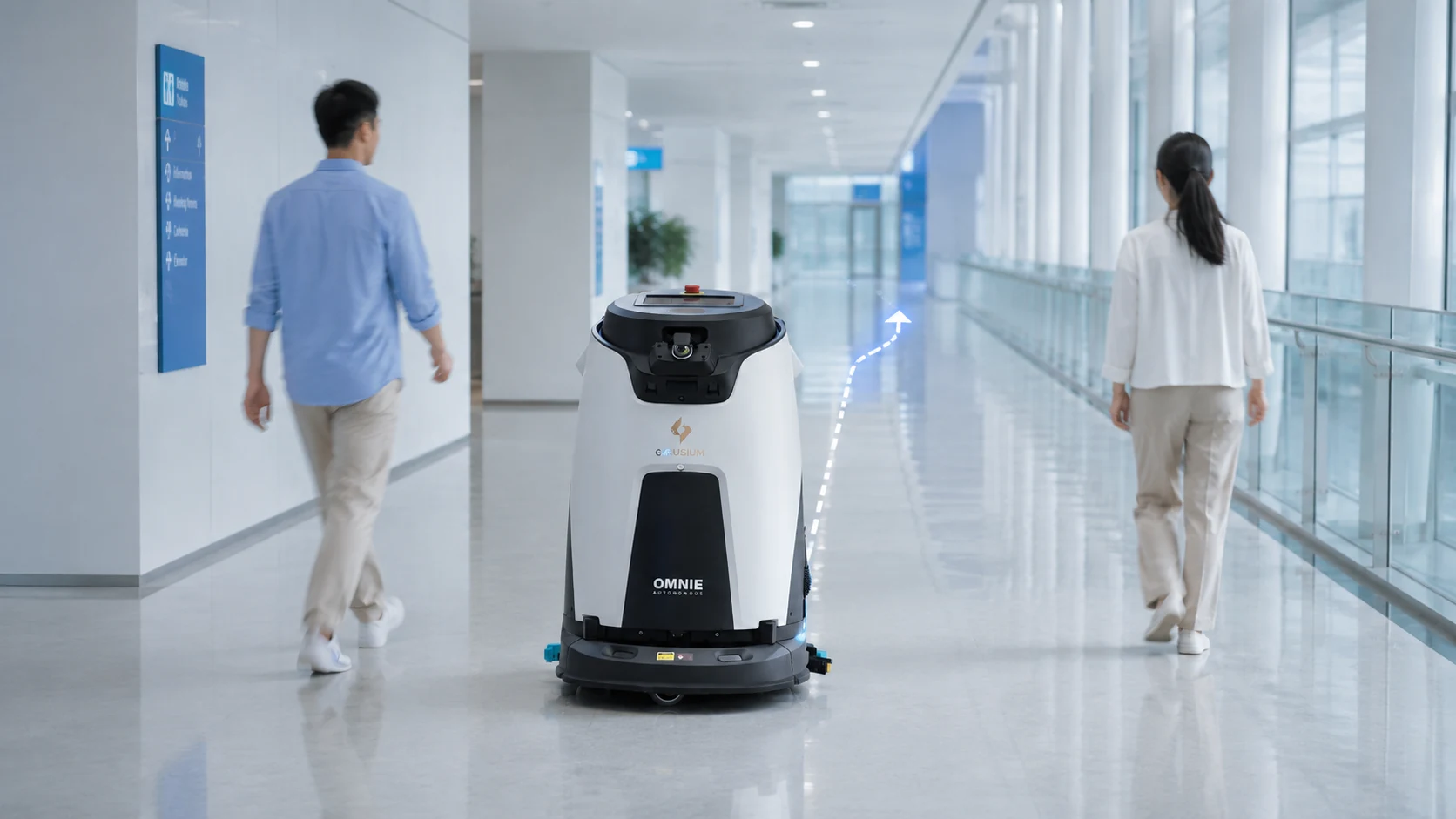
An autonomous machine follows an established route and avoids people the same way every time. Anyone approaching it does not need to work out its intentions before deciding where to walk.
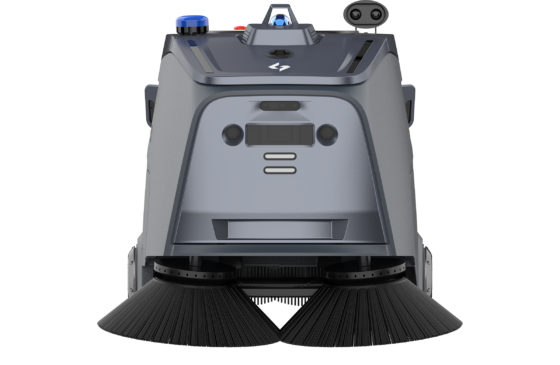
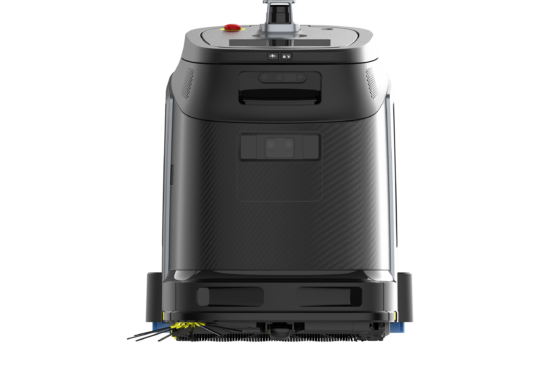
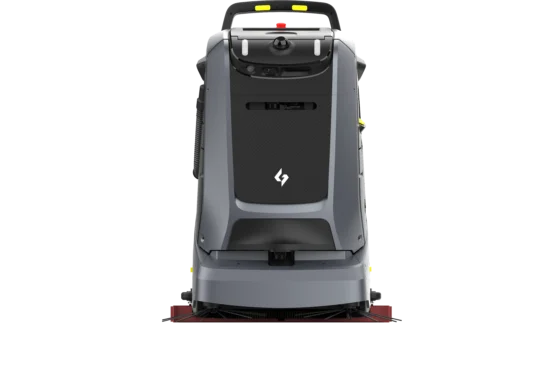
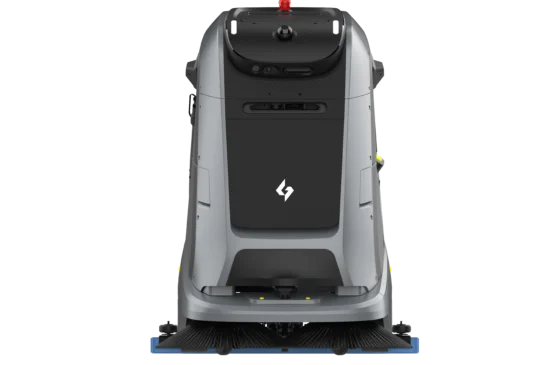
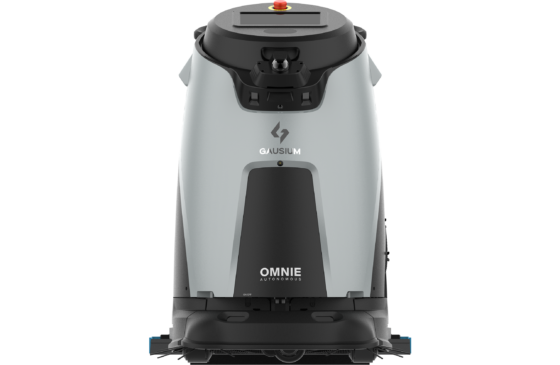
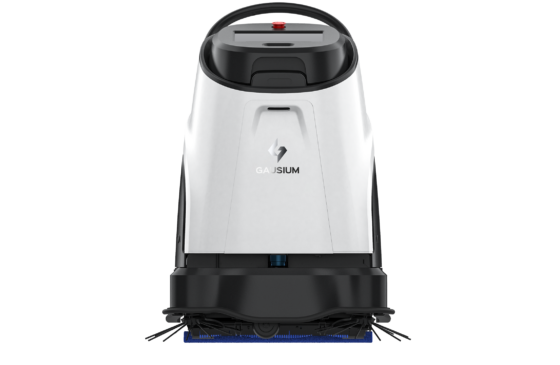
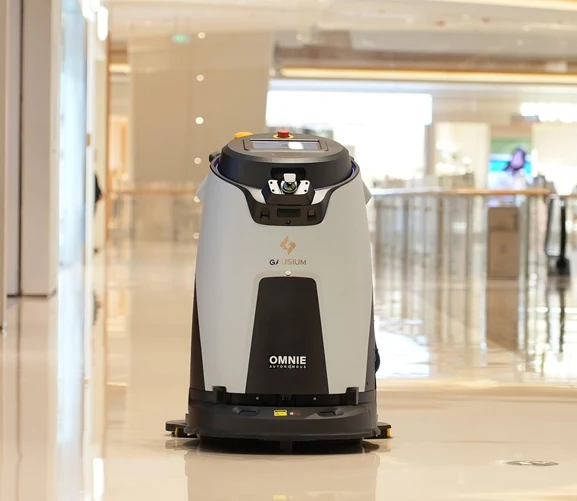
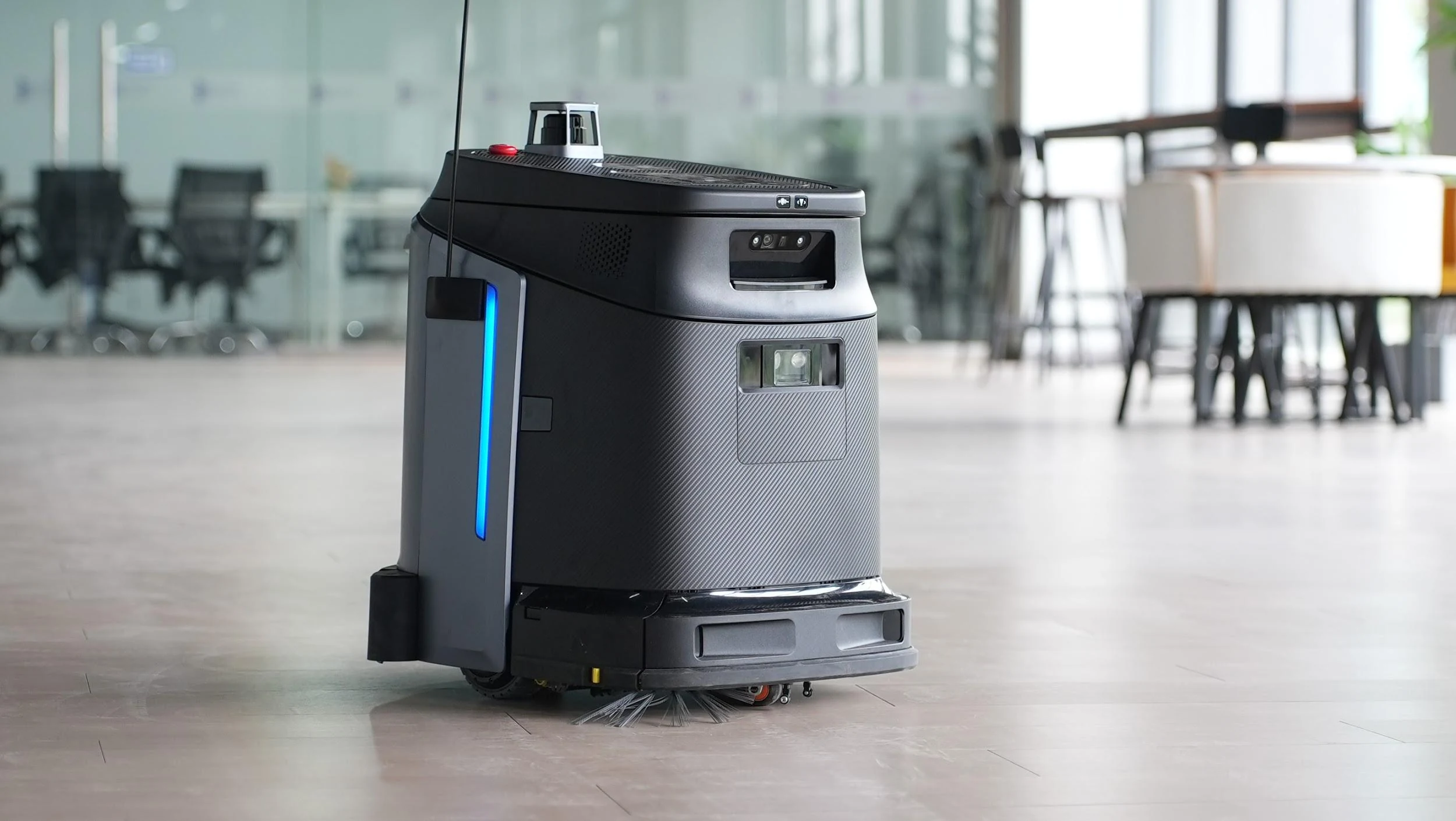
Omnie combines multimodal SLAM with 3D LiDAR and a 360-degree panoramic camera for zero-blind-spot perception, identifying people, trolleys, wheelchairs and temporary obstructions while adjusting its path in real time. Phantas applies deep-learning-based obstacle recognition and selects behaviour according to obstacle type — routing around cables rather than passing over them, for instance.
Behavioural consistency matters more to public experience than perception accuracy. A machine that brakes sharply or reroutes without warning creates hesitation in the circulation route even when no contact occurs. This is worth observing directly during an on-site demonstration.
Both models support Auto Spot Cleaning. The machine scans surrounding floor condition and works only where waste or staining is detected, rather than traversing the full route regardless.
For work during opening hours, this resolves two problems at once.
Time spent occupying a given area falls sharply. The machine completes a localised task and moves on, so disruption to circulation is measured in moments rather than minutes.
Wet areas stay localised. Signage covers a smaller footprint for a shorter period, which reduces the on-site management burden that drying time normally creates.
The mode also matches what public buildings actually need during opening hours. Spills, rain and grit tracked in at entrances, scuff marks concentrated where footfall converges — these are localised tasks, not full-coverage tasks.
The value of floor cleaning during opening hours lies in shortening the interval between a spill occurring and being dealt with.
An untreated spill presents a slip hazard. The National Floor Safety Institute reports slips and falls among the leading causes of injury, and in public buildings there is the additional problem of a spill being tracked across a wider area by passing footfall.
A machine circulating during traffic troughs treats staining before it spreads. That response time is difficult for on-site staff to guarantee while also covering restrooms, waste collection and supply restocking.
If every gap between working windows requires someone to refill water, discharge waste and connect a charger, multi-window daytime operation returns little.
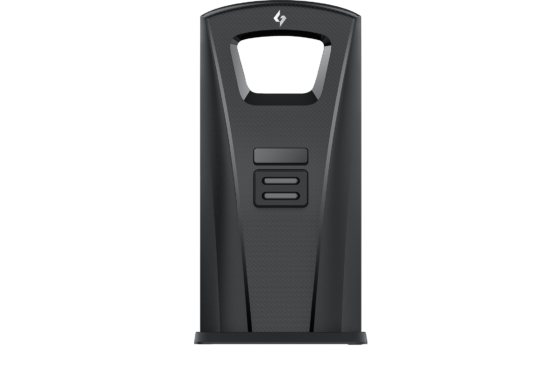
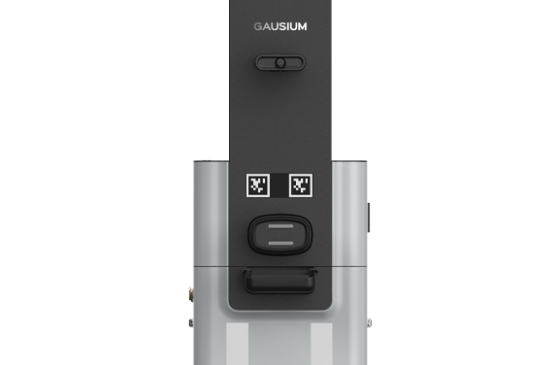
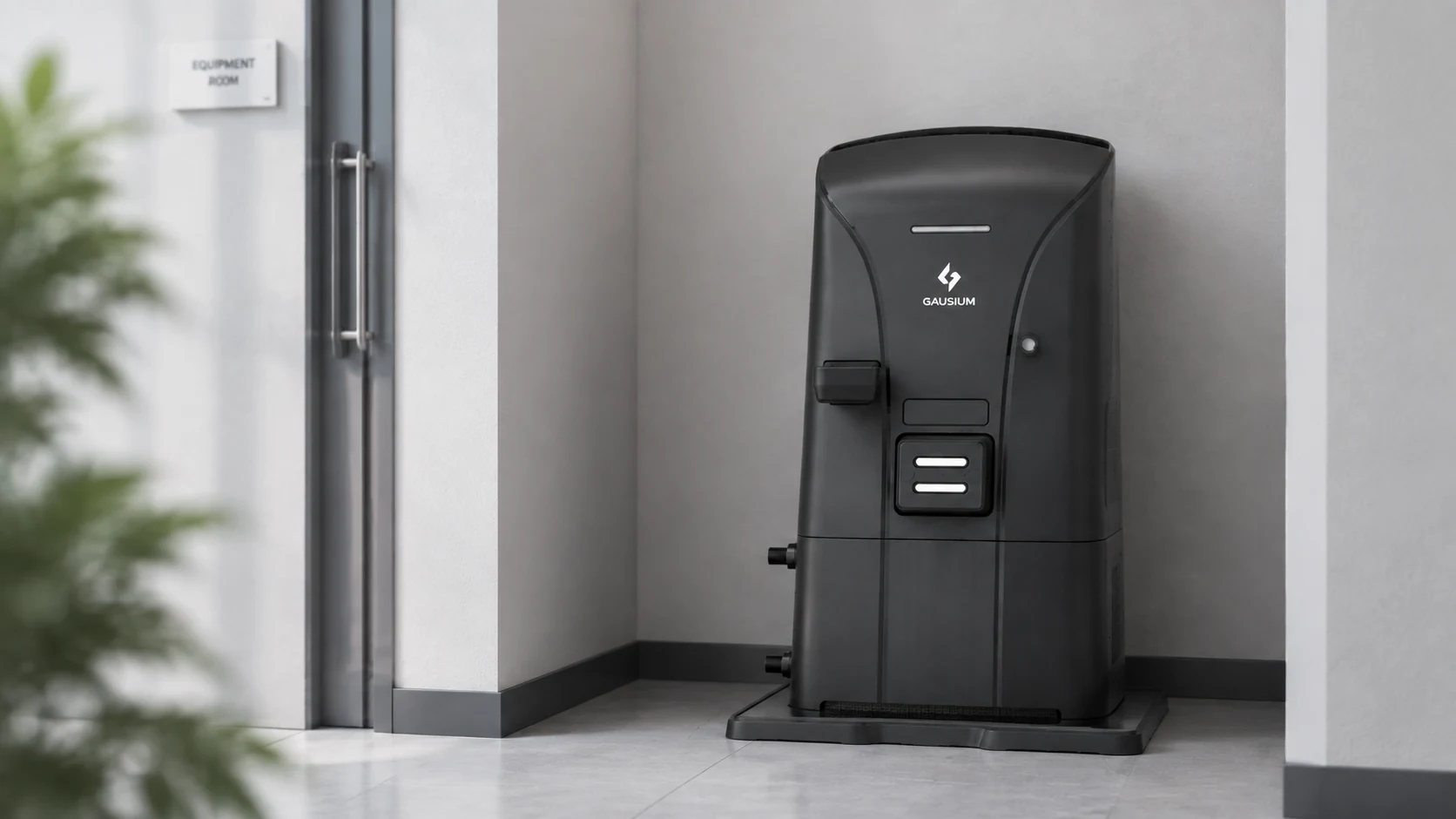
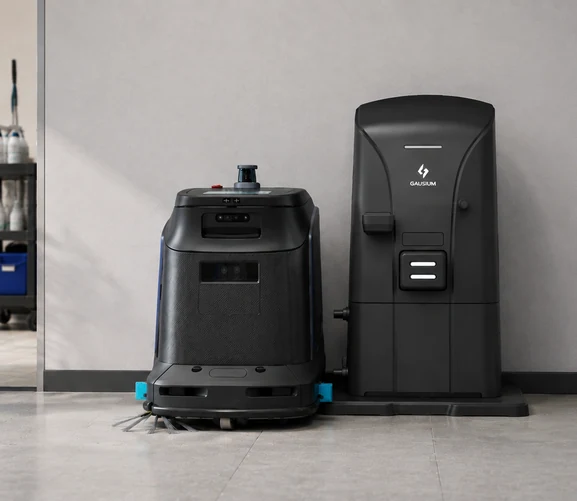
Models paired with replenishment equipment handle this independently. Charging docks cover power. Workstations add automatic fresh water refill and wastewater discharge, and the WS-03-S paired with Phantas also rinses the suction pipe and squeegee.
This is the condition on which multi-window operation during opening hours depends.
Four categories of work remain in the after-hours window.
Tasks requiring extended drying time — floor refinishing, waxing and large-area deep scrubbing.
Tasks using stronger cleaning products — a matter of odour and safety rather than machine capability.
Areas with exceptional acoustic sensitivity — examination halls, surgical areas and recording facilities should avoid occupied hours regardless of how quietly a machine operates. Acceptable noise depends on the background acoustic environment, so the same machine may be entirely acceptable in a lobby and unsuitable in a reading room. Measure it during an on-site demonstration in the space that will actually be cleaned.
Periods of temporary reconfiguration — exhibition installation, event setup and construction work make routes unstable, and automated operation is better paused.
Machines do not run continuously through opening hours. They run during periods when footfall drops noticeably.
Most public buildings contain several: libraries mid-morning and mid-afternoon, civic service halls around the lunch period, schools during lesson time, healthcare facilities between clinic peaks.
Troughs do not coincide between zones. Lobbies, administrative areas and corridors follow different traffic patterns, and aligning the whole site to one window leaves some areas without any.
Log a full week of footfall and mark the actual trough and its usable duration zone by zone. The measured figure is typically shorter than the estimate.
Real performance during opening hours is better judged from site records than from specifications.
Record assists per shift, which indicates directly how autonomously the machine operates in that building. Observe whether people have to make a deliberate effort to move around it, or whether congestion forms. Collect feedback from users in acoustically sensitive areas. Note the usable duration of each trough as measured rather than estimated.
Those four records determine whether operation during opening hours extends beyond the trial area.
Model capabilities are set out on the respective product pages, and Gausium can arrange a site assessment by building type.
Autonomous machines can. Omnie and Phantas follow established routes with consistent avoidance behaviour, and Auto Spot Cleaning keeps each intervention brief and localised.
No. Large-area full coverage remains most efficient in a clear building. Daytime work covers maintenance and incidental response, which redistributes the schedule rather than replacing it.
On site, in the space that will actually be cleaned. Acceptable levels depend on the background acoustic environment, so a machine suited to a lobby may not suit a reading room.
Spot cleaning confines wet areas to the treated position rather than an entire route, so signage covers a smaller footprint for a shorter period.
By logging a week of footfall zone by zone and marking each trough with its usable duration. Troughs differ between areas, so scheduling site-wide leaves some zones uncovered.
Refinishing and waxing, tasks using stronger chemicals, acoustically sensitive areas such as examination halls and surgical suites, and any period when routes are temporarily reconfigured.
National Floor Safety Institute — Slip-and-Fall Quick Facts
Gausium — Omnie | Phantas | Charging docks | Workstations
Step 1/2
Please select the type of business you’d like to have with Gausium.
Choose one item from the list
Step 2/2
Thanks for sharing your preference. Please fill out the form below, and we’ll get in touch shortly.
By clicking “Submit”, I authorize Gausium to contact me. Privacy Policy.
Thank you for filling out the form
By clicking “Submit”, I authorize Gausium to contact me. Privacy Policy.