




UP NEXT
What Is an Autonomous Floor Scrubber? How Robotic Floor Scrubbers Are Changing Commercial Cleaning12 października, 2026

12 października, 2026
In a large facility, the hardest part of floor care is rarely the cleaning itself. It is finding someone to drive the machine. A ride-on floor scrubber can cover a mall concourse or a warehouse aisle quickly, but only while an operator sits in the seat. When the night shift goes unfilled, the floor goes uncleaned.
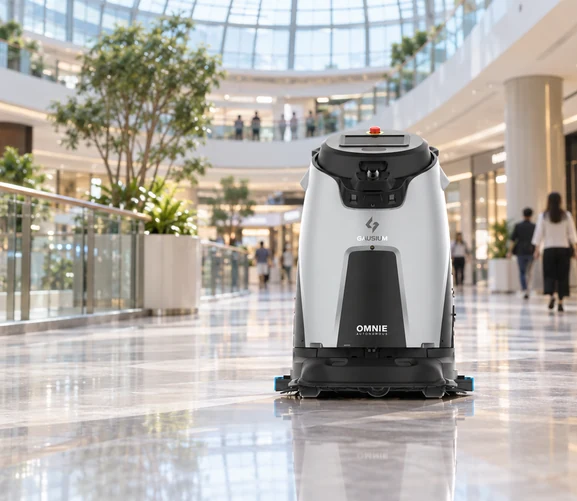
An autonomous floor scrubber removes that dependency. It scrubs and recovers water the same way, but it plans its own route and works without a driver.
Choosing between the two is less about which commercial floor scrubber cleans better. It is about which work actually needs a person at the controls, and which work does not.
Most large sites run some mix of three machine types, each suited to a different kind of floor.
Walk-behind floor scrubbers are the most common commercial auto scrubber. An operator guides the machine on foot, which makes it easy to maneuver in small rooms, tight aisles and detail areas. It is also slow over large floors and ties up one person for the entire job.
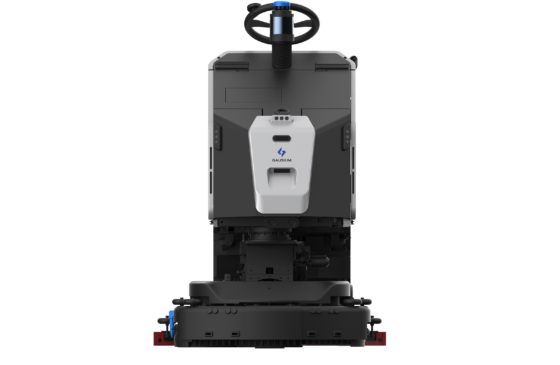
Ride-on floor scrubbers are built for big, open areas. The operator sits, the cleaning path is wider and the tanks are larger, so a skilled driver covers far more ground per hour. The trade-off is that every minute of cleaning still needs a dedicated operator.
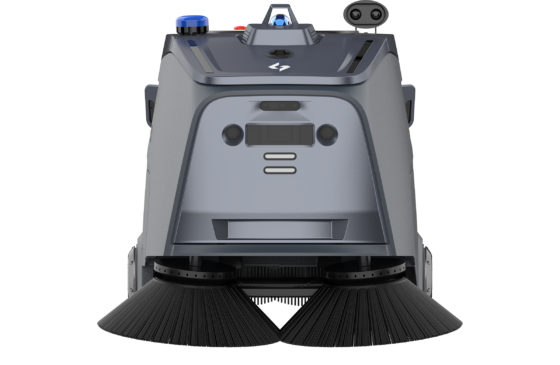
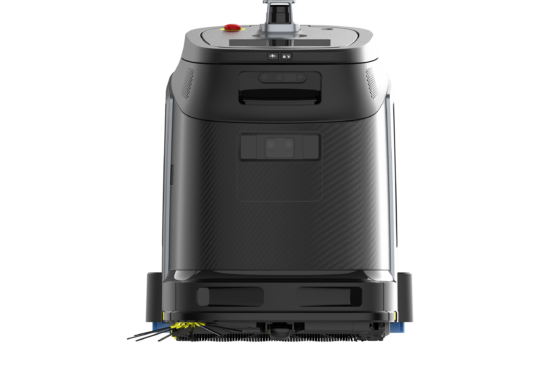
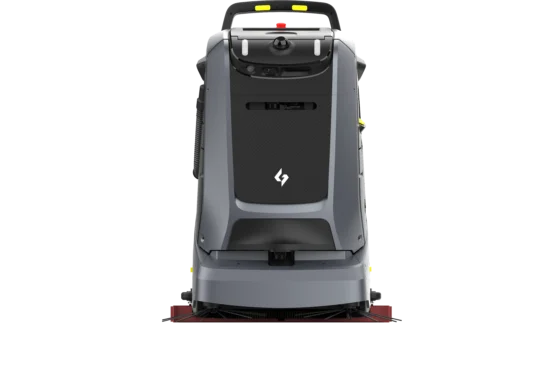
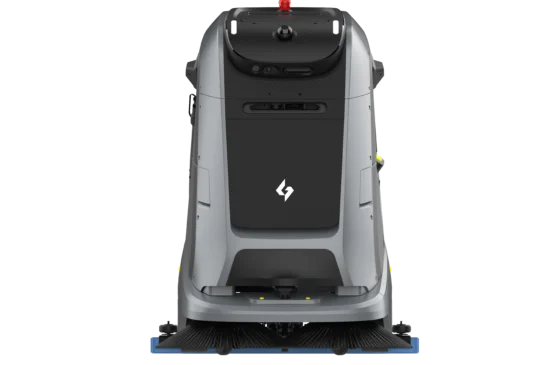
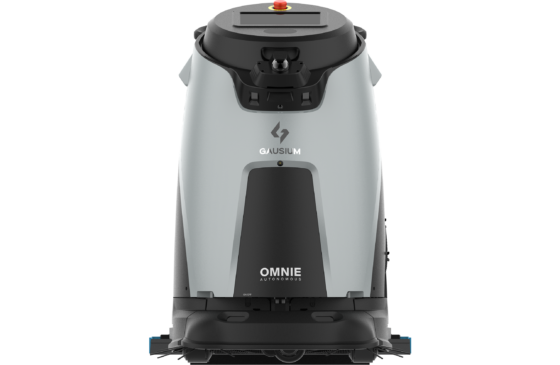
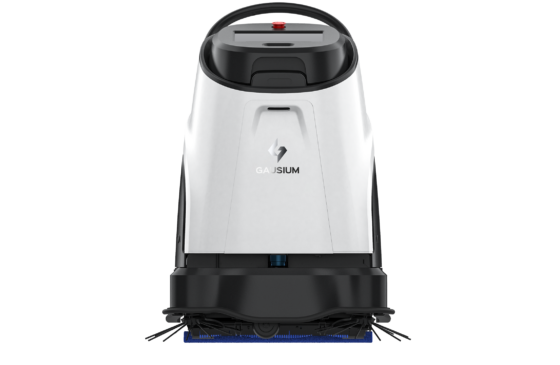
Autonomous floor scrubbers, also called robotic floor scrubbers, map the site, navigate on their own, avoid people and obstacles, and follow a schedule. Depending on the model, Gausium robots can also recharge at a charging dock and resupply at a workstation. Staff set the tasks and handle exceptions instead of driving.
|
Factor |
Autonomous floor scrubber |
Ride-on floor scrubber |
Verdict |
|
Cost |
Higher upfront investment, no dedicated driver per shift |
Lower upfront price, one operator every shift |
Autonomous, on routes that run often |
|
Coverage and consistency |
Same map and route every run, with a task record |
Depends on the operator’s judgment that day |
Autonomous |
|
Staff intervention |
Scheduling, routine checks and exceptions |
Full-time operator for the whole run |
Autonomous |
|
Deployment |
Mapping and route setup before the first run |
Ready once the operator is trained |
Ride-on |
|
Floor area |
Models for mid-sized to very large sites |
Large open areas |
Even |
|
Payback |
Driven by operator hours released and route frequency |
Low entry cost, labor cost continues |
Autonomous, on repeatable routes |
On purchase price alone, a ride-on floor scrubber usually looks cheaper. That comparison leaves out its largest cost: the operator who has to drive it every shift, every month, for the life of the machine.
A robotic floor scrubber changes where the money goes. The operator hours it frees up move to work a robot cannot do, such as restrooms, stairs, corners and quality checks. Because the same route runs to the same standard every day, rework drops as well. The gap widens on sites that clean across two or three shifts a day, such as factories and distribution centers heading into the year-end peak. Every extra shift needs another driver for a ride-on, while an autonomous scrubber simply runs another task.
Verdict: Autonomous, wherever the route runs often enough to keep the robot busy.
A skilled operator can do excellent work. A tired one on the fourth night in a row, or a new hire in week two, may not. Ride-on results rise and fall with the person behind the wheel.
An autonomous scrubber dryer runs the same map and the same path every time, and Gausium robots are built to keep that coverage going:
Facility managers and contract cleaners can use those records directly in service reviews. Our guide to cleaning robot performance reporting shows how.
Verdict: Autonomous.
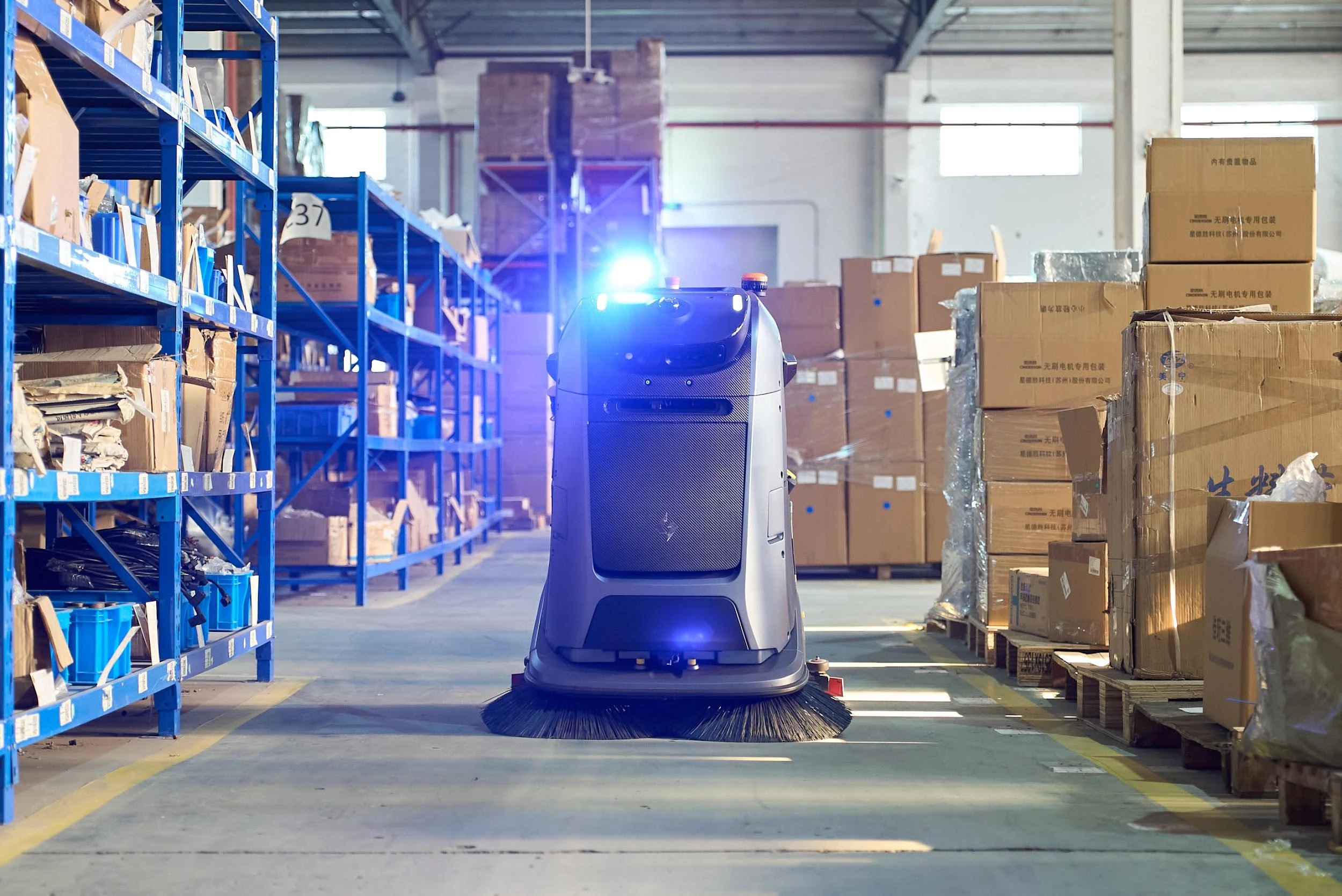
A ride-on may cross an empty hall faster. It also uses one person’s entire shift to do it.
With an autonomous floor scrubber, staff schedule tasks, carry out routine checks and step in when something unusual happens. With a Gausium charging dock or workstation on site, no one has to stand by while the robot works, so cleaning can move to overnight hours or quiet periods between traffic peaks. Depending on the model, the workstation handles charging, water refill, wastewater discharge and component self-cleaning. On models such as Mira and Marvel, a self-cleaning wastewater tank also reduces manual maintenance after every task.
At Auchan supermarkets in France, stores running Omnie no longer need staff to drive conventional scrubbers. That time goes back to customer service and store operations.
At Shanghai Maritime University, four Gausium robots share the campus. Two Omnie robots cover the Navigation Science Building and complete up to three full cleaning cycles a day, while two Phantas robots look after the student dormitories. None of them needs staff to supervise charging or move it between floors.
Verdict: Autonomous.
A ride-on floor scrubber is ready to work as soon as it arrives and the operator is trained. An autonomous floor scrubber needs a map and a route first.
Gausium keeps that step short. With AI Smart Deployment, the robot travels the site and builds its own map, with no location tags and no specialist engineer. A 2,000 m² (21,500 ft²) area takes about 30 minutes.
Verdict: Ride-on, though the gap is measured in hours, not weeks.
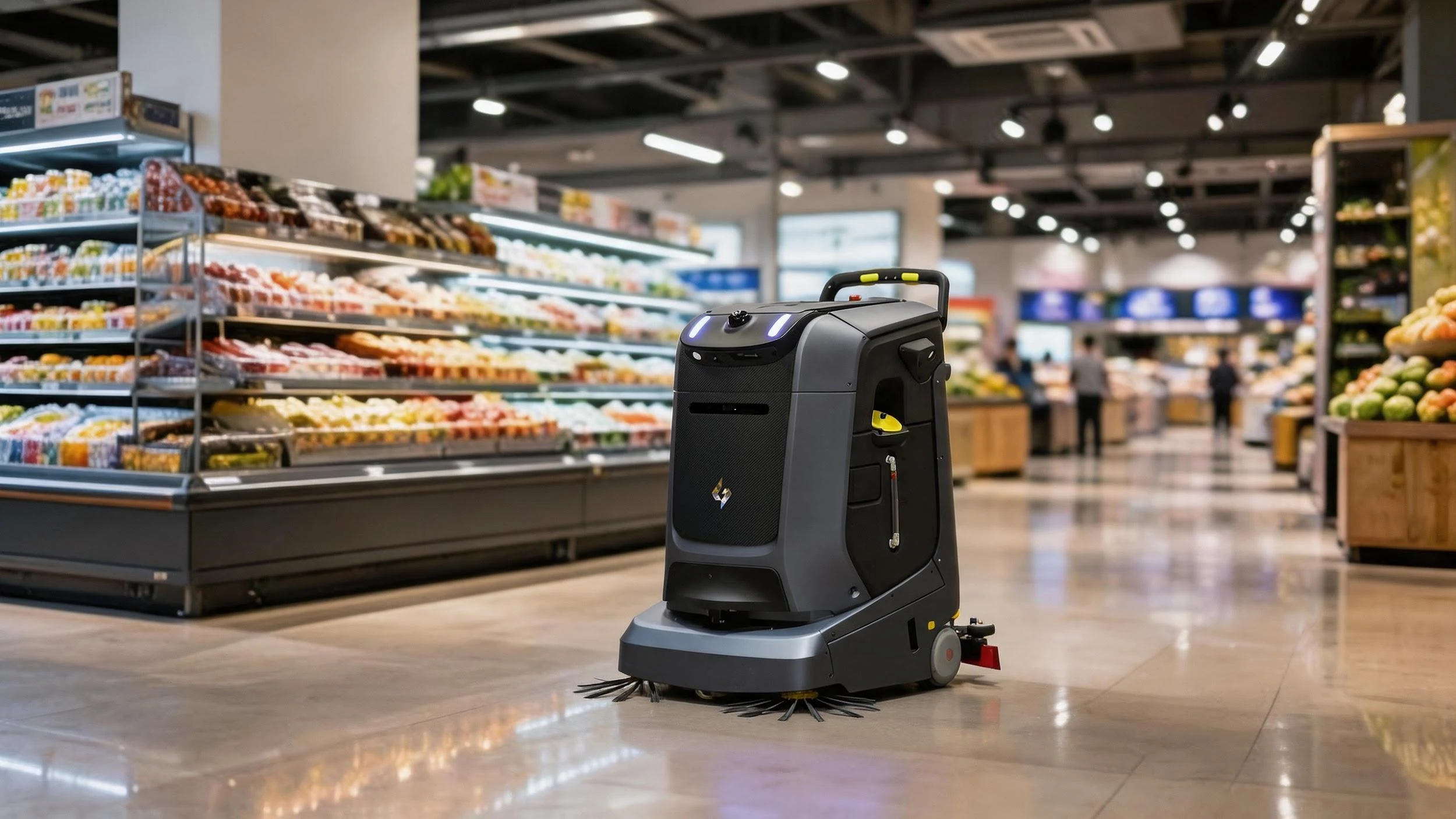
Large open floors used to belong to ride-on machines. Robotic floor scrubbers now cover that ground as well, with models sized to the site:
Verdict: Even. Size no longer decides the choice.
There is no universal payback period, and any figure offered before seeing the site is a guess. A simple way to frame it:
Payback period (months) = total robot investment ÷ (monthly cost of operator hours released − added monthly maintenance and consumables)
The more often a route runs, and the more shifts that currently need a dedicated driver, the faster a robotic floor scrubber pays back. It is best worked out with real site data from your own facility.
Operational results show where the value comes from. On São Paulo Metro Line 5, two Omnie robots brought platform cleaning time down from about 3.5 hours to roughly 40 minutes compared with the previous process. Water use fell from around 980 L to 15 L per operation.
Verdict: Autonomous, on routes that repeat.
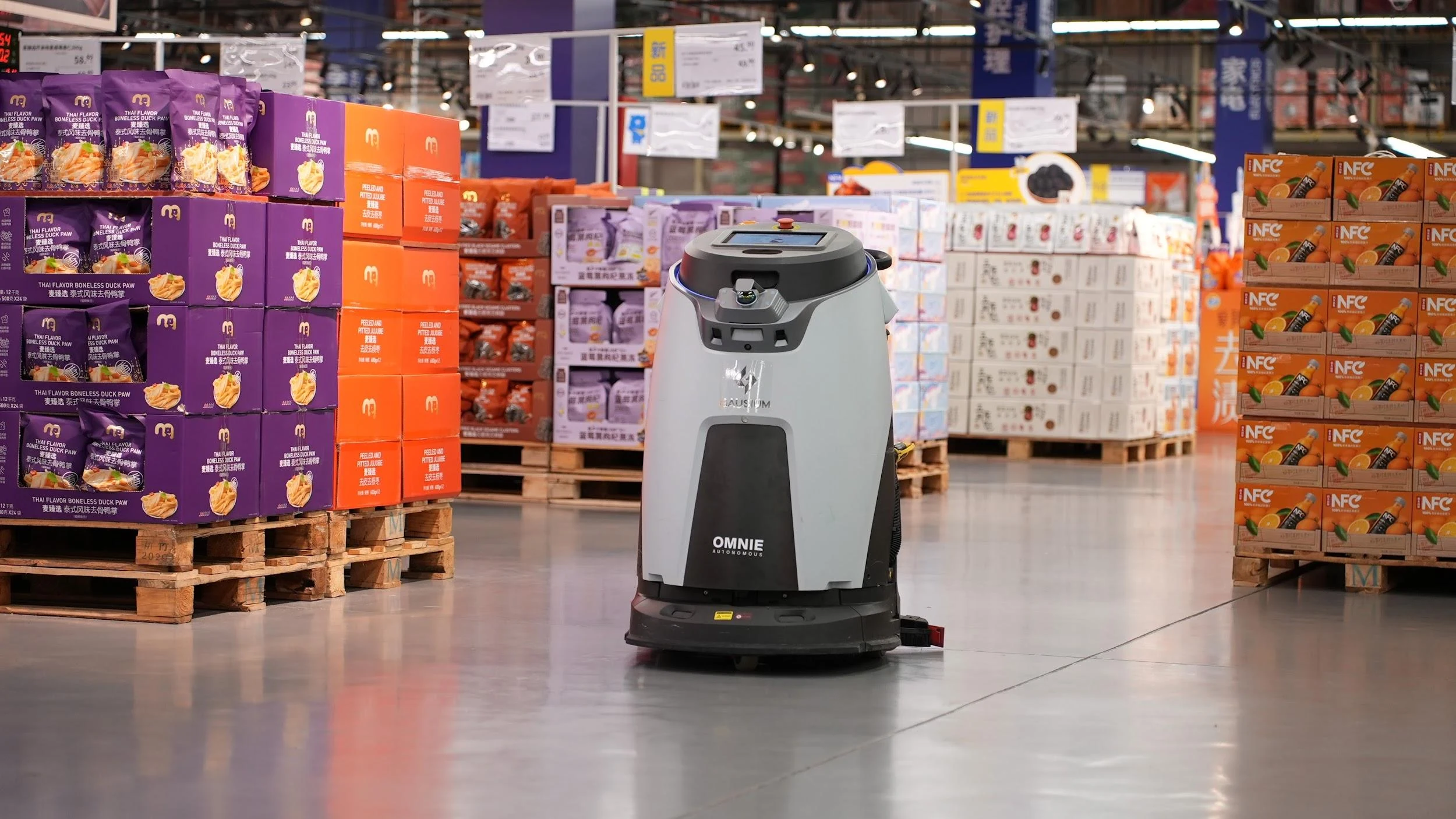
Three kinds of work still favor a person in the seat:
None of this is a flaw in autonomous cleaning. It is simply where the line between the two machines falls.
Large sites are never one kind of floor. A shopping center has wide concourses, small shops, restrooms, stairs and parking. A factory has main aisles, equipment cells, loading docks and staging areas that change by the day.
In large deployments, Gausium gives every zone a single owner:
The line between the two is also softer than it used to be. Marvel has a manual mode with a power-assisted handlebar and an optional stand-on pedal, so operators can move and position it easily when needed. Phantas switches between Auto and Manual modes through its integrated handle.
Without a clear owner for each zone, two machines end up cleaning the same stretch of floor while another goes untouched. As the fleet grows, every robot’s tasks are logged in the same Gausium App and cloud platform, so adding machines or shifts does not change how the operation is managed.
Shopping malls and retail stores: autonomous. Concourses and aisles follow the same routes every day and need cleaning around opening hours. During peak shopping season, when stores stay open longer and traffic runs heavier, robots can take the main floor overnight so it is ready before opening. Mira fits narrow store aisles, and Omnie handles busy supermarkets. See Gausium’s retail cleaning solutions.
Airports and transportation hubs: autonomous. Long concourses, platforms and 24-hour traffic suit scheduled, repeatable runs in off-peak windows. Those windows get shorter during holiday travel, which is exactly when a robot that runs without a driver matters most. Omnie is designed for exactly this environment. See public transport solutions.
Hospitals and healthcare facilities: autonomous, with manual detail work. Corridors and public areas need frequent, documented cleaning that task records support well. Patient rooms and clinical areas stay on the manual schedule. See healthcare solutions.
Hotels and convention centers: autonomous. Lobbies and hard-floor public areas can be cleaned overnight without disturbing guests. Phantas covers smaller hard-floor spaces and low-pile carpeted corridors, while Vacuum 40 handles carpeted corridors of any pile height. See hospitality solutions.
Schools and public buildings: autonomous for corridors, manual for classrooms. Hallways and entrances suit after-hours robot runs. Classrooms with furniture that moves daily are better left to staff. See education solutions.
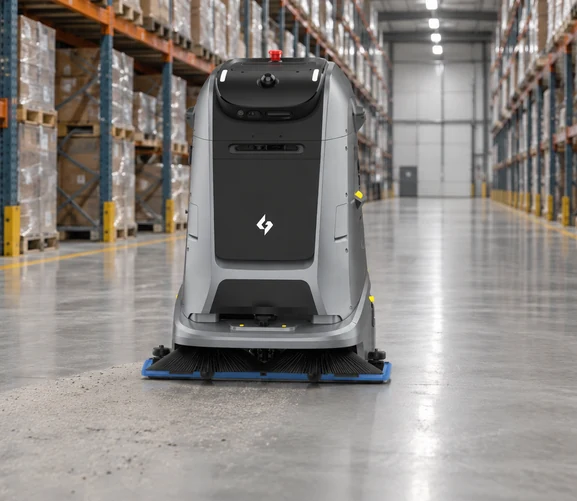
Warehouses and manufacturing plants: mixed fleet. Main aisles and open floor plates go to Marvel, while staging areas that change daily stay with ride-on equipment. Floors with mostly dry debris are better served by the Beetle autonomous sweeper. See warehousing and manufacturing solutions.
The choice between an autonomous and a ride-on floor scrubber comes down to one question: does this work need a driver? Repeatable routes that run every day belong to autonomous machines. Unplanned, fast-changing work still suits a person in the seat. Most large facilities get the best result by giving each zone to the machine that fits it.
Gausium can map your floor area, surfaces, cleaning windows and staffing into a clear split between autonomous and conventional equipment, then run an on-site trial on a representative route. Talk to a Gausium specialist to arrange a site assessment.
For large, repeatable routes, yes. A robotic floor scrubber frees the operator’s shift, repeats the same route every time and records each task. A ride-on scrubber remains the better tool for unplanned, fast-changing work.
Not always. A ride-on can be faster across an empty open floor. The autonomous advantage is that it cleans without a driver, so the time saved is the operator’s, not just the machine’s.
On sites with stable routes, it can take over most of it. Mixed facilities usually keep some conventional equipment for ad hoc cleanups and areas the robot cannot reach.
Gausium robots map a site on their own. With AI Smart Deployment, it takes about 30 minutes to cover a 2,000 m² (21,500 ft²) site.
It depends on the operator hours released, how often routes run and how heavily the robot is used. Payback is best calculated from real site data.
For large facilities with daily repeatable routes, an autonomous floor scrubber such as Marvel is usually the stronger choice. Sites above roughly 30,000 m² (320,000 ft²) typically run a multi-model fleet.
Yes, for routine heavy soil. Marvel is built for large, heavily soiled floors in warehouses and factories. Hazardous material and large debris should still be cleared by staff first.
UP NEXT
What Is an Autonomous Floor Scrubber? How Robotic Floor Scrubbers Are Changing Commercial Cleaning12 października, 2026
Step 1/2
Please select the type of business you’d like to have with Gausium.
Choose one item from the list
Step 2/2
Thanks for sharing your preference. Please fill out the form below, and we’ll get in touch shortly.
By clicking “Submit”, I authorize Gausium to contact me. Privacy Policy.
Thank you for filling out the form
By clicking “Submit”, I authorize Gausium to contact me. Privacy Policy.