




UP NEXT
Efficiency, Ethics, ESG: Why Autonomous Cleaning Technology Leads the Way28 dubna, 2025

26 června, 2025
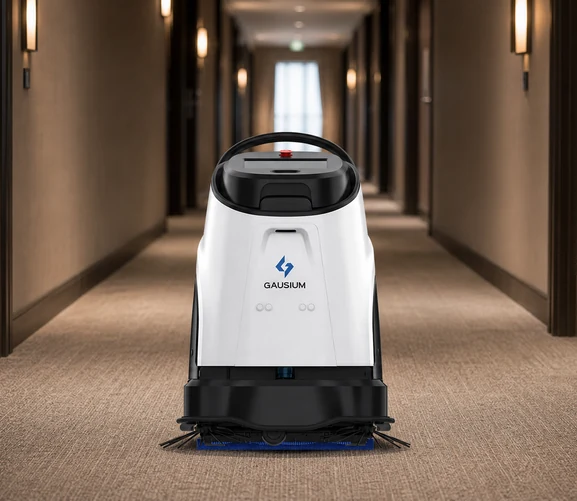
Carpeted areas in a commercial building, such as guest corridors, open-plan offices and meeting rooms, are occupied for long periods. That makes them harder to clean than hard floors, and it also makes their condition more visible to occupants and visitors.
Selecting a commercial cleaning robot for these areas comes down to four checks:
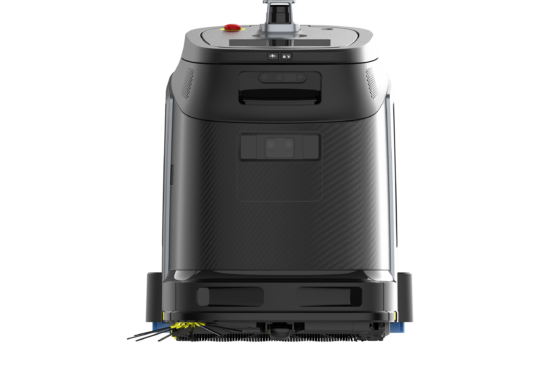
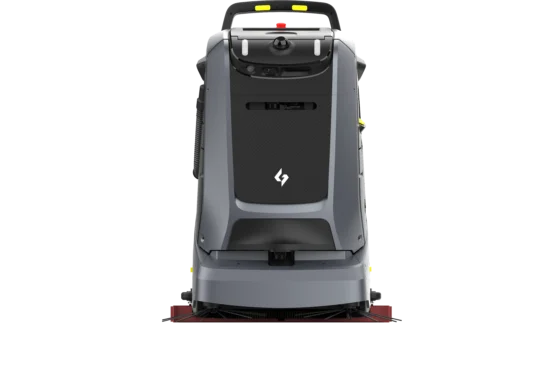
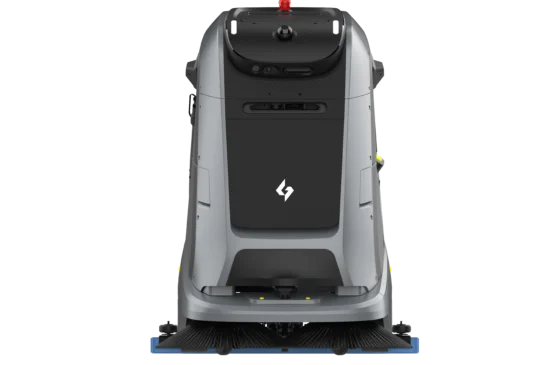
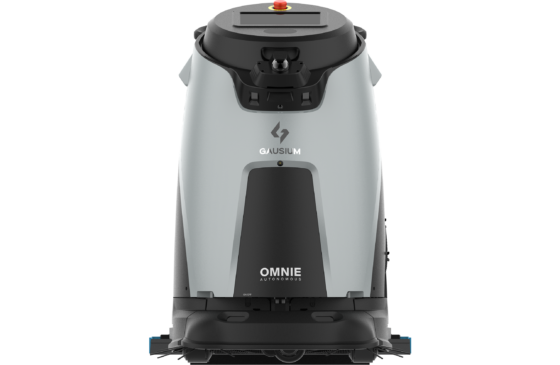
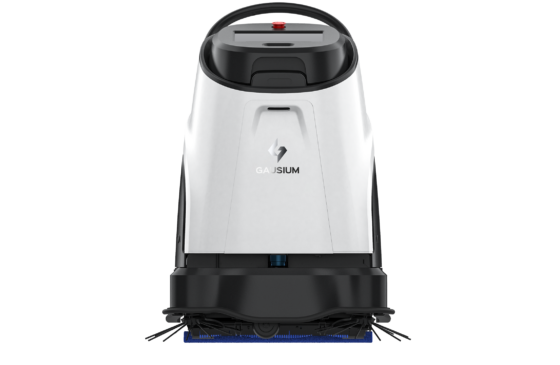
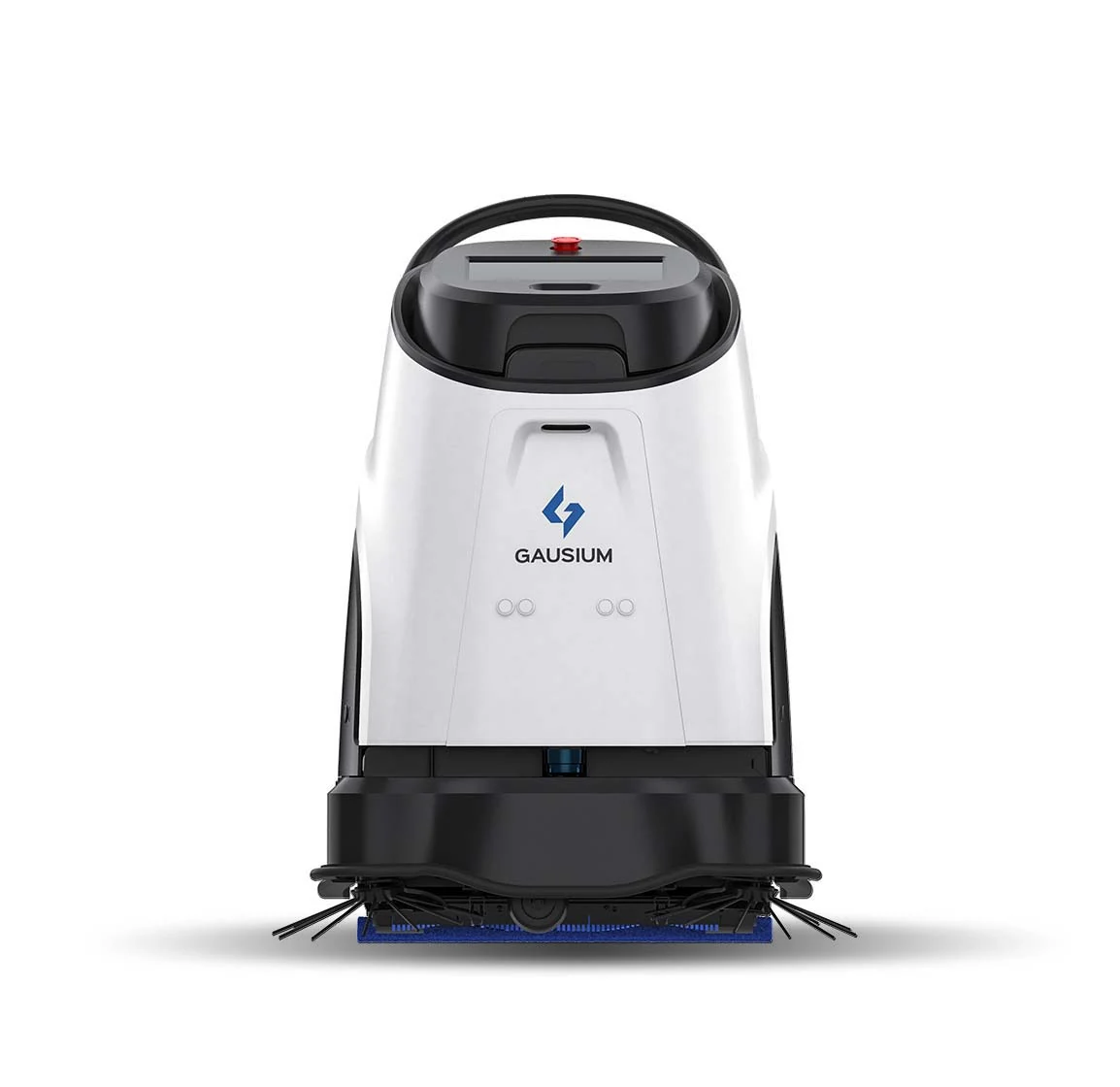
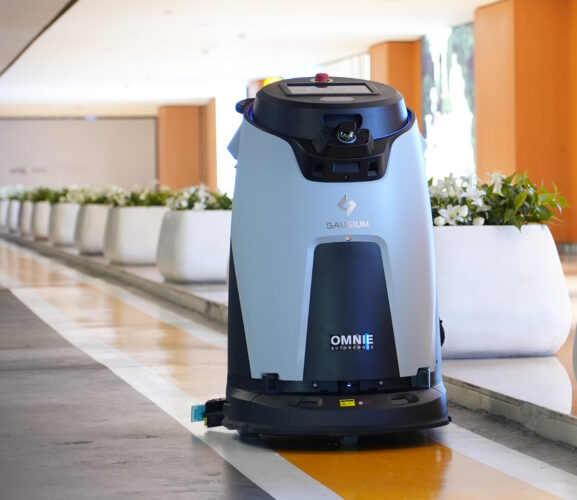
In Gausium’s range, the model specified for this work is Vacuum 40: three carpet cleaning modes for different pile heights, an anti-static roller brush, 24 kPa maximum vacuum pressure and an H13 HEPA filter.
Three conditions change when a machine moves from hard floor onto carpet.
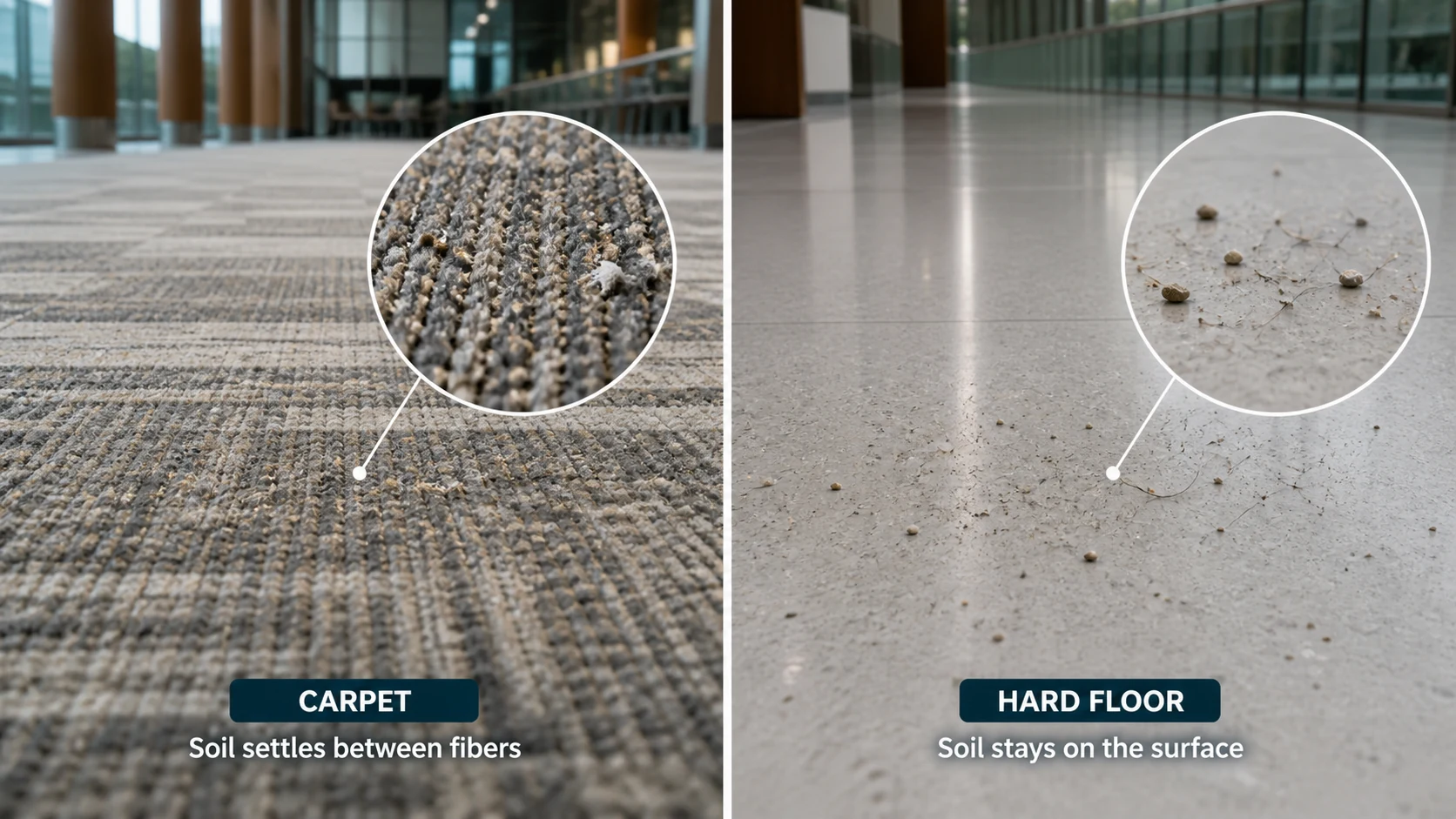
Soil is held inside the carpet rather than resting on the surface. Removing it requires the brush to disturb the fiber while airflow carries the loosened soil away in the same pass.
A machine with strong suction and a passive brush will collect surface litter and leave the embedded load in place. That embedded load is what shortens carpet life.
Dust capacity is consumed more quickly. Carpet retains considerably more fine soil per square meter than sealed hard floor, which makes bin volume and ease of emptying operational considerations rather than technical ones.
The work also takes place in front of occupants. Corridors, open-plan floors, meeting rooms and guest levels are carpeted precisely because they are occupied areas. Exhaust filtration and sound level therefore belong in the specification.
1. Suction and airflow, assessed together. Request both the vacuum pressure and the air flow volume, as a single headline figure is not sufficient on its own. Vacuum 40 publishes 24 kPa maximum vacuum pressure and 120 m³/h maximum air flow volume.
2. Brush design and pile-height modes. The brush determines whether suction is effective. Vacuum 40 offers three carpet cleaning modes, light, medium and deep, to accommodate various carpet pile heights, and uses an anti-static and highly elastic roller brush that reaches deep into the carpet fibers without causing any damage.
Anti-static properties are relevant on synthetic commercial carpet, where static retains fine dust against the fiber.
3. Filtration class. In occupied space, the exhaust is as significant as the pickup. Vacuum 40 uses an H13 HEPA filter, and a stated filter class should form part of the specification.
4. Sound level in occupied areas. Request a measured sound level at a stated distance, in the mode intended for operation, and confirm it on site during a trial. A furnished, carpeted space performs differently from a demonstration hall.
5. Capacity, coverage and access. Three practical figures determine how a machine performs on a working floor: how much it holds, how much it covers per hour, and how narrow a route it can service.
Vacuum 40 carries a 12 L dust bag, cleans a 720 mm width with side brushes, delivers 400 to 800 m²/h in practice, operates for up to 3 hours in vacuuming mode, and requires a minimum pass width of 800 mm.
|
Criterion |
Vacuum 40 |
|
Carpet types |
High-pile carpets and low-pile carpeting, plus six hard-floor types |
|
Carpet modes |
Three modes: light, medium, deep |
|
Brush |
Anti-static and highly elastic roller brush |
|
Suction and airflow |
24 kPa max. vacuum pressure; 120 m³/h max. air flow |
|
Filtration |
H13 HEPA filter |
|
Capacity |
12 L dust bag |
|
Cleaning width |
720 mm with side brushes |
|
Throughput |
400 to 800 m²/h practical; 2,300 m²/h theoretical maximum |
|
Runtime |
Up to 3 hours in vacuuming mode |
|
Mixed floors |
Identifies the floor type with 3D cameras and switches mode automatically |
|
Edges |
Side brushes and high-precision sensors for zero-distance edge cleaning |
|
Remote access |
Available through the Gausium App |
Full dimensions, electrical data and sensor configuration are published on the Vacuum 40 product page and its specification page.
One boundary should be noted. With side brushes and an add-on mop, Vacuum 40 can achieve simultaneous vacuuming and sweeping on carpets, as well as simultaneous sweeping and dry mopping on hard floors.
It remains a vacuum rather than a scrubber, so hard floors receive a dry pass and not a wash. Facilities that also require wet scrubbing should plan that as a separate machine or a separate task.
Where the area in question is a factory aisle, a warehouse yard or a logistics apron, the requirement is not carpet care. It is bulk dry debris across large hard-floor areas, indoors and outdoors.
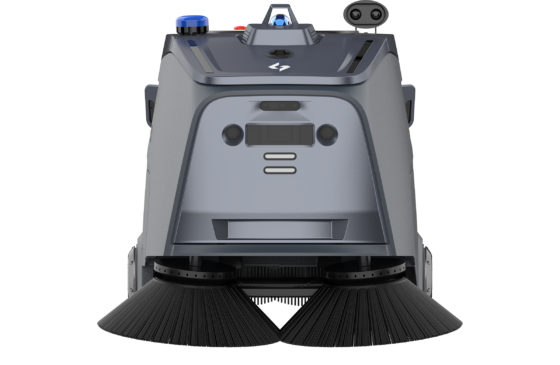
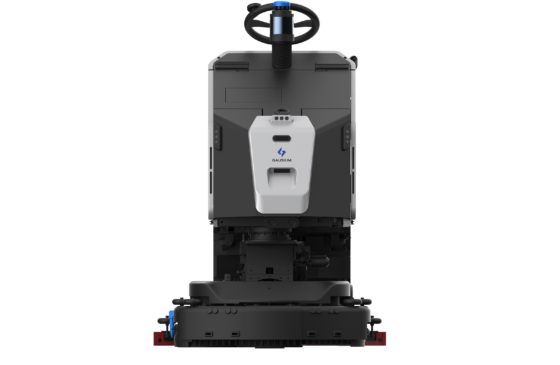
That is a different machine class, and Gausium’s model for it is Beetle, a heavy-duty autonomous sweeper for indoor and outdoor use.
Beetle is specified for bituminous road, concrete, rubble flooring, PVC vinyl and epoxy, in manufacturing and logistics or warehouse settings. Its high-power suction motor handles material ranging from fine dust and sand to paper scraps, bottles and wood chips, and it carries a 45 L trash bin with a 750 mm cleaning width.
Dust is managed with automatic HEPA cleaning after each task. Mapping and localization are powered by a 3D LiDAR, which is why it performs well in low-light conditions, high-dynamic areas with frequent activity, and vast open spaces.
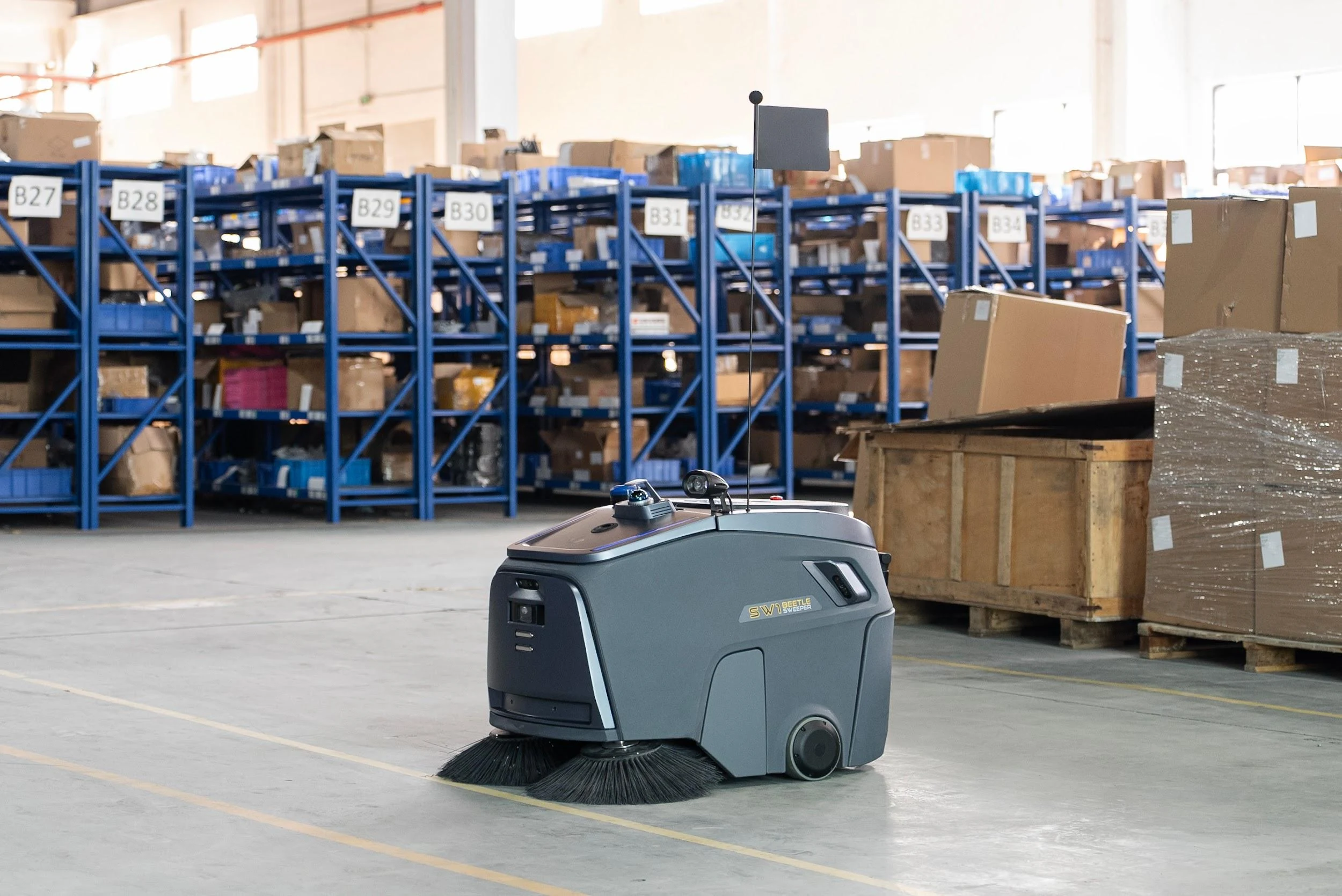
Beetle is a sweeper rather than a scrubber, and its applicable flooring types do not include carpet. It should not be deployed on carpeted interiors, and a carpet vacuum should not be deployed on a warehouse apron.
|
Floor condition |
Machine class |
Gausium model |
|
Carpeted corridors, open-plan offices, meeting floors, guest levels |
Commercial robotic vacuum |
Vacuum 40 |
|
Mixed carpet and hard floor within one occupied building |
Commercial robotic vacuum with automatic floor-type switching |
Vacuum 40 |
|
Factory aisles, warehouses, indoor and outdoor industrial sites, bulk dry debris |
Heavy-duty autonomous sweeper |
Beetle |
|
Hard floors requiring a wet wash |
Scrubbing rather than vacuuming |
Plan as a separate machine or task |
The case for a commercial robot vacuum rarely rests on a single figure. It is built on three things:
Gausium’s autonomous solutions, powered by the Gausium Cloud Platform, provide 24/7 access to operational data and data analytics. Supervisors can verify what was cleaned and when without relying on a walk-through inspection.
For most facilities the more useful framing is capacity rather than cost alone. Routine floor time transfers to the machine, which reduces reliance on an increasingly constrained cleaning labor pool and allows teams to concentrate on work a machine cannot perform: restrooms, touchpoints, glass, spill response and guest-facing service.
Hanting Hotel, Suzhou. One Vacuum 40 Diffuser covers 670 m² of low-pile carpet corridors across five floors in approximately 1.5 hours, commencing at around 2:00 in the afternoon. It separately cleans a marble lobby of around 45 m² in five-minute cycles across five shifts a day.
The published case records that it „works perfectly on varying flooring types, be it a hard surface, a low pile carpet or a high pile carpet, and effortlessly picks up fine dust or debris with a 24 kPa suction motor.“ The same case states that by the first quarter of 2022, according to Huazhu, 50 Hanting hotels would have deployed a Vacuum 40 Diffuser.
InterContinental Wien, Vienna. Deployed in June 2024, one Vacuum 40 Diffuser covers 12 guest floors together with the lobby and basement, while one Phantas covers the mezzanine.
Management at the property reported: „The cleaning performance is perfect and consistent. We already recommend these robots to other hotels.“ (Case study, 6 December 2024.)
Gausium’s office cleaning solution page describes the same model as „a vacuuming expert for all sorts of carpet tiles,“ and the hospitality solution page as a „perfect hotel cleaning robot for all sorts of carpet tiles.“
A robot vacuum performs the routine dry pass. It does not carry out hot-water extraction, interim encapsulation or bonnet cleaning.
It also does not treat stains, respond to spills, or maintain entrance matting, which is where most soil enters a building.
Periodic deep carpet care remains on its own cycle, and bag changes, brush clearing and filter checks remain manual tasks. Defining that scope clearly is what makes the daily pass dependable.
Request a trial and record five measurements.
That last figure, rather than the data sheet, determines whether the deployment delivers time savings.
For commercial carpet in occupied buildings, the criteria that matter are pile-height coverage, brush and suction working in combination, HEPA-class exhaust, and sufficient capacity to complete a shift without interruption.
Vacuum 40 is Gausium’s model for this application, and its published carpet specification should be assessed against the conditions on site. Where the requirement is an industrial floor, the answer is a different machine class.
To progress an evaluation, request a site assessment and a trial in the most demanding carpeted zone, with three inputs prepared: the measured area, the carpet pile height and the available cleaning window.
A commercial robotic vacuum specified for the carpet pile height in question. In Gausium’s range this is Vacuum 40, which offers three carpet cleaning modes, an anti-static roller brush, 24 kPa maximum vacuum pressure and an H13 HEPA filter.
There is no single industry threshold. Measure the pile in each carpeted zone and compare it with the model’s applicable flooring types. Vacuum 40 lists high-pile carpets and low-pile carpeting; Phantas lists low-pile carpeting.
Fill rate follows soil load rather than the calendar, so a figure from another building does not transfer. Record the area cleaned between two changes during a trial and use that as the basis for scheduling.
The roller brush, the filter and the dust bag. Brushes should be replaced when flat spots, splayed or shortened bristles, or a clear drop in cleaning quality become apparent, as set out in the maintenance checklist.
Yes. Gausium’s cloud-connected solutions provide 24/7 access to operational data and data analytics, and Vacuum 40 supports remote access through the Gausium App.
No. Beetle is a heavy-duty autonomous sweeper for industrial floors, and carpet is not among its applicable flooring types. Carpeted interiors require a commercial robotic vacuum.
No. It automates the routine dry pass. Extraction, stain treatment and spill response remain periodic manual tasks on their own schedule.
Gausium is a leading company of AI-powered autonomous cleaning solutions with more than 4,000 customers in more than 70 countries and regions. Products and services of Gausium include commercial floor cleaning robots, docking stations, cloud platform and application software, and more in the pipeline. Driven by a vision to lead the intelligent digital transformation of the cleaning and service industry, Gausium offers the world’s most comprehensive portfolio of commercial cleaning robots, empowering individuals to work smarter and lead more fulfilling lives.
Step 1/2
Please select the type of business you’d like to have with Gausium.
Choose one item from the list
Step 2/2
Thanks for sharing your preference. Please fill out the form below, and we’ll get in touch shortly.
By clicking “Submit”, I authorize Gausium to contact me. Privacy Policy.
Thank you for filling out the form
By clicking “Submit”, I authorize Gausium to contact me. Privacy Policy.