




UP NEXT
Commercial Cleaning Robot Service and Spare Parts Support: A Buyer’s Guide10 sierpnia, 2026

10 sierpnia, 2026
At the monthly service review, the client says the third floor was not cleaned on Tuesday night. The supervisor remembers doing it. The sign-in sheet carries a signature.
The dispute is not really about whether the cleaning happened. It is that nothing on record shows what was actually done. A sign-in sheet records attendance, not outcome. A visual spot check records one moment, not a shift. Cleaning verification has run on those two instruments for decades, and neither holds up when a client pushes back.
Cleaning robots connected to a cloud management platform change that. The work itself becomes data: which zones were covered, when the task ran, how much area was cleaned, and whether the route finished. Facility teams get a record that does not depend on anyone’s memory or judgement.
This article covers what a useful report should contain, what the Gausium Cloud Platform provides, and what to confirm about reporting before purchase.
Completing a cleaning task and proving it was completed are two different requirements. The cost of that gap shows up in three places.
Inspection hours. A supervisor walking the floor is a real labour line, and it grows with building size, shift count and number of sites. What it produces is one person’s assessment at one moment.
Inconsistent standards. The same area scores a five with one supervisor and an eight with another. Service terms built on satisfaction ratings are difficult to enforce; what holds up is a score that can be compared against a threshold and repeated over time. ISSA’s Cleaning Industry Management Standard sets out exactly this kind of framework, and professional cleaning contracts increasingly reference it.
Late detection. Where verification records only whether a task was scheduled, problems tend to surface when someone complains rather than when they start.
Connected robots address all three, because the record is produced by the work itself rather than by a person observing it afterwards.
A report is useful when it answers three questions. The number of data fields is not the measure.
The report should separate planned tasks from completed ones and timestamp the execution. This is the base layer of verification, and the item that turns a forty-minute review meeting into a five-minute one.
Cleaning time and area covered show the real workload of a single run. They also feed route planning and labour allocation.
A single shift proves little. Historical statistics let a team review activity by week or by month and see whether a recurring route is holding its efficiency.
Alongside these, visibility of machine health and consumables status determines whether an issue is handled inside a maintenance window or discovered when a task stops.
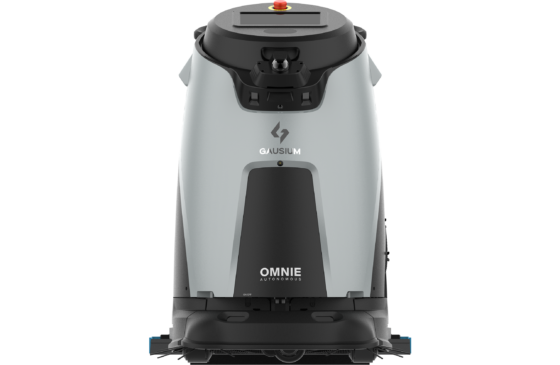
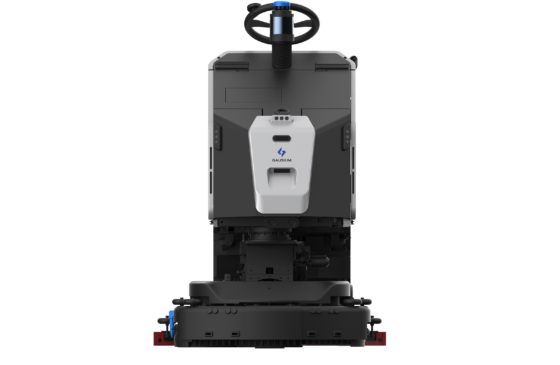
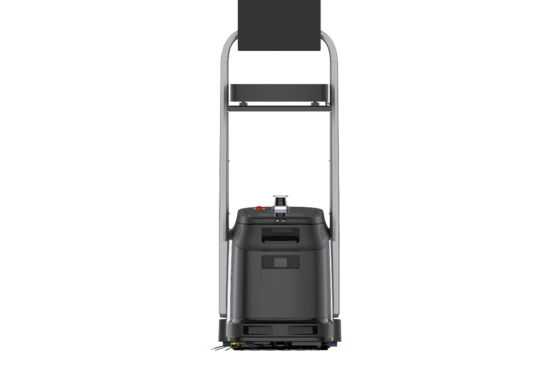
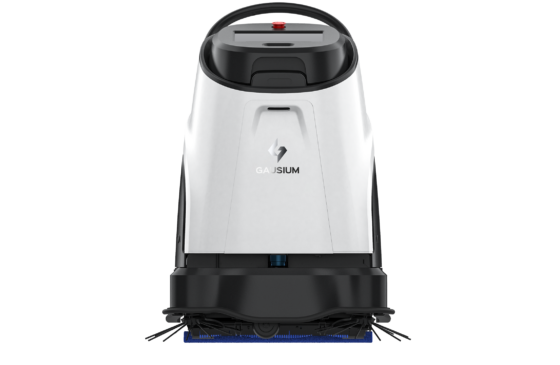
Gausium commercial cleaning robots connect to the Gausium Cloud Platform, where authorised users can reach operational data and management functions from a smartphone, tablet or computer.
In Greece, supermarket group AB Vassilopoulos deployed 25 Gausium robots across its national store network between January and May 2026. The cloud platform provides real-time cleaning statistics, remote operation and performance analytics, giving store managers visibility across locations, and the customer reports a 20% reduction in time spent on manual floor cleaning.
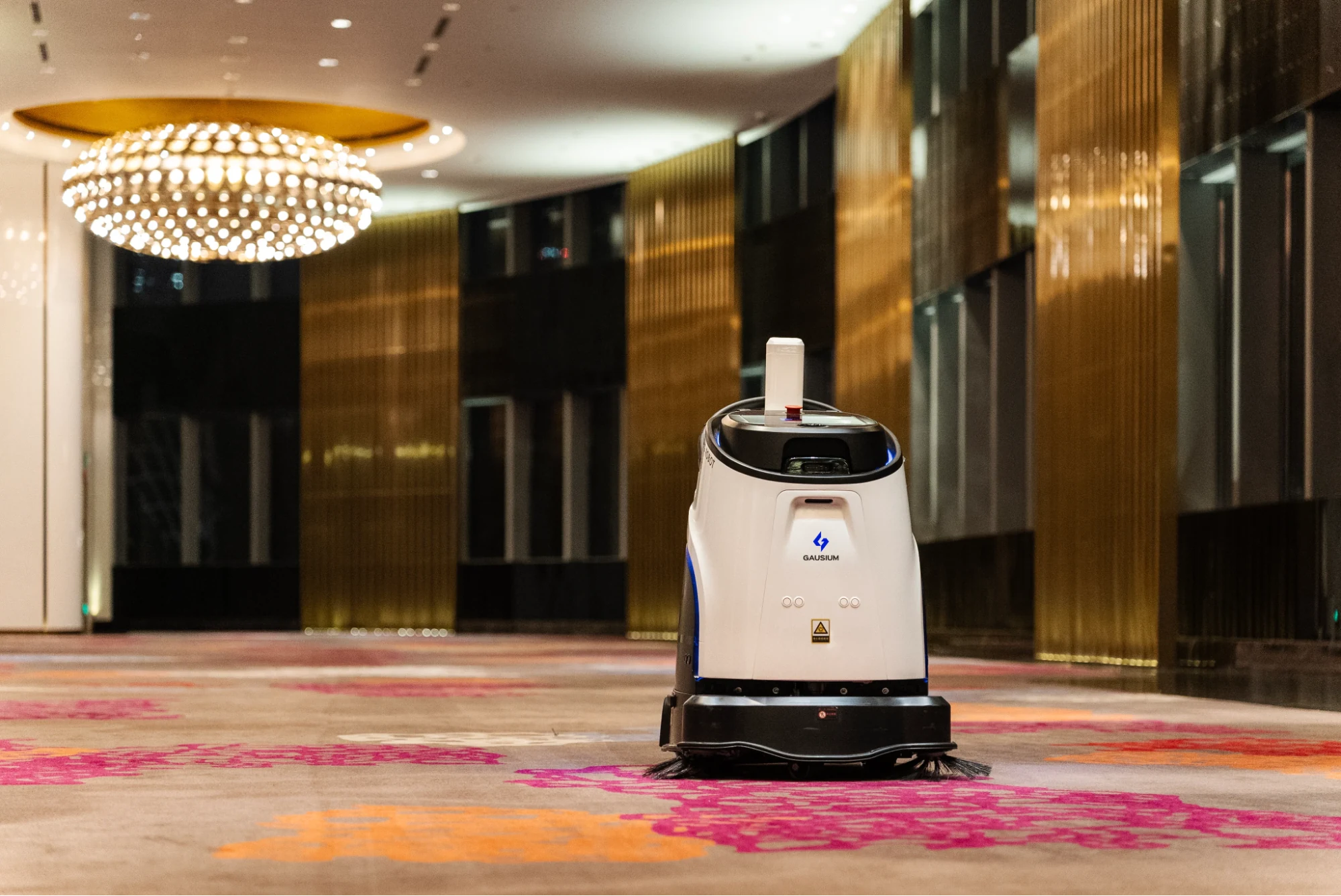
Reporting is delivered through the cloud platform and the Gausium App, so any connected model turns its work into reviewable operational data. It is not tied to one cleaning method.
The full portfolio covers sweeping, scrubbing, vacuuming and multi-mode cleaning.
The order matters. Select the machine against floor type, soil, and route first, then confirm the reporting functions and data access that model supports. Strong reporting does not compensate for the wrong machine on the floor.
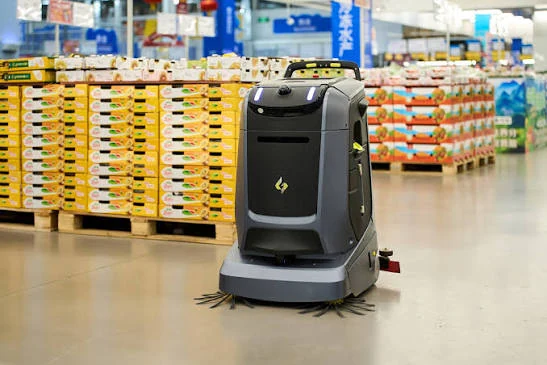
For sites with large floor areas, multiple shifts or several locations, reporting belongs among the hard requirements rather than the preferences. Five questions give a quick read:
Four or five yes answers, and reporting should be specified as a requirement. One or two, and machine fit is the more pressing question; reporting can be assessed in a second round.
Performance reporting does not solve a cleaning problem. It solves a proof problem. It replaces „someone was here” with a record of which area was cleaned, at what time, across how much floor, and whether the task ran to completion.
The boundary is worth stating plainly: reporting verifies machine activity. Cleaning quality, hygiene standards and contractual compliance still call for physical inspection. Reporting reduces how often those inspections are needed, not whether they are needed.
For facilities with large floor areas, multiple shifts or several sites, this capability is worth specifying at selection stage. Contact Gausium to discuss machine selection, reporting requirements and deployment planning.
Commercial cleaning robots connected to a cloud management platform. Gausium robots connect to the Gausium Cloud Platform, which provides operational data access, real-time monitoring, historical statistics and reporting through the Gausium App.
Typically operational metrics, task progress, historical statistics, cleaning time, area covered, machine health and consumables status. The exact contents depend on the model, platform configuration and deployment.
Yes. The Gausium App lets authorised users track task progress and start, pause or terminate a task from a smartphone, tablet or computer.
Cloud reporting produces a timestamped record of machine activity, which can confirm whether scheduled tasks were carried out. Judgements about cleaning quality still require on-site inspection scoring.
Yes. As site numbers grow, the cost of inspecting each location directly rises quickly, and centralised operational data reduces that management burden substantially.
The Gausium Cloud Platform provides an open API supporting connection with other applications and IoT devices. Specific integration requirements should be confirmed during deployment.
No. Reporting verifies machine activity. Cleaning quality, hygiene standards and contractual compliance still require physical inspection.
UP NEXT
Commercial Cleaning Robot Service and Spare Parts Support: A Buyer’s Guide10 sierpnia, 2026
Step 1/2
Please select the type of business you’d like to have with Gausium.
Choose one item from the list
Step 2/2
Thanks for sharing your preference. Please fill out the form below, and we’ll get in touch shortly.
By clicking “Submit”, I authorize Gausium to contact me. Privacy Policy.
Thank you for filling out the form
By clicking “Submit”, I authorize Gausium to contact me. Privacy Policy.