




UP NEXT
Welche Reinigungsroboter eignen sich für stark verschmutzte Industrieböden?23 września, 2026

23 września, 2026
A chain rollout succeeds or fails on repeatability. The unit of the decision is not the machine, it is the store routine: what the same task looks like in every location, who performs it, and how head office confirms it happened.
Single-store buyers evaluate cleaning performance. Chains evaluate whether a store manager with no technical background can run the machine on day one, and whether the fiftieth store costs the same to bring online as the fifth.
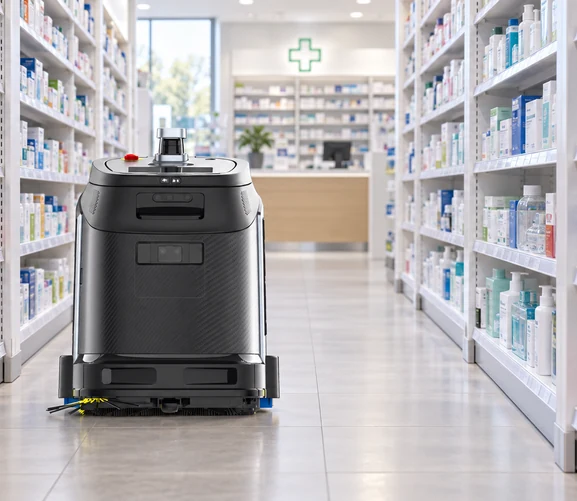
This article sets out how to pilot, standardize and scale a deployment across a store network, helping you bring every location to the same cleaning standard without adding cost per site. Pharmacies are the example used throughout, and the same sequence applies to convenience, optical and clinic chains, where stores are small, numerous and staffed without a dedicated cleaning team.
The instinct is to pilot in a flagship location. That produces a good result and a poor decision, because the flagship is the store least like the rest of the estate.
Pilot where the conditions are worst. An older high-street unit with a tight gondola pitch, an irregular back room and a short opening-to-closing turnaround will tell you what the rollout actually faces. If the machine completes the route there, the newer retail-park sites are not in doubt.
Three things to record during the pilot, because they become the rollout plan:
The narrowest passable point on the route, measured rather than estimated, including the stockroom turn and the till approach.
Cleanable floor area, not store area. Fixture footprint, back room and non-accessible zones come out of the total.
Who touched the machine, and for how long. This is the number that scales. A few minutes per day across 200 stores is a different proposition from thirty.
Everything that is not written down becomes a phone call to head office, repeated once per store.
A workable store routine fits on one page and covers five items:
| Item | What the store needs to know |
| Start and stop | When the task runs, and who presses start if it is not scheduled |
| Daily attention | Emptying the debris bin and checking consumables, with the cadence stated |
| Exceptions | What to do when the machine flags waste it should not attempt, such as packaging strapping or a liquid spill |
| Layout changes | What happens after a display is moved |
| Escalation | Who the store calls, and what information to give them |
Mapping and map editing are handled through the mobile app, without professionals or external tools, which is what makes a store-level routine possible rather than a technician-level one. Confirm during the pilot that store staff can complete each of the five items unaided, because that is the assumption the rollout rests on.
Once the routine holds, the constraint moves to deployment cost per site.
Commissioning. A rollout multiplies every site visit by the number of stores. Establish whether store staff can bring a machine online, or whether each site requires an engineer. This single factor sets the timeline for the whole programme.
Central visibility. A regional manager needs task completion across the estate without visiting each store. The Gausium cloud platform provides 24/7 access to operational data with multiple sites visible in one place, which turns store-level compliance into something head office can see rather than assume.
New store openings. The cheapest point to add a machine is when the store is fitted out. Decide early whether new openings include one by default, because retrofitting later means repeating the whole onboarding sequence.
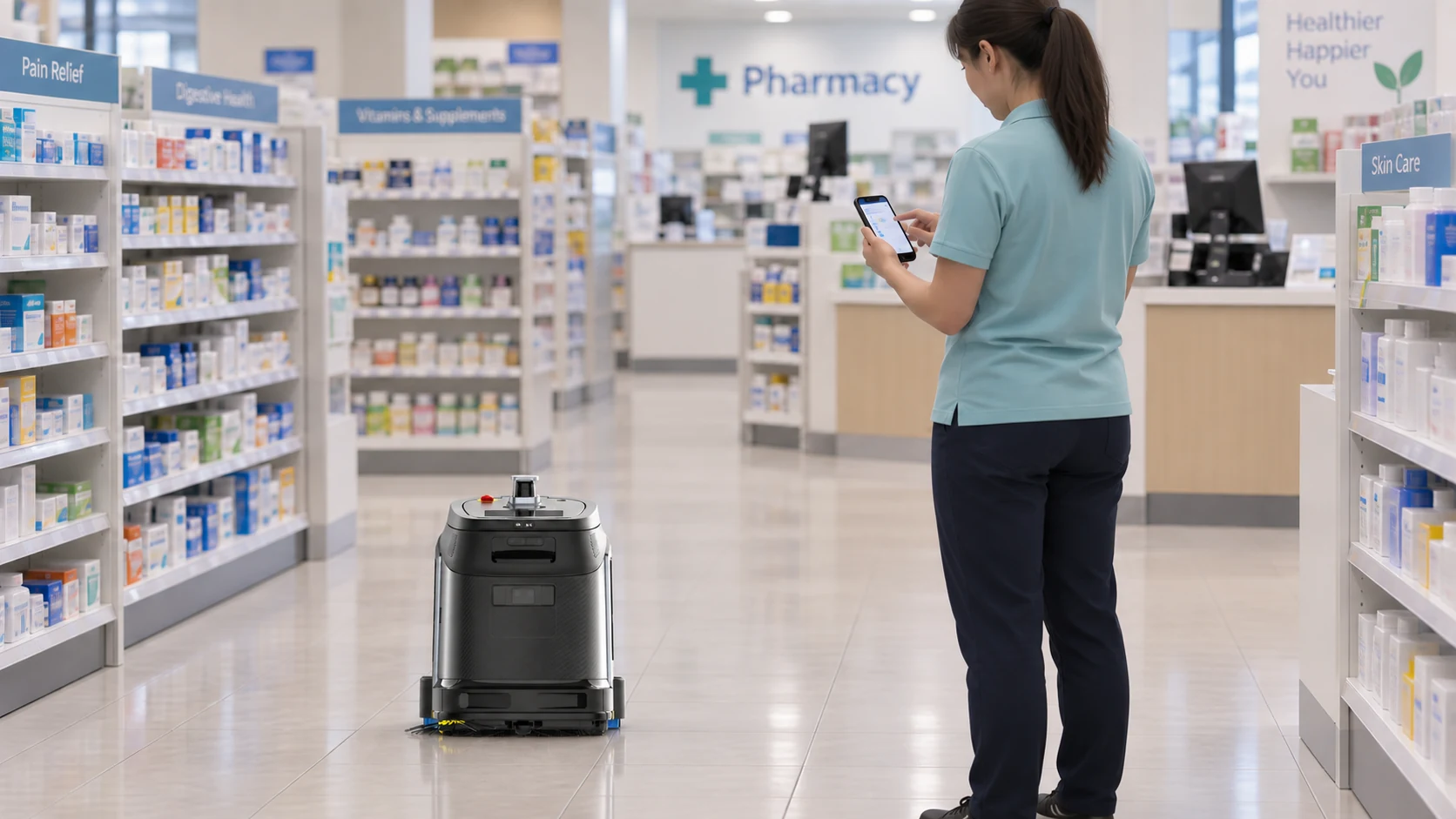
Retail layouts move. Promotional resets, seasonal displays and range changes all alter the route, and a machine that requires remapping after each one turns into a task rather than a saving.
This is the most common reason a chain deployment stalls. Confirm it during the pilot with a real reset rather than a demonstration: move a display, run the task, and see what the store has to do.
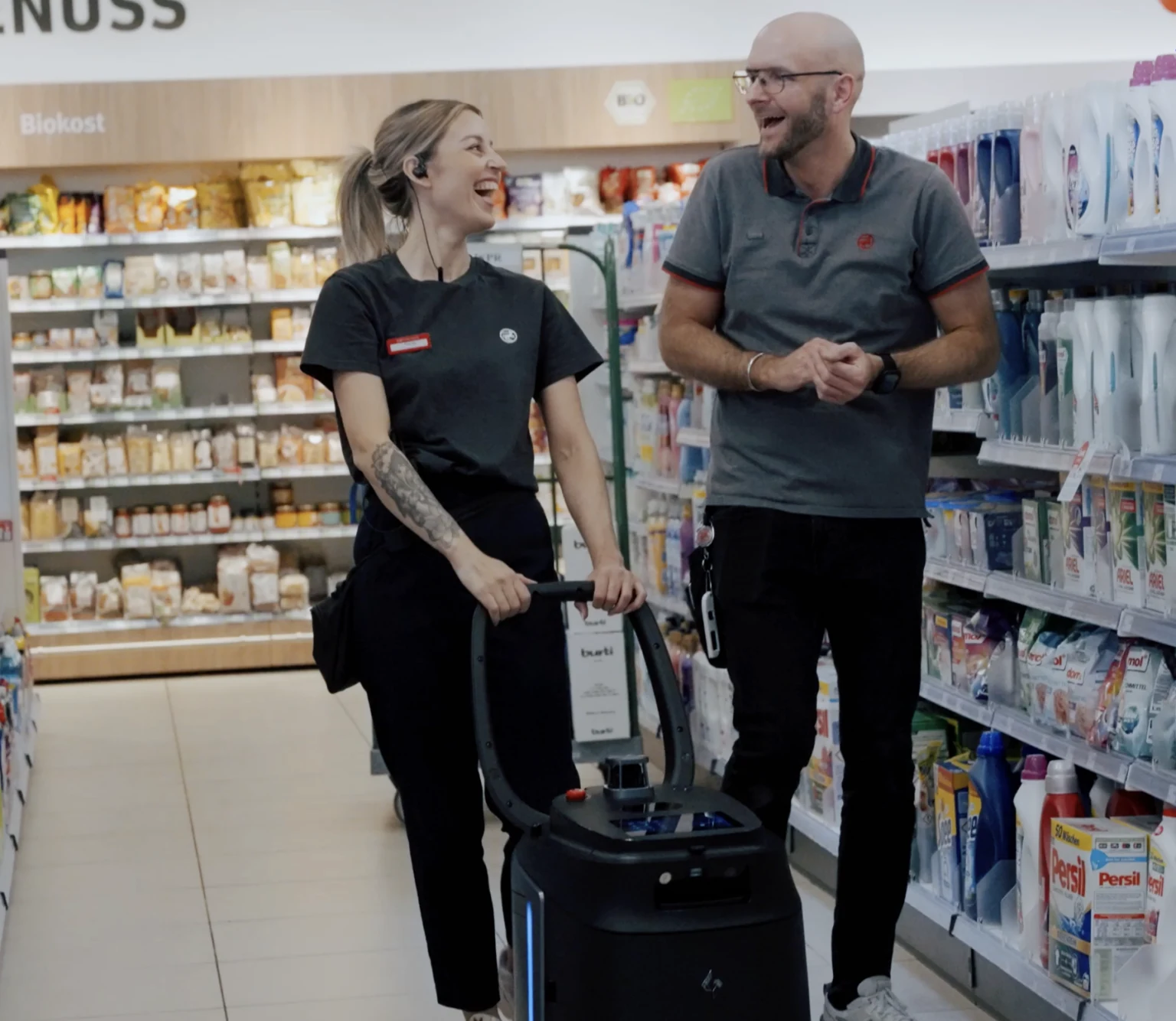
Published deployments give a reference point. In the Rossmann case study, a fleet of over 200 Phantas robots was deployed across the German drugstore chain’s stores, with new store openings set to include Phantas by default. The case records the machine cleaning an entire store in approximately 1.5 hours without supervision, and Store Manager Sebastian Rehse describes it adapting when displays are moved, cleaning the space a display previously occupied.
Not every store in an estate belongs in the rollout, and identifying the exceptions early protects the programme’s numbers.
Stores below a workable floor area. A small unit does not give the machine enough continuous floor to justify the cost, and its cleaning task is mostly detail work.
Stores where the route cannot be completed. A single blocking point, such as a permanent stock overflow in the only through-route, removes the machine’s value even if everything else fits.
Stores with a floor condition outside the machine’s range. Confirm surface types against the applicable-surface list rather than assuming consistency across the estate, particularly where older sites were refitted at different times. Machine selection for an individual store is a separate question, covered in what actually decides the choice for a pharmacy.
Treating these as excluded sites rather than as failures keeps the reported utilization rate honest, which matters when the programme is reviewed.
Pilot in the hardest store. Record narrowest point, cleanable area, and staff minutes per day. Write the one-page store routine. Test it against a real layout change. Exclude the stores that do not fit. Scale, with new openings included by default.
To size this against a specific estate, contact Gausium for a store assessment covering floor types, route conditions and cleaning windows.
One store is enough to validate the routine, provided it is a difficult one. A second store is useful only if the estate contains two genuinely different formats, such as high-street and retail-park sites.
Mapping and map editing are handled through the mobile app without external tools. Confirm this with store staff during the pilot, since staff-level commissioning is what makes a large rollout affordable.
It has to account for the change without a remapping task. Test this with a real reset during the pilot, because promotional resets recur throughout the year and this is where rollouts most often stall.
Through the cloud platform, which shows task data across multiple sites in one place. Agree at the outset which records the regional review will use.
Units below a workable floor area, sites where a permanent obstruction blocks the only through-route, and stores whose floor type falls outside the machine’s range. Excluding them at the planning stage keeps the reported utilization rate accurate.
UP NEXT
Welche Reinigungsroboter eignen sich für stark verschmutzte Industrieböden?23 września, 2026
Step 1/2
Please select the type of business you’d like to have with Gausium.
Choose one item from the list
Step 2/2
Thanks for sharing your preference. Please fill out the form below, and we’ll get in touch shortly.
By clicking “Submit”, I authorize Gausium to contact me. Privacy Policy.
Thank you for filling out the form
By clicking “Submit”, I authorize Gausium to contact me. Privacy Policy.