




UP NEXT
How Cleaning Robots Increase Service Capacity for Commercial Cleaning Companies14 września, 2026

14 września, 2026
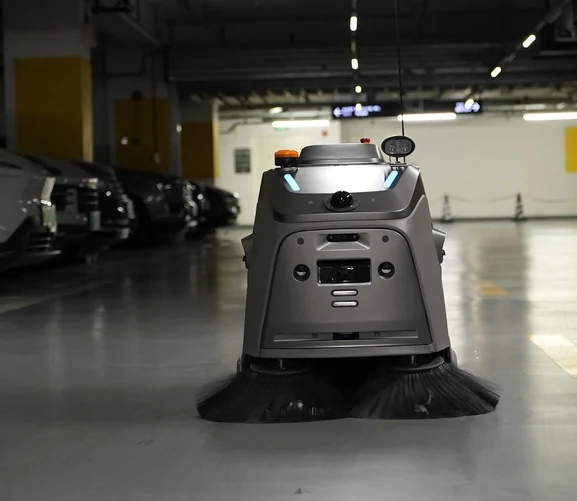
A parking deck needs a sweeper and a scrubber.
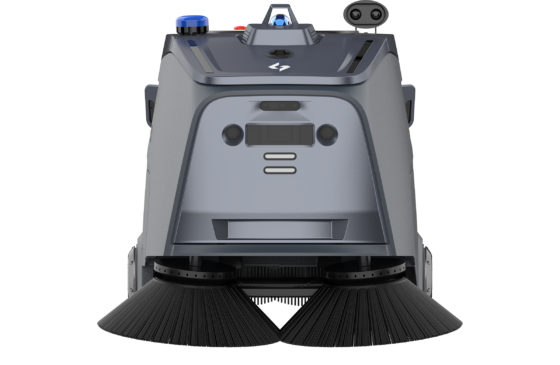
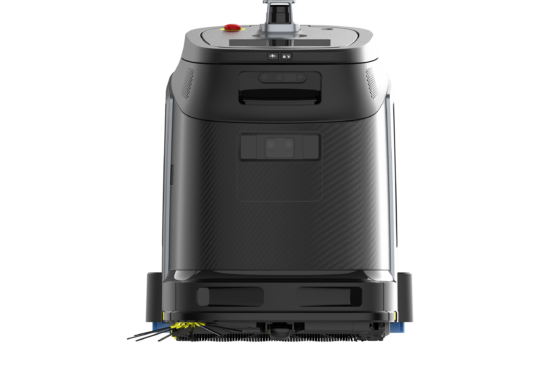
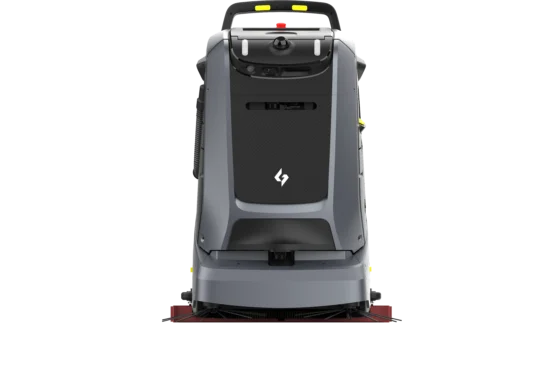
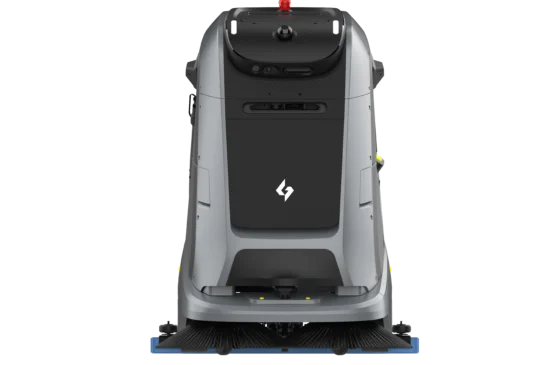
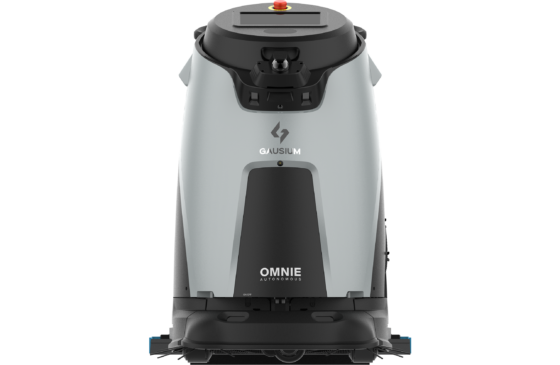
Grit, leaves and litter cover most of the floor and need sweeping. Tire marks, oil film and soil worked into the concrete sit along circulation routes and in individual bays, and sweeping will not lift them. In Gausium’s range, that means Beetle and Marvel.
Specifying them is harder than the floor plan suggests. A garage combines five conditions that rarely appear together: a repeating layout with no landmarks, moving vehicles rather than pedestrians, uneven lighting, heavy grit loading, and ramps and drainage falls on the route.
Get those wrong and a machine that performs well in a supermarket will stall here in its first week.
No landmarks. A parking deck is a repeating grid of identical bays and columns, and the vehicles that defined last week’s environment have all moved since. Navigation that depends on distinctive geometry has very little to anchor to.
Moving vehicles, not pedestrians. A person steps around a machine. A car does not, it approaches faster, and the driver is looking for a space rather than at the floor.
This is the largest single difference from any indoor deployment.
Uneven lighting. Bays are dim, the ramp mouth is bright, and the transition happens over a few meters.
Grit as the dominant soil. Every vehicle brings in sand, road salt in winter and tire-carried dust. Grit loads filtration far faster than indoor dust, and abrades brushes faster too.
Gradients and level changes. Ramps, speed humps and drainage falls all sit on the route. Each is a specification question rather than a driving question.
In most buildings navigation is a supporting requirement. In a garage it is the primary one, because a machine that loses position on a repetitive deck stops being autonomous regardless of how well it cleans.
Beetle maps and localizes using 3D LiDAR. Gausium names underground parking facilities among the target environments for Beetle 2.0, which adds a rear-mounted 2D LiDAR and full-surround vision including intelligent detection of moving vehicles.
Two things are worth watching in a demonstration on your own deck:
Neither question is answerable from a specification sheet, and neither is answerable on someone else’s deck.
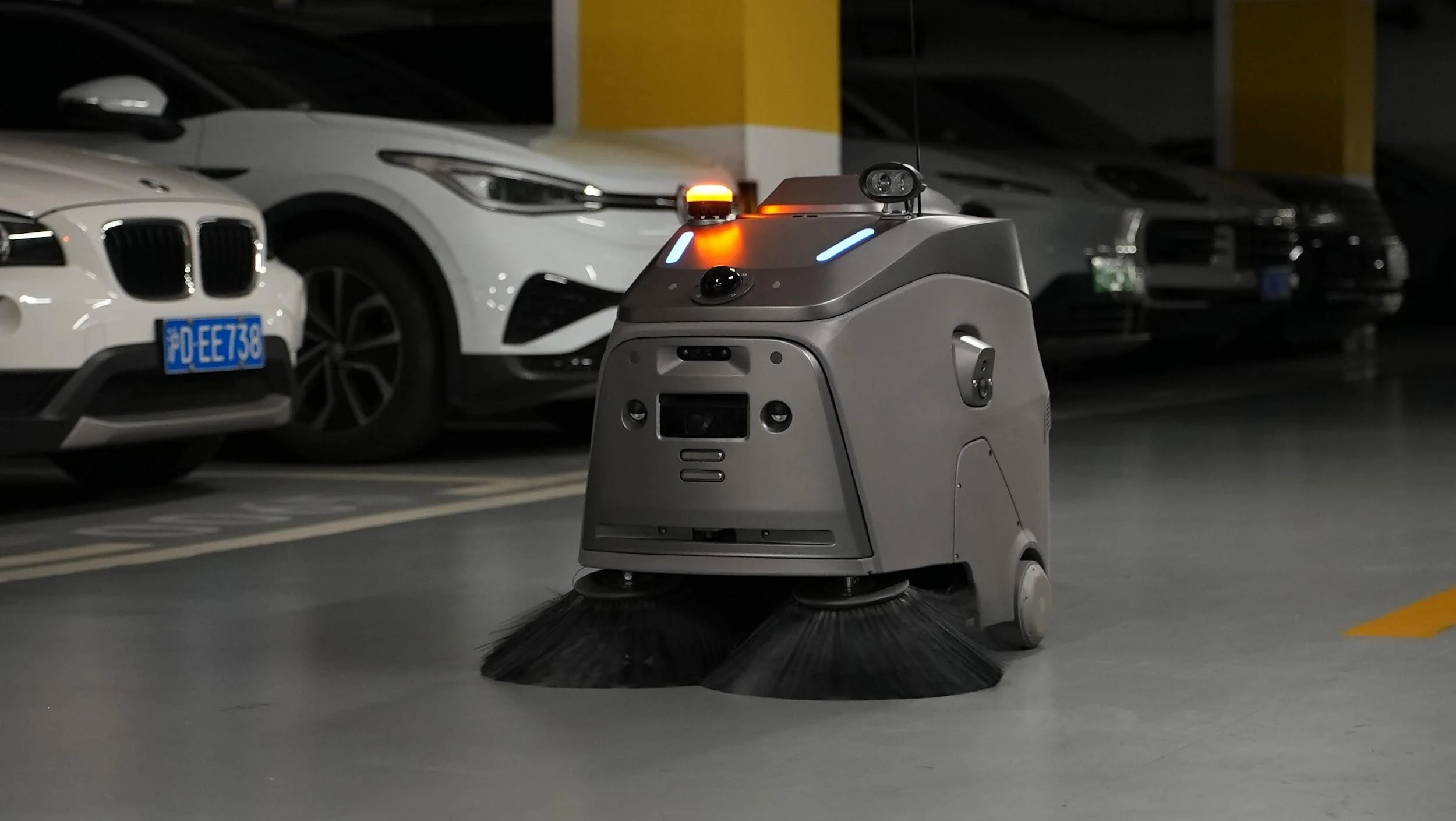
The instinct in a dirty garage is to scrub everything. In practice most of the floor is a sweeping problem, and applying water to a grit-covered deck works the grit into the surface rather than lifting it.
Wet work earns its place in defined zones:
Those zones are typically a small share of total area and can run on a separate cycle, often monthly rather than weekly.
Mark them on the floor plan before specifying anything. A garage that treats itself as a scrubbing site will buy the wrong machine and run it on the wrong schedule.
Beetle covers the deck.
It is specified for indoor and outdoor use across bituminous road, concrete, rubble flooring, PVC vinyl and epoxy, which covers effectively every surface in a parking structure including the apron outside.
Its suction handles the range from fine dust and sand through to paper scraps, bottles and wood chips, and it runs an automatic HEPA cleaning cycle after each task. Under a heavy grit load, that cycle is what keeps the machine unattended between services.
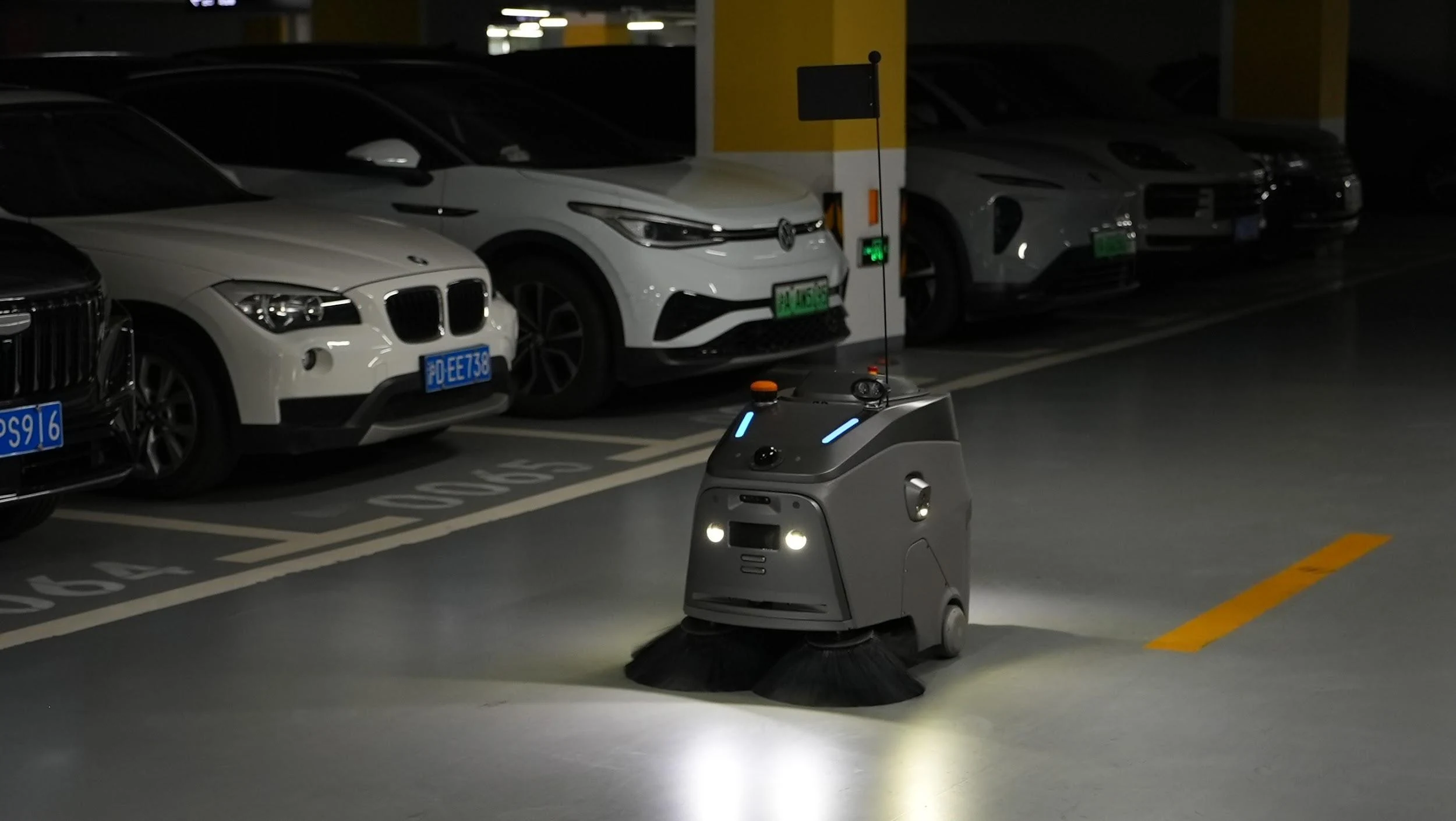
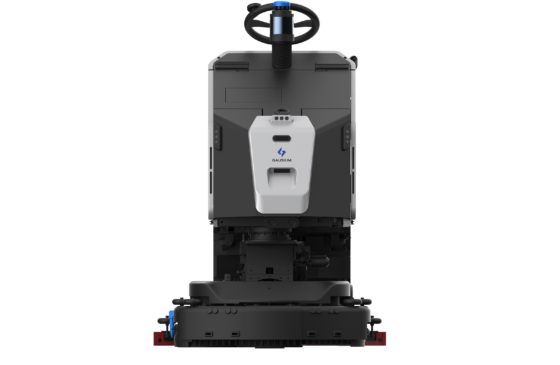
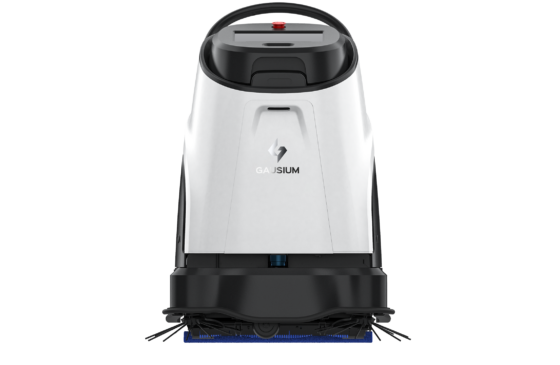
Marvel covers the wet zones.
Built for large open floor plates, it carries a heavy-duty side brush alongside disc brush scrubbing in the same pass, with tank capacity sized to reduce refill and drain stops across large areas.
Two boundaries to respect:
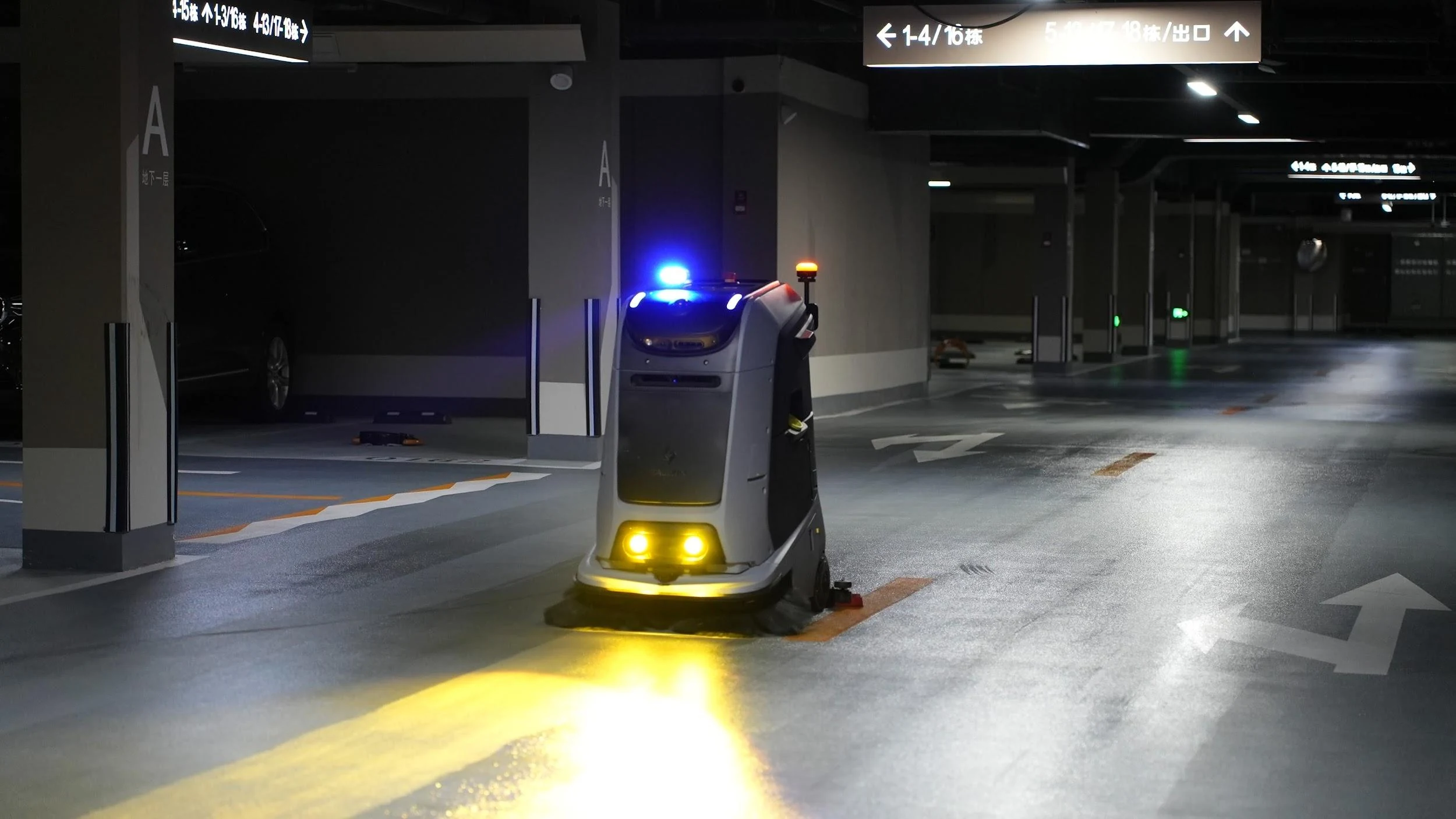
Three physical decisions determine whether a deployment runs unattended or turns into a daily task.
Ramp policy. Decide whether the machine works one level or travels between them. Multi-level travel needs the gradient confirmed and the ramp treated as part of the route, including the transition at top and bottom where the floor angle changes.
Drainage falls. Decks are laid to drain, so nothing is truly level. Water applied on a fall runs before it is recovered, which is a further argument for keeping wet work in defined zones.
Dock placement. A charging dock needs power, protection from vehicle movement, and a clear return path from the furthest bay on the route.
The natural location is usually near the elevator core or plant room. Confirming that the return path from the far corner is genuinely clear is worth doing before installation rather than after.
A garage has a traffic pattern as pronounced as any retail floor, and it is usually the inverse of the building it serves.
An office garage fills between 07:00 and 09:30, sits still through the day, and empties between 16:30 and 19:00. The mid-morning to mid-afternoon window is long, quiet and almost entirely unused for cleaning, which makes it the most valuable slot in the building.
A retail or mixed-use garage is different again, with the deepest trough overnight and a secondary one mid-morning. A residential garage is quiet through the working day.
Log entry and exit counts by hour across a full week before setting a schedule, including weekends where the pattern differs. Bay occupancy is not the same as vehicle movement, and it is movement that constrains the route.
|
Condition on your site |
What to confirm |
|
Repeating bay layout, no landmarks |
Watch a full bay run in the demonstration and check the machine holds position end to end |
|
Vehicles moving through the route |
Observe machine behavior when a car enters the aisle, and agree a traffic plan with the operator |
|
Uneven lighting |
Run the demonstration at the actual light level, including the ramp mouth transition |
|
Heavy grit load |
Set the filter and bin service interval against your own deck rather than a generic figure |
|
Ramps, humps and drainage falls |
Check the rated gradient for the intended route, and mark dry and wet zones on the floor plan |
Settle those five and the remaining decisions are straightforward.
Gausium’s Car Parking solutions page sets out the wider approach across parking environments, and Outdoor Cleaning Robots for Commercial Areas covers the semi-outdoor areas beyond the deck. A site assessment on the deck itself is the only reliable way to close the table above.
Beetle for the deck, since its applicable surfaces cover concrete, epoxy and bituminous road, and Marvel for the zones needing wet scrubbing. Most structures run both on separate cycles.
Only where the deck stays dry and soil is loose. Once tire marks and oil film are worked into the concrete, sweeping will not lift them and a scrubbing cycle is needed.
Yes, with the route restricted to defined periods. Beetle 2.0 adds full-surround vision including intelligent detection of moving vehicles. Agree a traffic plan with the operator rather than relying on sensing alone.
Beetle maps and localizes using 3D LiDAR rather than distinctive geometry, which suits repetitive, low-light and wide-open space. Confirm it holds position across a full bay run during the demonstration.
More often than indoors, because grit loads filtration faster than office or retail dust. Beetle runs an automatic HEPA cleaning cycle after each task. Set the manual service interval against your own deck rather than a generic figure.
UP NEXT
How Cleaning Robots Increase Service Capacity for Commercial Cleaning Companies14 września, 2026
Step 1/2
Please select the type of business you’d like to have with Gausium.
Choose one item from the list
Step 2/2
Thanks for sharing your preference. Please fill out the form below, and we’ll get in touch shortly.
By clicking “Submit”, I authorize Gausium to contact me. Privacy Policy.
Thank you for filling out the form
By clicking “Submit”, I authorize Gausium to contact me. Privacy Policy.