




UP NEXT
How Gausium Cleaning Robots Use Elevators and Automatic Doors to Clean Entire Buildings12 října, 2026

12 října, 2026
A cleaning robot demonstration can look impressive and still prove very little. A robot gliding across an empty, freshly cleaned floor shows that it moves. It does not show whether it will clean your floor, on your schedule, around your people, without someone following it around.
A useful cleaning robot performance test measures the things that decide day-to-day results. Six measures matter most: coverage, residual water, stain removal, edges, obstacle response and staff intervention. Each one can be observed during a single demonstration, and each one leaves evidence you can take back to your team.
The value of a demonstration depends on the route. The best test area is representative of your site and includes its difficult parts: the narrowest aisle, a tight turn, walls and shelf bases, a section with real foot traffic, and the kind of soil your team actually deals with.
It also helps to note how long your current process takes on the same area. That baseline turns a demonstration from „the floor looks cleaner“ into a comparison you can put numbers on.
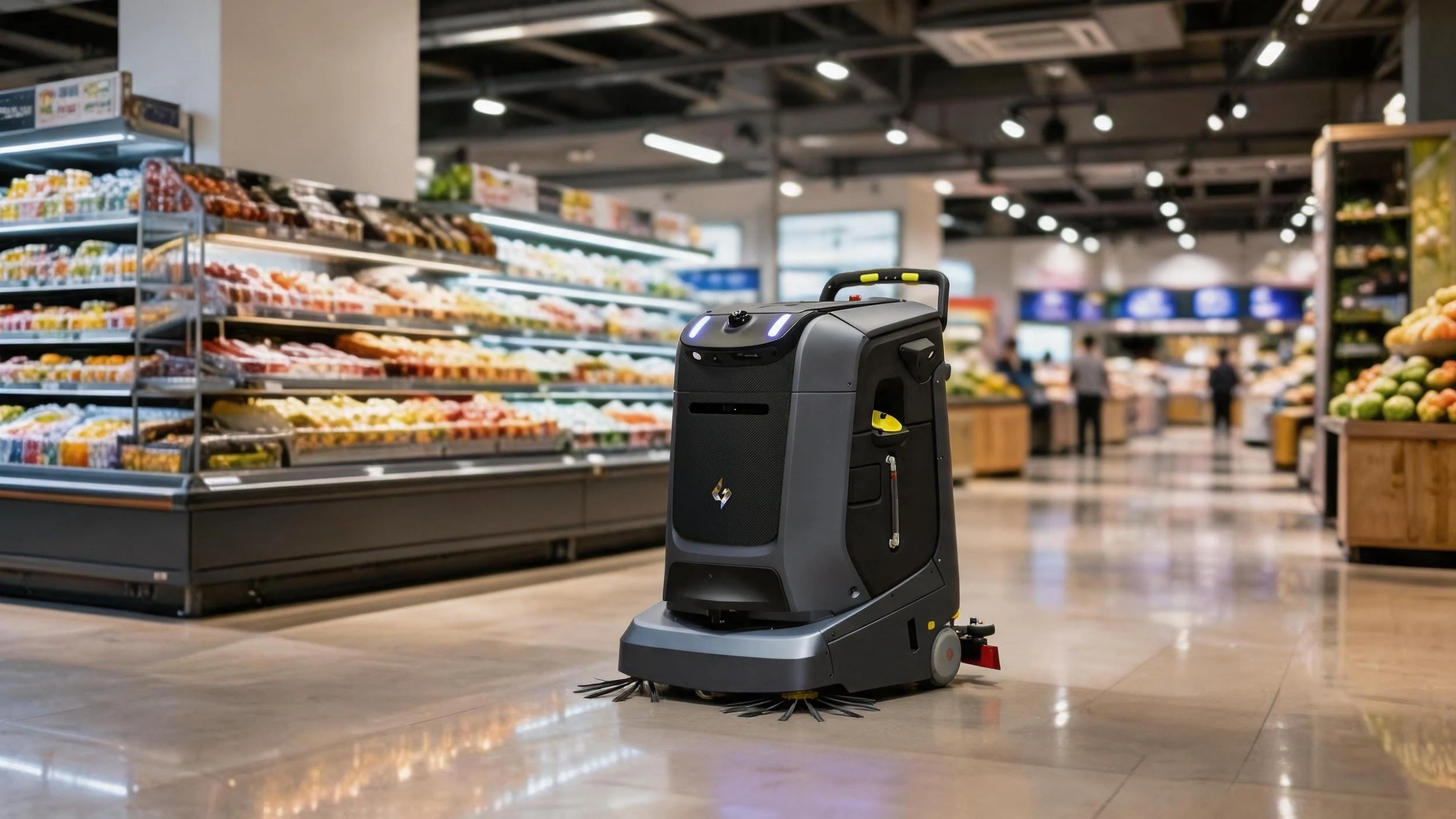
Setup does not have to eat into the time. With AI Smart Deployment, a Gausium robot maps a 2,000 m² (21,500 ft²) area in about 30 minutes, with no location tags or specialist engineer.
|
Test |
What to measure |
What Gausium robots do |
Evidence you get |
|
Coverage |
Planned area versus area actually cleaned |
Follow the mapped route and planning mode for each zone |
Task record showing area completed and time taken |
|
Residual water |
Wet strips, streaks and standing water after the pass |
Recover water through the squeegee system; models such as Phantas Extra also detect residual water |
Dry-floor inspection of the test route |
|
Stain removal |
Target soil before and after cleaning |
Detect waste and stains and clean them on the spot |
Before-and-after photos of fixed test points |
|
Edges |
Uncleaned strip along walls, shelf bases and corners |
Side brushes, close wall-following and edge-first path planning |
Edge measurements and a list of touch-up spots |
|
Obstacle response |
Behavior around people, carts and temporary objects |
Identify obstacles and waste, then avoid or reroute |
Observed stops, reroutes and recovery time |
|
Staff intervention |
Every time someone has to step in, and for how long |
Recharge at a dock, resupply at a workstation, alert staff through the app |
Intervention log with cause and minutes |
The first question is simple: did the robot clean everything it was supposed to? Compare the planned zone with what was actually covered, and note any skipped patches.
Gausium robots offer five path-planning modes, according to Gausium’s navigation technology, and a site can be divided into zones with a different mode for each. When the demonstration ends, the task record shows the area completed and the time it took, so coverage can be measured rather than eyeballed.
A scrubber that cleans well but leaves the floor wet creates a new problem. Walk the route after the pass and look for damp strips, streaks and standing water, especially near walls and at turns.
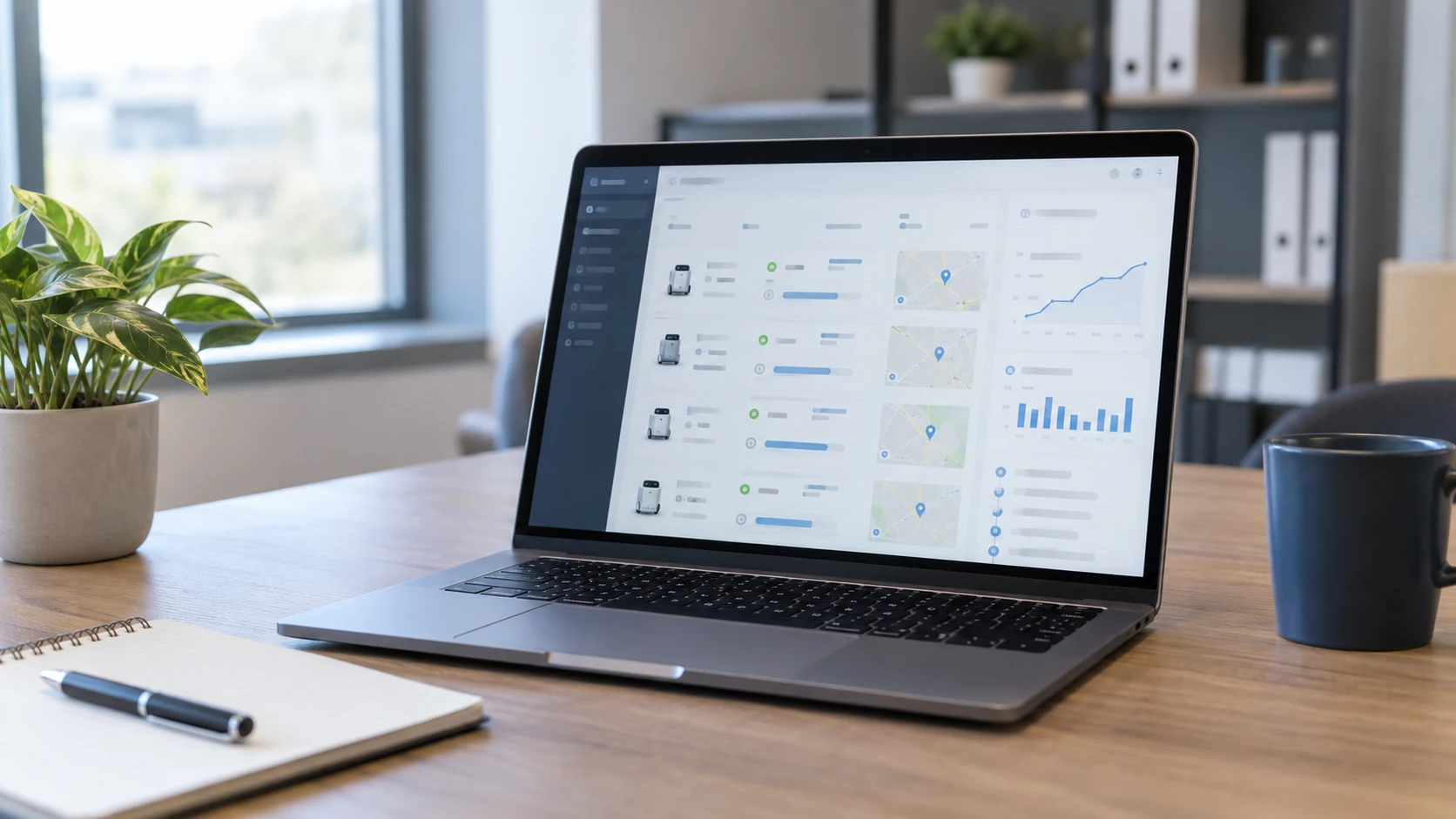
Phantas Extra, for example, uses smart residual water detection to keep water traces to a minimum. On models such as Mira and Marvel, a self-cleaning wastewater tank reduces manual maintenance after each task.
Mark a few fixed test points with the soil your site actually sees, then photograph them before and after. This shows whether the robot removes the dirt or simply passes over it.
Gausium’s Auto Spot Cleaning mode scans the floor continuously and cleans wherever it detects waste or stains. Omnie, for example, uses AI deep learning to identify and clean both dry and wet waste, while Phantas Extra adjusts its cleaning parameters for stubborn stains.
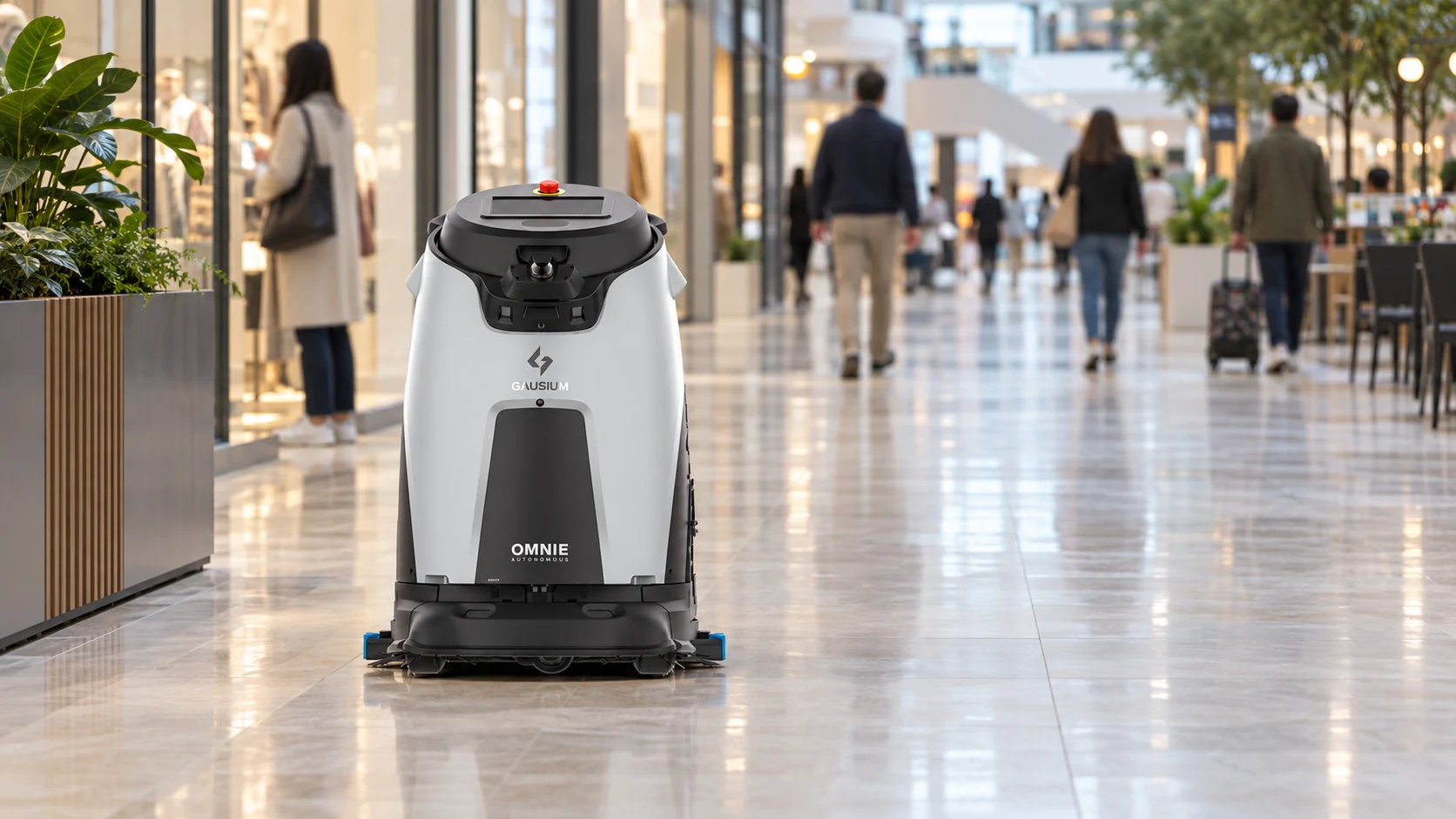
After the robot finishes, check the walls, shelf bases and corners on the route. The width of any uncleaned strip, and the number of spots someone would need to finish by hand, show how much manual work the robot actually leaves behind.
Phantas, for example, cleans right up to the edge at 0 cm, while Omnie and Marvel use dual side brushes for edge-to-edge coverage. In Drop & Go mode, a Gausium robot explores the boundary and cleans along the edges first, then completes full coverage, as Gausium CTO Dr. Baoxing Qin explained in a recent webinar.
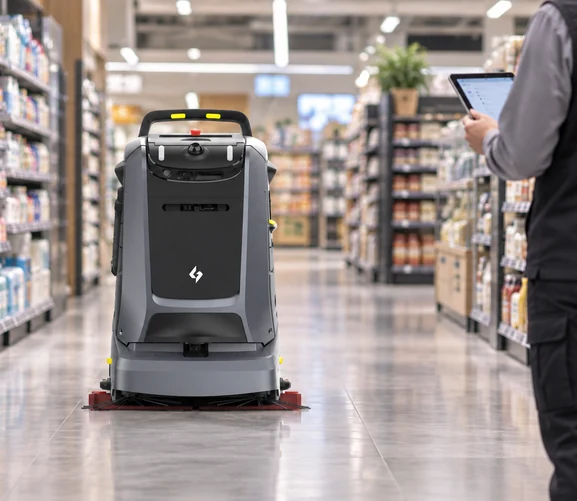
If the robot will work while people are around, test it while people are around. Walk across its path, park a cart in the aisle, leave a box on the floor, and watch whether it stops, waits or reroutes, and how quickly it gets back to work. If the robot will run through peak season, add the obstacles that season brings, such as promotional stacks, extra carts and temporary displays in the aisles.
Gausium robots are trained on millions of real-world images and identify obstacles and waste with 99% accuracy. Models such as Omnie and Marvel also use 3D LiDAR and 360° vision for busy public areas and shared forklift and pedestrian routes.
The most revealing number in any cleaning robot demo is how often a person has to step in. Log every intervention, what caused it and how many minutes it took. A planned two-minute check is not the same as a twenty-minute recovery, so record them separately.
Gausium robots are designed to keep this number low. When a robot finds an item too large to clean, it alerts the operator through the Gausium App instead of stalling. With a charging dock in place, charging runs automatically. With a workstation, depending on the model, water refill and wastewater discharge do too, so no one has to stand by during the task.
If the robot will cover long or overnight shifts, include a full docking and resupply cycle in the demonstration, because that is what continuous operation depends on.
The demonstration should end with real data, not a summary slide. Once the run is finished, the Gausium App shows the actual task record, including area covered, time taken, and consumables and machine status.
Those same records are what facility teams and contract cleaners use day to day for scheduling and service reviews. When several robots work the same site, each one’s task record appears in the same Gausium App, so results can be compared robot by robot and zone by zone. Our guide to cleaning robot performance reporting explains how teams put that data to work after deployment.
It also helps to read the spec sheet alongside the results. Gausium specification pages list theoretical cleaning efficiency and note that actual performance varies with the application. The demonstration shows what that performance looks like on your floor.
A fair test starts with the right robot for the job. Choose the demo model by your core cleaning need.
Wet scrubbing in mid-sized spaces
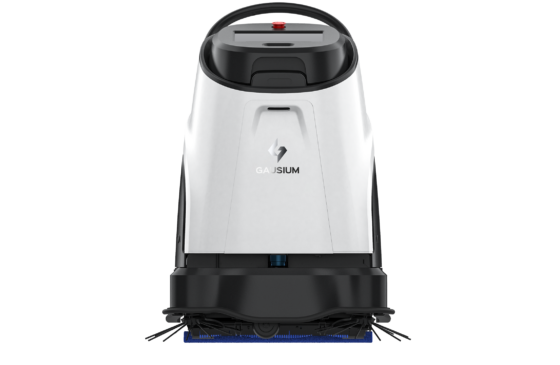
Mira is ideal for spaces of about 800–2,000 m² (8,600–21,500 ft²), such as retail stores, hotels and offices with narrow aisles and changing layouts.
Heavy soil across large open floors
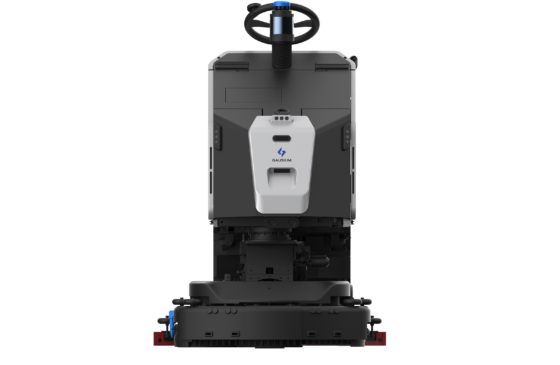
Marvel is ideal for large sites from 3,000 m² (32,300 ft²) upward, such as warehouses, factories and underground garages.
Scrubbing in busy, high-traffic areas
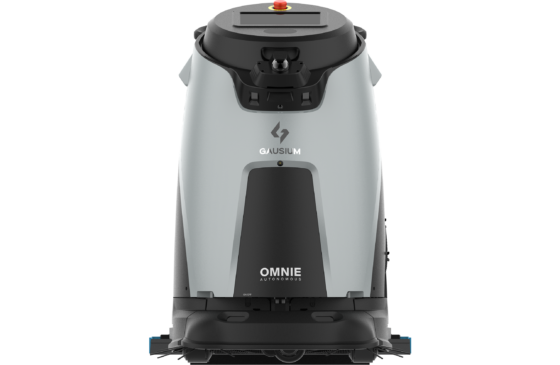
Omnie is ideal for sites from 800 m² (8,600 ft²) upward, such as airports, metro stations and other transportation hubs, as well as busy supermarkets.
Small spaces with both hard floor and low-pile carpet
Phantas is ideal for spaces of about 100–1,500 m² (1,100–16,000 ft²), such as offices, stores and pharmacies.
Dry debris on industrial floors
Beetle is ideal for warehouses, factories and indoor or outdoor industrial areas.
Carpet vacuuming
Vacuum 40 is ideal for carpeted areas of any pile height, such as hotel corridors and office floors.
A demonstration narrows the choice. It shows, in a few hours, whether a robot can handle your floor, your soil and your traffic. A final decision on a larger rollout is best made after a multi-shift pilot, which shows how the robot performs across different days, traffic levels and staff.
For facilities heading into the year-end peak, the pilot is the time to test what the busy season will demand: long shifts, overnight runs with no one standing by, and several robots working the site at the same time. It is far easier to confirm that before the peak than in the middle of it.
The best cleaning robot demo leaves you with evidence, not just an impression. Measure coverage, residual water, stain removal, edges, obstacle response and staff intervention on a route that looks like your real site, and read the results from the robot’s own task record.
Gausium can set up a demonstration on a representative route at your facility, with the robot matched to your core cleaning need. Talk to a Gausium specialist to arrange a site demonstration.
UP NEXT
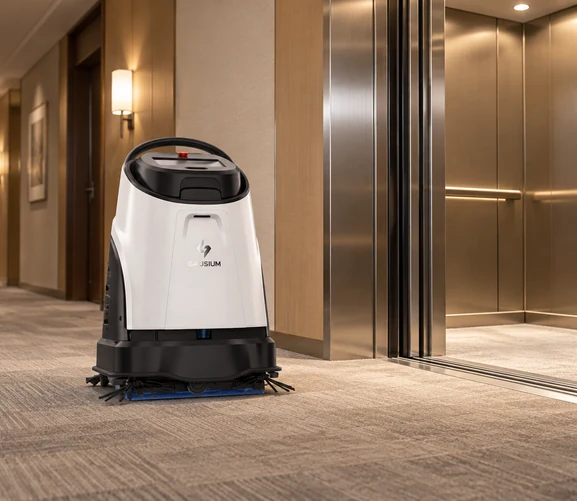
How Gausium Cleaning Robots Use Elevators and Automatic Doors to Clean Entire Buildings12 října, 2026
Step 1/2
Please select the type of business you’d like to have with Gausium.
Choose one item from the list
Step 2/2
Thanks for sharing your preference. Please fill out the form below, and we’ll get in touch shortly.
By clicking “Submit”, I authorize Gausium to contact me. Privacy Policy.
Thank you for filling out the form
By clicking “Submit”, I authorize Gausium to contact me. Privacy Policy.