




UP NEXT
Heavy-Duty Cleaning Robots for Industrial Floor Scrubbing23 září, 2026

23 září, 2026
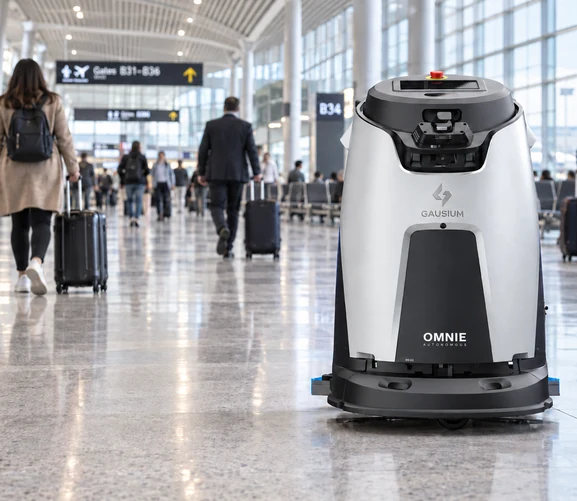
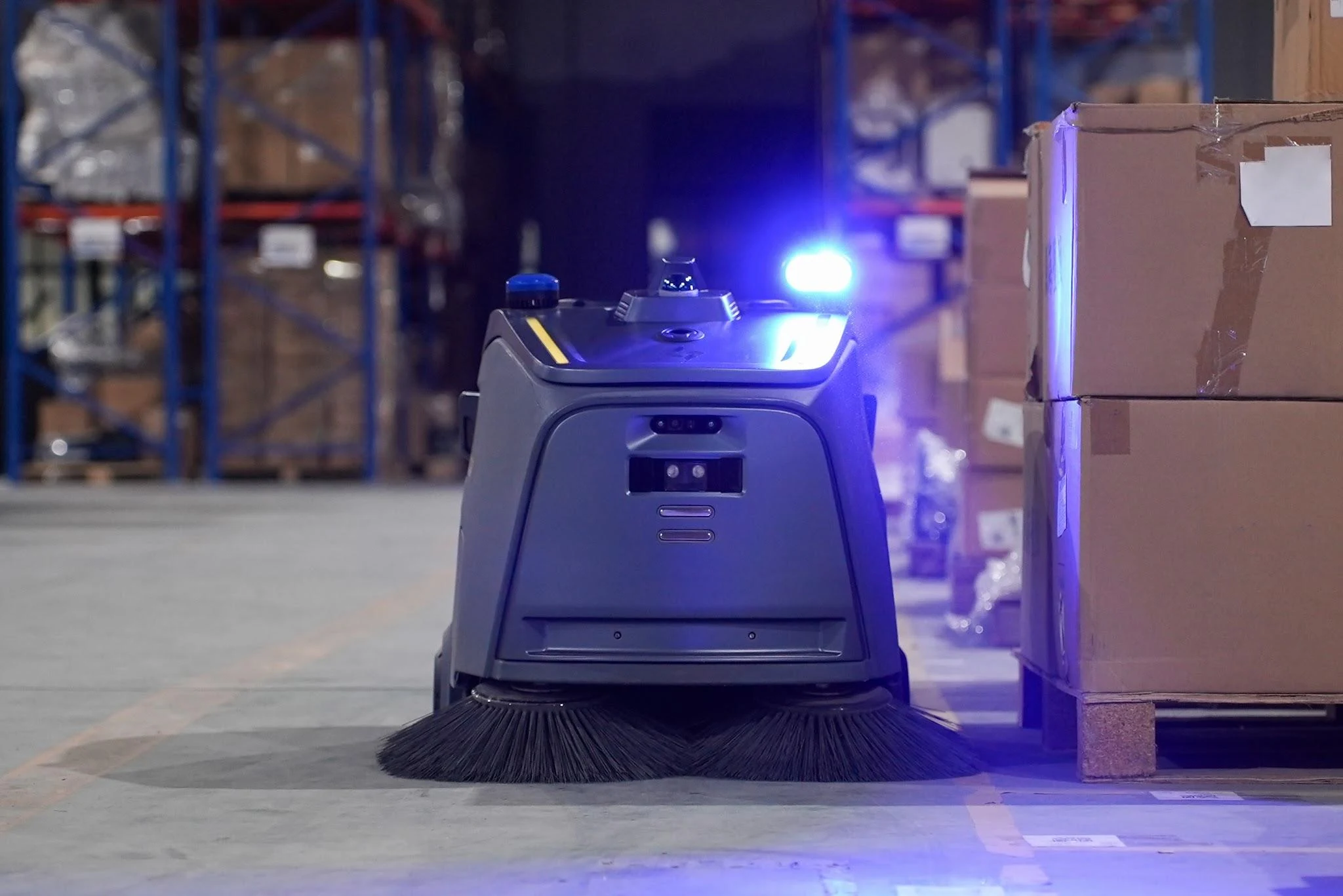
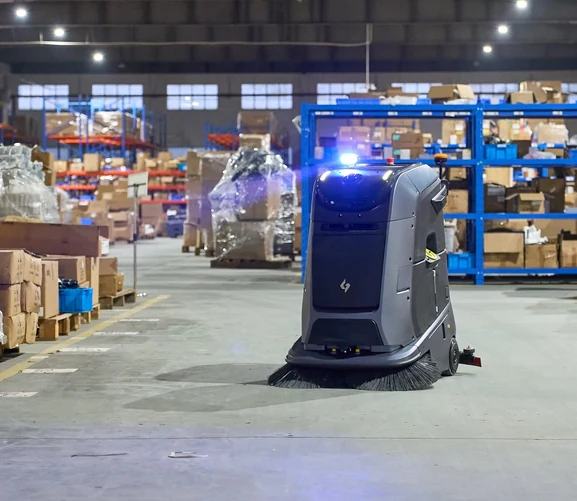
A commercial cleaning robot carries LiDAR, depth sensors and cameras, and all three exist to keep the machine on its route and away from people and obstacles. It is navigation equipment, not monitoring equipment, and the specification should state that rather than leave it to assumption.
The question still needs a documented answer, because it arrives after the machines are installed and usually from someone outside the cleaning team: a security officer, an employee representative body, or a client’s IT department.
This article sets out what the sensors capture, which controls are documented, who can reach the data, and what happens at contract end, so a deployment does not open a question the facility team cannot answer. For certification, storage regions and procurement clauses, see how to assess data security when buying commercial cleaning robots.
Navigation sensors process their input to locate the machine and avoid what is in front of it. That is a different function from a camera system installed to observe a space, and the difference should be visible in the answers a supplier gives.
Four points settle it:
What is processed onboard in real time, and what leaves the machine.
Whether images of people are retained at all, and if so, for how long.
What de-identification or anonymization is applied before anything is stored.
Whether any camera feed can be viewed live, and under what conditions.
Where a site has a works council, an employee representative body, or a duty to disclose monitoring to occupants, this answer belongs in the deployment notice rather than in the procurement file.
Gausium’s privacy policy names the measures applied to personal information:
Encryption in transit, including SSL.
De-identification or anonymization applied to stored personal information.
Firewall protection on the platform.
Access control measures governing who reaches the account.
Server area selection — users can choose the cloud server area where their personal information is stored, based on their location.
Retention to account cancellation, with deletion after cancellation except where a retention period is required by applicable law.
Verified access, correction and deletion requests processed within five working days, extending to a maximum of thirty days in special circumstances.
Gausium is also certified to ISO/IEC 27001 and ISO/IEC 27701, which cover the management system behind these measures rather than any single product.
Items not covered by published material, including onboard retention cycles for camera data and whether images of people are retained at all, should be confirmed in writing for the specific deployment.
| Category | What it contains | Why it is raised |
| Floor maps | Layout, restricted zones, route plans | Treated as building information rather than cleaning information, particularly in airports, hospitals, data centers and public buildings |
| Task records | Coverage, runtime, timestamps, consumable use | A timestamped cleaning record also indicates when an area was unoccupied |
| Account data | Supervisor and operator identities, contact details | Falls under personal data rules in most jurisdictions |
Security reviews tend to focus on sensor data. In practice the first two are what a facility team is asked to explain later.
The Gausium cloud platform provides 24/7 access to operational data with multiple sites visible in one place. For a multi-site operator, the question at setup is which of those sites each login should reach.
The account holder. The account is created when the first machine is installed, and whoever creates it tends to keep it. Where a cleaning contractor holds it and the contract later changes hands, the building’s cleaning history goes with them unless the transfer was agreed in advance. Name the legal entity and the individual administrators in writing.
Access scope per site. Map the platform’s access levels to the roles that exist on site rather than accepting the default set. Floor maps deserve the same treatment as any other building plan.
Service access. Gausium’s Remote Maintenance Center provides 24/7 cloud diagnostics, and around 70% of faults are resolved without a site visit. Confirm how that access is granted, how it is logged, and that it is withdrawn when the work closes.
Most access problems are not technical. They come from a login that was never removed.
Cleaning teams turn over, contractors change at tender cycles, and engineers receive temporary access for commissioning or fault work. Each grant is legitimate at the time and stale afterwards.
Two routines close the gap, and neither requires IT involvement once established. Add platform access to the existing offboarding checklist, alongside building passes and email. Review the administrator list quarterly, confirming each name is still in role.
A management system certification covers how an organization develops and maintains software. It does not certify each release, which is why update handling belongs in the operational routine.
Gausium robots receive over-the-air updates covering new features, performance improvements and bug fixes at no additional charge, and platform advisories are published on the cybersecurity notifications page.
Agree at handover who on the customer side is notified when an advisory is published, and whether updates apply automatically or require an operator action.
The end of a deployment gets less attention than the start, and it is where data most often stays behind.
Account data is covered by the retention and deletion terms above. Map and sensor data is a separate category, and exit terms for it should be written rather than inferred:
Which data categories are exported to the customer, and in what form.
Which are deleted, and within what period.
What happens to the account if machines transfer to a different operator or site.
At commissioning: what the sensors capture and what is stored, account holder and named administrators, access scope per site, service access procedure, advisory notification contact, and exit terms per data category.
Quarterly: administrator list, active logins against current staff, and any service access still open.
Both sets can be raised with the Gausium team during the site assessment that covers floor types and cleaning area, which keeps one timeline instead of two.
Q1: Do Cleaning Robots Record Staff or Customers?
The sensors exist for navigation and obstacle detection, not monitoring. Ask each supplier what is processed onboard, what leaves the machine, and what de-identification is applied. Gausium’s privacy policy names de-identification or anonymization among its measures.
Q2: Are Floor Maps Treated as Sensitive Data?
They show layout, restricted zones and route plans, so most organizations treat them on the same basis as other building plans. Set access accordingly rather than leaving maps open to every login.
Q3: Where Is the Data Stored?
Gausium’s privacy policy states that users can select the cloud server area for their personal information based on location. Storage arrangements for map and sensor data are confirmed during deployment planning.
Q4: Who Should Hold the Fleet Platform Account?
Usually the building operator rather than the cleaning contractor, since the operator needs the cleaning history over time. Where a contractor holds it, agree in advance what transfers if the contract changes.
Q5: How Is Remote Service Access Controlled?
Gausium resolves around 70% of faults through its Remote Maintenance Center without a site visit. Confirm how access is granted, how it is logged, and that it is withdrawn when the work closes.
Q6: How Are Security Advisories Communicated?
Gausium publishes platform advisories on its cybersecurity notifications page. Agree at handover who is notified and whether updates apply automatically.
Gausium, privacy policy — security measures, server area selection, retention, deletion, and request handling.
Gausium, cybersecurity notifications — where platform security advisories are published.
Gausium, technology overview — cloud platform access, remote maintenance, and over-the-air updates.
Step 1/2
Please select the type of business you’d like to have with Gausium.
Choose one item from the list
Step 2/2
Thanks for sharing your preference. Please fill out the form below, and we’ll get in touch shortly.
By clicking “Submit”, I authorize Gausium to contact me. Privacy Policy.
Thank you for filling out the form
By clicking “Submit”, I authorize Gausium to contact me. Privacy Policy.